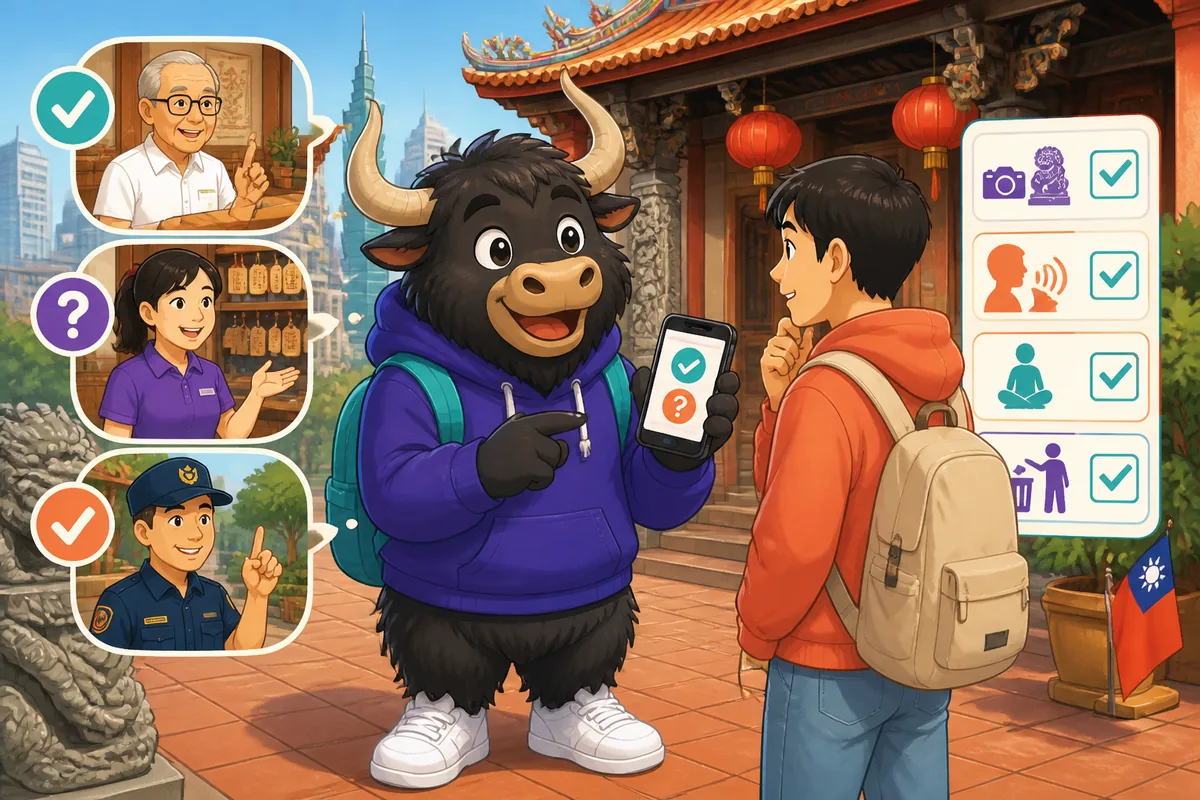
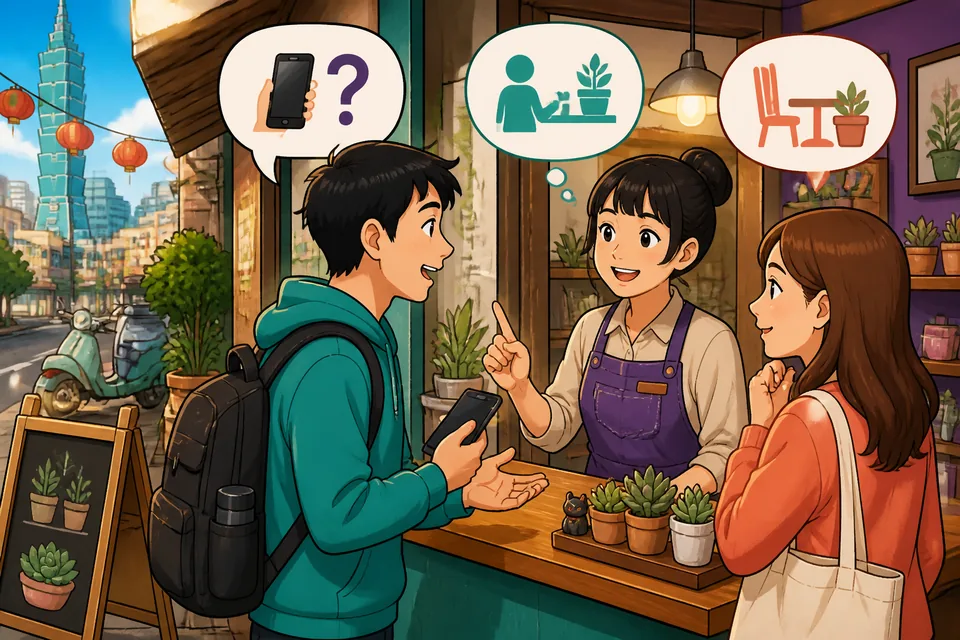
我想___,需要先问一下吗?
wǒ xiǎng ___, xūyào xiān wèn yíxià ma?
Do I need permission to ___?
Meaning: Do I need permission to ___?
When to use: Use this when you plan to do something and want to know if you must ask first.
Tip: Beginners sometimes use 要不要问? which sounds less polite; this full phrase is a natural polite question.
Examples ▼ 我想在教室吃东西,需要先问一下吗?
wǒ xiǎng zài jiàoshì chī dōngxī, xūyào xiān wèn yíxià ma?
Do I need to ask before eating in the classroom?
我想把行李放在这里,需要先问一下吗?
wǒ xiǎng bǎ xínglǐ fàng zài zhèlǐ, xūyào xiān wèn yíxià ma?
Do I need to ask before leaving my luggage here?
我可以问谁
wǒ kěyǐ wèn shéi?
Who can I ask?
Meaning: Who can I ask?
When to use: Ask this when you need to know the right person to ask for permission.
Examples ▼ 我可以问谁关于停车的问题?
wǒ kěyǐ wèn shéi guānyú tíngchē de wèntí?
Who can I ask about parking?
如果要改会议时间,我可以问谁?
rúguǒ yào gǎi huìyì shíjiān, wǒ kěyǐ wèn shéi?
If I want to change the meeting time, who can I ask?
你可以在这里___。
nǐ kěyǐ zài zhèlǐ ___.
You can ___ here.
Meaning: You can ___ here.
When to use: Use to tell someone an action is allowed in a specific place.
Tip: Don’t put the place after 可以 (wrong: 你可以___在这里) — the natural order is 你可以在这里___.
Examples ▼ 你可以在这里休息,沙发很舒服。
nǐ kěyǐ zài zhèlǐ xiūxí, shāfā hěn shūfú.
You can rest here; the sofa is comfortable.
在公园里你可以在这里吃东西。
zài gōngyuán lǐ nǐ kěyǐ zài zhèlǐ chī dōngxī.
In the park you can eat here.
你不能在这里___。
nǐ bù néng zài zhèlǐ ___.
You can't ___ here.
Meaning: You can't ___ here.
When to use: Use to tell someone an action is not allowed in a place.
Examples ▼ 你不能在这里吸烟,这是禁止区。
nǐ bù néng zài zhèlǐ xīyān, zhè shì jìnzhǐ qū.
You can't smoke here; this is a no-smoking area.
晚上十点以后你不能在这里大声唱歌。
wǎnshàng shí diǎn yǐhòu nǐ bù néng zài zhèlǐ dàshēng chànggē.
After 10pm you can't sing loudly here.
可以
kěyǐ.
It's allowed.
Meaning: It’s allowed.
When to use: Short reply to say something is permitted.
Examples ▼ 问:这里可以拍照吗?答:可以。
wèn: zhèlǐ kěyǐ pāizhào ma? dá: kěyǐ.
Q: Can I take photos here? A: Yes, you can.
你可以带宠物进来吗?可以。
nǐ kěyǐ dài chǒngwù jìn lái ma? kěyǐ.
Can you bring pets in? Yes, you can.
不可以
bù kěyǐ.
It's not allowed.
Meaning: It’s not allowed.
When to use: Short reply to clearly deny permission.
Examples ▼ 孩子问:可以用这台电脑吗?老师说:不可以。
háizi wèn: kěyǐ yòng zhè tái diànnǎo ma? lǎoshī shuō: bù kěyǐ.
Child: Can I use this computer? Teacher: No, you can't.
在图书馆里吃东西?不可以。
zài túshūguǎn lǐ chī dōngxī? bù kěyǐ.
Eat in the library? Not allowed.
请不要___
qǐng bú yào ___.
Please don't ___.
Meaning: Please don’t ___.
When to use: Use politely to ask someone not to do something.
Tip: Beginners sometimes say 别请不要—don't combine forms. Use 请不要 or 别, not both.
Examples ▼ 请不要在会议期间玩手机。
qǐng bú yào zài huìyì qījiān wán shǒujī.
Please don't use your phone during the meeting.
请不要带食物进教室。
qǐng bú yào dài shíwù jìn jiàoshì.
Please don't bring food into the classroom.
当然可以
dāngrán kěyǐ.
Yes, of course.
Meaning: Yes, of course.
When to use: Polite, friendly way to give permission.
Examples ▼ 你可以借我的笔,当然可以。
nǐ kěyǐ jiè wǒ de bǐ, dāngrán kěyǐ.
You can borrow my pen — of course.
Anna问:我可以先走吗?经理:当然可以。
Anna wèn: wǒ kěyǐ xiān zǒu ma? jīnglǐ: dāngrán kěyǐ.
Anna: May I leave early? Manager: Yes, of course.
Which phrase asks 'Who can I ask?' 我想___,需要先问一下吗? 可以 我可以问谁 请不要__
How do you politely say 'Yes, of course' to give permission? 当然可以 你不能在这里___。 不可以 请不要___
Which short reply means 'It's allowed'? 你不能在这里___。 请不要___ 可以 我可以问谁
How do you tell someone they are not allowed to do something here? 你不能在这里___。 你可以在这里__。 当然可以 我想___,需要先问一下吗?
Anna says: Do I need to ask before taking photos in the museum? 在博物馆,Anna 对工作人员说:'___'。
zài bówùguǎn, Anna duì gōngzuòrényuán shuō: '___'.
我想在博物馆拍照,需要先问一下吗? 你不能在这里吸烟。 请不要在这里拍照。 当然可以
In the office, we'd say: Please don't talk loudly on the phone here. 在办公室里,大家需要安静。对正在大声通话的人,我们会说:'___'。
zài bàngōngshì lǐ, dàjiā xūyào ānjìng. duì zhèngzài dàshēng tōnghuà de rén, wǒmen huì shuō: '___'.
我可以问谁 可以 你可以在这里吸烟。 请不要在这里大声打电话。
She asks: Who can I ask? 在租借处,Anna 不确定谁能批准,她问工作人员:'___'。
zài zūjiè chù, Anna bù quèdìng shéi néng pīzhǔn, tā wèn gōngzuòrényuán: '___'.
当然可以 我可以问谁 你不能在这里抽烟。 请不要拿走别人的行李。
我想___,需要先问一下吗? wǒ xiǎng ___, xūyào xiān wèn yíxià ma? 我可以问谁 wǒ kěyǐ wèn shéi? 你可以在这里___. nǐ kěyǐ zài zhèlǐ ___. 你不能在这里___. nǐ bù néng zài zhèlǐ ___. 可以 kěyǐ. 不可以 bù kěyǐ. 请不要___ qǐng bú yào ___. 当然可以 dāngrán kěyǐ. Do I need permission to ___? Who can I ask? You can ___ here. You can't ___ here. It's allowed. It's not allowed. Please don't ___. Yes, of course.
可以吗 kěyǐ ma? 允许 yǔnxǔ 禁止 jìnzhǐ 没问题 méi wèntí 别 bié 行 xíng May I?/Is it okay? to allow (formal) to prohibit No problem Don't (casual) Okay / fine
Recording stays on your device only. Check speech uses your browser's speech tools when available.
Say this phrase out loud:
我想___,需要先问一下吗?
wǒ xiǎng ___, xūyào xiān wèn yíxià ma?
Do I need permission to ___?
Check speech
Record Play back
Say this phrase out loud:
我可以问谁
wǒ kěyǐ wèn shéi?
Who can I ask?
Check speech
Record Play back
Say this phrase out loud:
你可以在这里___。
nǐ kěyǐ zài zhèlǐ ___.
You can ___ here.
Check speech
Record Play back
Say this phrase out loud:
你不能在这里___。
nǐ bù néng zài zhèlǐ ___.
You can’t ___ here.
Check speech
Record Play back
Say this phrase out loud:
可以
kěyǐ.
It's allowed.
Check speech
Record Play back
Say this phrase out loud:
不可以
bù kěyǐ.
It's not allowed.
Check speech
Record Play back
Say this phrase out loud:
请不要___
qǐng bú yào ___.
Please don’t ___.
Check speech
Record Play back
Say this phrase out loud:
当然可以
dāngrán kěyǐ.
Yes, of course.
Check speech
Record Play back