Simplified Chinese - Making Plans

Lesson 125 of 156

Two friends planning a meet-up in Simplified Chinese; urban scene with a coffee shop and a cinema, illustrating the lesson 'Making Plans'.

Goal: Polite everyday phrases to suggest, confirm, and postpone plans

Free Simplified Chinese lessons with guided practice, audio, and speaking support.

Ready to plan something in Chinese? This short lesson helps you suggest meeting places, check times, accept or postpone — all in friendly, natural phrases. Try listening, repeating, then using the phrases aloud.

Level A2: Lesson 125 — quick, practical phrases for making plans. We'll practice how to confirm an arrival time, suggest meeting near a place, accept or postpone plans, suggest activities, check if something is okay, offer alternatives, and confirm the final plan. (CEFR-aligned language — small, useful chunks you can start using today.)

After this lesson you'll be able to:

  • Learn 9 useful chunks for making and confirming plans in everyday Chinese (Level A2).
  • Be able to suggest a nearby meeting place and check if a time or place is okay.
  • Practice polite ways to postpone or delay a decision and confirm the final plan.
Close-up: a phone screen with a Chinese text message about meeting times; shows Simplified Chinese planning phrases.

Ready? Let's go!

When you tap play on phrases, we track your progress through this lesson.

1. Reading + Listening Practice

Hear core phrases, repeat aloud.

我___到

Wǒ ___ dào.

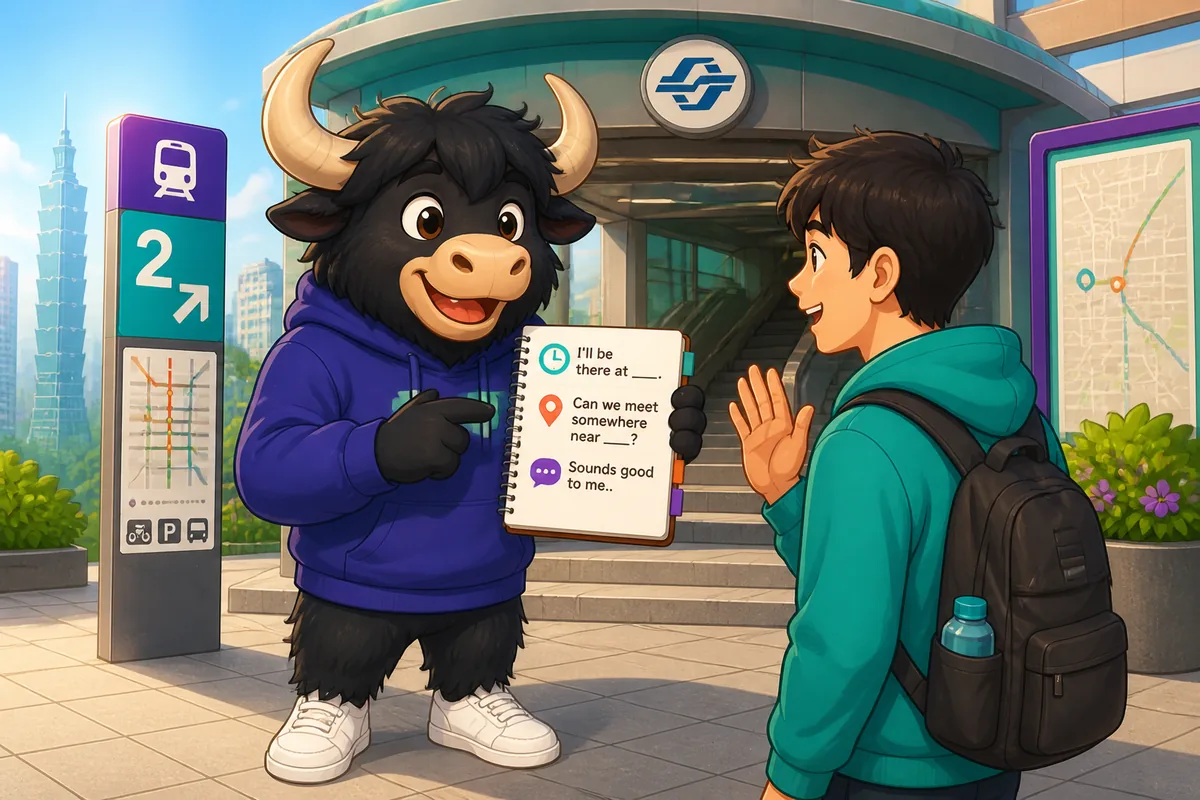
I'll be there at ___.

Meaning: I'll be there at ___.

When to use: Use with a specific time in the blank, for example 三点 or 八点半 when confirming your arrival.

Tip: Don't forget 到 after the time (e.g., say 我三点到, not just 我三点).

我三点到

Wǒ sān diǎn dào.

I'll be there at three.
我八点半到

Wǒ bā diǎn bàn dào.

I'll arrive at 8:30.

我们能在___附近见吗?

Wǒmen néng zài ___ fùjìn jiàn ma?

Can we meet somewhere near ___?

Meaning: Can we meet somewhere near ___?

When to use: Use this to suggest meeting near a known landmark (e.g., 火车站, 咖啡馆). It's polite and natural.

我们能在火车站附近见吗?

Wǒmen néng zài huǒchēzhàn fùjìn jiàn ma?

Can we meet near the train station?
我们能在咖啡馆附近见吗?

Wǒmen néng zài kāfēiguǎn fùjìn jiàn ma?

Can we meet near the coffee shop?

听起来不错

Tīng qǐlai búcuò.

Sounds good to me.

Meaning: Sounds good to me.

When to use: A short positive response to accept a suggestion or plan.

我们周末去爬山,听起来不错。

Wǒmen zhōumò qù páshān, tīng qǐlai búcuò.

We go hiking this weekend — sounds good.
你想看电影吗?听起来不错。

Nǐ xiǎng kàn diànyǐng ma? Tīng qǐlai búcuò.

You want to see a movie? Sounds good.

要不下次吧

Yàobù xià cì ba.

Maybe another time.

Meaning: Maybe another time.

When to use: Use this to politely postpone or decline without saying no directly.
这个周末我有事,要不下次吧。

Zhège zhōumò wǒ yǒu shì, yàobù xià cì ba.

I'm busy this weekend — maybe another time.
不好意思,我现在不方便,要不下次吧。

Bù hǎoyìsi, wǒ xiànzài bù fāngbiàn, yàobù xià cì ba.

Sorry, not convenient now — maybe next time.

我再告诉你吧

Wǒ zài gàosu nǐ ba.

I'll let you know.

Meaning: I'll let you know.

When to use: Say this when you can't decide right away and will update the other person later.

我还不确定时间,我再告诉你吧。

Wǒ hái bù quèdìng shíjiān, wǒ zài gàosu nǐ ba.

I'm not sure about the time yet — I'll let you know.
等我确认一下日程,我再告诉你吧。

Děng wǒ quèrèn yíxià rìchéng, wǒ zài gàosu nǐ ba.

Let me check my schedule, I'll tell you later.

我们可以___。

Wǒmen kěyǐ ___.

We could ___ .

Meaning: We could ___.

When to use: Use this to casually suggest an activity, such as 去吃饭 or 去看电影.

Tip: Remember to add the activity after 我们可以 (e.g., 我们可以去看电影), not leave the phrase by itself.

我们可以去吃饭。

Wǒmen kěyǐ qù chīfàn.

We could go eat.
我们可以去看电影。

Wǒmen kěyǐ qù kàn diànyǐng.

We could go see a movie.

你觉得___可以吗?

Nǐ juéde ___ kěyǐ ma?

Is ___ okay for you?

Meaning: Is ___ okay for you?

When to use: Use this to check if a time, place, or plan works for the other person.

你觉得明天五点可以吗?

Nǐ juéde míngtiān wǔ diǎn kěyǐ ma?

Do you think 5 o'clock tomorrow is okay?
你觉得咖啡馆可以吗?

Nǐ juéde kāfēiguǎn kěyǐ ma?

Is the coffee shop okay for you?

___怎么样

___ zěnmeyàng?

What about ___?

Meaning: What about ___?

When to use: Offer an alternative time, place, or plan by filling the blank with a suggestion.

下午三点怎么样?

Xiàwǔ sān diǎn zěnmeyàng?

What about 3 PM?
电影院怎么样

Diànyǐngyuàn zěnmeyàng?

What about the cinema?

那就这么定了

Nà jiù zhème dìng le.

It's a plan.

Meaning: It's a plan.

When to use: Use this to confirm that the plan is decided and both sides agree.

好,那就这么定了。

Hǎo, nà jiù zhème dìng le.

Okay, it's settled then.
时间和地点都确认了,那就这么定了。

Shíjiān hé dìdiǎn dōu quèrèn le, nà jiù zhème dìng le.

Time and place are confirmed — it's a plan.

2. Conversational Listening Practice

Hear phrases in a real mini-conversation.

Planning to see a movie this weekend

Anna and David talking near a cinema and coffee shop, using Simplified Chinese phrases to suggest and confirm a plan.

Did they decide a meeting time?

Portrait of Anna in a Simplified Chinese lesson dialogue

Anna

这周末看电影怎么样?

Zhè zhōumò kàn diànyǐng zěnmeyàng?

How about seeing a movie this weekend?

Portrait of David in a Simplified Chinese lesson dialogue

David

我现在不确定时间。我再告诉你吧。

Wǒ xiànzài bù quèdìng shíjiān. Wǒ zài gàosu nǐ ba.

I'm not sure about the time right now. I'll let you know.

Portrait of Anna in a Simplified Chinese lesson dialogue

Anna

那我们可以先选个地方。电影院附近见可以吗?

Nà wǒmen kěyǐ xiān xuǎn ge dìfāng. Diànyǐngyuàn fùjìn jiàn kěyǐ ma?

Then we could pick a place first. Can we meet near the cinema?

Portrait of David in a Simplified Chinese lesson dialogue

David

我觉得电影院可以。你觉得八点可以吗?

Wǒ juéde diànyǐngyuàn kěyǐ. Nǐ juéde bā diǎn kěyǐ ma?

I think the cinema is fine. Do you think 8 o'clock is okay?

Portrait of Anna in a Simplified Chinese lesson dialogue

Anna

我八点到。那就这么定了。

Wǒ bā diǎn dào. Nà jiù zhème dìng le.

I'll be there at 8. It's a plan.

3. Guided Practice

Quizzes and matching to lock in meaning.

Which phrase means 'Sounds good to me.'?

How do you politely say 'I'll let you know' when you need time to check your schedule?

Which phrase asks whether a proposed time/place is OK for the other person?

Which phrase would you use to confirm that a plan is settled?

If you'll be a little late, you can say: 'I'll be there at six.'

如果你晚一点到,你可以说:'我___到。'

To ask to meet near the cinema, you'd use the cinema in the blank.

想在电影院附近见面,你会说:'我们能在___附近见吗?'

A polite way to decline this time is: 'Maybe next time.'

如果你这次没空,你会礼貌地说:'要不___吧。'

Match the core phrases

Match the extra phrases

4. Speaking Practice

Say phrases yourself (mic/recording).

Recording stays on your device only. Check speech uses your browser's speech tools when available.

Say this phrase out loud:

我___到

Wǒ ___ dào.

I'll be there at ___.

Say this phrase out loud:

我们能在___附近见吗?

Wǒmen néng zài ___ fùjìn jiàn ma?

Can we meet somewhere near ___?

Say this phrase out loud:

听起来不错

Tīng qǐlai búcuò.

Sounds good to me.

Say this phrase out loud:

要不下次吧

Yàobù xià cì ba.

Maybe another time.

Say this phrase out loud:

我再告诉你吧

Wǒ zài gàosu nǐ ba.

I'll let you know.

Say this phrase out loud:

我们可以___。

Wǒmen kěyǐ ___.

We could ___.

Say this phrase out loud:

你觉得___可以吗?

Nǐ juéde ___ kěyǐ ma?

Is ___ okay for you?

Say this phrase out loud:

___怎么样

___ zěnmeyàng?

What about ___?

Say this phrase out loud:

那就这么定了

Nà jiù zhème dìng le.

It's a plan.