Simplified Chinese - Emergencies: Quick Phrases

Lesson 133 of 156

A first-responder scene in Simplified Chinese style: urgent street scene showing people helping an injured person, representing emergency phrases practice.

Goal: Short, urgent phrases for accidents and injuries

Free Simplified Chinese lessons with guided practice, audio, and speaking support.

Quick and calm — that's the goal. In this short lesson you'll meet a set of clear, urgent phrases to use in real emergency moments. Listen, practice, and then say them out loud to make them ready when you need them.

Level A2: This CEFR-aligned lesson teaches nine practical emergency phrases you can use in accidents, injuries, or when someone goes missing. You'll hear and repeat lines like 别慌 (Bié huāng), 我需要救护车 (Wǒ xūyào jiùhùchē), and 马上出去 (Mǎshàng chūqù) in a short dialogue, then practice with quick quizzes and speaking prompts.

After this lesson you'll be able to:

  • Understand and recognize nine urgent Chinese phrases used in accidents and injuries.
  • Be able to say short emergency sentences aloud (speaking practice).
  • At A2: respond or report basic facts in an emergency (who is hurt, where it hurts, if someone is missing).
Two people near a crashed bicycle and a worried crowd; the image highlights Simplified Chinese emergency vocabulary in action.

Ready? Let's go!

When you tap play on phrases, we track your progress through this lesson.

1. Reading + Listening Practice

Hear core phrases, repeat aloud.

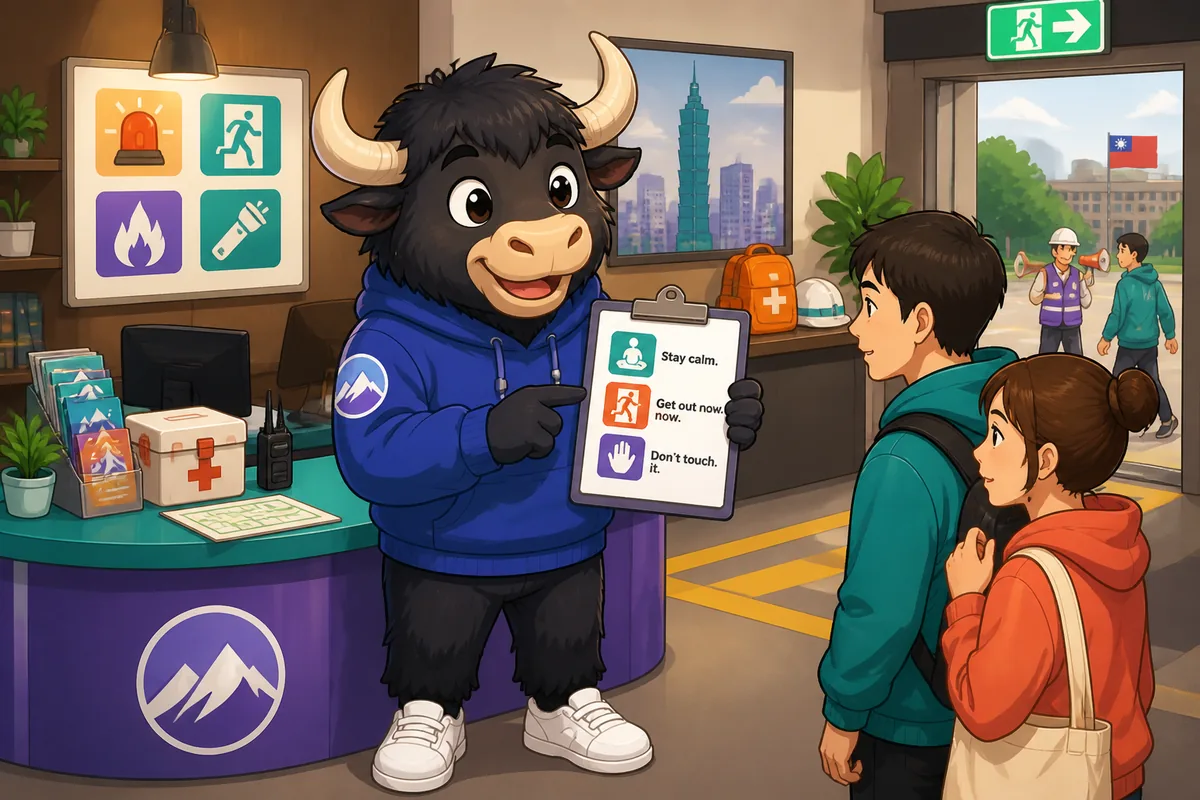
别慌

Bié huāng.

Stay calm.

Meaning: Stay calm.

When to use: Use to calm someone in a sudden emergency — short and direct.

Tip: Beginners sometimes say “不要慌” — it's fine, but 别慌 is shorter and more natural in urgent speech.

别慌,我们会帮你的。

Bié huāng, wǒmen huì bāng nǐ de.

Stay calm, we'll help you.
听到响声后,老师对大家说:别慌。

Tīngdào xiǎngshēng hòu, lǎoshī duì dàjiā shuō: Bié huāng.

After the noise, the teacher said: Stay calm.

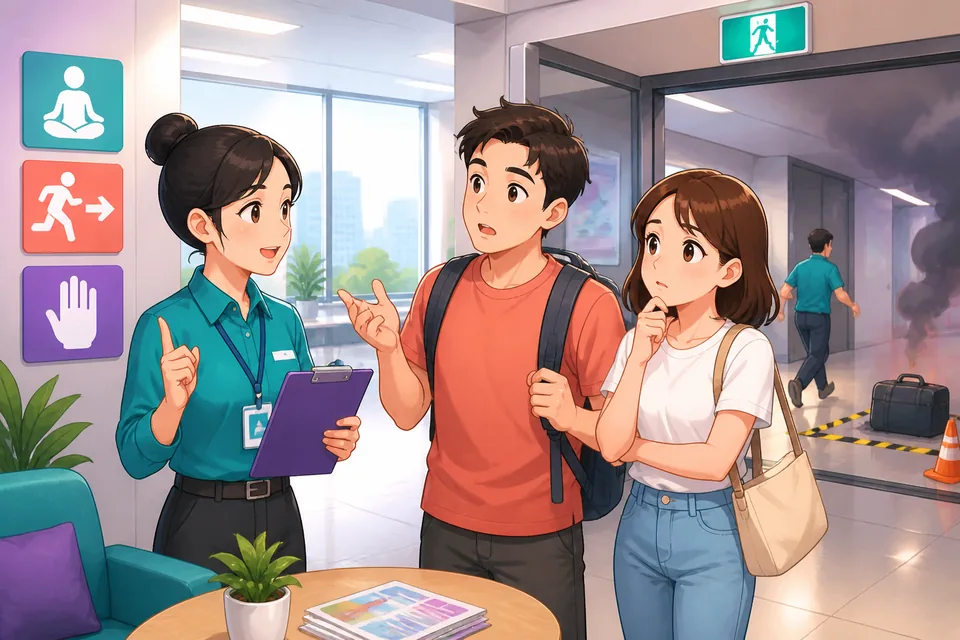
马上出去

Mǎshàng chūqù!

Get out now.

Meaning: Get out now!

When to use: Shout this to tell people to leave a dangerous place immediately (fire, gas, collapsing structure).

着火了!大家马上出去!

Zháohuǒ le! Dàjiā mǎshàng chūqù!

It's on fire! Everyone get out now!
听到爆裂声,保安喊:马上出去!

Tīngdào bàoliè shēng, bǎo'ān hǎn: Mǎshàng chūqù!

Hearing a bang, the guard shouted: Get out now!

别碰它

Bié pèng tā.

Don't touch it.

Meaning: Don't touch it.

When to use: Warn others not to touch a suspicious or dangerous object (broken glass, exposed wire).

地上有破碎的玻璃,别碰它。

Dìshàng yǒu pòsuì de bōli, bié pèng tā.

There is broken glass on the ground; don't touch it.
那可能是电线,别碰它!

Nà kěnéng shì diànxiàn, bié pèng tā!

That might be an electric wire—don't touch it!

出事故了

Chū shìgù le。抄送无意义? Wait JSON string? Need pinyin no Chinese punctuation? I accidentally only one item? Need complete. Also no commentary. Start over final. Ensure valid. Need no weird. Use response schema. But final currently includes invalid? Need final channel only one content. Let's craft full. Need pinyin no Chinese period maybe with period. JSON string can contain tone. Also final format wrapper. Ensure valid.

There was an accident.

Meaning: There was an accident.

When to use: Brief spoken report when you want to tell someone an accident happened nearby (car crash, fall).

路口出事故了,车很多都停下了。

Lùkǒu chū shìgù le, chē hěn duō dōu tíng xià le.

There was an accident at the intersection; many cars stopped.
他打电话说:出事故了,有人受伤。

Tā dǎ diànhuà shuō: Chū shìgù le, yǒurén shòushāng.

He called and said: There was an accident; someone is injured.

我的___动不了了。

Wǒ de ___ dòng bùliǎo le。

I can't move my ___.

Meaning: I can't move my ___.

When to use: Say this when you or someone cannot move a specific body part after injury; fill the blank with a body part (腿, 胳膊, 手).

Tip: Some learners say “不能动” — it's understandable, but 在急救语境用“动不了”更口语、直接。

我的腿动不了了。

Wǒ de tuǐ dòng bùliǎo le.

I can't move my leg.
她哭着说:我的胳膊动不了了!

Tā kūzhe shuō: Wǒ de gēbo dòng bùliǎo le!

She cried: I can't move my arm!

我需要救护车

Wǒ xūyào jiùhùchē。

I need an ambulance.

Meaning: I need an ambulance.

When to use: Use this to request urgent medical transport; also say 请叫救护车 to ask someone to call one.

有人晕倒了,我说:我需要救护车。

Yǒurén yūndǎo le, wǒ shuō: Wǒ xūyào jiùhùchē.

Someone fainted; I said: I need an ambulance.
手机没信号,他大喊:我需要救护车!

Shǒujī méi xìnhào, tā dà hǎn: Wǒ xūyào jiùhùchē!

No phone signal; he shouted: I need an ambulance!

这儿疼

Zhèr téng.

It hurts here.

Meaning: It hurts here.

When to use: Point to a place on your body and say this to show where the pain or injury is.

他指着肚子说:这儿疼。

Tā zhǐzhe dùzi shuō: Zhèr téng.

He pointed at his stomach and said: It hurts here.
护士问哪里疼,我说:这儿疼,不能站。

Hùshi wèn nǎlǐ téng, wǒ shuō: Zhèr téng, bùnéng zhàn.

The nurse asked where it hurts; I said: It hurts here, I can't stand.

我在流血

Wǒ zài liúxuè.

I'm bleeding.

Meaning: I'm bleeding.

When to use: Say this when you are actively losing blood and need immediate help.

手被玻璃割到,我在流血,需要帮助。

Shǒu bèi bōli gē dào, wǒ zài liúxuè, xūyào bāngzhù.

My hand was cut by glass; I'm bleeding and need help.
别动,他在流血,要按住伤口。

Bié dòng, tā zài liúxuè, yào ànzhù shāngkǒu.

Don't move; he's bleeding. Press the wound.

我的___不见了。

Wǒ de ___ bú jiàn le.

My ___ is missing.

Meaning: My ___ is missing.

When to use: Report a missing person or item; fill the blank (钱包, 孩子, 手机). For a missing child, '我的孩子不见了' is natural and urgent.

Tip: Learners sometimes say 丢了 (diū le) — that's okay; 不见了 is more neutral and commonly used in urgent calls.

我在商场找不到他,我喊:我的孩子不见了!

Wǒ zài shāngchǎng zhǎo bù dào tā, wǒ hǎn: Wǒ de háizi bú jiàn le!

I can't find him in the mall; I shouted: My child is missing!
地铁站里我发现:我的钱包不见了。

Dìtiě zhàn lǐ wǒ fāxiàn: Wǒ de qiánbāo bú jiàn le.

At the subway station I found: My wallet is missing.

2. Conversational Listening Practice

Hear phrases in a real mini-conversation.

Street accident: two people respond to an injured bystander.

Close-up of a person pointing to a bleeding wound while another person calls for help; the image matches the lesson's emergency conversation.

Who says they are bleeding?

Portrait of Anna in a Simplified Chinese lesson dialogue

Anna

出事故了

Chū shìgù le.

There was an accident.

Portrait of David in a Simplified Chinese lesson dialogue

David

别慌

Bié huāng.

Stay calm.

Portrait of Anna in a Simplified Chinese lesson dialogue

Anna

我在流血,这儿疼。

Wǒ zài liúxuè, zhèr téng.

I'm bleeding; it hurts here.

Portrait of David in a Simplified Chinese lesson dialogue

David

我需要救护车

Wǒ xūyào jiùhùchē.

I need an ambulance.

Portrait of Anna in a Simplified Chinese lesson dialogue

Anna

我的腿动不了了!

Wǒ de tuǐ dòng bùliǎo le!

I can't move my leg!

Portrait of David in a Simplified Chinese lesson dialogue

David

别碰它,马上出去!

Bié pèng tā, mǎshàng chūqù!

Don't touch it; get out now!

3. Guided Practice

Quizzes and matching to lock in meaning.

Which phrase means 'Get out now!'?

If someone points to their arm and says '这儿疼。', what are they telling you?

Which phrase would you say if you or someone is actively losing blood?

A short report of 'There was an accident' is:

In the hospital, the injured person pressing the wound says: I'm bleeding.

医院里,伤者按着伤口对护士说:___。

In the hallway there is heavy smoke; the teacher shouts to students: Get out now!, hurry and leave!

楼道里闻到浓烟,老师紧张地对学生们喊:___,快离开!

In the crowd a mother anxiously says: My child is missing, please help me!

在人群中,一位妈妈慌张地说:___,请帮帮我!

Match the core phrases

Match the extra phrases

4. Speaking Practice

Say phrases yourself (mic/recording).

Recording stays on your device only. Check speech uses your browser's speech tools when available.

Say this phrase out loud:

别慌

Bié huāng.

Stay calm.

Say this phrase out loud:

马上出去

Mǎshàng chūqù!

Get out now!

Say this phrase out loud:

别碰它

Bié pèng tā.

Don't touch it.

Say this phrase out loud:

出事故了

Chū shìgù le.

There was an accident.

Say this phrase out loud:

我的___动不了了。

Wǒ de ___ dòng bùliǎo le.

I can't move my ___.

Say this phrase out loud:

我需要救护车

Wǒ xūyào jiùhùchē.

I need an ambulance.

Say this phrase out loud:

这儿疼

Zhèr téng.

It hurts here.

Say this phrase out loud:

我在流血

Wǒ zài liúxuè.

I'm bleeding.

Say this phrase out loud:

我的___不见了。

Wǒ de ___ bú jiàn le.

My ___ is missing.