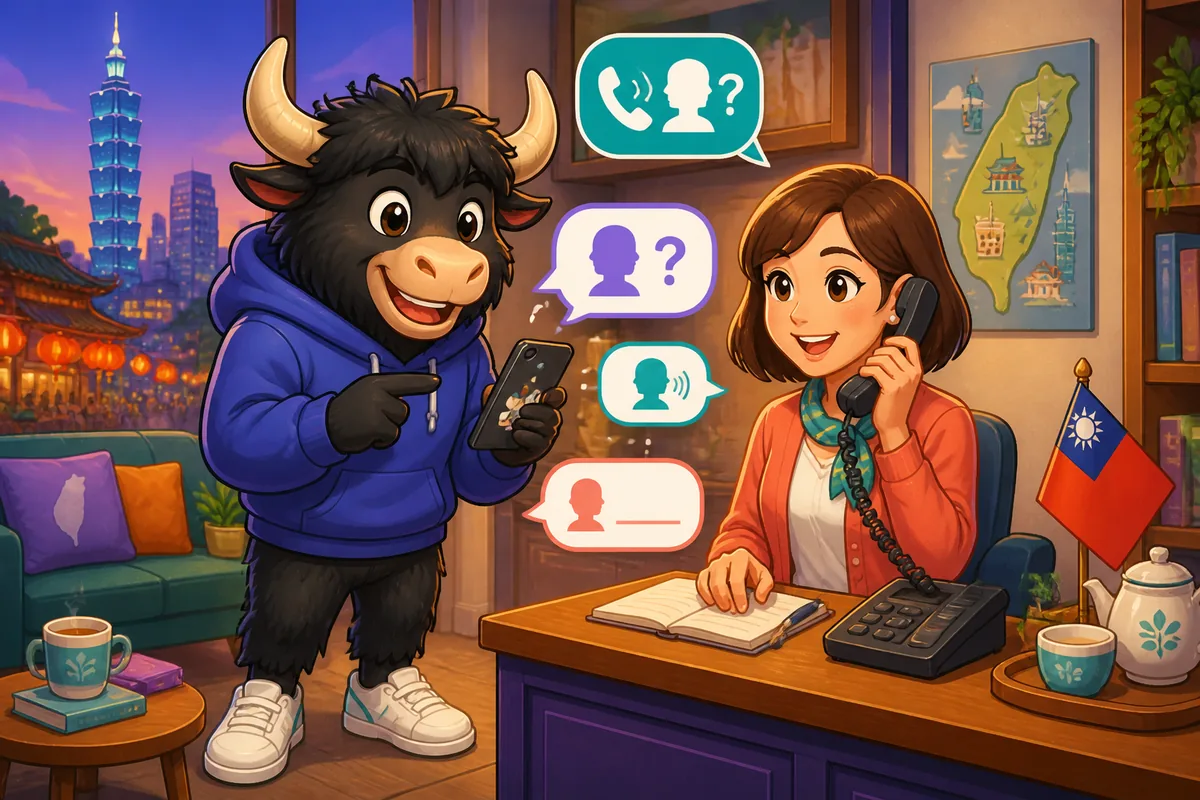
Ready to handle phone calls in Chinese? This lesson helps you leave messages, ask for people, and be polite on the phone. Have fun — phone practice is a great way to sound natural fast!
Level A2: In Lesson 134 you'll practice common phone phrases for introductions, checking if someone is available, leaving messages, and asking for callbacks. This CEFR-aligned pack focuses on short, useful frames like 我能和___说话吗? and 需要我帮您留言吗? — listen, repeat, and use them in a short conversation.
After this lesson you'll be able to:
At A2 you'll learn to identify yourself on the phone (我是___。) and ask to speak with someone (我能和___说话吗?).
Leave a clear message (我想留个言。 / 留言是___。) and offer to take a message (需要我帮您留言吗?).
Ask someone to call back (能请___给我回个电话吗?) and handle wrong numbers politely (不好意思,我打错了。).
Ready? Let's go!
When you tap play on phrases, we track your progress through this lesson.
1. Reading + Listening Practice
Hear core phrases, repeat aloud.
我能和___说话吗?
Wǒ néng hé ___ shuōhuà ma?
Can I speak to ___?
Meaning: Can I speak to ___?
When to use: Use this to ask if you can speak with someone who may be on the line or available to come to the phone.
Tip: Don't use this with '给' (给我) — learners sometimes say 我能给王经理说话吗? which sounds odd. Use 和 or 通话 instead.
Should I take a message for you? I can note the number and time.
能请___给我回个电话吗?
Néng qǐng ___ gěi wǒ huí ge diànhuà ma?
Could you ask ___ to call me back?
Meaning: Could you ask ___ to call me back?
When to use: Use to request that a message-taker asks someone to return your call later.
能请王经理给我回个电话吗?我有个问题要问他。
Néng qǐng Wáng jīnglǐ gěi wǒ huí ge diànhuà ma? Wǒ yǒu ge wèntí yào wèn tā.
Could you ask Manager Wang to call me back? I have a question for him.
如果她不在,能请她给我回个电话吗?谢谢!
Rúguǒ tā bù zài, néng qǐng tā gěi wǒ huí ge diànhuà ma? Xièxiè!
If she's not in, could you ask her to call me back? Thanks!
我的号码是___。
Wǒ de hàomǎ shì ___.
My number is ___.
Meaning: My number is ___.
When to use: Give your phone number when leaving a message or asking for a callback.
Tip: Don't forget to say '我的号码是...' rather than just reading digits — learners sometimes pause and lose the listener. You can also say 我的手机号是... for mobile numbers.
我的号码是138-0011-0022,请转告他给我回电话。
Wǒ de hàomǎ shì 138-0011-0022, qǐng zhuǎngào tā gěi wǒ huí diànhuà.
My number is 138-0011-0022, please tell him to call me back.
如果需要更多信息,我的号码是010-1234-5678。
Rúguǒ xūyào gèng duō xìnxī, wǒ de hàomǎ shì 010-1234-5678.
If you need more information, my number is 010-1234-5678.
不好意思,我打错了。
Bù hǎoyìsi, wǒ dǎcuò le.
Sorry, I have the wrong number.
Meaning: Sorry, I have the wrong number.
When to use: Say this briefly when you realise you've called the wrong person or dialed the wrong number.
不好意思,我打错了。谢谢,请再见。
Bù hǎoyìsi, wǒ dǎcuò le. Xièxiè, qǐng zàijiàn.
Sorry, I have the wrong number. Thanks, goodbye.
哦,不好意思,我打错了,打扰了。
Ó, bù hǎoyìsi, wǒ dǎcuò le, dǎrǎo le.
Oh, sorry I dialed the wrong number and bothered you.
我晚点再打过来。
Wǒ wǎndiǎn zài dǎ guòlái。
I'll call back later.
Meaning: I'll call back later.
When to use: Use this to politely end a call with the plan to try again later.