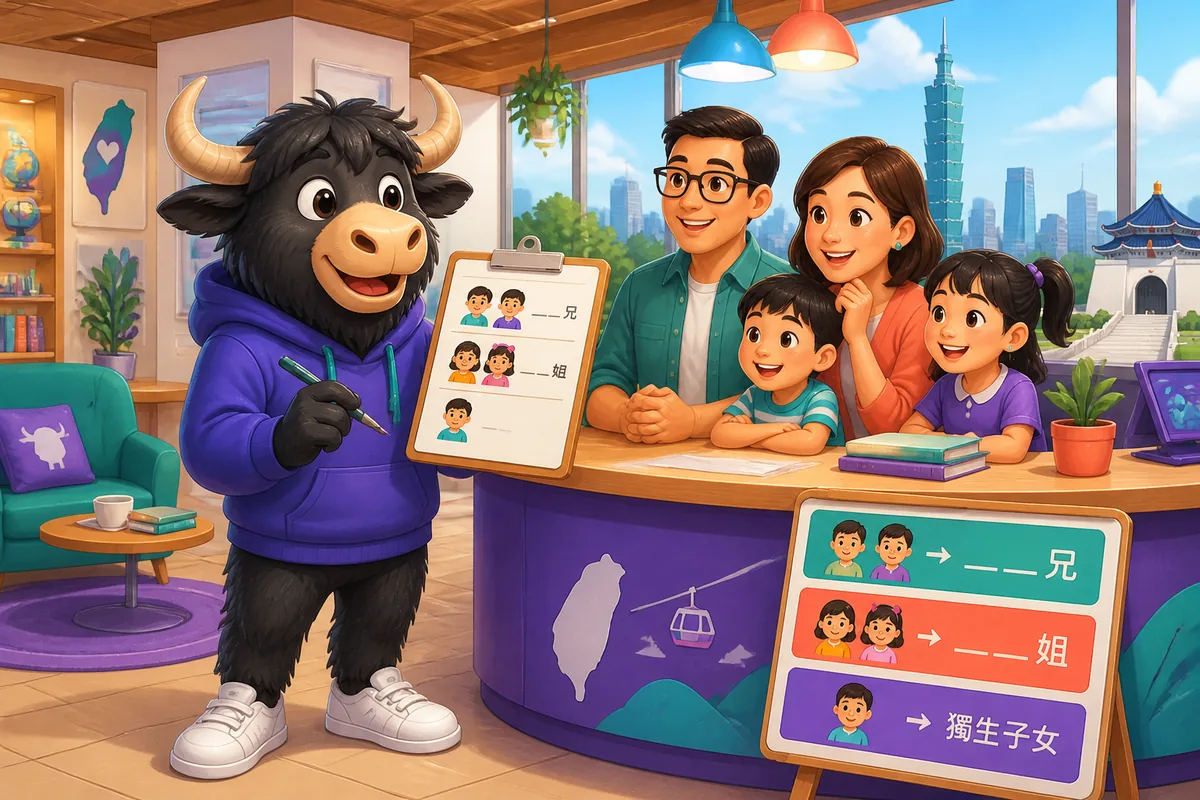
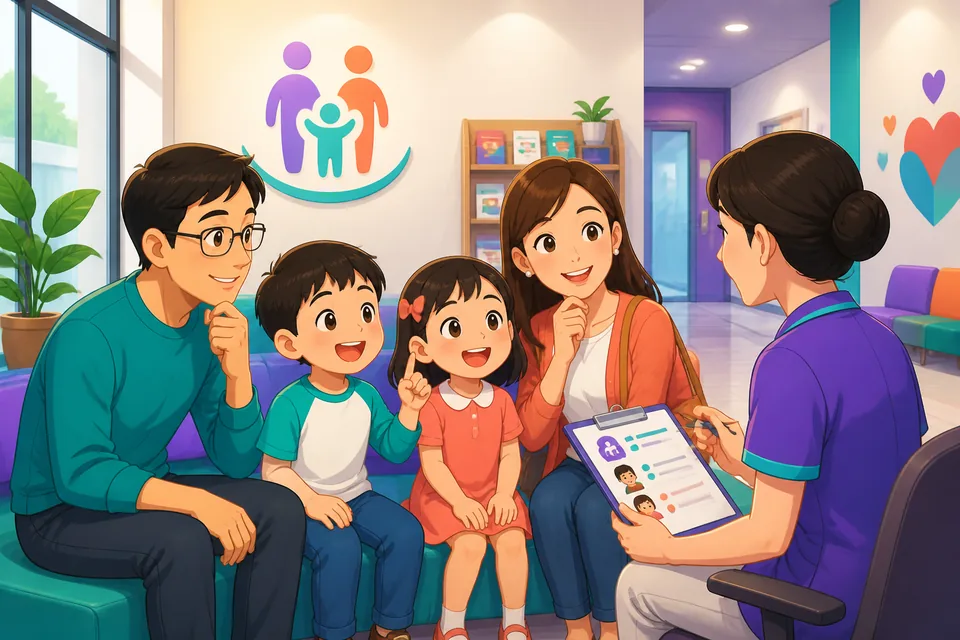
你有兄弟姐妹吗?
Nǐ yǒu xiōngdì jiěmèi ma?
Do you have any brothers or sisters?
Meaning: Do you have any brothers or sisters?
When to use: 自然、常用的问法;更礼貌可说“您有兄弟姐妹吗?”。
Examples ▼ 你有兄弟姐妹吗?我只有一个妹妹。
Nǐ yǒu xiōngdì jiěmèi ma? Wǒ zhǐ yǒu yí gè mèimei.
Do you have siblings? I only have one younger sister.
跟新朋友聊天时,可以先问:你有兄弟姐妹吗?
Gēn xīn péngyǒu liáotiān shí, kěyǐ xiān wèn: Nǐ yǒu xiōngdì jiěmèi ma?
When chatting with a new friend, you can first ask: Do you have siblings?
我有___个兄弟,___个姐妹。
Wǒ yǒu ___ ge xiōngdì, ___ ge jiěmèi.
I have ___ brothers and ___ sisters.
Meaning: I have ___ brothers and ___ sisters.
When to use: 如果要更具体,可分别说“哥哥、弟弟、姐姐、妹妹”。
Tip: 初学者常忘记加量词“个”,或数字的读法(两/二)。
Examples ▼ 我有两个兄弟, 一个姐妹。
Wǒ yǒu liǎng gè xiōngdì, yí gè jiěmèi.
I have two brothers and one sister.
他说:我有三个兄弟, 没有姐妹。
Tā shuō: Wǒ yǒu sān gè xiōngdì, méiyǒu jiěmèi.
He said: I have three brothers and no sisters.
我是独生子女
Wǒ shì dúshēng zǐnǚ.
I'm an only child.
Meaning: I'm an only child.
When to use: 性别不明确时用“独生子女”;男性可说“独生子”,女性可说“独生女”。
Tip: 学生有时只说“我是独生”,需完整说“我是独生子女”。
Examples ▼ 我小时候常被问:你有兄弟姐妹吗?我回答:我是独生子女。
Wǒ xiǎoshíhòu cháng bèi wèn: Nǐ yǒu xiōngdì jiěmèi ma? Wǒ huídá: Wǒ shì dúshēng zǐnǚ.
When I was little I was often asked: Do you have siblings? I answered: I'm an only child.
如果你不想说性别,就说:我是独生子女。
Rúguǒ nǐ bù xiǎng shuō xìngbié, jiù shuō: Wǒ shì dúshēng zǐnǚ.
If you don't want to state gender, say: I'm an only child.
他是我的___。
Tā shì wǒ de ___.
He is my ___.
Meaning: He is my ___.
When to use: 用于介绍男性或男孩与自己的关系。
Examples ▼ 他是我的哥哥,不是我的爸爸。
Tā shì wǒ de gēge, bù shì wǒ de bàba.
He is my older brother, not my dad.
那个人是我的丈夫,他是我的丈夫,我们说:他是我的丈夫。
Nà gè rén shì wǒ de zhàngfū, tā shì wǒ de zhàngfū, wǒmen shuō: Tā shì wǒ de zhàngfū.
That person is my husband; we say: He is my husband.
她是我的___。
Tā shì wǒ de ___.
She is my ___.
Meaning: She is my ___.
When to use: 用于介绍女性或女孩与自己的关系。
Examples ▼ 她是我的妹妹,今天来我们家吃饭。
Tā shì wǒ de mèimei, jīntiān lái wǒmen jiā chīfàn.
She is my younger sister; she came to our house for dinner today.
这是李老师,她是我的同事:她是我的同事。
Zhè shì Lǐ lǎoshī, tā shì wǒ de tóngshì: Tā shì wǒ de tóngshì.
This is Teacher Li; she is my colleague.
你跟谁一起住
Nǐ gēn shéi yìqǐ zhù?
Who do you live with?
Meaning: Who do you live with?
When to use: 日常口语常用;更礼貌可说“您跟谁一起住?”。
Examples ▼ 搬家时邻居会问:你跟谁一起住?
Bānjiā shí línjū huì wèn: Nǐ gēn shéi yìqǐ zhù?
When you move, neighbors may ask: Who do you live with?
你跟谁一起住?我跟我的室友住。
Nǐ gēn shéi yìqǐ zhù? Wǒ gēn wǒ de shìyǒu zhù.
Who do you live with? I live with my roommate.
我和我的___住在一起。
Wǒ hé wǒ de ___ zhù zài yìqǐ.
I live with my ___.
Meaning: I live with my ___.
When to use: 适合说明同住的家人或室友。
Examples ▼ 我和我的爸妈住在一起,家里很热闹。
Wǒ hé wǒ de bà mā zhù zài yìqǐ, jiālǐ hěn rènao.
I live with my parents; the house is lively.
我和我的室友住在一起,一个月分摊房租。
Wǒ hé wǒ de shìyǒu zhù zài yìqǐ, yí gè yuè fēntān fángzū.
I live with my roommate and we split rent each month.
你有孩子吗
Nǐ yǒu háizi ma?
Do you have children?
Meaning: Do you have children?
When to use: Mainland Mandarin;更礼貌可说“您有孩子吗?”。
Examples ▼ 和朋友聊天:你有孩子吗?朋友说:两个, 都上学了。
Hé péngyǒu liáotiān: Nǐ yǒu háizi ma? Péngyǒu shuō: Liǎng gè, dōu shàngxué le.
Talking with a friend: Do you have children? Friend says: Two, both go to school.
医生问:您有孩子吗?以便了解病史。
Yīshēng wèn: Nín yǒu háizi ma? Yǐbiàn liǎojiě bìngshǐ.
The doctor asks: Do you have children? To understand medical history.
我结婚了
Wǒ jiéhūn le.
I'm married.
Meaning: I'm married.
When to use: Mainland Mandarin;常用于说明婚姻状态。
Examples ▼ 有人问你的婚姻状况时,你可以说:我结婚了。
Yǒurén wèn nǐ de hūnyīn zhuàngkuàng shí, nǐ kěyǐ shuō: Wǒ jiéhūn le.
When someone asks about your marital status, you can say: I'm married.
我结婚了,所以晚饭常和另一半一起做。
Wǒ jiéhūn le, suǒyǐ wǎnfàn cháng hé lìng yí bàn yìqǐ zuò.
I'm married, so I often cook dinner with my partner.
你家有几口人
Nǐ jiā yǒu jǐ kǒu rén?
How many people are in your family?
Meaning: How many people are in your family?
When to use: “口”是问家庭人数的常用说法。礼貌可说“您家有几口人?”
Examples ▼ 问新朋友:你家有几口人?他们回答:五口人。
Wèn xīn péngyǒu: Nǐ jiā yǒu jǐ kǒu rén? Tāmen huídá: Wǔ kǒu rén.
Ask a new friend: How many people in your family? They answer: Five.
我家有三口人:父母和我。
Wǒ jiā yǒu sān kǒu rén: Fùmǔ hé wǒ.
There are three people in my family: my parents and me.
我家有___口人。
Wǒ jiā yǒu ___ kǒu rén.
There are ___ people in my family.
Meaning: There are ___ people in my family.
When to use: ___填数字,比如“三”“四”。
Examples ▼ 我家有四口人:我、爸爸、妈妈和奶奶。
Wǒ jiā yǒu sì kǒu rén: Wǒ, bàba, māmā hé nǎinai.
There are four people in my family: me, dad, mom, and grandma.
如果你说:我家有两口人,就意味着家里只有两个人。
Rúguǒ nǐ shuō: Wǒ jiā yǒu liǎng kǒu rén, jiù yìwèi zhe jiālǐ zhǐ yǒu liǎng gè rén.
If you say: There are two people in my family, it means only two people at home.
我家人___
Wǒ jiā rén ___.
My family is ___.
Meaning: My family is ___.
When to use: ___可填“都很忙”“很亲”“不多”。说家庭人数时更常用“我家有___口人”。
Examples ▼ 我家人都很忙,但我们周末常见面。
Wǒ jiā rén dōu hěn máng, dàn wǒmen zhōumò cháng jiànmiàn.
My family members are all busy, but we often meet on weekends.
你可以说:我家人很亲,意思是大家关系很好。
Nǐ kěyǐ shuō: Wǒ jiā rén hěn qīn, yìsi shì dàjiā guānxì hěn hǎo.
You can say: My family is close, meaning everyone has a good relationship.
我爸妈___
Wǒ bà mā ___.
My parents are ___.
Meaning: My parents are ___.
When to use: 适合说父母关系状态,比如“离婚了”“还在一起”。较正式可说“我的父母___”。
Examples ▼ 我爸妈还在一起,我们经常全家出游。
Wǒ bà mā hái zài yìqǐ, wǒmen jīngcháng quán jiā chūyóu.
My parents are still together; we often go on family trips.
他说:我爸妈离婚了,但我们保持联系。
Tā shuō: Wǒ bà mā líhūn le, dàn wǒmen bǎochí liánxì.
He said: My parents are divorced, but we stay in touch.
Which sentence means “I'm an only child.”? 我结婚了 你有兄弟姐妹吗? 我有两个兄弟,一个妹妹。 我是独生子女
How do you ask “Who do you live with?” in Chinese? 他是我的___。 你有孩子吗 你家有几口人 你跟谁一起住
Which sentence answers “How many people are in your family?” with “There are five people.” 我家人都很忙 我结婚了 我家有三口人 我家有五口人
Which is the right Chinese frame to introduce a woman as your relative? 她是我的___。 他是我的___。 我家有___口人。 你有孩子吗
I'm an only child. Anna: 我听说你没有兄弟姐妹,是吗?
David: ___
Anna: Wǒ tīngshuō nǐ méiyǒu xiōngdì jiěmèi, shì ma?
David: ___
我结婚了 我是独生子女 我家有三口人 我和我的室友住在一起。
I live with my parents. Anna: 你搬到新城市之后,谁和你一起住?
David: ___
Anna: Nǐ bān dào xīn chéngshì zhīhòu, shéi hé nǐ yìqǐ zhù?
David: ___
我有两个兄弟 我和我的爸妈住在一起。 我家人都很忙 我结婚了
There are three people in my family. Anna: 你家里有几个人?
David: ___
Anna: Nǐ jiā lǐ yǒu jǐ gè rén?
David: ___
你跟谁一起住 我家有三口人 她是我的姐姐 我没有兄弟姐妹。
你有兄弟姐妹吗? Nǐ yǒu xiōngdì jiěmèi ma? 我是独生子女 Wǒ shì dúshēng zǐnǚ. 他是我的___。 Tā shì wǒ de ___. 她是我的___。 Tā shì wǒ de ___. 你跟谁一起住 Nǐ gēn shéi yìqǐ zhù? 我和我的___住在一起。 Wǒ hé wǒ de ___ zhù zài yìqǐ. 你家有几口人 Nǐ jiā yǒu jǐ kǒu rén? 我家有___口人。 Wǒ jiā yǒu ___ kǒu rén. Do you have siblings? I'm an only child. He is my ___. She is my ___. Who do you live with? I live with my ___. How many people are in your family? There are ___ people in my family.
我结婚了 Wǒ jiéhūn le. 你有孩子吗 Nǐ yǒu háizi ma? 我家人都很忙 Wǒ jiā rén dōu hěn máng. 我爸妈还在一起。 Wǒ bà mā hái zài yìqǐ. 我有两个兄弟, 一个姐妹。 Wǒ yǒu liǎng gè xiōngdì, yí gè jiěmèi. 她是我的妹妹 Tā shì wǒ de mèimei. I'm married. Do you have children? My family members are all busy. My parents are still together. I have two brothers and one sister. She is my younger sister.
Recording stays on your device only. Check speech uses your browser's speech tools when available.
Say this phrase out loud:
你有兄弟姐妹吗?
Nǐ yǒu xiōngdì jiěmèi ma?
Do you have any brothers or sisters?
Check speech
Record Play back
Say this phrase out loud:
我有___个兄弟,___个姐妹。
Wǒ yǒu ___ ge xiōngdì, ___ ge jiěmèi.
I have ___ brothers and ___ sisters.
Check speech
Record Play back
Say this phrase out loud:
我是独生子女
Wǒ shì dúshēng zǐnǚ.
I'm an only child.
Check speech
Record Play back
Say this phrase out loud:
他是我的___。
Tā shì wǒ de ___.
He is my ___.
Check speech
Record Play back
Say this phrase out loud:
她是我的___。
Tā shì wǒ de ___.
She is my ___.
Check speech
Record Play back
Say this phrase out loud:
你跟谁一起住
Nǐ gēn shéi yìqǐ zhù?
Who do you live with?
Check speech
Record Play back
Say this phrase out loud:
我和我的___住在一起。
Wǒ hé wǒ de ___ zhù zài yìqǐ.
I live with my ___.
Check speech
Record Play back
Say this phrase out loud:
你有孩子吗
Nǐ yǒu háizi ma?
Do you have children?
Check speech
Record Play back
Say this phrase out loud:
我结婚了
Wǒ jiéhūn le.
I'm married.
Check speech
Record Play back
Say this phrase out loud:
你家有几口人
Nǐ jiā yǒu jǐ kǒu rén?
How many people are in your family?
Check speech
Record Play back
Say this phrase out loud:
我家有___口人。
Wǒ jiā yǒu ___ kǒu rén.
There are ___ people in my family.
Check speech
Record Play back
Say this phrase out loud:
我家人___
Wǒ jiā rén ___.
My family is ___.
Check speech
Record Play back
Say this phrase out loud:
我爸妈___
Wǒ bà mā ___.
My parents are ___.
Check speech
Record Play back