Simplified Chinese - Greetings Openings

Lesson 2 of 156

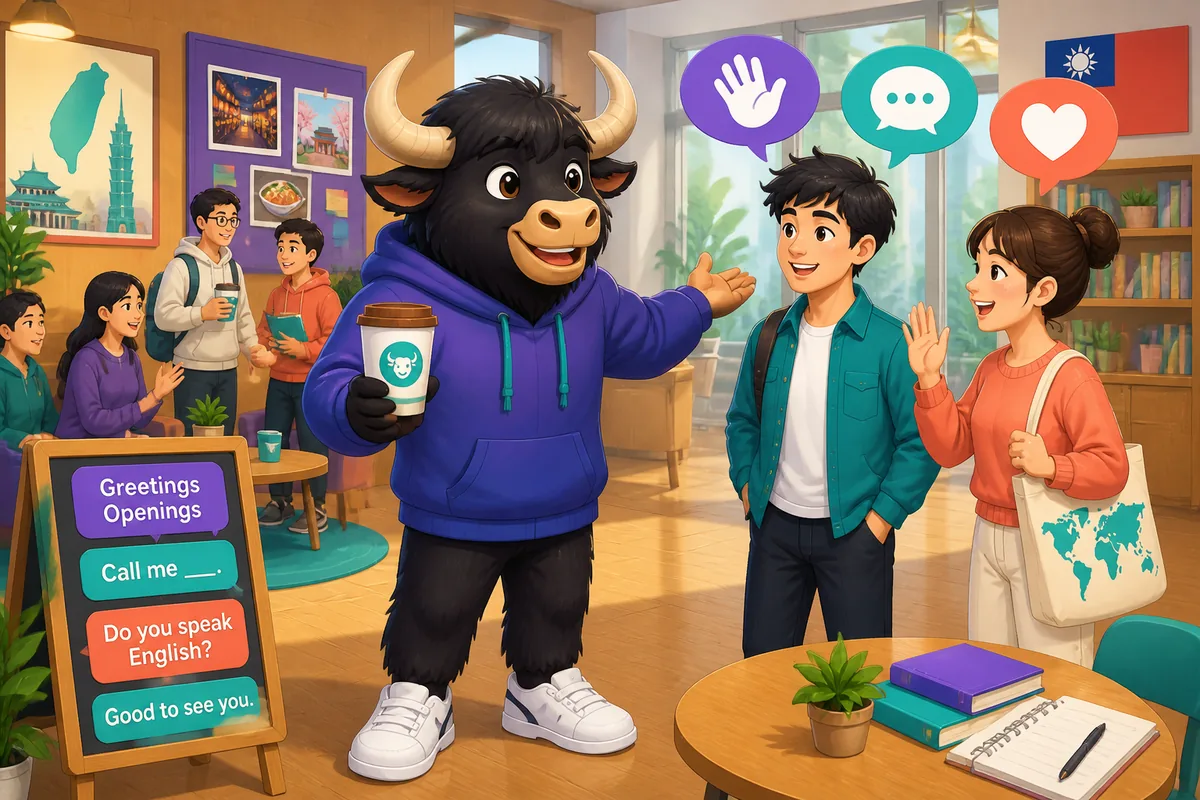
Two people greeting each other in Simplified Chinese, showing phrases like 嗨 and 见到你真高兴 — a friendly opening scene.

Goal: Simple ways to start a conversation

Free Simplified Chinese lessons with guided practice, audio, and speaking support.

Hi — welcome back! This short Lesson 2 keeps things light: hear, repeat, and use useful opening lines. Have fun practicing aloud.

Level A1: In this lesson you'll learn friendly opening phrases for first contact — casual greetings, asking if someone speaks English, saying what to call you, and checking identity. We'll listen to short examples and practice with quick quizzes so these phrases feel natural when you meet someone.

After this lesson you'll be able to:

  • Recognize and say simple greetings like 嗨 (Hāi) and 见到你真高兴 (Jiàn dào nǐ zhēn gāoxìng).
  • Ask and answer a basic language question: 你会说英语吗? (Nǐ huì shuō Yīngyǔ ma?).
  • Tell someone how to address you: 叫我___吧。 (Jiào wǒ ___ ba.) and confirm identity: 请问你是___吗? (Qǐngwèn nǐ shì ___ ma?).
  • Return a question with 你呢? (Nǐ ne?) and use these openings in short spoken exchanges.
A small airport meeting: a traveler asks 你会说英语吗? in Simplified Chinese while a local responds — bright, practical travel imagery.

Ready? Let's go!

When you tap play on phrases, we track your progress through this lesson.

1. Reading + Listening Practice

Hear core phrases, repeat aloud.

叫我___吧

Jiào wǒ ___ ba.

Call me ___.

Meaning: Call me ___.

When to use: Use this to tell someone the name you prefer — casual but natural.

Tip: Beginners sometimes say 我叫... (Wǒ jiào...) in places where 叫我...吧 feels friendlier; both work but 叫我...吧 is more casual and conversational.

你可以叫我李梅吧。

Nǐ kěyǐ jiào wǒ Lǐ Méi ba.

You can call me Li Mei.
叫我安娜吧,我比较喜欢这个名字。

Jiào wǒ Ān nà ba, wǒ bǐjiào xǐhuān zhège míngzi.

Call me Anna — I prefer that name.

你会说英语吗

Nǐ huì shuō Yīngyǔ ma?

Do you speak English?

Meaning: Do you speak English?

When to use: Ask this early when you need to find a shared language; useful in travel or service settings.

Tip: Some learners drop 会 (huì) and say 你说英语吗? — it's understandable, but 你会说英语吗? is the most natural way to ask ability.

你会说英语吗?我想用英语问路。

Nǐ huì shuō Yīngyǔ ma? Wǒ xiǎng yòng Yīngyǔ wèn lù.

Do you speak English? I want to ask for directions in English.
请问你会说英语吗?我需要一些帮助。

Qǐngwèn nǐ huì shuō Yīngyǔ ma? Wǒ xūyào yìxiē bāngzhù.

Do you speak English? I need some help.

见到你真高兴

Jiàn dào nǐ zhēn gāoxìng.

Good to see you.

Meaning: Good to see you.

When to use: Say this when you meet someone you know or when you're happy to meet them.

见到你真高兴,我好久没见你了。

Jiàn dào nǐ zhēn gāoxìng, wǒ hǎojiǔ méi jiàn nǐ le.

Good to see you — I haven't seen you in a long time.
见到你真高兴,今天有时间一起喝咖啡吗?

Jiàn dào nǐ zhēn gāoxìng, jīntiān yǒu shíjiān yìqǐ hē kāfēi ma?

Good to see you — do you have time for coffee today?

你呢

Nǐ ne?

And you?

Meaning: And you?

When to use: Use this to quickly return a question or interest back to the other person.

我很好,你呢

Wǒ hěn hǎo, nǐ ne?

I'm good — and you?
我在学中文,你呢?

Wǒ zài xué Zhōngwén, nǐ ne?

I'm studying Chinese — and you?

Hāi.

Hey.

Meaning: Hey.

When to use: A casual, friendly opening used among peers or in informal settings.

嗨,你好!今天怎么样?

Hāi, nǐ hǎo! Jīntiān zěnmeyàng?

Hey, hi! How's today?
嗨,早上好,咖啡要一杯吗?

Hāi, zǎoshang hǎo, kāfēi yào yì bēi ma?

Hey, good morning — want a coffee?

请问你是___吗?

Qǐngwèn nǐ shì ___ ma?

Are you ___?

Meaning: Are you ___?

When to use: Politely check identity on the phone or when confirming a person's name or role.

请问你是王先生吗?

Qǐngwèn nǐ shì Wáng xiānsheng ma?

Excuse me, are you Mr. Wang?
请问你是这位老师吗?我想问一些问题。

Qǐngwèn nǐ shì zhè wèi lǎoshī ma? Wǒ xiǎng wèn yìxiē wèntí.

Excuse me, are you this teacher? I have some questions.

2. Conversational Listening Practice

Hear phrases in a real mini-conversation.

Meeting at a café

Anna and David smiling and exchanging short Chinese openings like 叫我安娜吧 and 你呢? in a casual café meeting.

Who asks if the other person speaks English?

Portrait of Anna in a Simplified Chinese lesson dialogue

Anna

Hāi.

Hey.

Portrait of David in a Simplified Chinese lesson dialogue

David

嗨,见到你真高兴。

Hāi, jiàn dào nǐ zhēn gāoxìng.

Hey — good to see you.

Portrait of Anna in a Simplified Chinese lesson dialogue

Anna

你会说英语吗

Nǐ huì shuō Yīngyǔ ma?

Do you speak English?

Portrait of David in a Simplified Chinese lesson dialogue

David

会一点。你呢

Huì yìdiǎn. Nǐ ne?

A little. And you?

Portrait of Anna in a Simplified Chinese lesson dialogue

Anna

叫我安娜吧

Jiào wǒ Ān nà ba.

Call me Anna.

Portrait of David in a Simplified Chinese lesson dialogue

David

很高兴认识你

Hěn gāoxìng rènshì nǐ.

Nice to meet you.

3. Guided Practice

Quizzes and matching to lock in meaning.

Which phrase means 'And you?'

Which phrase would you use to ask if someone speaks English?

If you meet a friend and are happy to see them, which phrase fits?

Which phrase is polite to use when confirming someone's identity on the phone?

At the airport, Anna asks, 'Do you speak English?'

在机场,Anna 对工作人员说:'___'。

When he sees an old friend, David says 'Good to see you.'

见到老朋友时,David 说:'___'。

Someone asks 'Do you like Chinese?' You can answer 'I do — and you?'

别人问你:'你喜欢中文吗?' 你可以回答:'我喜欢,你___?'。

Match the core phrases

Match the extra phrases

4. Speaking Practice

Say phrases yourself (mic/recording).

Recording stays on your device only. Check speech uses your browser's speech tools when available.

Say this phrase out loud:

叫我___吧

Jiào wǒ ___ ba.

Call me ___.

Say this phrase out loud:

你会说英语吗

Nǐ huì shuō Yīngyǔ ma?

Do you speak English?

Say this phrase out loud:

见到你真高兴

Jiàn dào nǐ zhēn gāoxìng.

Good to see you.

Say this phrase out loud:

你呢

Nǐ ne?

And you?

Say this phrase out loud:

Hāi.

Hey.

Say this phrase out loud:

请问你是___吗?

Qǐngwèn nǐ shì ___ ma?

Are you ___?