Simplified Chinese - Simple Yes-No Responses

Lesson 22 of 156

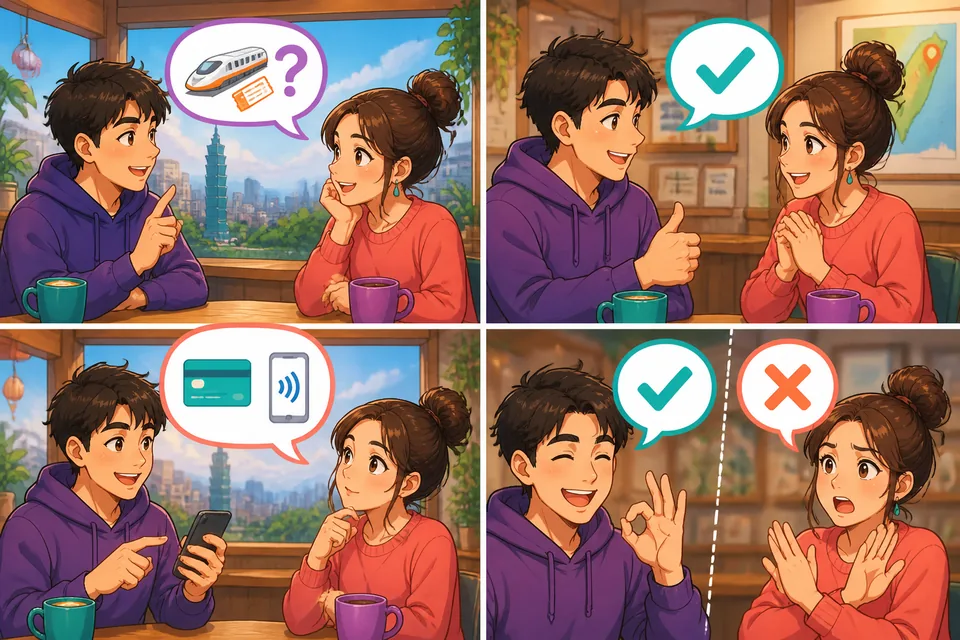
A friendly market scene with signs in Simplified Chinese showing yes/no responses; focus on short answers for quick interactions.

Goal: Short answers for everyday yes/no questions

Free Simplified Chinese lessons with guided practice, audio, and speaking support.

Nice to see you — welcome to Lesson 22! This short lesson focuses on quick, natural yes/no replies you can use right away. Listen, repeat, and use them in tiny conversations.

Level A1: In this lesson you'll learn seven common short responses like 可以 (Kěyǐ) and 没有 (Méiyǒu) that answer ability, existence, and simple facts. CEFR-aligned and focused: by the end you'll recognize and say these quick replies in real situations (tickets, availability, agreement). Lesson 22 keeps it practical and quick — no fluff.

After this lesson you'll be able to:

  • Level A1: Recognize and say seven short yes/no replies: 可以 (Kěyǐ), 不行 (Bù xíng), 是的 (Shì de), 不是 (Bú shì), 有 (Yǒu), 没有 (Méiyǒu), 嗯 (Ǹg).
  • Answer questions about ability, facts, and existence with natural short replies.
  • Use these replies in a short conversation about tickets and payment.
Two people talking at a ticket counter in Simplified Chinese about availability and payment, with quick replies like 可以 and 不行.

Ready? Let's go!

When you tap play on phrases, we track your progress through this lesson.

1. Reading + Listening Practice

Hear core phrases, repeat aloud.

可以

Kěyǐ.

Yes, I can.

Meaning: Yes, I can.

When to use: Use 可以 (Kěyǐ) as a short answer when something is allowed or possible (permission, possibility, or willingness).

Tip: Don't confuse 可以 with 会 — 会 often refers to learned skills, while 可以 talks about permission or possibility.

现在可以进来吗?

Xiànzài kěyǐ jìnlái ma?

Can I come in now?
这件衣服可以退吗?

Zhè jiàn yīfú kěyǐ tuì ma?

Can this shirt be returned?

不行

Bù xíng.

No, I can't.

Meaning: No, I can't.

When to use: Use 不行 (Bù xíng) to say something is not possible or allowed in spoken answers.

Tip: Learners sometimes say 不可以 — that's also okay, but 不行 is very natural for 'not possible' in spoken replies.

抱歉,不能改签,今天不行。

Bàoqiàn, bùnéng gǎiqiān, jīntiān bù xíng.

Sorry, you can't change it — not possible today.
这个功能在手机上不行。

Zhège gōngnéng zài shǒujī shàng bù xíng.

This feature doesn't work on the phone.

是的

Shì de.

Yes, it is.

Meaning: Yes, it is.

When to use: Use 是的 (Shì de) to affirm a fact or situation — a general 'yes' to questions with 是.
这是你的包吗?是的。

Zhè shì nǐ de bāo ma? Shì de.

Is this your bag? Yes, it is.
电影票还在吗?是的,我有两张。

Diànyǐng piào hái zài ma? Shì de, wǒ yǒu liǎng zhāng.

Are there still movie tickets? Yes, I have two.

不是

Bú shì.

No, it isn't.

Meaning: No, it isn't.

When to use: Use 不是 (Bú shì) to give a short negative answer to questions that use 是.

这是新款吗?不是。

Zhè shì xīnkuǎn ma? Bú shì.

Is this a new model? No, it's not.
他是司机吗?不是,他是导游。

Tā shì sījī ma? Bú shì, tā shì dǎoyóu.

Is he the driver? No, he's a guide.

Yǒu.

Yes, there is.

Meaning: Yes, there is.

When to use: Use 有 (Yǒu) for short affirmative answers to existence questions (有没有…?).

出租车还有吗?有。

Chūzūchē hái yǒu ma? Yǒu.

Are there taxis left? Yes, there are.
包里有钥匙吗?有,在最下面。

Bāo lǐ yǒu yàoshi ma? Yǒu, zài zuì xiàmiàn.

Is there a key in the bag? Yes, at the bottom.

没有

Méiyǒu.

No, there isn't.

Meaning: No, there isn't.

When to use: Use 没有 (Méiyǒu) to say something does not exist or is not available in short answers.

这家店有咖啡吗?没有。

Zhè jiā diàn yǒu kāfēi ma? Méiyǒu.

Does this shop have coffee? No, it doesn't.
票已经卖完了吗?没有,还可以买。

Piào yǐjīng mài wán le ma? Méiyǒu, hái kěyǐ mǎi.

Are tickets sold out? No, you can still buy them.

Ǹg.

Yeah.

Meaning: Yeah.

When to use: Use 嗯 (Ǹg) as a casual, quick affirmative — like 'yeah' or 'uh-huh' in conversation.

Tip: Because it's casual, learners sometimes overuse 嗯 in formal situations — use it with friends or informal settings.

A:我们走吧。B:嗯。

A: Wǒmen zǒu ba. B: Ǹg.

A: Let's go. B: Yeah.
你明天来吗?嗯,我会来的。

Nǐ míngtiān lái ma? Ǹg, wǒ huì lái de.

Are you coming tomorrow? Yeah, I'll come.

2. Conversational Listening Practice

Hear phrases in a real mini-conversation.

Buying a ticket and payment method

Close-up of Anna and David at a hotel/ticket desk using simple yes/no phrases in Simplified Chinese during a short conversation.

What are Anna and David talking about?

Portrait of Anna in a Simplified Chinese lesson dialogue

Anna

门票还有吗

Ménpiào hái yǒu ma?

Are there tickets left?

Portrait of David in a Simplified Chinese lesson dialogue

David

Yǒu.

Yes, there are.

Portrait of Anna in a Simplified Chinese lesson dialogue

Anna

现在买可以吗

Xiànzài mǎi kěyǐ ma?

Can I buy them now?

Portrait of David in a Simplified Chinese lesson dialogue

David

可以

Kěyǐ.

Yes, you can.

Portrait of Anna in a Simplified Chinese lesson dialogue

Anna

可以用信用卡吗?

Kěyǐ yòng xìnyòngkǎ ma?

Can I use a credit card?

Portrait of David in a Simplified Chinese lesson dialogue

David

不行

Bù xíng.

No, you can't.

Portrait of Anna in a Simplified Chinese lesson dialogue

Anna

那我付现金,可以吗?

Nà wǒ fù xiànjīn, kěyǐ ma?

Then I'll pay cash, is that okay?

Portrait of David in a Simplified Chinese lesson dialogue

David

是的

Shì de.

Yes, that's fine.

Portrait of Anna in a Simplified Chinese lesson dialogue

Anna

嗯,谢谢

Ǹg, xièxie!

Yeah, thanks!

3. Guided Practice

Quizzes and matching to lock in meaning.

If someone asks '现在可以进来吗?' and you want to say 'Yes, you may', which short reply fits best?

Which reply answers the question '桌子上有水吗?' if there is water on the table?

If someone asks '你是老师吗?' and the answer is 'No,' which short reply is most natural?

In a casual chat, how would you respond to '我们出发吧' (Let's go) with a relaxed 'yeah'?

Yes, there is; it's next to the sink.

厕所里有纸吗?___,在洗手台旁边。

No, you can't; you didn't bring the receipt.

这个包可以退吗?店员说:___,发票没带。

Yes, there are rooms; you can book now.

酒店前台问:房间还有空吗?答:___,你可以现在预订。

Match the core phrases

Match the extra phrases

4. Speaking Practice

Say phrases yourself (mic/recording).

Recording stays on your device only. Check speech uses your browser's speech tools when available.

Say this phrase out loud:

可以

Kěyǐ.

Yes, I can.

Say this phrase out loud:

不行

Bù xíng.

No, I can't.

Say this phrase out loud:

是的

Shì de.

Yes, it is.

Say this phrase out loud:

不是

Bú shì.

No, it isn't.

Say this phrase out loud:

Yǒu.

Yes, there is.

Say this phrase out loud:

没有

Méiyǒu.

No, there isn't.

Say this phrase out loud:

Ǹg.

Yeah.