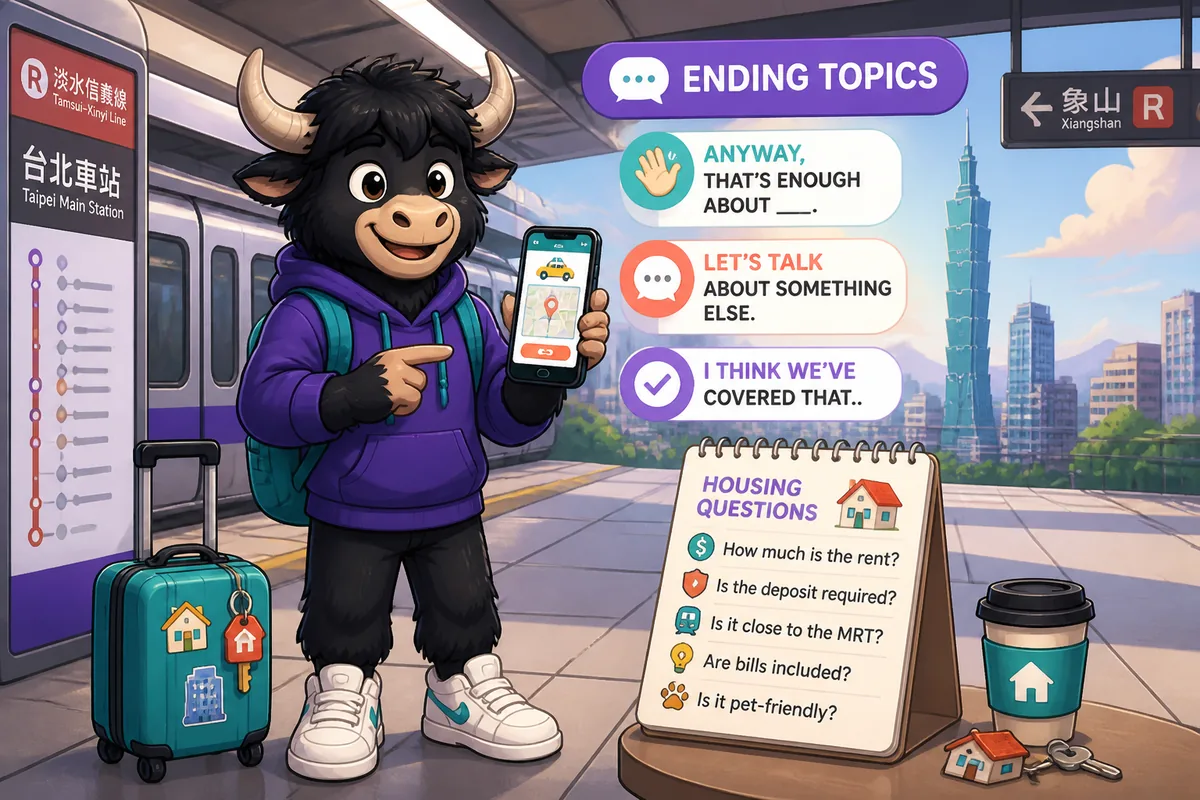
好了,___就先说到这儿。
Hǎo le, ___ jiù xiān shuō dào zhèr.
Anyway, that's enough about ___.
Meaning: Anyway, that's enough about ___.
When to use: Use this to signal you've said enough about a topic and move on smoothly.
Tip: Don't use this for brand-new topics — it's for wrapping up something already discussed.
Examples ▼ 好了,工作上的问题就先说到这儿。
Hǎo le, gōngzuò shàng de wèntí jiù xiān shuō dào zhèr.
Anyway, that's enough about the work issues for now.
好了,这个项目的细节就先说到这儿,接下来看时间表。
Hǎo le, zhège xiàngmù de xìjié jiù xiān shuō dào zhèr, jiēxiàlái kàn shíjiānbiǎo.
Okay, that's enough about the project's details; next, let's check the schedule.
我们聊点别的吧。
Wǒmen liáo diǎn bié de ba.
Let's talk about something else.
Meaning: Let's talk about something else.
When to use: Casual suggestion to change the subject during a friendly or neutral conversation.
Examples ▼ 听够了技术细节,我们聊点别的吧。
Tīng gòu le jìshù xìjié, wǒmen liáo diǎn bié de ba.
Enough technical details — let's talk about something else.
你今天怎么样?我们聊点别的吧,不要总说工作。
Nǐ jīntiān zěnmeyàng? Wǒmen liáo diǎn bié de ba, bùyào zǒng shuō gōngzuò.
How are you today? Let's talk about something else — not just work.
我觉得这个我们说得差不多了。
Wǒ juéde zhège wǒmen shuō de chàbuduō le.
I think we've covered that.
Meaning: I think we've covered that.
When to use: State that a topic has been discussed enough and you're ready to close it.
Examples ▼ 关于预算的问题,我觉得这个我们说得差不多了。
Guānyú yùsuàn de wèntí, wǒ juéde zhège wǒmen shuō de chàbuduō le.
About the budget question, I think we've covered it.
大家也提了很多意见,我觉得这个我们说得差不多了,可以投票了。
Dàjiā yě tí le hěn duō yìjiàn, wǒ juéde zhège wǒmen shuō de chàbuduō le, kěyǐ tóupiào le.
Everyone gave input; I think we've covered this enough — we can vote now.
这个我们可以以后再说。
Zhège wǒmen kěyǐ yǐhòu zài shuō.
We can come back to that later.
Meaning: We can come back to that later.
When to use: Suggest postponing a topic to another time; polite and neutral.
Tip: Some learners overuse '以后' for urgent matters — use only when postponing is acceptable.
Examples ▼ 这个我们可以以后再说,现在先决定主要方案。
Zhège wǒmen kěyǐ yǐhòu zài shuō, xiànzài xiān juédìng zhǔyào fāng'àn.
We can come back to that later; now let's decide the main plan.
关于假期安排,这个我们可以以后再说,先处理手头工作。
Guānyú jiàqī ānpái, zhège wǒmen kěyǐ yǐhòu zài shuō, xiān chǔlǐ shǒutóu gōngzuò.
About holiday plans — we can talk about that later; first finish current tasks.
那我们接着往下说。
Nà wǒmen jiēzhe wǎng xià shuō.
So, moving on.
Meaning: So, moving on.
When to use: Use to transition from one point to the next (meetings, presentations, lectures).
Examples ▼ 讨论完第一部分,那我们接着往下说第二项议程。
Tǎolùn wán dì yī bùfèn, nà wǒmen jiēzhe wǎng xià shuō dì èr xiàng yìchéng.
After discussing the first part, so moving on to agenda item two.
好的,那我们接着往下说,看看下一个问题是什么。
Hǎo de, nà wǒmen jiēzhe wǎng xià shuō, kàn kàn xià yí gè wèntí shì shénme.
Okay, so moving on — let's see what the next issue is.
要不我们先说到这儿吧。
Yàobù wǒmen xiān shuō dào zhèr ba.
Maybe we should leave it there for now.
Meaning: Maybe we should leave it there for now.
When to use: A polite, tentative way to suggest ending a topic for the moment.
Examples ▼ 今天讨论时间不够,要不我们先说到这儿吧,改天再继续。
Jīntiān tǎolùn shíjiān bùgòu, yàobù wǒmen xiān shuō dào zhèr ba, gǎitiān zài jìxù.
We don't have enough time today; maybe we should leave it there for now and continue another day.
这个争论有点激烈,要不我们先说到这儿吧,冷静一下再谈。
Zhège zhēnglùn yǒudiǎn jīliè, yàobù wǒmen xiān shuō dào zhèr ba, lěngjìng yíxià zài tán.
This debate is heated — maybe leave it there for now, calm down and talk later.
关于___,我想说的就这些。
Guānyú ___, wǒ xiǎng shuō de jiù zhèxiē.
That's all I wanted to say about ___.
Meaning: That's all I wanted to say about ___.
When to use: Finish your own explanation or story and indicate you have no more to add.
Examples ▼ 关于客户的反馈,我想说的就这些,接下来请大家发表意见。
Guānyú kèhù de fǎnkuì, wǒ xiǎng shuō de jiù zhèxiē, jiēxiàlái qǐng dàjiā fābiǎo yìjiàn.
That's all I wanted to say about the customer's feedback — now please share your opinions.
关于旅行计划,我想说的就这些,如果有问题请问我。
Guānyú lǚxíng jìhuà, wǒ xiǎng shuō de jiù zhèxiē, rúguǒ yǒu wèntí qǐng wèn wǒ.
That's all I wanted to say about the travel plans; ask me if there are questions.
这个我就不多说了。
Zhège wǒ jiù bù duō shuō le.
I don't want to spend too long on this.
Meaning: I don't want to spend too long on this.
When to use: Politely move past a topic you don't want to elaborate on — casual and neutral.
Examples ▼ 这个我就不多说了,重点是下一步的计划。
Zhège wǒ jiù bù duō shuō le, zhòngdiǎn shì xià yí bù de jìhuà.
I won't say much about this — the focus is the next step.
关于细节我就不多说了,时间有限我们先看总体方案。
Guānyú xìjié wǒ jiù bù duō shuō le, shíjiān yǒuxiàn wǒmen xiān kàn zǒngtǐ fāng'àn.
I won't go into details — time is limited; let's look at the overall plan first.
那就先这样吧
Nà jiù xiān zhèyàng ba.
Let's leave it at that for now.
Meaning: Let's leave it at that for now.
When to use: Stop detailed discussion and accept the current situation or result.
Examples ▼ 意见不统一,那就先这样吧,回去再整理一下意见。
Yìjiàn bù tǒngyī, nà jiù xiān zhèyàng ba, huíqù zài zhěnglǐ yíxià yìjiàn.
Opinions differ — let's leave it at that for now and organize feedback later.
文件先按这个版本发出去,那就先这样吧,等有更新再改。
Wénjiàn xiān àn zhège bǎnběn fā chūqù, nà jiù xiān zhèyàng ba, děng yǒu gēngxīn zài gǎi.
Send the document as this version for now — let's leave it at that and edit when updated.
总之,细节就不多说了。
Zǒngzhī, xìjié jiù bù duō shuō le.
Anyway, let's not get into all the details.
Meaning: Anyway, let's not get into all the details.
When to use: Politely avoid lengthy detail and keep the conversation moving.
Examples ▼ 总之,细节就不多说了,重点是我们已经同意方向。
Zǒngzhī, xìjié jiù bù duō shuō le, zhòngdiǎn shì wǒmen yǐjīng tóngyì fāngxiàng.
Anyway, let's skip the details — the main point is we've agreed on the direction.
总之,细节就不多说了,先把主要问题解决了。
Zǒngzhī, xìjié jiù bù duō shuō le, xiān bǎ zhǔyào wèntí jiějué le.
In short, no need for details now — solve the main issue first.
这个我现在就不细说了。
Zhège wǒ xiànzài jiù bù xì shuō le.
I won't go into that now.
Meaning: I won't go into that now.
When to use: Signal that you won't explain this topic further at the current moment.
Examples ▼ 这个我现在就不细说了,等会儿给大家发资料。
Zhège wǒ xiànzài jiù bù xì shuō le, děnghuìr gěi dàjiā fā zīliào.
I won't go into that now — I'll send materials later.
这个问题我现在就不细说了,先听听别人的看法。
Zhège wèntí wǒ xiànzài jiù bù xì shuō le, xiān tīng tīng biérén de kànfǎ.
I won't explain that now — let's hear others' views first.
这事以后有机会再说吧。
Zhè shì yǐhòu yǒu jīhuì zài shuō ba.
That's a story for another time.
Meaning: That's a story for another time.
When to use: Postpone a longer or less relevant explanation in a friendly way.
Examples ▼ 这事以后有机会再说吧,现在我们专注会议内容。
Zhè shì yǐhòu yǒu jīhuì zài shuō ba, xiànzài wǒmen zhuānzhù huìyì nèiróng.
Let's leave that story for another time — now focus on the meeting.
关于那次旅行的奇遇,这事以后有机会再说吧,大家现在都忙。
Guānyú nà cì lǚxíng de qíyù, zhè shì yǐhòu yǒu jīhuì zài shuō ba, dàjiā xiànzài dōu máng.
About that travel adventure — that's for another time; everyone's busy now.
长话短说,___。
Chánghuà duǎn shuō, ___.
Long story short, ___.
Meaning: Long story short, ___.
When to use: Use to summarize a longer point briefly before ending the topic.
Tip: Be careful: '长话短说' must be followed by a short summary, not more detail.
Examples ▼ 长话短说,项目已经批准了,我们可以开始了。
Chánghuà duǎn shuō, xiàngmù yǐjīng pīzhǔn le, wǒmen kěyǐ kāishǐ le.
Long story short, the project was approved — we can start.
长话短说,问题不大,主要是时间安排。
Chánghuà duǎn shuō, wèntí bù dà, zhǔyào shì shíjiān ānpái.
Long story short, it's not a big problem — it's mostly about scheduling.
Which phrase politely suggests postponing discussion until later? 我觉得这个我们说得差不多了。 这个我们可以以后再说。 那我们接着往下说。 长话短说,___。
Which sentence is best to use in a meeting to move to the next agenda item? 那我们接着往下说。 这事以后有机会再说吧。 要不我们先说到这儿吧。 这个我就不多说了。
Choose the phrase meaning 'Long story short'. 这个我现在就不细说了。 长话短说,___. 那就先这样吧 总之,细节就不多说了。
Which phrase would you use to politely stop adding more details? 我们聊点别的吧。 关于___,我想说的就这些。 这个我就不多说了。 这事以后有机会再说吧。
The chair says: 'We can come back to that later; let's start the next item.' 会议已经讨论了半小时,主席说:___,我们开始下一项吧。
Huìyì yǐjīng tǎolùn le bàn xiǎoshí, zhǔxí shuō: ___, wǒmen kāishǐ xià yí xiàng ba.
我们聊点别的吧。 这个我就不多说了。 这个我们可以以后再说。 长话短说,___。
Manager Li suggests: 'That's a story for another time; don't discuss it in detail here.' 讨论到敏感话题时,李经理建议:___,别在这里深入讨论。
Tǎolùn dào mǐngǎn huàtí shí, Lǐ jīnglǐ jiànyì: ___, bié zài zhèlǐ shēnrù tǎolùn.
这事以后有机会再说吧。 关于___,我想说的就这些。 好了,___就先说到这儿。 那我们接着往下说。
Wang summarizes: 'Let's leave it at that for now. Does everyone agree?' 讨论到结果时,王总总结道:___,大家都同意了吗?
Tǎolùn dào jiéguǒ shí, Wáng zǒng zǒngjié dào: ___, dàjiā dōu tóngyì le ma?
我觉得这个我们说得差不多了。 那就先这样吧 要不我们先说到这儿吧。 这个我们可以以后再说。
好了,___就先说到这儿。 Hǎo le, ___ jiù xiān shuō dào zhèr. 我们聊点别的吧。 Wǒmen liáo diǎn bié de ba. 我觉得这个我们说得差不多了。 Wǒ juéde zhège wǒmen shuō de chàbuduō le. 这个我们可以以后再说。 Zhège wǒmen kěyǐ yǐhòu zài shuō. 那我们接着往下说。 Nà wǒmen jiēzhe wǎng xià shuō. 要不我们先说到这儿吧。 Yàobù wǒmen xiān shuō dào zhèr ba. 关于___,我想说的就这些。 Guānyú ___, wǒ xiǎng shuō de jiù zhèxiē. 这个我就不多说了。 Zhège wǒ jiù bù duō shuō le. Anyway, that's enough about ___. Let's talk about something else. I think we've covered that. We can come back to that later. So, moving on. Maybe we should leave it there for now. That's all I wanted to say about ___. I don't want to spend too long on this.
那就先这样吧 Nà jiù xiān zhèyàng ba. 总之,细节就不多说了。 Zǒngzhī, xìjié jiù bù duō shuō le. 这个我现在就不细说了。 Zhège wǒ xiànzài jiù bù xì shuō le. 这事以后有机会再说吧。 Zhè shì yǐhòu yǒu jīhuì zài shuō ba. 长话短说,___. Chánghuà duǎn shuō, ___. 回头再说 Huítóu zài shuō. Let's leave it at that for now. Anyway, let's not get into all the details. I won't go into that now. That's a story for another time. Long story short, ___. Talk about it later (colloquial).
Recording stays on your device only. Check speech uses your browser's speech tools when available.
Say this phrase out loud:
好了,___就先说到这儿。
Hǎo le, ___ jiù xiān shuō dào zhèr.
Anyway, that's enough about ___.
Check speech
Record Play back
Say this phrase out loud:
我们聊点别的吧。
Wǒmen liáo diǎn bié de ba.
Let's talk about something else.
Check speech
Record Play back
Say this phrase out loud:
我觉得这个我们说得差不多了。
Wǒ juéde zhège wǒmen shuō de chàbuduō le.
I think we've covered that.
Check speech
Record Play back
Say this phrase out loud:
这个我们可以以后再说。
Zhège wǒmen kěyǐ yǐhòu zài shuō.
We can come back to that later.
Check speech
Record Play back
Say this phrase out loud:
那我们接着往下说。
Nà wǒmen jiēzhe wǎng xià shuō.
So, moving on.
Check speech
Record Play back
Say this phrase out loud:
要不我们先说到这儿吧。
Yàobù wǒmen xiān shuō dào zhèr ba.
Maybe we should leave it there for now.
Check speech
Record Play back
Say this phrase out loud:
关于___,我想说的就这些。
Guānyú ___, wǒ xiǎng shuō de jiù zhèxiē.
That's all I wanted to say about ___.
Check speech
Record Play back
Say this phrase out loud:
这个我就不多说了。
Zhège wǒ jiù bù duō shuō le.
I don't want to spend too long on this.
Check speech
Record Play back
Say this phrase out loud:
那就先这样吧
Nà jiù xiān zhèyàng ba.
Let's leave it at that for now.
Check speech
Record Play back
Say this phrase out loud:
总之,细节就不多说了。
Zǒngzhī, xìjié jiù bù duō shuō le.
Anyway, let's not get into all the details.
Check speech
Record Play back
Say this phrase out loud:
这个我现在就不细说了。
Zhège wǒ xiànzài jiù bù xì shuō le.
I won't go into that now.
Check speech
Record Play back
Say this phrase out loud:
这事以后有机会再说吧。
Zhè shì yǐhòu yǒu jīhuì zài shuō ba.
That's a story for another time.
Check speech
Record Play back
Say this phrase out loud:
长话短说,___。
Chánghuà duǎn shuō, ___.
Long story short, ___.
Check speech
Record Play back