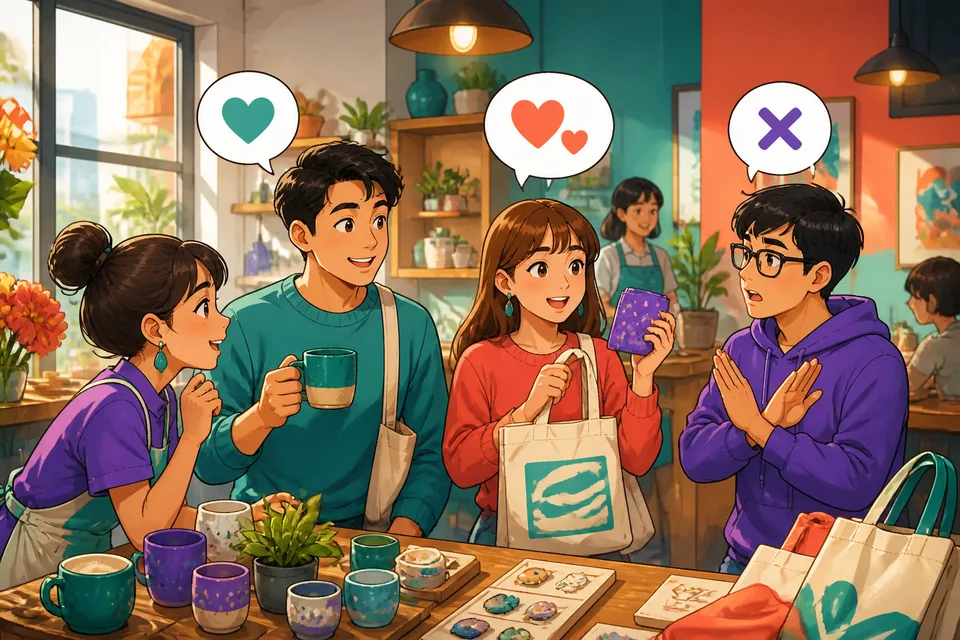
Welcome to Lesson 32 — time to talk about what you like (or don't)! This lesson is short and practical: listen, repeat, and use these phrases in real chats.
Level A2: In this CEFR-aligned lesson you'll practice common phrases to say what you like, prefer, or dislike in everyday conversation. We'll focus on useful frames like 我喜欢___ (Wǒ xǐhuan ___) and 我更喜欢___,而不是___ (Wǒ gèng xǐhuan ___, ér bú shì ___), plus polite and stronger ways to show feelings.
After this lesson you'll be able to:
Learn 13 useful phrases to state likes, dislikes, preferences, and favorites.
Be able to ask and answer questions about preferences in simple conversations.
Practice saying these phrases aloud to build confidence (Level A2).
Ready? Let's go!
When you tap play on phrases, we track your progress through this lesson.
1. Reading + Listening Practice
Hear core phrases, repeat aloud.
我喜欢___
Wǒ xǐhuan ___.
I like ___.
Meaning: I like ___.
When to use: Use this to say you enjoy a thing or activity (noun or verb phrase).
我喜欢听音乐
Wǒ xǐhuan tīng yīnyuè.
I like listening to music.
我喜欢看电影
Wǒ xǐhuan kàn diànyǐng.
I like watching movies.
我很喜欢___。
Wǒ hěn xǐhuan ___.
I really like ___.
Meaning: I really like ___.
When to use: Use this to express a stronger like than 我喜欢___.
我很喜欢喝咖啡,尤其是早上。
Wǒ hěn xǐhuan hē kāfēi, yóuqí shì zǎoshang.
I really like drinking coffee, especially in the morning.
我很喜欢这首歌。
Wǒ hěn xǐhuan zhè shǒu gē.
I really like this song.
我不喜欢___。
Wǒ bù xǐhuan ___.
I don't like ___.
Meaning: I don't like ___.
When to use: Use this to say directly you don't like something.
Tip: Don't mix up intensity: 我不喜欢 and 我不太喜欢 are different in politeness/strength.
我不喜欢太辣的菜。
Wǒ bù xǐhuan tài là de cài.
I don't like food that's too spicy.
我不喜欢很吵的地方。
Wǒ bù xǐhuan hěn chǎo de dìfang.
I don't like very noisy places.
我不太喜欢___。
Wǒ bù tài xǐhuan ___.
I'm not a big fan of ___.
Meaning: I'm not a big fan of ___.
When to use: Use this to politely express a mild dislike.
Tip: Some learners overuse 不太 with things they strongly dislike; use 我不喜欢 or 我讨厌 for stronger feelings.
我不太喜欢喝太甜的饮料。
Wǒ bù tài xǐhuan hē tài tián de yǐnliào.
I'm not a big fan of drinking very sweet drinks.
我不太喜欢看恐怖片。
Wǒ bù tài xǐhuan kàn kǒngbù piàn.
I'm not a big fan of watching horror movies.
我更喜欢___。
Wǒ gèng xǐhuan ___.
I prefer ___.
Meaning: I prefer ___.
When to use: Use when choosing one option over others (often in comparisons).
我更喜欢早上跑步。
Wǒ gèng xǐhuan zǎoshang pǎobù.
I prefer running in the morning.
我更喜欢坐窗边的位置。
Wǒ gèng xǐhuan zuò chuāng biān de wèizhì.
I prefer sitting by the window.
我更喜欢___,而不是___。
Wǒ gèng xǐhuan ___, ér bú shì ___.
I prefer ___ to ___.
Meaning: I prefer ___ to ___.
When to use: Use this to compare two choices and say which you like more.
我更喜欢茶,而不是咖啡。
Wǒ gèng xǐhuan chá, ér bú shì kāfēi.
I prefer tea rather than coffee.
我更喜欢散步,而不是去健身房。
Wǒ gèng xǐhuan sànbù, ér bú shì qù jiànshēnfáng.
I prefer walking rather than going to the gym.
我最喜欢的___是___。
Wǒ zuì xǐhuan de ___ shì ___.
My favorite ___ is ___.
Meaning: My favorite ___ is ___.
When to use: Use this to say your favorite person, thing, place, or activity.
我最喜欢的水果是草莓。
Wǒ zuì xǐhuan de shuǐguǒ shì cǎoméi.
My favorite fruit is strawberry.
我最喜欢的运动是足球。
Wǒ zuì xǐhuan de yùndòng shì zúqiú.
My favorite sport is soccer.
你喜欢___吗?
Nǐ xǐhuan ___ ma?
Do you like ___?
Meaning: Do you like ___?
When to use: Use this to ask whether someone likes a thing or activity.
你喜欢喝茶吗
Nǐ xǐhuan hē chá ma?
Do you like drinking tea?
你喜欢看电影吗?
Nǐ xǐhuan kàn diànyǐng ma?
Do you like watching movies?
___和___,你更喜欢哪个?
___ hé ___, nǐ gèng xǐhuan nǎge?
Which do you prefer, ___ or ___?
Meaning: Which do you prefer, ___ or ___?
When to use: Use this to ask someone to choose between two options.
咖啡和茶,你更喜欢哪个?
Kāfēi hé chá, nǐ gèng xǐhuan nǎge?
Coffee and tea, which do you prefer?
电影和音乐会,你更喜欢哪个?
Diànyǐng hé yīnyuèhuì, nǐ gèng xǐhuan nǎge?
Movies and concerts, which do you prefer?
我特别喜欢___。
Wǒ tèbié xǐhuan ___.
I love ___.
Meaning: I love ___.
When to use: Use this when you want a stronger positive feeling than 我很喜欢___.
我特别喜欢这个餐厅的饺子。
Wǒ tèbié xǐhuan zhège cāntīng de jiǎozi.
I love the dumplings at this restaurant.
我特别喜欢旅行,尤其是去海边。
Wǒ tèbié xǐhuan lǚxíng, yóuqí shì qù hǎibiān.
I especially love traveling, especially going to the beach.
我喜欢___
Wǒ xǐhuan ___.
I enjoy ___.
Meaning: I enjoy ___.
When to use: A natural way to say you enjoy an activity or thing.
我喜欢周末去爬山。
Wǒ xǐhuan zhōumò qù páshān.
I enjoy hiking on weekends.
我喜欢跟朋友一起做饭。
Wǒ xǐhuan gēn péngyǒu yìqǐ zuò fàn.
I enjoy cooking with friends.
我讨厌___
Wǒ tǎoyàn ___.
I hate ___.
Meaning: I hate ___.
When to use: Use this to express strong dislike; it's direct.
我讨厌早上堵车。
Wǒ tǎoyàn zǎoshang dǔchē.
I hate morning traffic jams.
我讨厌等很久的队。
Wǒ tǎoyàn děng hěn jiǔ de duì.
I hate waiting in long lines.
我受不了___。
Wǒ shòu bù liǎo ___.
I can't stand ___.
Meaning: I can't stand ___.
When to use: Use this informal phrase to say you strongly can't tolerate something.
我受不了太热的房间。
Wǒ shòu bù liǎo tài rè de fángjiān.
I can't stand rooms that are too hot.
我受不了很吵的音乐。
Wǒ shòu bù liǎo hěn chǎo de yīnyuè.
I can't stand very loud music.
2. Conversational Listening Practice
Hear phrases in a real mini-conversation.
Talking about food preferences at a cafe
What are Anna and David discussing?
Anna
你喜欢中国菜吗?
Nǐ xǐhuan Zhōngguó cài ma?
Do you like Chinese food?
David
我很喜欢,特别是饺子。
Wǒ hěn xǐhuan, tèbié shì jiǎozi.
I really like it, especially dumplings.
Anna
那你更喜欢中国菜还是日本菜?
Nà nǐ gèng xǐhuan Zhōngguó cài háishì Rìběn cài?
So do you prefer Chinese food or Japanese food?
David
我更喜欢中国菜,而不是日本菜。
Wǒ gèng xǐhuan Zhōngguó cài, ér bú shì Rìběn cài.
I prefer Chinese food, not Japanese food.
Anna
我不太喜欢太甜的菜,所以我通常点清淡的。
Wǒ bù tài xǐhuan tài tián de cài, suǒyǐ wǒ tōngcháng diǎn qīngdàn de.
I'm not a big fan of very sweet dishes, so I usually order mild ones.
3. Guided Practice
Quizzes and matching to lock in meaning.
Which Chinese phrase means 'I can't stand ___'?
Which phrase is the most polite way to say 'I'm not a big fan of ___'?
How do you ask 'Do you like tea?' in Chinese?
Which sentence means 'I prefer tea to coffee.'?
In the coffee shop, when asked 'Coffee or milk tea?' you answer: 'I prefer milk tea rather than coffee.'