Simplified Chinese - Public Transport

Lesson 109 of 156

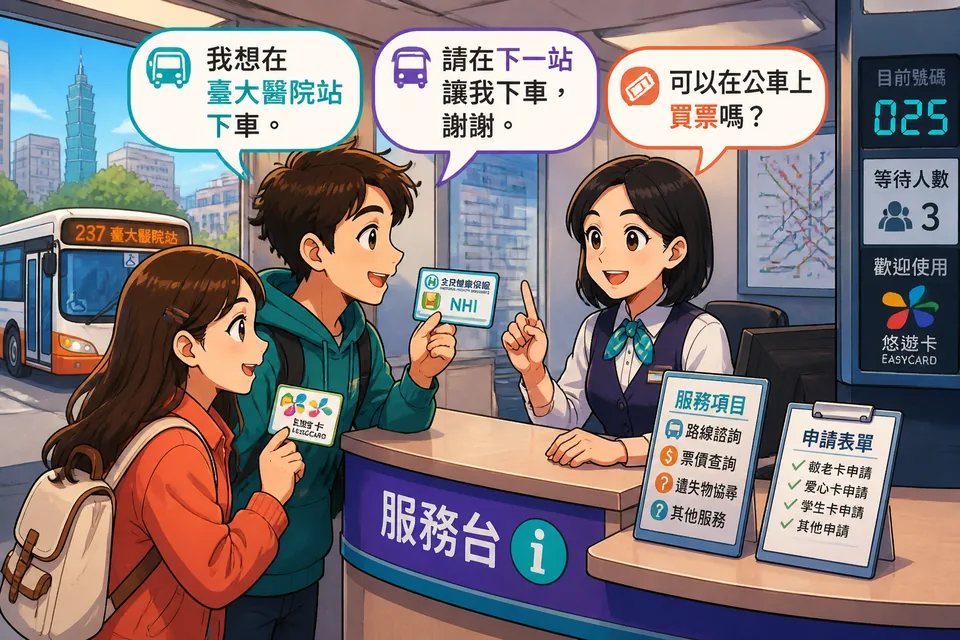
Photo of a crowded bus stop with people asking about tickets in Simplified Chinese; theme: public transport phrases.

Goal: Common phrases for buses, taxis and trains

Free Simplified Chinese lessons with guided practice, audio, and speaking support.

Welcome — ready to ride? This short lesson helps you handle common situations on buses, subways, taxis and at stations. You'll listen, practice, then speak the phrases aloud.

Level A2: In this lesson you'll practice ten useful transit phrases for getting on and off, buying tickets, asking about schedules and handling problems. It's a CEFR-aligned pack focused on everyday lines: asking the driver to stop, checking if seats are taken, reporting a broken ticket machine, and more.

After this lesson you'll be able to:

  • Understand and say practical transit phrases for buses, taxis, subways and stations.
  • Ask where to buy tickets (请问,在哪里买票? Qǐngwèn, zài nǎlǐ mǎi piào?) and whether you can buy on board (可以上车买票吗? Kěyǐ shàngchē mǎi piào ma?).
  • Tell the driver where to stop and report a missed stop (我要在___下车。 Wǒ yào zài ___ xiàchē.).
  • Level A2: feel confident asking about service frequency and direct routes (___多久来一趟? Yǒu ___ néng zhídá ___ ma?).
A traveler asks a station worker where to buy tickets in Simplified Chinese at a busy transit hub.

Ready? Let's go!

When you tap play on phrases, we track your progress through this lesson.

1. Reading + Listening Practice

Hear core phrases, repeat aloud.

我要在___下车。

Wǒ yào zài ___ xiàchē.

I need to get off at ___.

Meaning: I need to get off at ___.

When to use: Use this to tell the driver or a fellow passenger the stop where you want to get off. Fill the blank with the station or landmark name (e.g., 我要在人民广场下车。).

Tip: Don't drop 在; saying 我要下车 at the wrong place can be unclear.

我要在人民广场下车。

Wǒ yào zài Rénmín Guǎngchǎng xiàchē.

I need to get off at People's Square.
我要在下一站下车。

Wǒ yào zài xià yí zhàn xiàchē.

I'll get off at the next stop.

师傅,下一站请停一下。

Shīfu, xià yí zhàn qǐng tíng yíxià.

Please let me off at the next stop.

Meaning: Please let me off at the next stop.

When to use: Say this politely to a taxi driver or bus driver when you want them to stop at the next station. '师傅' is a common, polite way to address drivers in Mainland China.

师傅,下一站请停一下,我要下车。

Shīfu, xià yí zhàn qǐng tíng yíxià, wǒ yào xiàchē.

Driver, please stop at the next stop, I need to get off.
师傅,下一站请停一下,谢谢。

Shīfu, xià yí zhàn qǐng tíng yíxià, xièxiè.

Driver, please stop at the next stop, thanks.

可以上车买票吗?

Kěyǐ shàngchē mǎi piào ma?

Can I buy a ticket on the bus?

Meaning: Can I buy a ticket on the bus?

When to use: Ask this on buses or long-distance coaches if you’re unsure whether onboard purchase is allowed. In many Chinese cities you may need to tap or scan instead.
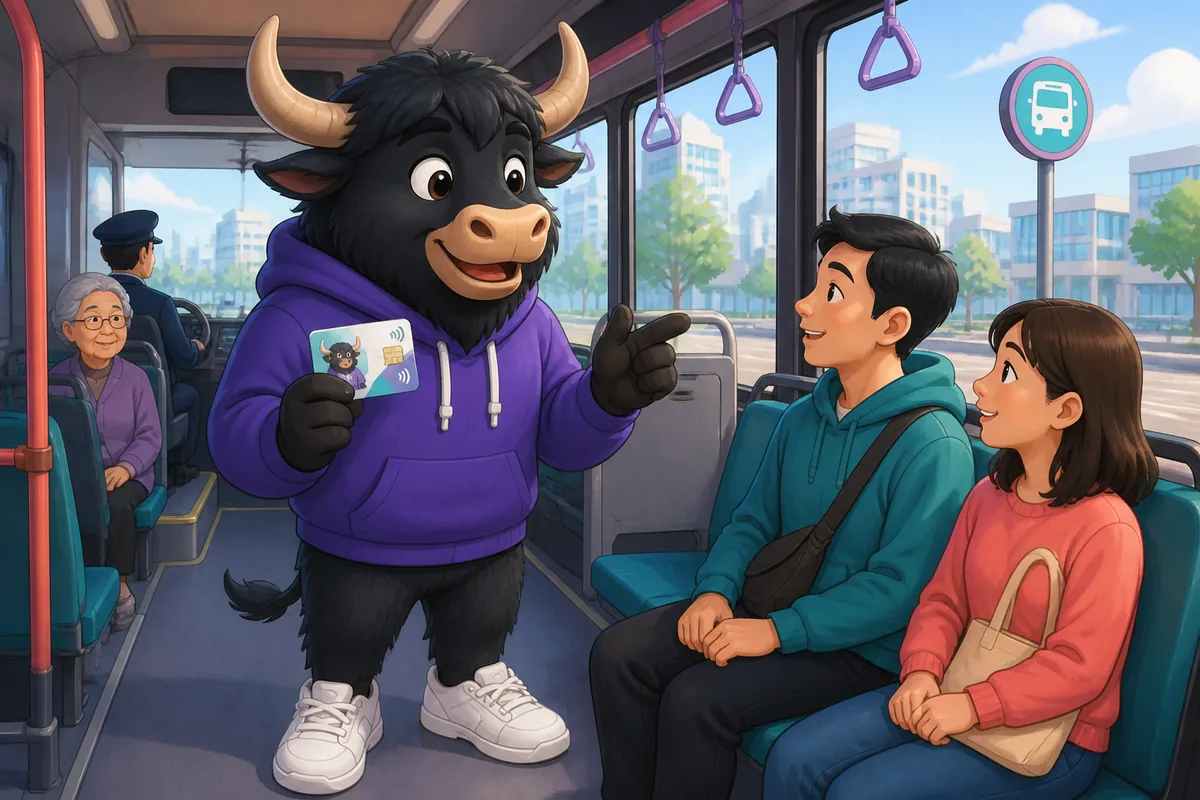
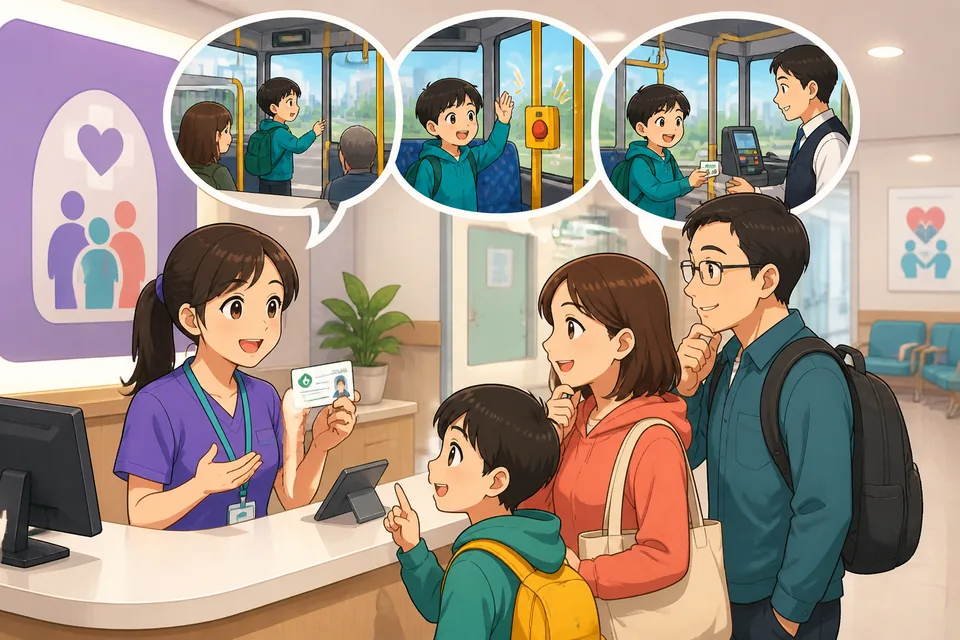
上车后我问司机:可以上车买票吗?

Shàngchē hòu wǒ wèn sījī: Kěyǐ shàngchē mǎi piào ma?

After boarding I asked the driver: Can I buy a ticket on the bus?
这辆车没售票员,可以上车买票吗?

Zhè liàng chē méi shòupiàoyuán, kěyǐ shàngchē mǎi piào ma?

This bus has no conductor; can I buy a ticket on board?

上下车都要刷卡吗?

Shàng xià chē dōu yào shuākǎ ma?

Do I have to tap in and out?

Meaning: Do I have to tap in and out?

When to use: Use this to ask whether your transit card must be tapped both when boarding and when leaving a service (common on some networks).

Tip: Confusing 刷卡 (tap card) with 扫码 (scan QR). Ask which method to use.

在地铁站我问:上下车都要刷卡吗?

Zài dìtiě zhàn wǒ wèn: Shàng xià chē dōu yào shuākǎ ma?

At the subway station I asked: Do I have to tap in and out?
请问上下车都要刷卡吗?还是只进站刷一次?

Qǐngwèn shàng xià chē dōu yào shuākǎ ma? Háishì zhǐ jìn zhàn shuā yí cì?

Do I have to tap both on and off, or just once when entering?

请问,这个座位有人吗?

Qǐngwèn, zhège zuòwèi yǒu rén ma?

Is this seat taken?

Meaning: Excuse me, is this seat taken?

When to use: Polite way to check if a seat is free on a bus, train, or in a waiting area.

上车后我说:请问,这个座位有人吗?

Shàngchē hòu wǒ shuō: Qǐngwèn, zhège zuòwèi yǒu rén ma?

After boarding I said: Excuse me, is this seat taken?
请问,这个座位有人吗?我可以坐这里吗?

Qǐngwèn, zhège zuòwèi yǒu rén ma? Wǒ kěyǐ zuò zhèlǐ ma?

Excuse me, is this seat taken? Can I sit here?

我坐过站了

Wǒ zuò guò zhàn le.

I missed my stop.

Meaning: I missed my stop.

When to use: Use this to explain to a fellow passenger, driver, or station staff that you rode past the stop you intended.

对不起,我坐过站了。能帮我提醒下一站吗?

Duìbuqǐ, wǒ zuò guò zhàn le. Néng bāng wǒ tíxǐng xià yí zhàn ma?

Sorry, I missed my stop. Can you help tell me the next stop?
我坐过站了,现在怎么回去?

Wǒ zuò guò zhàn le, xiànzài zěnme huíqù?

I missed my stop; how do I get back?

这台售票机坏了。

Zhè tái shòupiào jī huài le.

The ticket machine isn't working.

Meaning: The ticket machine isn't working.

When to use: Report to station staff or other passengers when a specific ticket machine is out of order. Use 这台 to point out the particular machine.

这台售票机坏了,我不能买票。

Zhè tái shòupiào jī huài le, wǒ bùnéng mǎi piào.

This ticket machine is broken; I can't buy a ticket.
请工作人员来看一看,这台售票机坏了。

Qǐng gōngzuò rényuán lái kàn yí kàn, zhè tái shòupiào jī huài le.

Please staff check: this ticket machine is broken.

请问,在哪里买票?

Qǐngwèn, zài nǎlǐ mǎi piào?

Where can I buy a ticket?

Meaning: Excuse me, where can I buy a ticket?

When to use: Polite and concise question to ask at stations, ticket counters, or information desks when you need to know where tickets are sold.

请问,在哪里买票?我第一次来这里。

Qǐngwèn, zài nǎlǐ mǎi piào? Wǒ dì yī cì lái zhèlǐ.

Excuse me, where can I buy tickets? It's my first time here.
请问,在哪里买票?我想买到机场的。

Qǐngwèn, zài nǎlǐ mǎi piào? Wǒ xiǎng mǎi dào jīchǎng de.

Excuse me, where can I buy tickets? I want to buy one to the airport.

___多久来一趟?

___ duōjiǔ lái yí tàng?

How often does the ___ come?

Meaning: How often does the ___ come?

When to use: Ask this to find out frequency of a bus, train or shuttle. Fill the blank with the vehicle or line (e.g., 公交车, 二号线).

Tip: Be specific: say 公交车 or 二号线 rather than only saying '多久' so staff know which service you mean.

公交车多久来一趟?

Gōngjiāo chē duōjiǔ lái yí tàng?

How often does the bus come?
二号线多久来一趟?

Èr hào xiàn duōjiǔ lái yí tàng?

How often does Line 2 come?

有___能直达___吗?

Yǒu ___ néng zhídá ___ ma?

Is there a direct ___ to ___?

Meaning: Is there a direct ___ to ___?

When to use: Use this to ask if a direct bus, train or shuttle goes to your destination (first blank: vehicle/option, second blank: destination).

有地铁能直达机场吗?

Yǒu dìtiě néng zhídá jīchǎng ma?

Is there a subway that goes directly to the airport?
有公交能直达博物馆吗?

Yǒu gōngjiāo néng zhídá bówùguǎn ma?

Is there a bus that goes directly to the museum?

2. Conversational Listening Practice

Hear phrases in a real mini-conversation.

On a city bus

Inside a bus, a passenger asks if a seat is taken and later tells the driver where to stop in Simplified Chinese.

What is broken?

Portrait of Anna in a Simplified Chinese lesson dialogue

Anna

请问,这个座位有人吗?

Qǐngwèn, zhège zuòwèi yǒu rén ma?

Excuse me, is this seat taken?

Portrait of David in a Simplified Chinese lesson dialogue

David

没有,请坐

Méiyǒu, qǐng zuò.

No, please sit.

Portrait of Anna in a Simplified Chinese lesson dialogue

Anna

请问,在哪里买票?

Qǐngwèn, zài nǎlǐ mǎi piào?

Excuse me, where can I buy a ticket?

Portrait of David in a Simplified Chinese lesson dialogue

David

站口有售票机

Zhàn kǒu yǒu shòupiào jī.

There's a ticket machine at the entrance.

Portrait of Anna in a Simplified Chinese lesson dialogue

Anna

哦,等等……这台售票机坏了。

Ó, děng děng... Zhè tái shòupiào jī huài le.

Oh, wait... this ticket machine is broken.

Portrait of Anna in a Simplified Chinese lesson dialogue

Anna

师傅,下一站请停一下,我要在下一站下车。

Shīfu, xià yí zhàn qǐng tíng yíxià, wǒ yào zài xià yí zhàn xiàchē.

Driver, please stop at the next stop; I want to get off at the next stop.

3. Guided Practice

Quizzes and matching to lock in meaning.

What does '我坐过站了。' mean?

Which sentence asks whether you can buy a ticket after boarding?

Which sentence asks whether you must tap your transit card both on and off?

Which sentence asks if there is a direct service to a destination?

I said: 'Driver, please stop at the next stop,' because I want to get off.

我在车里对司机说:'___',因为我要下车。

I asked the staff: 'Excuse me, where can I buy a ticket?'

在售票机前我问工作人员:'___'。

At the subway station I asked: 'How often does Line 2 come?'

在地铁站,我问工作人员:'___多久来一趟?'(我指的是二号线。)

Match the core phrases

Match the extra phrases

4. Speaking Practice

Say phrases yourself (mic/recording).

Recording stays on your device only. Check speech uses your browser's speech tools when available.

Say this phrase out loud:

我要在___下车。

Wǒ yào zài ___ xiàchē.

I need to get off at ___.

Say this phrase out loud:

师傅,下一站请停一下。

Shīfu, xià yí zhàn qǐng tíng yíxià.

Please let me off at the next stop.

Say this phrase out loud:

可以上车买票吗?

Kěyǐ shàngchē mǎi piào ma?

Can I buy a ticket on the bus?

Say this phrase out loud:

上下车都要刷卡吗?

Shàng xià chē dōu yào shuākǎ ma?

Do I have to tap in and out?

Say this phrase out loud:

请问,这个座位有人吗?

Qǐngwèn, zhège zuòwèi yǒu rén ma?

Excuse me, is this seat taken?

Say this phrase out loud:

我坐过站了

Wǒ zuò guò zhàn le.

I missed my stop.

Say this phrase out loud:

这台售票机坏了。

Zhè tái shòupiào jī huài le.

The ticket machine isn't working.

Say this phrase out loud:

请问,在哪里买票?

Qǐngwèn, zài nǎlǐ mǎi piào?

Excuse me, where can I buy a ticket?

Say this phrase out loud:

___多久来一趟?

___ duōjiǔ lái yí tàng?

How often does the ___ come?

Say this phrase out loud:

有___能直达___吗?

Yǒu ___ néng zhídá ___ ma?

Is there a direct ___ to ___?