不用了,谢谢
Bú yòng le, xièxie.
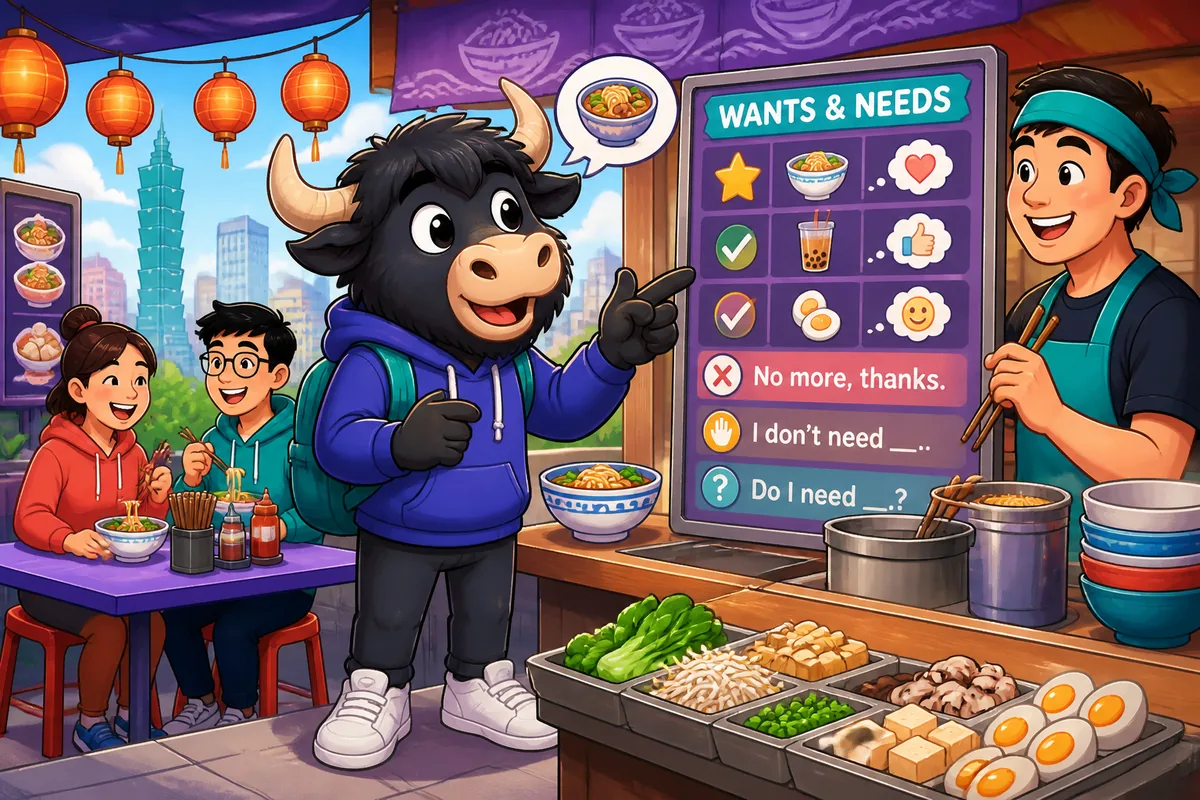
No more, thanks.
Meaning: No more, thanks.
When to use: 礼貌拒绝别人再给更多;如果是倒饮料或加菜,也可说“不用再加了,谢谢”。
Examples ▼ 服务员要再给我茶,我说:不用了,谢谢。
Fúwùyuán yào zài gěi wǒ chá, wǒ shuō: Bú yòng le, xièxie.
The server wants to pour more tea; I say: No more, thanks.
妈妈想给我第二个饺子,我笑着说:不用了,谢谢。
Māmā xiǎng gěi wǒ dì èr gè jiǎozi, wǒ xiàozhe shuō: Bú yòng le, xièxie.
My mom offers a second dumpling; I politely refuse.
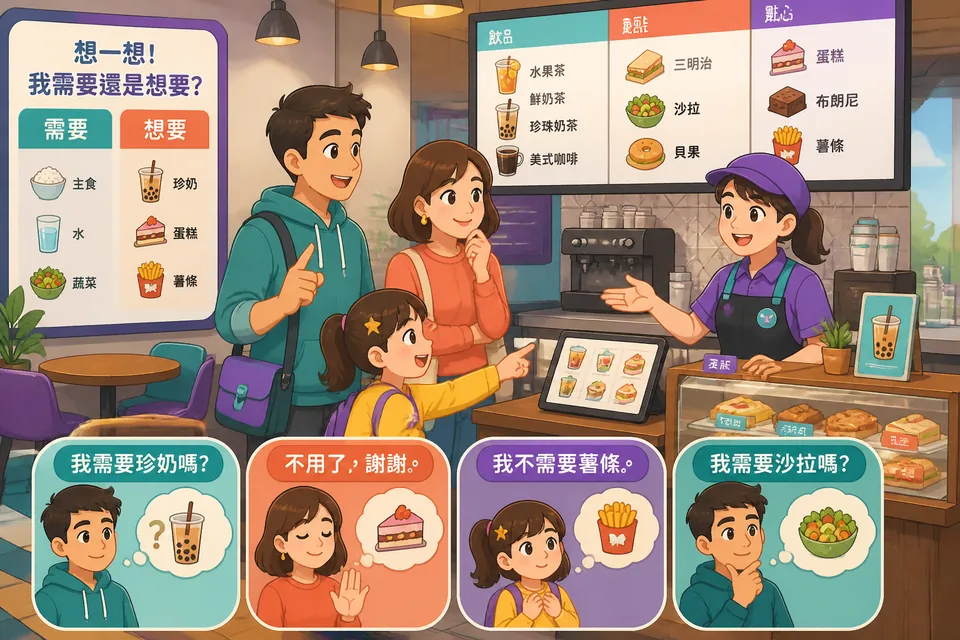
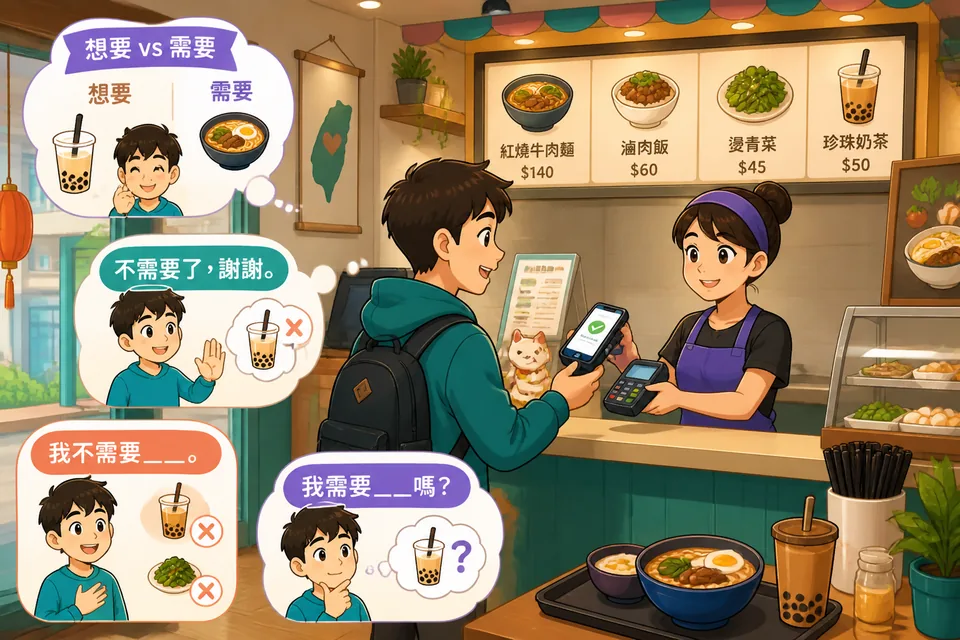
我不需要___。
Wǒ bù xūyào ___.
I don't need ___.
Meaning: I don't need ___.
When to use: 用于表示某个东西或服务不需要。
Examples ▼ 我不需要塑料袋,谢谢,我有自己的包。
Wǒ bù xūyào sùliào dài, xièxie, wǒ yǒu zìjǐ de bāo.
I don't need a plastic bag, thanks; I have my own bag.
你可以给别人刀叉,我不需要,谢谢。
Nǐ kěyǐ gěi biérén dāo chā, wǒ bù xūyào, xièxie.
You can give the cutlery to someone else; I don't need it, thanks.
我需要___吗?
Wǒ xūyào ___ ma?
Do I need ___?
Meaning: Do I need ___?
When to use: 用于询问某个东西是否必要。
Examples ▼ 我需要签名吗?(在取快递的时候) 我需要签名吗?
Wǒ xūyào qiānmíng ma? (Zài qǔ kuàidì de shíhòu) Wǒ xūyào qiānmíng ma?
Do I need to sign? (When picking up a package.)
医生说:出门需要口罩吗?我问:我需要口罩吗?
Yīshēng shuō: chūmén xūyào kǒuzhào ma? Wǒ wèn: Wǒ xūyào kǒuzhào ma?
The doctor asks if you need a mask; I ask: Do I need a mask?
我一定要___吗?
Wǒ yídìng yào ___ ma?
Do I have to ___?
Meaning: Do I have to ___?
When to use: 用于询问某个动作是不是必须做;比“我必须___吗?”更口语。
Tip: Beginners sometimes say 我必须___吗?(Wǒ bìxū ___ ma?) — it's correct but sounds more formal than 我一定要___吗?
Examples ▼ 老师问程序要不要改,我问:我一定要改吗?
Lǎoshī wèn chéngxù yào bùyào gǎi, wǒ wèn: Wǒ yídìng yào gǎi ma?
The teacher asks if code needs changing; I ask: Do I have to change it?
公司要求周末加班,我问经理:我一定要来吗?
Gōngsī yāoqiú zhōumò jiābān, wǒ wèn jīnglǐ: Wǒ yídìng yào lái ma?
The company asks for weekend work; I ask the manager if I must come.
我不用___
Wǒ búyòng ___.
I don't have to ___.
Meaning: I don't have to ___.
When to use: 用于表示某个动作不必做,很常见的口语说法。
Examples ▼ 今天下雨,出去买菜不方便。我对朋友说:我不用出去买。
Jīntiān xiàyǔ, chūqù mǎi cài bù fāngbiàn. Wǒ duì péngyǒu shuō: Wǒ búyòng chūqù mǎi.
It's raining so I don't have to go out shopping; I tell a friend.
你已经带了伞,所以你不用担心淋雨。
Nǐ yǐjīng dài le sǎn, suǒyǐ nǐ búyòng dānxīn lín yǔ.
You already have an umbrella, so you don't have to worry about getting wet.
我要这个,谢谢。
Wǒ yào zhège, xièxie.
This one, please.
Meaning: This one, please.
When to use: 买东西或点餐时常用;“谢谢”让语气更礼貌。
Examples ▼ 在市场指着苹果说:我要这个,谢谢。
Zài shìchǎng zhǐzhe píngguǒ shuō: Wǒ yào zhège, xièxie.
At the market, pointing to an apple: This one, please.
在咖啡店我看菜单,最后对店员说:我要这个,谢谢。
Zài kāfēi diàn wǒ kàn càidān, zuìhòu duì diànyuán shuō: Wǒ yào zhège, xièxie.
At the café I look at the menu and then say: This one, please.
要一点,谢谢
Yào yìdiǎn, xièxie.
A little, please.
Meaning: A little, please.
When to use: 用于要少量东西;也可以说“一点点,谢谢”,语气更轻。
Examples ▼ 你要辣椒少一点,对厨师说:要一点,谢谢。
Nǐ yào làjiāo shǎo yìdiǎn, duì chúshī shuō: Yào yìdiǎn, xièxie.
If you want less chili, tell the chef: A little, please.
糖太多,我对服务员说:咖啡要一点,谢谢。
Táng tài duō, wǒ duì fúwùyuán shuō: Kāfēi yào yìdiǎn, xièxie.
Too much sugar; I tell the server: A little, please (for coffee).
How do you politely refuse more food or drink? 我一定要 不用了,谢谢 我需要一个 请帮我拿
If you want to ask whether you must do something, which sentence fits? 我一定要___吗? 我不用___ 我要这个,谢谢。 要一点,谢谢
You're at a fruit stand and want to pick one apple. Which phrase do you use? 不用了,谢谢 我一定要苹果吗? 我要这个,谢谢。 我不需要苹果
You only need a small amount of sauce. How do you ask for that politely? 我要很多,谢谢。 我一定要酱吗 要一点,谢谢 我不需要酱
No more, thanks. 你点了三杯茶,服务员又倒了一杯,你已经够了,礼貌地说:___
Nǐ diǎn le sān bēi chá, fúwùyuán yòu dào le yì bēi, nǐ yǐjīng gòu le, lǐmào de shuō: ___
我需要更多 不用了,谢谢 请给我账单 我要这个,谢谢。
A little, please. 你在点辣条,想要少一点辣,对厨师说:___
Nǐ zài diǎn là tiáo, xiǎng yào shǎo yìdiǎn là, duì chúshī shuō: ___
我不需要辣椒 给我很多,谢谢。 我一定要辣吗 要一点,谢谢
Do I need to sign? 收快递时,你不确定需要签名,问工作人员:___
Shōu kuàidì shí, nǐ bù quèdìng xūyào qiānmíng, wèn gōngzuò rényuán: ___
不用了,谢谢 我需要签名吗 我要这个,谢谢。 我不用签名
不用了,谢谢 Bú yòng le, xièxie. 我不需要___。 Wǒ bù xūyào ___. 我需要___吗? Wǒ xūyào ___ ma? 我一定要___吗? Wǒ yídìng yào ___ ma? 我不用___ Wǒ búyòng ___. 我要这个,谢谢。 Wǒ yào zhège, xièxie. 要一点,谢谢 Yào yìdiǎn, xièxie. 我不用出去买 Wǒ búyòng chūqù mǎi. No more, thanks. I don't need ___. Do I need ___? Do I have to ___? I don't have to ___. This one, please. A little, please. I don't have to go out shopping.
我不需要塑料袋。 Wǒ bù xūyào sùliào dài. 你不用担心 Nǐ búyòng dānxīn. 我需要口罩吗 Wǒ xūyào kǒuzhào ma? 给我一点儿糖,谢谢。 Gěi wǒ yìdiǎnr táng, xièxie. 我一定要来吗 Wǒ yídìng yào lái ma? 我要这个苹果 Wǒ yào zhège píngguǒ. I don't need a plastic bag. You don't have to worry. Do I need a mask? Give me a little sugar, please. Do I really have to come? I want this apple.
Recording stays on your device only. Check speech uses your browser's speech tools when available.
Say this phrase out loud:
不用了,谢谢
Bú yòng le, xièxie.
No more, thanks.
Check speech
Record Play back
Say this phrase out loud:
我不需要___。
Wǒ bù xūyào ___.
I don't need ___.
Check speech
Record Play back
Say this phrase out loud:
我需要___吗?
Wǒ xūyào ___ ma?
Do I need ___?
Check speech
Record Play back
Say this phrase out loud:
我一定要___吗?
Wǒ yídìng yào ___ ma?
Do I have to ___?
Check speech
Record Play back
Say this phrase out loud:
我不用___
Wǒ búyòng ___.
I don't have to ___.
Check speech
Record Play back
Say this phrase out loud:
我要这个,谢谢。
Wǒ yào zhège, xièxie.
This one, please.
Check speech
Record Play back
Say this phrase out loud:
要一点,谢谢
Yào yìdiǎn, xièxie.
A little, please.
Check speech
Record Play back