我们在___吃了晚饭。
Wǒmen zài ___ chī le wǎnfàn.
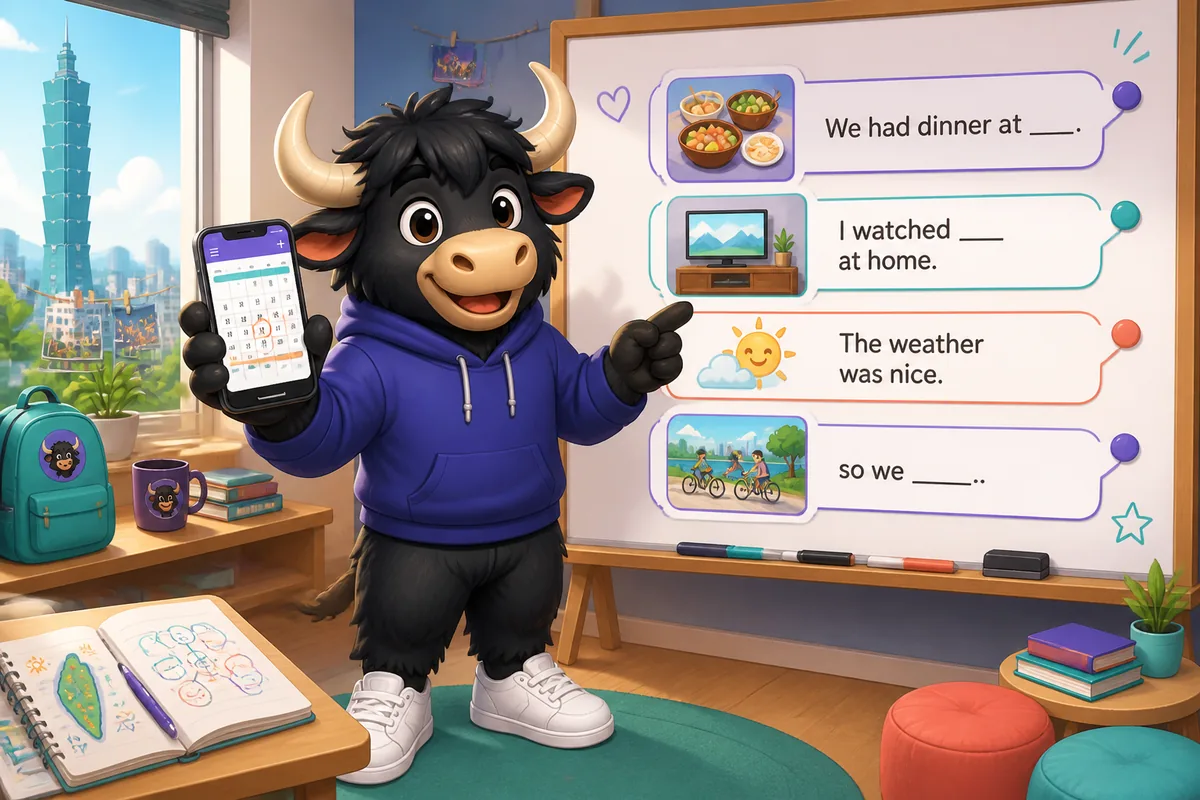
We had dinner at ___.
Meaning: We had dinner at ___.
When to use: Use the blank for a restaurant, home, or place name.
Examples ▼ 我们在小饭馆吃了晚饭。
Wǒmen zài xiǎo fànguǎn chī le wǎnfàn.
We had dinner at a small restaurant.
我们在家吃了晚饭,妈妈做的菜很好吃。
Wǒmen zài jiā chī le wǎnfàn, māma zuò de cài hěn hǎochī.
We had dinner at home; my mom's cooking was tasty.
我在家看了___。
Wǒ zài jiā kàn le ___.
I watched ___ at home.
Meaning: I watched ___ at home.
When to use: Works for movies, TV shows, videos, or sports events.
Examples ▼ 我在家看了电影,昨晚的那部爱情片。
Wǒ zài jiā kàn le diànyǐng, zuó wǎn de nà bù àiqíng piàn.
I watched a movie at home — that romantic film from last night.
我在家看了比赛,结果很激动。
Wǒ zài jiā kàn le bǐsài, jiéguǒ hěn jīdòng.
I watched the match at home; it was exciting.
天气不错,所以我们___。
Tiānqì búcuò, suǒyǐ wǒmen ___.
The weather was nice, so we ___.
Meaning: The weather was nice, so we ___.
When to use: Use the blank for an outdoor or leisure activity.
Examples ▼ 天气不错,所以我们去公园散步。
Tiānqì búcuò, suǒyǐ wǒmen qù gōngyuán sànbù.
The weather was nice, so we went for a walk in the park.
天气不错,所以我们在河边拍照。
Tiānqì búcuò, suǒyǐ wǒmen zài hé biān pāizhào.
The weather was nice, so we took photos by the river.
你周末一般做什么?
Nǐ zhōumò yìbān zuò shénme?
What do you usually do on weekends?
Meaning: What do you usually do on weekends?
When to use: Natural question about someone's weekend routine.
Examples ▼ 你周末一般做什么?我喜欢去市场买菜。
Nǐ zhōumò yìbān zuò shénme? Wǒ xǐhuan qù shìchǎng mǎi cài.
What do you usually do on weekends? I like going to the market to buy food.
你周末一般做什么?有人去爬山吗?
Nǐ zhōumò yìbān zuò shénme? Yǒu rén qù páshān ma?
What do you usually do on weekends? Does anyone go hiking?
还挺___的
Hái tǐng ___ de.
It was pretty ___ .
Meaning: It was pretty ___.
When to use: Use with an adjective, such as 好玩, 累, or 放松.
Tip: Beginners sometimes add a noun after 还挺 without an adjective (e.g., 还挺旅游的). Use an adjective after 还挺.
Examples ▼ 周末还挺放松的,我没做太多事。
Zhōumò hái tǐng fàngsōng de, wǒ méi zuò tài duō shì.
The weekend was pretty relaxing; I didn't do much.
那次旅行还挺好玩的,我们笑了很多。
Nà cì lǚxíng hái tǐng hǎowán de, wǒmen xiào le hěn duō.
That trip was pretty fun; we laughed a lot.
周末大部分时间我都在___。
Zhōumò dà bùfen shíjiān wǒ dōu zài ___.
I spent most of the weekend ___ .
Meaning: I spent most of the weekend ___.
When to use: 适合后接活动,如“睡觉、看剧、收拾房间”。
Examples ▼ 周末大部分时间我都在看书,准备考试。
Zhōumò dà bùfen shíjiān wǒ dōu zài kànshū, zhǔnbèi kǎoshì.
I spent most of the weekend reading to prepare for an exam.
周末大部分时间我都在睡觉,因为工作太累了。
Zhōumò dà bùfen shíjiān wǒ dōu zài shuìjiào, yīnwèi gōngzuò tài lèi le.
I spent most of the weekend sleeping because work was tiring.
我把___补上了。
Wǒ bǎ ___ bǔ shàng le.
I caught up on ___ .
Meaning: I caught up on ___.
When to use: 适合工作、作业、课、消息等落下的事情;“补觉”更常说“我补了补觉”。
Tip: Don't say 我把补上了 without an object; include what you caught up on (e.g., 我把作业补上了).
Examples ▼ 我把工作补上了,所以周一不怕加班。
Wǒ bǎ gōngzuò bǔ shàng le, suǒyǐ zhōuyī bù pà jiābān.
I caught up on work, so I'm not worried about overtime on Monday.
周末我把邮件都补上了,感觉轻松多了。
Zhōumò wǒ bǎ yóujiàn dōu bǔ shàng le, gǎnjué qīngsōng duō le.
I caught up on emails over the weekend and feel much more relaxed.
你有机会___了吗?
Nǐ yǒu jīhuì ___ le ma?
Did you get to ___ ?
Meaning: Did you get to ___ ?
When to use: 可用于问对方是否终于做了想做或该做的事。
Examples ▼ 你有机会去旅行了吗?我一直想知道。
Nǐ yǒu jīhuì qù lǚxíng le ma? Wǒ yìzhí xiǎng zhīdào.
Did you get to travel? I've been wondering.
你有机会看那部电影了吗?口碑很好。
Nǐ yǒu jīhuì kàn nà bù diànyǐng le ma? Kǒubēi hěn hǎo.
Did you get to see that movie? It has great reviews.
Which sentence asks about someone's usual weekend routine? 我把___补上了。 我在家看了___。 你周末一般做什么? 周末大部分时间我都在___。
How would you say 'I watched a movie at home' using the lesson frame? 我在家看了电影。 我把电影补上了。 你有机会看电影了吗? 我在饭馆看了电影。
Which sentence means 'I caught up on work'? 我把工作看了 我补觉了 我把工作补上了。 我把工作做了
Which completes this sentence naturally: 天气不错,所以我们___。 去公园散步 看作业 补觉了 在家做饭
Last night we had dinner at a small restaurant and were very satisfied. 昨天晚上我们在___吃了晚饭,很满意。
Zuótiān wǎnshàng wǒmen zài ___ chī le wǎnfàn, hěn mǎnyì.
学校 图书馆 小饭馆 办公室
I was a bit tired on the weekend, so I caught up on my homework and felt much more relaxed on Monday. 周末我有点累,所以我把___补上了,周一轻松多了。
Zhōumò wǒ yǒu diǎn lèi, suǒyǐ wǒ bǎ ___ bǔ shàng le, zhōuyī qīngsōng duō le.
作业 电影 朋友 菜
Did you get the chance to watch the match? I want to know if you saw it. 你有机会___了吗?我想知道你有没有看那场比赛。
Nǐ yǒu jīhuì ___ le ma? Wǒ xiǎng zhīdào nǐ yǒu méiyǒu kàn nà chǎng bǐsài.
打电话 睡午觉 看球赛 做饭
我们在___吃了晚饭。 Wǒmen zài ___ chī le wǎnfàn. 我在家看了___。 Wǒ zài jiā kàn le ___. 天气不错,所以我们___。 Tiānqì búcuò, suǒyǐ wǒmen ___. 你周末一般做什么? Nǐ zhōumò yìbān zuò shénme? 还挺___的 Hái tǐng ___ de. 周末大部分时间我都在___。 Zhōumò dà bùfen shíjiān wǒ dōu zài ___. 我把___补上了。 Wǒ bǎ ___ bǔ shàng le. 你有机会___了吗? Nǐ yǒu jīhuì ___ le ma? We had dinner at ___. I watched ___ at home. The weather was nice, so we ___. What do you usually do on weekends? It was pretty ___. I spent most of the weekend ___. I caught up on ___. Did you get to ___?
公园 gōngyuán 电影 diànyǐng 小饭馆 xiǎo fànguǎn 放松 fàngsōng 作业 zuòyè 比赛 bǐsài park movie small restaurant relaxed homework match / game
Recording stays on your device only. Check speech uses your browser's speech tools when available.
Say this phrase out loud:
我们在___吃了晚饭。
Wǒmen zài ___ chī le wǎnfàn.
We had dinner at ___.
Check speech
Record Play back
Say this phrase out loud:
我在家看了___。
Wǒ zài jiā kàn le ___.
I watched ___ at home.
Check speech
Record Play back
Say this phrase out loud:
天气不错,所以我们___。
Tiānqì búcuò, suǒyǐ wǒmen ___.
The weather was nice, so we ___.
Check speech
Record Play back
Say this phrase out loud:
你周末一般做什么?
Nǐ zhōumò yìbān zuò shénme?
What do you usually do on weekends?
Check speech
Record Play back
Say this phrase out loud:
还挺___的
Hái tǐng ___ de.
It was pretty ___.
Check speech
Record Play back
Say this phrase out loud:
周末大部分时间我都在___。
Zhōumò dà bùfen shíjiān wǒ dōu zài ___.
I spent most of the weekend ___.
Check speech
Record Play back
Say this phrase out loud:
我把___补上了。
Wǒ bǎ ___ bǔ shàng le.
I caught up on ___.
Check speech
Record Play back
Say this phrase out loud:
你有机会___了吗?
Nǐ yǒu jīhuì ___ le ma?
Did you get to ___?
Check speech
Record Play back