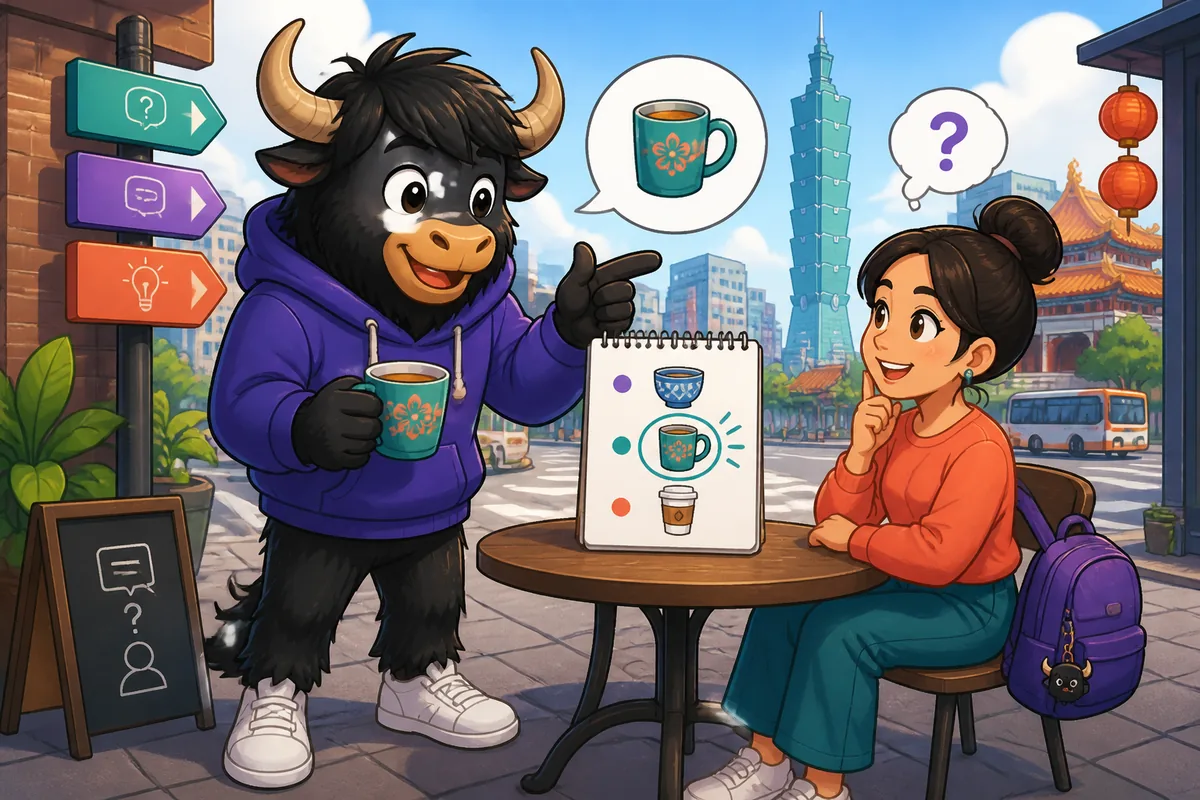
Welcome back! This lesson is a quick, friendly practice session for everyday clarification. You'll hear, practice, and say short phrases that help you check meaning and confirm details.
Level A1: In this short lesson you'll learn polite, survival phrases for clarification — asking someone to rephrase, checking which item, confirming correctness, and saying you didn't hear clearly. These are CEFR-aligned, useful phrases to keep a conversation moving when you need more clarity.
After this lesson you'll be able to:
Recognize and say key clarification phrases (e.g. 我听不清。, 你能换个说法吗?).
Use questions that ask which item (哪一个? / 这个吗?) and confirm correctness (这样对吗?).
Practice simple confirmation patterns to avoid misunderstandings in real conversations.
Ready? Let's go!
When you tap play on phrases, we track your progress through this lesson.
1. Reading + Listening Practice
Hear core phrases, repeat aloud.
你能换个说法吗?
Nǐ néng huàn ge shuōfǎ ma?
Can you say it another way?
Meaning: Can you say it another way?
When to use: Use this to ask someone to explain or rephrase something you don't understand. It's polite and very useful when a speaker uses difficult words or speaks quickly.
老师解释太复杂了,我问:你能换个说法吗?
Lǎoshī jiěshì tài fùzá le, wǒ wèn: Nǐ néng huàn ge shuōfǎ ma?
The teacher's explanation is too complicated. I asked: Can you say it another way?
在电话里我没听明白,我说:你能换个说法吗?
Zài diànhuà lǐ wǒ méi tīng míngbai, wǒ shuō: Nǐ néng huàn ge shuōfǎ ma?
On the phone I didn't understand; I said: Can you say it another way?
哪一个
Nǎ yí ge?
Which one?
Meaning: Which one?
When to use: Use this short question when you want someone to point out which item they mean. In spoken Chinese it's very common and quick.
There are two books on the table. You said which one? I ask: Which one?
菜单上有三道菜,Anna问:哪一个比较辣?
Càidān shàng yǒu sān dào cài, Anna wèn: Nǎ yí ge bǐjiào là?
There are three dishes on the menu. Anna asks: Which one is spicier?
这样吗
Zhèyàng ma?
Like this?
Meaning: Like this?
When to use: Use this to check the way someone wants something done — a gesture, a drawing, or an example. It's a quick, casual confirmation.
Tip: Sometimes learners mix this with 这样对吗? — 这样吗? is more about showing an example.
你要我这样摆盘吗?我问:这样吗?
Nǐ yào wǒ zhèyàng bǎipán ma? Wǒ wèn: Zhèyàng ma?
Do you want me to plate it like this? I ask: Like this?
我示范一个动作,教练说:这样吗?
Wǒ shìfàn yí ge dòngzuò, jiàoliàn shuō: Zhèyàng ma?
I demonstrate a move; the coach says: Like this?
这样对吗
Zhèyàng duì ma?
Is this correct?
Meaning: Is this correct?
When to use: Use this to check whether something (an answer, a way of doing something, written text) is correct. Slightly more formal than 这样吗? for correctness.
Tip: Learners sometimes say 这样吗? for correctness; use 这样对吗? when you want a clear yes/no on correctness.
After finishing the test, a student asks the teacher: Is this correct?
这个词是什么意思?
Zhè ge cí shì shénme yìsi?
What is this word?
Meaning: What is this word?
When to use: Use this when you see a written word you don't understand — on signs, menus, or in texts. It's the most natural way to ask for a word's meaning.
在菜单上看到一个陌生词,Anna问:这个词是什么意思?
Zài càidān shàng kàn dào yí ge mòshēng cí, Anna wèn: Zhè ge cí shì shénme yìsi?
Seeing an unfamiliar word on the menu, Anna asks: What is this word?
There's a new word in the textbook; the student asks the teacher: What is this word?
我听不清
Wǒ tīng bu qīng.
I can't hear you.
Meaning: I can't hear you.
When to use: Say this when the speaker's voice is too low, the signal is bad, or there's background noise — on calls, in crowds, or when someone mumbles.
在地铁里人很多,David对朋友说:我听不清。
Zài dìtiě lǐ rén hěn duō, David duì péngyou shuō: Wǒ tīng bu qīng.
On the crowded subway, David says to his friend: I can't hear you.
电话信号差时,Anna说:对不起,我听不清,你能再说一遍吗?
Diànhuà xìnhào chà shí, Anna shuō: Duìbuqǐ, wǒ tīng bu qīng, nǐ néng zài shuō yí biàn ma?
When the phone signal is bad, Anna says: Sorry, I can't hear you, can you say that again?
你说的是___吗?
Nǐ shuō de shì ___ ma?
You said ___?
Meaning: You said ___?
When to use: Use this to check whether you heard a particular word or short phrase correctly. Fill the blank with the word you think you heard.
我没听清,问:你说的是北京吗?(你说的是北京吗?)
Wǒ méi tīng qīng, wèn: Nǐ shuō de shì Běijīng ma?
I didn't hear clearly, I ask: You said Beijing?
火车站他说了一个站名,我确认:你说的是广州吗?
Huǒchēzhàn tā shuō le yí ge zhànmíng, wǒ quèrèn: Nǐ shuō de shì Guǎngzhōu ma?
He said a station name; I confirm: You said Guangzhou?
这个吗
Zhè ge ma?
This one?
Meaning: This one?
When to use: Point at or hold an object and use this phrase to confirm whether it's the item the other person meant.
服务员指着杯子,我拿起来问:这个吗?
Fúwùyuán zhǐ zhe bēizi, wǒ ná qǐlái wèn: Zhè ge ma?
The server points to a cup; I pick it up and ask: This one?
在商店试衣间外,Anna对朋友说:这个吗?(我应该买这件吗?)
Zài shāngdiàn shìyī jiān wài, Anna duì péngyou shuō: Zhè ge ma?
Outside the fitting room, Anna says to her friend: This one?
2. Conversational Listening Practice
Hear phrases in a real mini-conversation.
Anna calls David about a sign and some items; they need to clarify what he meant.
What kind of help does Anna ask David for?
Anna
喂,David,我听不清,你能再说一次吗?
Wèi, David, wǒ tīng bu qīng, nǐ néng zài shuō yí cì ma?
Hi David, I can't hear you clearly — can you say it again?
David
我说的是那家咖啡馆,在街角,名字叫'晨光'。
Wǒ shuō de shì nà jiā kāfēiguǎn, zài jiējiǎo, míngzi jiào 'Chénguāng'.
I meant that café, on the corner, it's called 'Morning Light.'
Anna
你能换个说法吗?我不太懂'晨光'的发音。
Nǐ néng huàn ge shuōfǎ ma? Wǒ bù tài dǒng 'Chénguāng' de fāyīn.
Can you say it another way? I don't quite get the pronunciation of 'Chénguāng.'
David
我写一下:'晨'是早上的晨,'光'是光。你说的是'晨光'吗?
Wǒ xiě yíxià: 'chén' shì zǎoshang de chén, 'guāng' shì guāng. Nǐ shuō de shì 'Chénguāng' ma?
I'll write it: 'chen' like morning, 'guang' like light. You said 'Chénguāng'?
Anna
哦,明白了。那家咖啡馆是这个吗?(她指着地图)
Ó, míngbai le. Nà jiā kāfēiguǎn shì zhè ge ma? (tā zhǐ zhe dìtú)
Oh, got it. Is that café this one? (she points at the map)
David
对,就是那个。你到了可以问人:这个词是什么意思?(牌子上写的)
Duì, jiù shì nàgè. Nǐ dào le kěyǐ wèn rén: Zhè ge cí shì shénme yìsi? (páizi shàng xiě de)
Right, it's that one. When you arrive you can ask people: What does this word mean? (on the sign)
3. Guided Practice
Quizzes and matching to lock in meaning.
What does '我听不清。' mean?
Which phrase asks someone to rephrase in a polite way?
If you point at a cup and want to confirm it is the right one, what do you ask?
Which phrase asks about the meaning of a written word?
On the noisy call Anna says: Sorry, I can't hear you.
电话里噪声很大,Anna听不见对方,说:对不起,___。
Diànhuà lǐ zàoshēng hěn dà, Anna tīng bu jiàn duìfāng, shuō: Duìbuqǐ, ___ .
The shop assistant points to two coats, and Anna asks: Which one?
店员指着两件外套,Anna不确定,她看了看说:___
Diànyuán zhǐ zhe liǎng jiàn wàitào, Anna bù quèdìng, tā kàn le kàn shuō: ___
David writes the address; Anna asks: Is this correct?
David在纸上写地址,Anna看了看,问:我把地址写成这样,___
David zài zhǐ shàng xiě dìzhǐ, Anna kàn le kàn, wèn: Wǒ bǎ dìzhǐ xiě chéng zhèyàng, ___
Match the core phrases
Match the extra phrases
4. Speaking Practice
Say phrases yourself (mic/recording).
Recording stays on your device only. Check speech uses your browser's speech tools when available.