
New here? This is lesson 237 of a free 240-lesson German course.
The trip story, told properly in German
Jule is retelling the Hamburg weekend at Bäckerei Krause, and the story keeps growing. Priya was there, so she can land the punchline when Jule goes too far.
Anton sits at the corner table, still on his Milchkaffee. He missed the trip: on time, but on the wrong day.
You'll start a story, mark the turn, tease the best bit, and hold the punchline until the end.
Keep du with Jule. This is story craft, not new travel words.
By the end of this lesson
Retell one story with details and a punchline.
- Also, pass auf, es war so:So listen, it went like this.
- Am Anfang lief tatsächlich alles nach Plan.At the start everything actually went to plan.
- Genau in dem Moment kippte die Sache.Right at that moment the whole thing turned.
- Und weißt du, was das Beste war?And you know what the best part was?
- Wenn ich das heute erzähle, muss ich lachen.When I tell it today, I have to laugh.
- Die Pointe kommt erst ganz am Schluss.The punchline only comes right at the end.
Scene — the bakery table
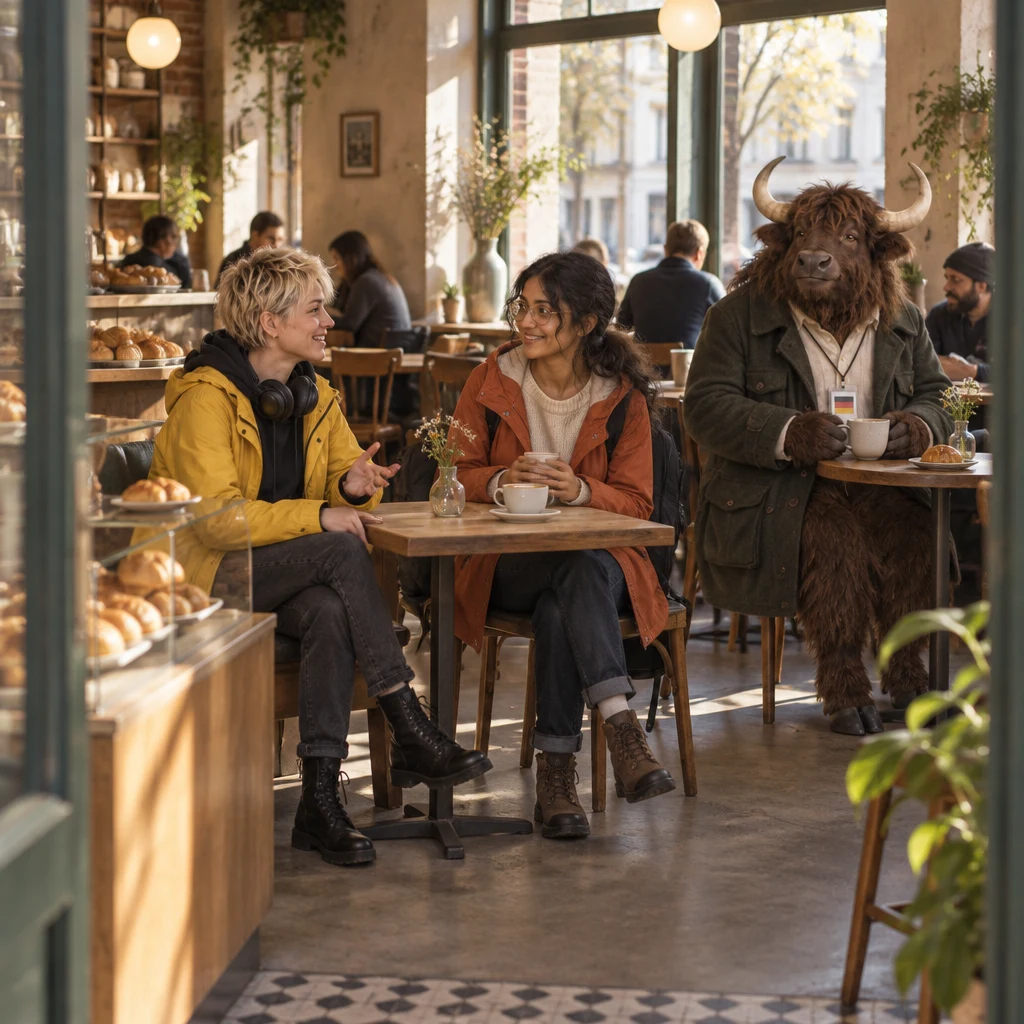
Jule drops onto the bench at Bäckerei Krause with a grin that already looks too big for Hamburg. Priya has a coffee waiting.
Anton occupies two chairs at the corner table, as usual.
Keks sits under the table. Renate wipes the counter and pretends not to listen.
Learn — start, turn, punchline
Six lines give you a story from the opening to the punchline.
You start, mark the smooth bit, name the turn, tease the best part, then laugh and hold the ending.
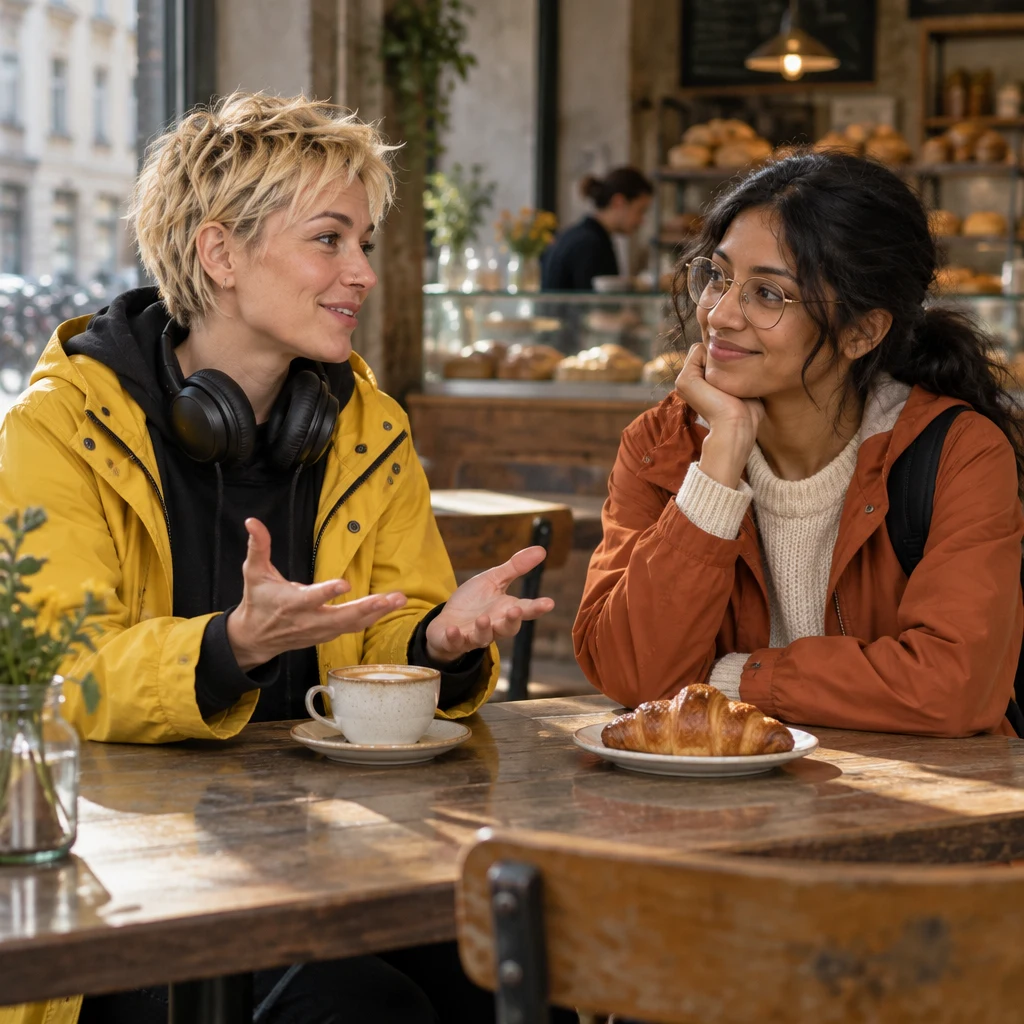
Also, pass auf, es war so:
So listen, it went like this.
When to use it: Use this to open a story and make people listen.
The prefix of aufpassen sits at the end: pass auf.
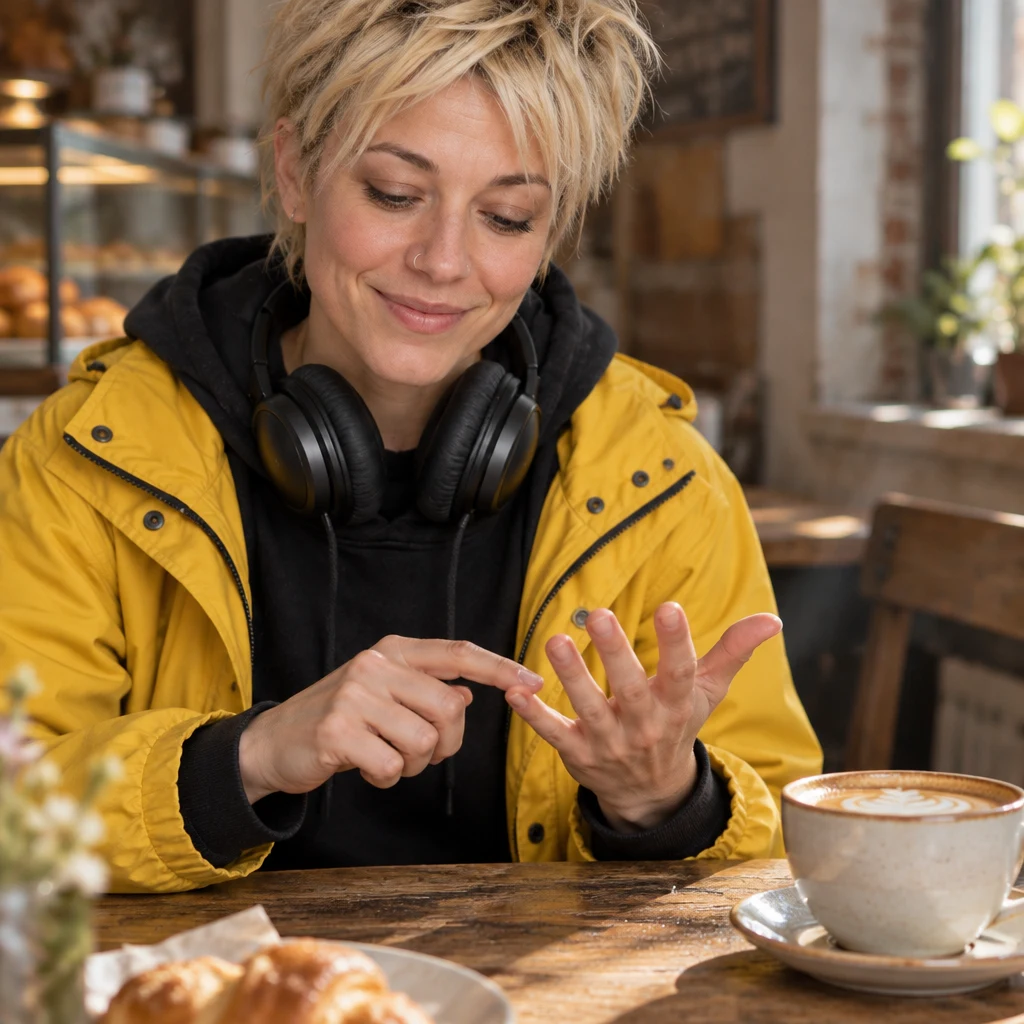
Am Anfang lief tatsächlich alles nach Plan.
At the start everything actually went to plan.
When to use it: Use this when the first part of a story went smoothly.
After Am Anfang, the verb lief stays in second place.
Say it: In tatsächlich, ch sounds like ich, not like ach.
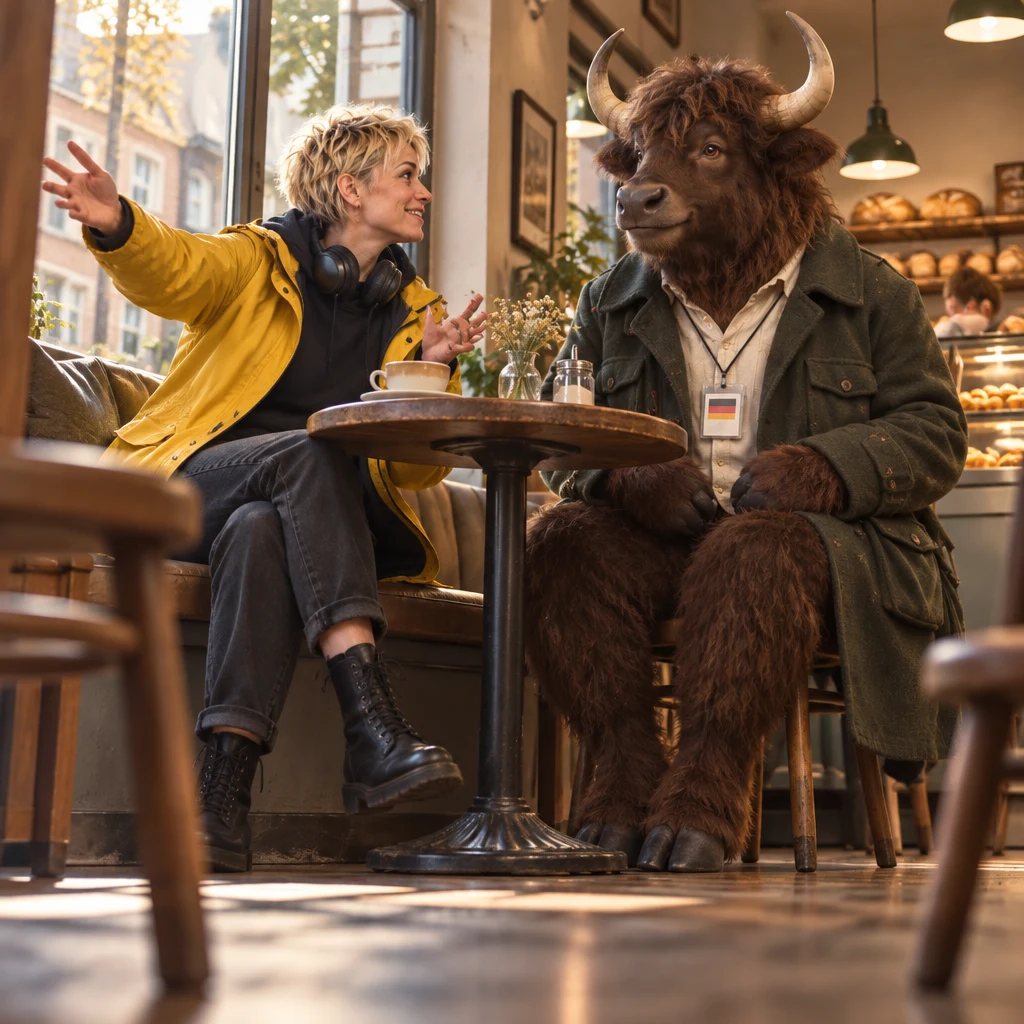
Genau in dem Moment kippte die Sache.
Right at that moment the whole thing turned.
When to use it: Use this when a story suddenly goes wrong.
The verb kippte still comes second, even after a longer time phrase.
Say it: Sache puts the stress on the first syllable.
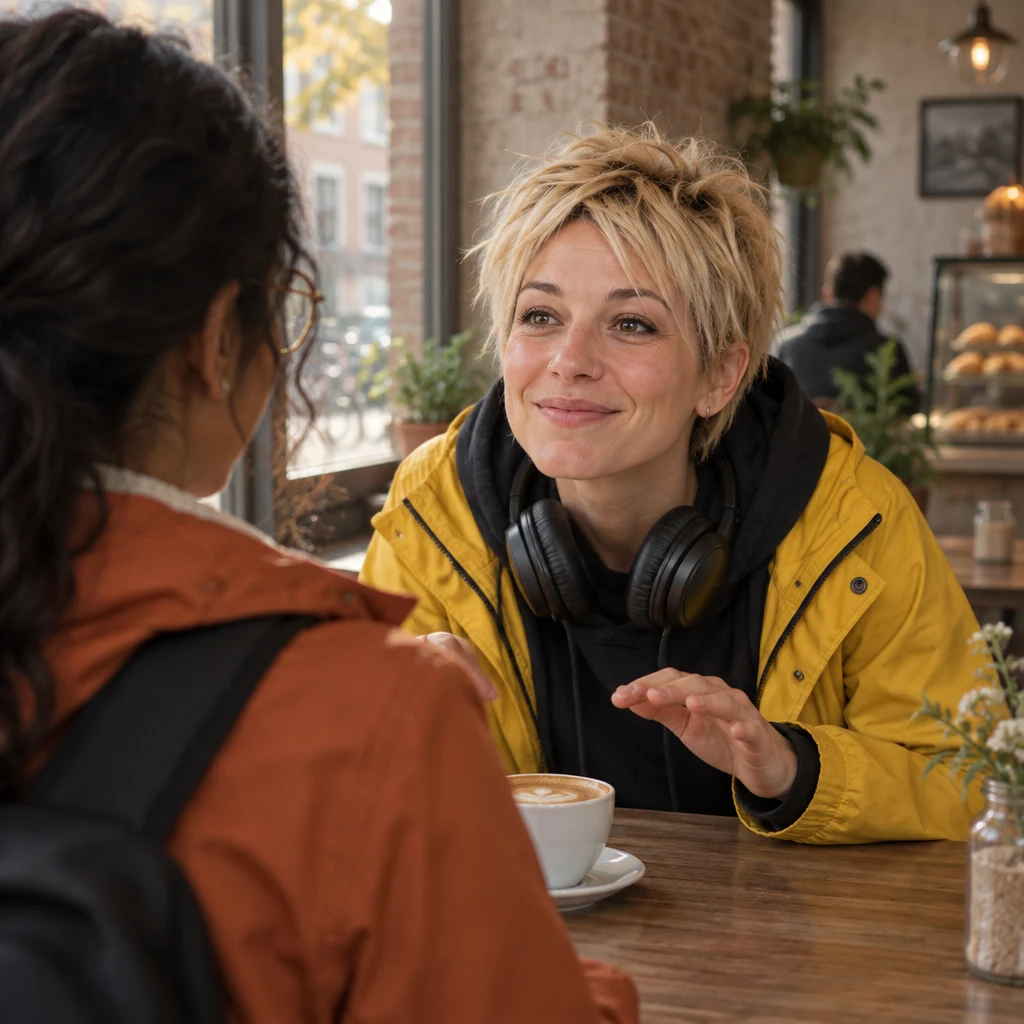
Und weißt du, was das Beste war?
And you know what the best part was?
When to use it: Use this to tease the best bit before you tell it.
This du is for a friend; Sie would sound too stiff here.
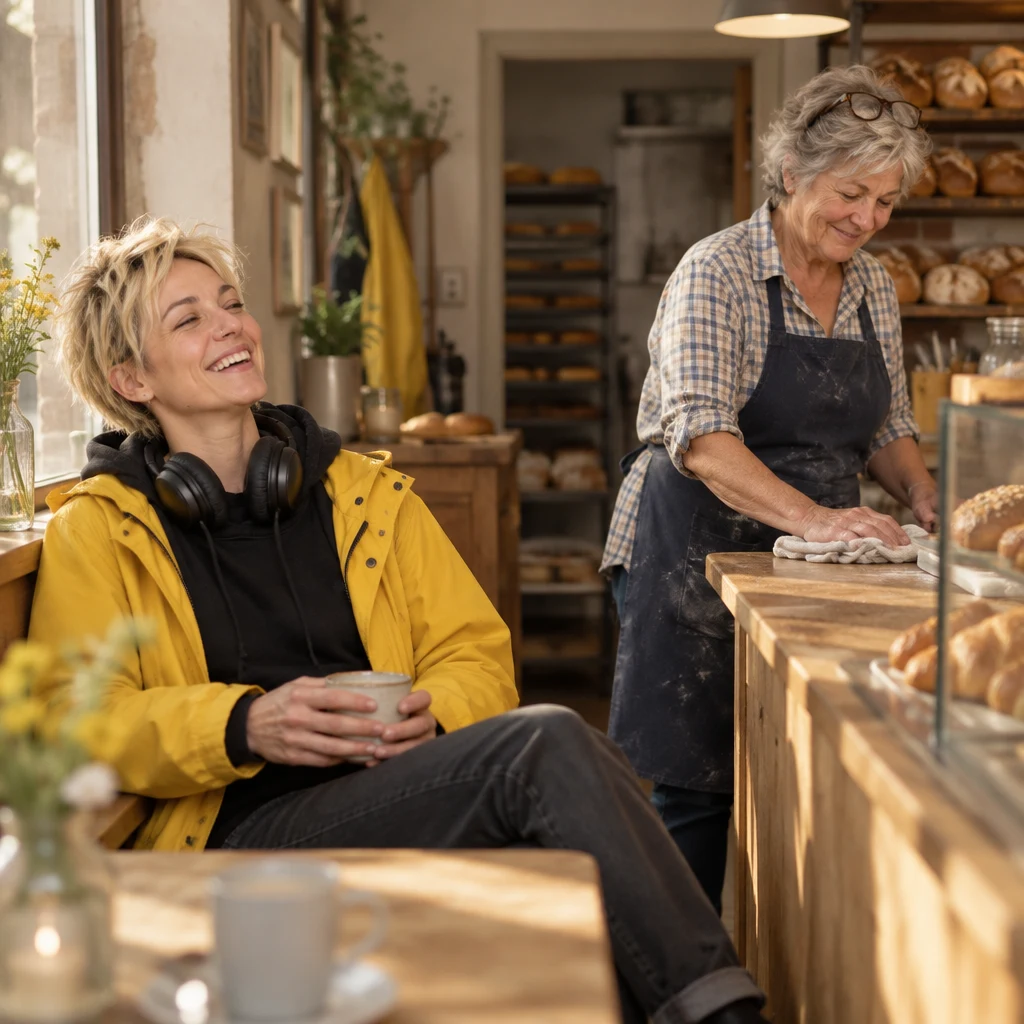
Wenn ich das heute erzähle, muss ich lachen.
When I tell it today, I have to laugh.
When to use it: Use this when a messy story is funny later.
After wenn, erzähle comes later in that first clause.
Say it: The ä in erzähle sounds like a long eh.
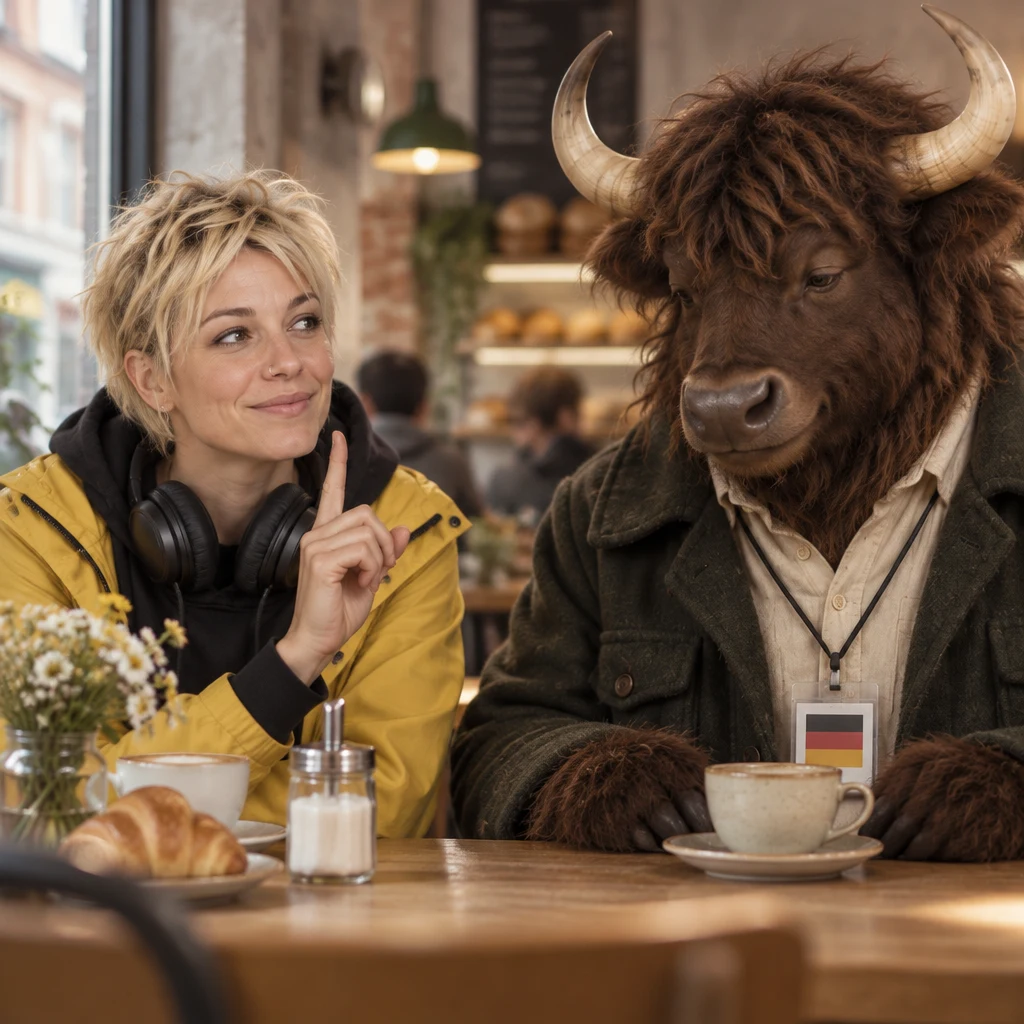
Die Pointe kommt erst ganz am Schluss.
The punchline only comes right at the end.
When to use it: Use this to say the punchline is still coming.
Put the punchline last; this line tells people to wait for it.
Say it: Schluss starts with the German sch sound.
Story — bigger than it was
Jule starts the Hamburg weekend again, bigger than last time. Priya waits for the punchline, and Anton missed the train on the wrong day.
The highlighted words are the lines you just learned. Turn on Show English if you need it.
- Jule sets her cup down as if this will take a while.
 JuleAlso, pass auf, es war so:So listen, it went like this.
 PriyaDu machst es schon wieder größer, oder?You're making it bigger again, aren't you?
- She does not deny it. She only sits up straighter.
- JuleAm Anfang lief tatsächlich alles nach Plan.At the start everything actually went to plan.
- PriyaUnd dann ist Folgendes passiert.And then this happened.
- JuleWir saßen ruhig im Zug, Kaffee, sogar ein Fensterplatz.We sat quietly on the train, coffee, even a window seat.
- PriyaBis zur Verspätung und zum Schienenersatzverkehr.Until the delay and the rail replacement.
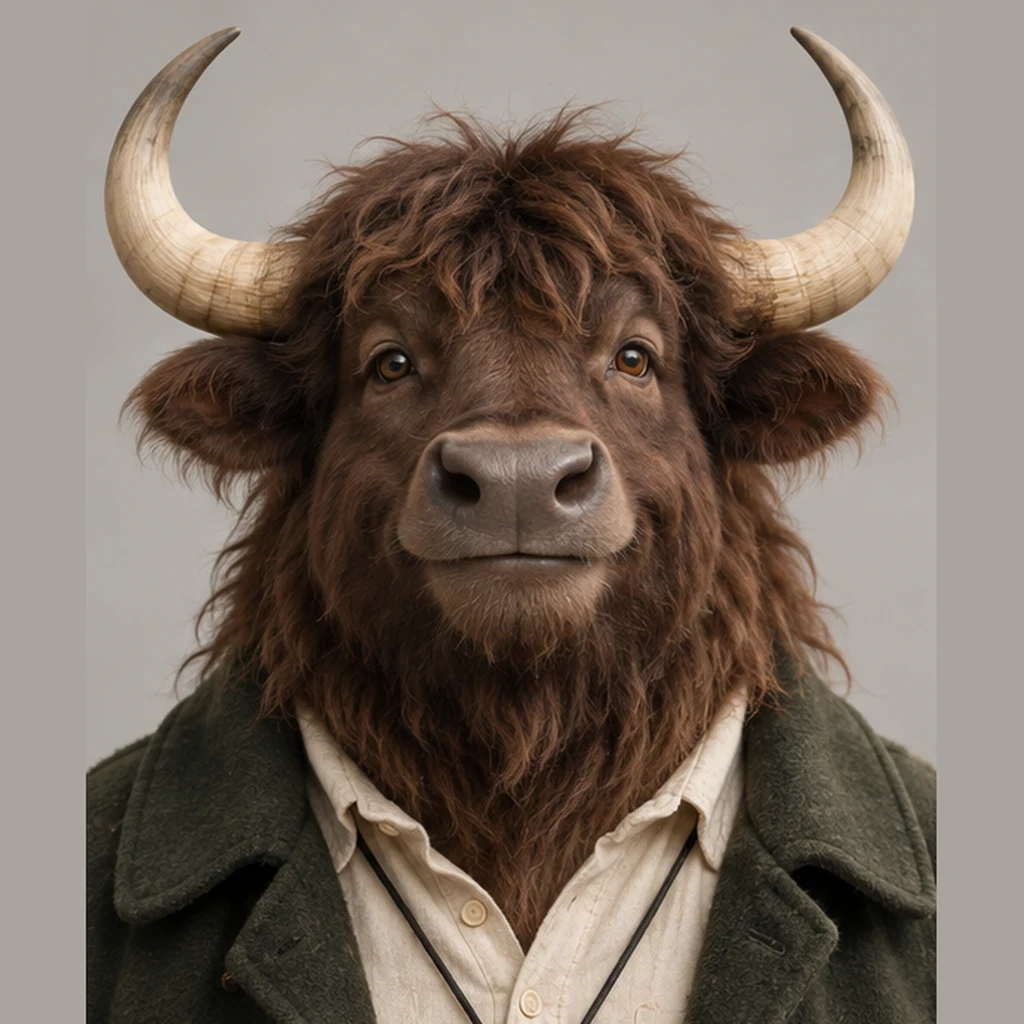 AntonDas stand nicht auf dem Zettel.That wasn't on the tag.
- JuleGenau in dem Moment kippte die Sache.Right at that moment the whole thing turned.
- AntonIch stand pünktlich am Bahnsteig. Nur einen Tag zu früh.I was on the platform on time. Just a day too early.
- PriyaDeshalb hast du die ganze Reise verpasst.That's why you missed the whole trip.
- JuleUnd weißt du, was das Beste war?And you know what the best part was?
- Jule leans in. The harbour weather is about to grow.
- PriyaJetzt kommt der Regen und der Hafen bei Sturm, oder?Now comes the rain and the harbour in a storm, right?
- JuleIn Hamburg hat es gestürmt, mindestens eine Stunde.In Hamburg it stormed, for at least an hour.
- PriyaEs hat zehn Minuten geregnet. Mehr nicht.It rained for ten minutes. That was it.
- JuleWenn ich das heute erzähle, muss ich lachen.When I tell it today, I have to laugh.
- Anton looks at his Milchkaffee and still does not drink.
- AntonNa, und die Pointe?So, and the punchline?
- PriyaDie Pointe kommt erst ganz am Schluss.The punchline only comes right at the end.
- JuleNa, dann sag sie endlich.Right, then say it at last.
- PriyaHinterher wirkt die ganze Sache fast komisch.Afterwards the whole thing seems almost funny.
- PriyaAnton stand pünktlich da. Nur am Tag vorher.Anton was there on time. Just the day before.
- AntonPünktlich bin ich immer. Den Tag habe ich vertauscht.I'm always on time. I mixed up the day.
- JuleUnd das ist die Pointe.And that's the punchline.
- PriyaGenau. Kein Sturm. Nur ein Yak am falschen Tag.Exactly. No storm. Just a yak on the wrong day.
Practice — hold the ending
Ten short tasks wait here. You'll listen, build, fill a gap, and swap a word.
They keep the story moves apart so you don't rush the punchline.
0 of 10 done
What did you hear?
What did you hear?
What do you say?
What do you say?
The first part of your weekend story went smoothly. Say so.
Fill the gap
Fill the gap
Right at that moment the whole thing turned.
Genau in dem Moment ____ die Sache.
What does it mean?
What does it mean?
Und weißt du, was das Beste war?
Build the line
Build the line
When I tell it today, I have to laugh.
, .
Tap the words in order.
Swap the word
Swap the word
Hold the funny last beat. Tell them it still has not arrived.
Die Pointe kommt erst ganz am ____.
Pick the reply
Jule says:
Pick the reply
Am Anfang lief tatsächlich alles nach Plan.
At the start everything actually went to plan.
And you reply with:
True or false?
True or false?
This line is how you start a story from the beginning.
Match the pairs
German
Also, pass auf, es war so:Drop the English hereAm Anfang lief tatsächlich alles nach Plan.Drop the English hereGenau in dem Moment kippte die Sache.Drop the English hereEnglish
What do you say?
What do you say?
You have finished the tale. Name the punchline as the punchline.
Say it — tell it in order
Now you're Priya at the bakery table. When it's your turn, tap the microphone and tell the story in order.
Tap ▶ first if you want to hear the line. Your recording stays on your device.
- JuleNa, erzähl du mal die Geschichte von Hamburg.Go on, you tell the Hamburg story.
- Priya (you)Start the story and tell her to listen.
Start the story and tell her to listen.
Also, pass auf, es war so:
So listen, it went like this.
0 of 6 said
Recap — what you can say now
| German | English | Play |
|---|---|---|
| Also, pass auf, es war so: | So listen, it went like this. | |
| Am Anfang lief tatsächlich alles nach Plan. | At the start everything actually went to plan. | |
| Genau in dem Moment kippte die Sache. | Right at that moment the whole thing turned. | |
| Und weißt du, was das Beste war? | And you know what the best part was? | |
| Wenn ich das heute erzähle, muss ich lachen. | When I tell it today, I have to laugh. | |
| Die Pointe kommt erst ganz am Schluss. | The punchline only comes right at the end. |
Save your progress — it’s free
Keep your place in the course and see which lines you’ve learned.
Want the next lesson in your inbox?
Get the next lesson by email, one a day.
Join the newsletterDaily lesson emails are coming soon. Newsletter subscribers get them first.
Keep practicing with Yak Cards
Want to keep these story moves handy? Grab the Yak Cards for this lesson and review them anywhere.
A short round with the Yak Cards each day keeps the opening and the punchline in the right order.
Open Yak Cards