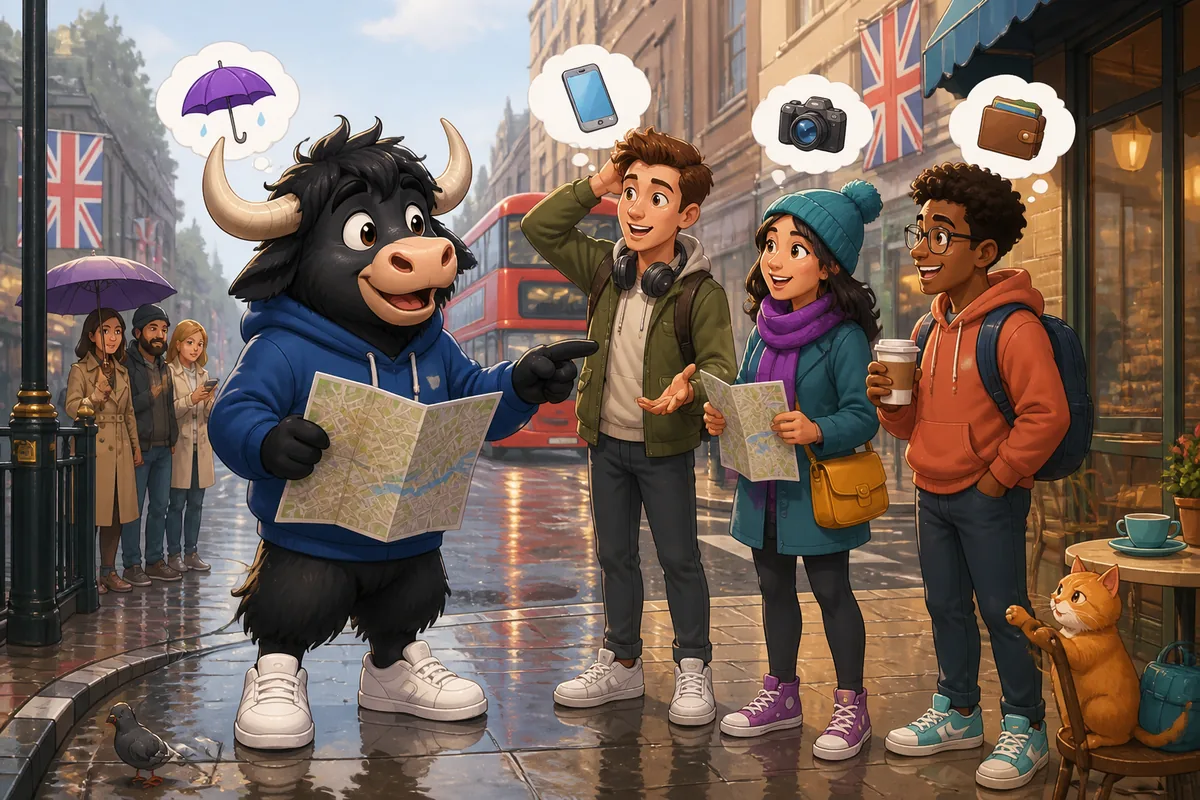
Welcome! In this short lesson we'll practice useful phrases to say what you have and who owns things. Read, listen, repeat — then try the short conversation and exercises.
Level A1: This lesson focuses on simple possession phrases in German: saying you have something, saying you don't, asking if someone has something (including "any"), and short ways to say who owns an item. CEFR-aligned and practical: you'll practice the exact phrases you can use right away.
After this lesson you'll be able to:
Learn to say you have or don’t have things (Ich habe ___ / Ich habe kein ___).
Ask and answer simple questions about possession (Hast du ___? / Ja, ich habe ___ / Nein, ___ habe ich nicht).
Say who owns something (Das gehört mir / Das gehört dir / Ist das dein ___?).
Level A1: build confidence with short possession replies and questions.
Ready? Let's go!
When you tap play on phrases, we track your progress through this lesson.
1. Reading + Listening Practice
Hear core phrases, repeat aloud.
Ich habe ___.
I have ___.
Meaning: I have ___.
When to use: Use this to say you own or carry something now (object in accusative: einen/eine/ein ___).
Ich habe einen Hund.
I have a dog.
Ich habe eine Tasche.
I have a bag.
Ich habe kein ___.
I don't have ___.
Meaning: I don't have ___.
When to use: Use this to say you do not have something. Remember ‚kein/keine/keinen‘ changes with gender and case.
Tip: Beginners sometimes forget to change ‚kein‘ for masculine accusative (keinen).
Ich habe keinen Stift.
I don't have a pen.
Ich habe kein Auto.
I don't have a car.
Hast du ___?
Do you have ___?
Meaning: Do you have ___?
When to use: Ask someone if they have a specific thing. Formal version: ‚Haben Sie ___?‘
Hast du einen Stift?
Do you have a pen?
Hast du ein Ladegerät?
Do you have a charger?
Hast du irgendwelche ___?
Do you have any ___?
Meaning: Do you have any ___?
When to use: Use this with plural count nouns to ask if someone has some of those items: ‚irgendwelche Fragen/Ideen/Stifte‘.
Tip: Don't use this with singular nouns; it's best with plurals.
Hast du irgendwelche Fragen?
Do you have any questions?
Hast du irgendwelche Fotos?
Do you have any photos?
Ja, ich habe ___.
Yes, I have ___.
Meaning: Yes, I have ___.
When to use: Short positive reply about possession. The object is in the accusative, e.g. ‚Ja, ich habe einen Ball.‘
Ja, ich habe einen Regenschirm.
Yes, I have an umbrella.
Ja, ich habe Karten.
Yes, I have tickets.
Nein, ___ habe ich nicht.
No, I don't have ___.
Meaning: No, I don’t have ___.
When to use: A natural short negative answer, often after the thing was mentioned: ‚Nein, Schlüssel habe ich nicht.‘
Tip: Remember the object may appear before ‚habe ich nicht‘ for emphasis; word order differs from English.
Nein, ein Auto habe ich nicht.
No, I don't have a car.
Nein, Zeit habe ich nicht.
No, I don't have time.
Das ist mein ___.
This is my ___.
Meaning: This is my ___.
When to use: Use to say that a specific item belongs to you. For feminine/plural use ‚meine‘.
Das ist mein Buch.
This is my book.
Das ist meine Tasche.
This is my bag.
Ist das dein ___?
Is this your ___?
Meaning: Is this your ___?
When to use: Ask if an item belongs to someone. For feminine/plural use ‚deine‘; formal: ‚Ist das Ihr/Ihre ___?‘
Tip: Beginners sometimes use ‚dein‘ for plural nouns instead of ‚deine‘.
Ist das dein Handy?
Is this your phone?
Ist das deine Jacke?
Is this your jacket?
Das ist nicht mein ___.
That's not my ___.
Meaning: That’s not my ___.
When to use: Use this to say something does not belong to you. Adjust ‚mein/meine‘ for gender and number.
Das ist nicht mein Stift.
That is not my pen.
Das ist nicht meine Tasche.
That is not my bag.
Ich habe ___ dabei.
I have ___ with me.
Meaning: I have ___ with me.
When to use: Say you currently have something on you or nearby: ‚Ich habe mein Buch dabei.‘
Ich habe meinen Pass dabei.
I have my passport with me.
Ich habe ein bisschen Geld dabei.
I have some money with me.
Das gehört mir.
It's mine.
Meaning: It’s mine.
When to use: Use to say something belongs to you. You can also say ‚Das ist meins.‘
Dieses Buch gehört mir.
This book is mine.
Der Platz gehört mir.
The seat is mine.
Das gehört dir.
It's yours.
Meaning: It’s yours.
When to use: Informal way to say something belongs to the listener. Formal: ‚Das gehört Ihnen.‘
Der Regenschirm gehört dir.
The umbrella is yours.
Die Bücher gehören dir.
The books are yours.
Gehört das mir?
Is it mine?
Meaning: Is it mine?
When to use: Ask if something belongs to you. A natural alternative is ‚Ist das meins?‘
Gehört das mir?
Is that mine?
Gehört dieser Schlüssel mir?
Does this key belong to me?
2. Conversational Listening Practice
Hear phrases in a real mini-conversation.
At a table, Anna and David check a pen.
Anna
Hast du irgendwelche Stifte?
Do you have any pens?
David
Ja, ich habe einen Stift dabei.
Yes, I have a pen with me.
Anna
Ist das dein Stift?
Is this your pen?
David
Nein, das ist nicht mein Stift.
No, that is not my pen.
Anna
Gehört das mir?
Does that belong to me?
David
Nein, das gehört dir.
No, it's yours.
3. Guided Practice
Quizzes and matching to lock in meaning.
How do you say 'I have a car.' in German?
How do you say the short negative 'No, I don't have a car.' using the lesson's short negative frame?
How do you ask 'Do you have any questions?'
Which phrase means 'It's mine.'?
Hast du irgendwelche Taschen? — Do you have any bags?
At the party you want to ask ‘Do you have any bags?’ You say: ___.
Das ist nicht mein Buch. — That is not my book.
Someone hands you a book and you want to say 'That’s not my book.' You say: ___.
Ich habe Geld dabei. — I have money with me.
At the café you want to say 'I have money with me.' You say: ___.
Match the core phrases
Match the extra phrases
4. Speaking Practice
Say phrases yourself (mic/recording).
Recording stays on your device only. Check speech uses your browser's speech tools when available.