Gibt es auch eine ___ Option?
Is there a ___ option?
Gibt es auch eine vegetarische Option?
Is there also a vegetarian option?
Gibt es auch eine milchfreie Option?
Is there also a dairy-free option?
Lesson 63 of 158
Goal: Talk about likes, allergies, and polite requests
Free German lessons with guided practice, audio, and speaking support.
Ready to talk about food in German? Let’s practice useful phrases for menus, friends, and restaurants. This lesson is relaxed — we’ll listen, repeat, and speak aloud a few times so these phrases stick.
Level A2: In this lesson (Lesson 63) you will practice asking about dietary options, saying what you can or can't eat, checking for allergies, and making polite refusals. We'll use eight helpful chunks for everyday food conversations — perfect for ordering or planning a meal. This lesson is CEFR-aligned and focused on practical speaking and listening.
After this lesson you'll be able to:

Ready? Let's go!
When you tap play on phrases, we track your progress through this lesson.
Hear core phrases, repeat aloud.
Gibt es auch eine ___ Option?
Is there a ___ option?
Ich kann ___ essen, aber ___ nicht.
I can eat ___, but not ___.
Bist du allergisch gegen ___?
Are you allergic to ___?
Was isst du gern?
What kind of food do you like?
Für mich bitte kein ___.
No ___ for me, please.
Ich mag ___ total gern.
I'm a big fan of ___.
Gibt es irgendwas, was du nicht essen kannst?
Is there anything you can't eat?
Es ist okay, aber nicht mein Lieblingsessen.
It's okay, but it's not my favorite.
Hear phrases in a real mini-conversation.
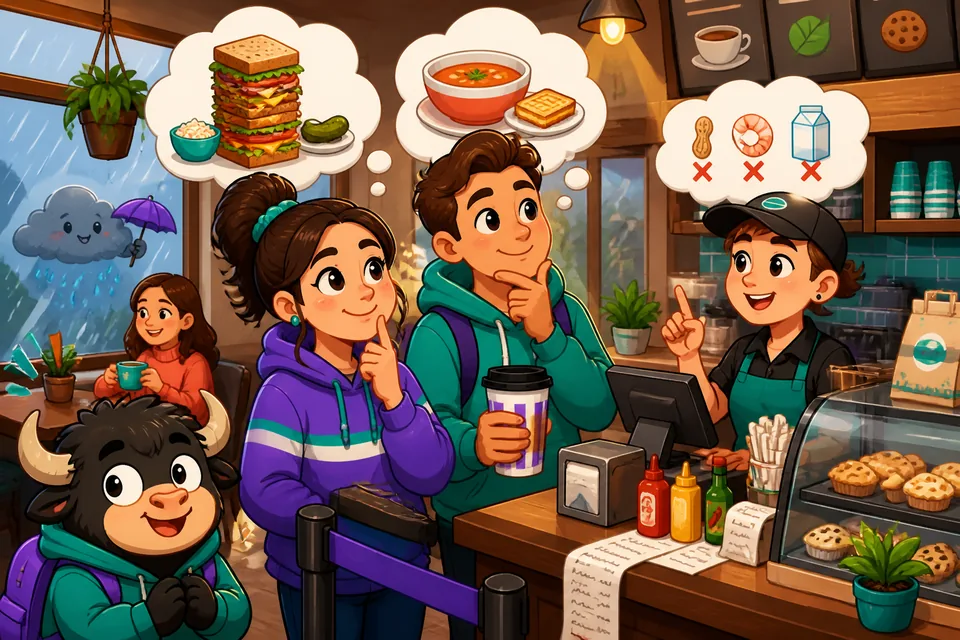
At a café deciding what to order

Anna
Was isst du gern?
What do you like to eat?

David
Ich mag Pizza total gern. Gibt es auch eine vegetarische Option?
I really like pizza. Is there also a vegetarian option?
Anna
Ja. Für mich bitte kein Fleisch, bitte.
Yes. No meat for me, please.
David
Gibt es irgendwas, was du nicht essen kannst? Bist du allergisch gegen Nüsse?
Is there anything you can't eat? Are you allergic to nuts?
Anna
Ich kann Nüsse essen, aber Milch nicht.
I can eat nuts, but not milk.
David
Okay. Wenn du willst, ist die Gemüsepizza okay, aber nicht dein Lieblingsessen?
Okay. If you like, the vegetable pizza is okay, but not your favorite?
Quizzes and matching to lock in meaning.
Gibt es auch eine ___ Option? Ich esse kein Fleisch.
Ich kann Käse essen, aber ___ nicht.
Für mich bitte keine ___, ich bin allergisch.
Say phrases yourself (mic/recording).
Recording stays on your device only. Check speech uses your browser's speech tools when available.
Say this phrase out loud:
Gibt es auch eine ___ Option?
Is there a ___ option?
Say this phrase out loud:
Ich kann ___ essen, aber ___ nicht.
I can eat ___, but not ___.
Say this phrase out loud:
Bist du allergisch gegen ___?
Are you allergic to ___?
Say this phrase out loud:
Was isst du gern?
What kind of food do you like?
Say this phrase out loud:
Für mich bitte kein ___.
No ___ for me, please.
Say this phrase out loud:
Ich mag ___ total gern.
I'm a big fan of ___.
Say this phrase out loud:
Gibt es irgendwas, was du nicht essen kannst?
Is there anything you can’t eat?
Say this phrase out loud:
Es ist okay, aber nicht mein Lieblingsessen.
It’s okay, but it’s not my favorite.