
New here? This is lesson 230 of a free 240-lesson German course.
Everyday idioms in German
Deniz has crossed from the Späti with a theory. At Bäckerei Krause he is sure the old key in the Fundkiste is treasure.
Anton wants nothing to do with it. Priya tries to keep the talk on the ground.
By the end you'll use six everyday idioms in speech.
You can say you don't get it, it is not your problem, or someone is missing the obvious.
You can also say a plan is not ideal, don't get carried away, and well, that's just great.
By the end of this lesson
Use a handful of common German idioms in everyday speech.
- Ich verstehe nur Bahnhof.I don't understand a word of this.
- Das ist nicht mein Bier.That's not my problem.
- Hast du Tomaten auf den Augen?Can you not see what's right in front of you?
- Das ist nicht das Gelbe vom Ei.That's not exactly ideal.
- Lass uns die Kirche im Dorf lassen.Let's not get carried away.
- Da haben wir den Salat.Well, that's just great.
Scene — the bakery table
Sunday at Bäckerei Krause. Deniz has come over from the Späti and is staring at the Fundkiste behind the counter.
Priya sits with Anton at the corner table. His Milchkaffee is still full. Renate wipes flour from her hands and does not look impressed.

Learn — everyday idioms
Six set phrases do everyday jobs: you are lost, it is not your problem, someone missed the obvious.
You also get a so-so verdict, a call to stay grounded, and a dry that's just great.

Ich verstehe nur Bahnhof.
I don't understand a word of this.
When to use it: Say this when a conversation has completely lost you.
The verb stays second, then comes nur Bahnhof.
Say it: Bahnhof puts the stress on the first syllable.
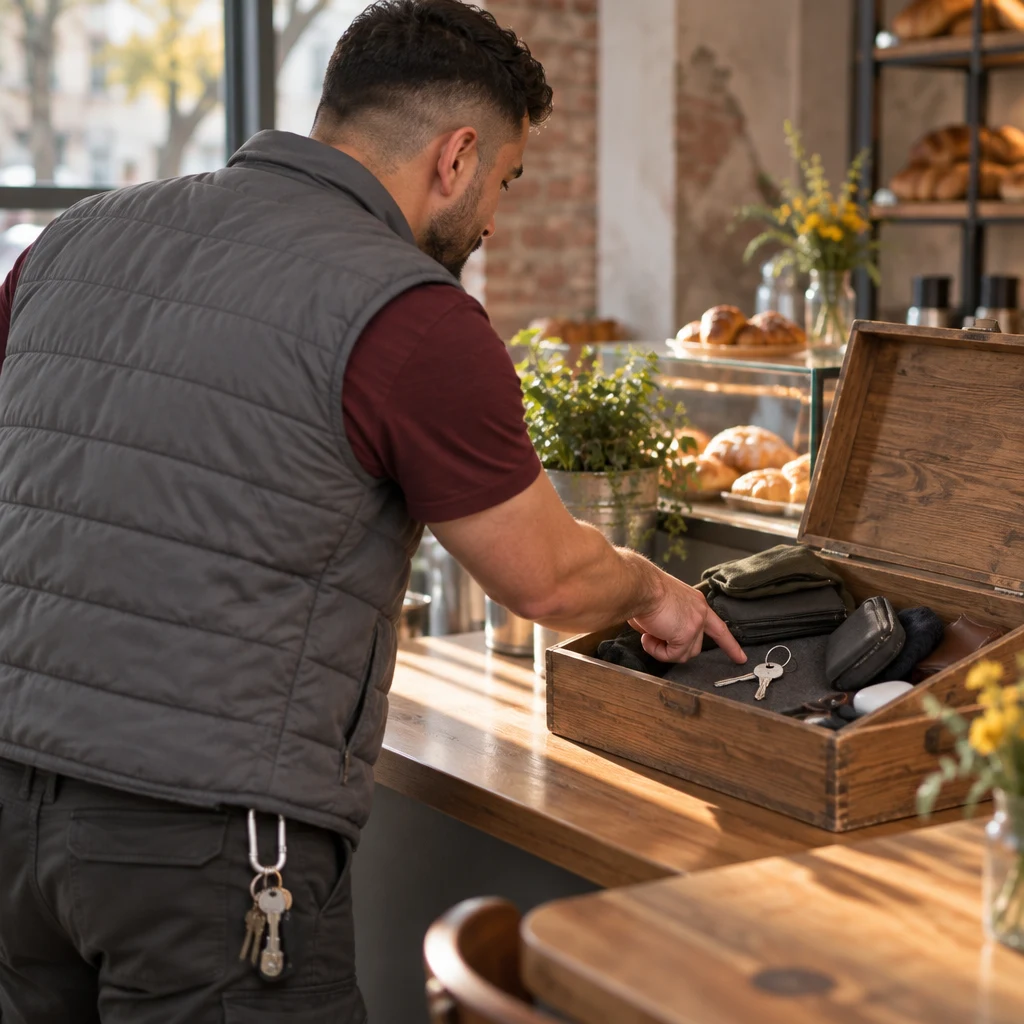
Das ist nicht mein Bier.
That's not my problem.
When to use it: Use this when a mess belongs to someone else.
Bier here names the problem, not a drink on the table.
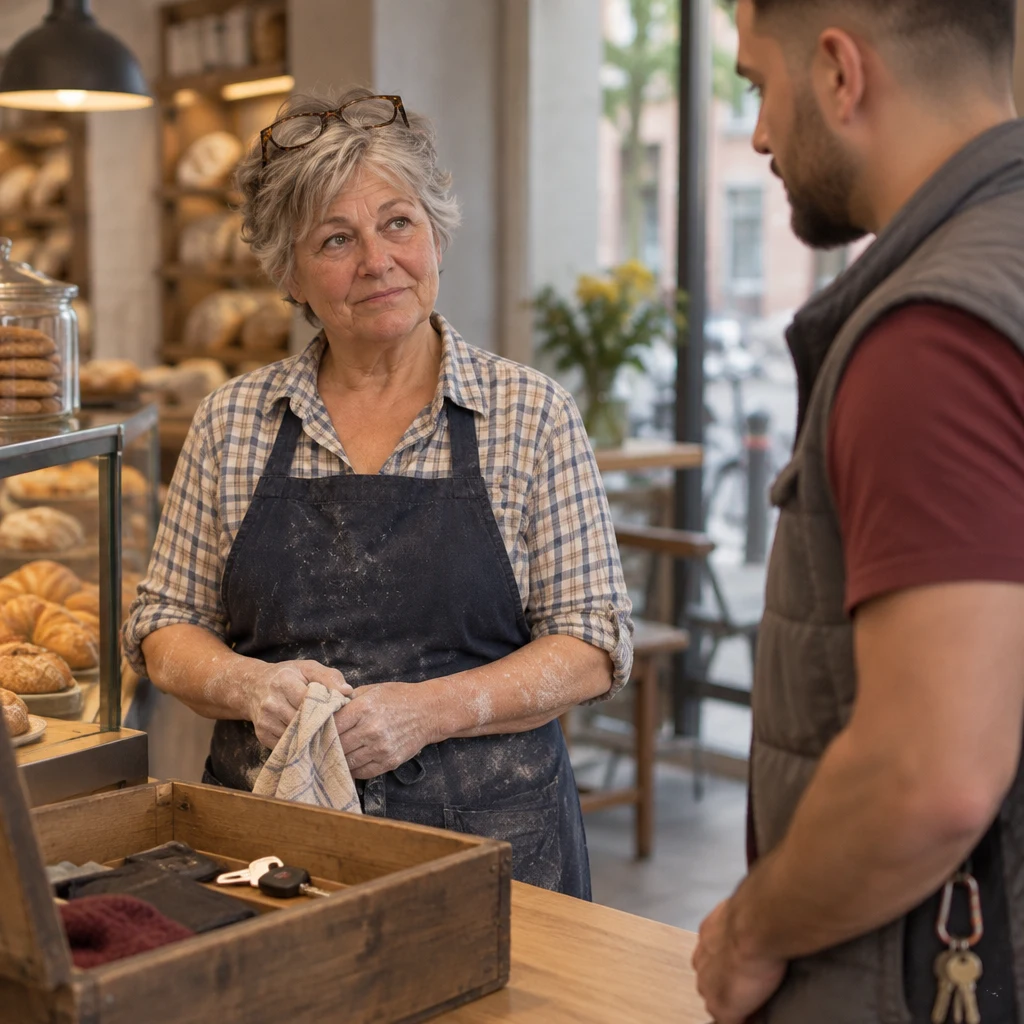
Hast du Tomaten auf den Augen?
Can you not see what's right in front of you?
When to use it: Ask this when a friend is missing something obvious.
Du is for a friend; this tease is not for Sie.
Say it: Augen puts the stress on the first syllable.

Das ist nicht das Gelbe vom Ei.
That's not exactly ideal.
When to use it: Say this when a plan or result is only so-so.
Vom is von dem, so after von the form is dem.
Say it: Gelbe puts the stress on the first syllable.
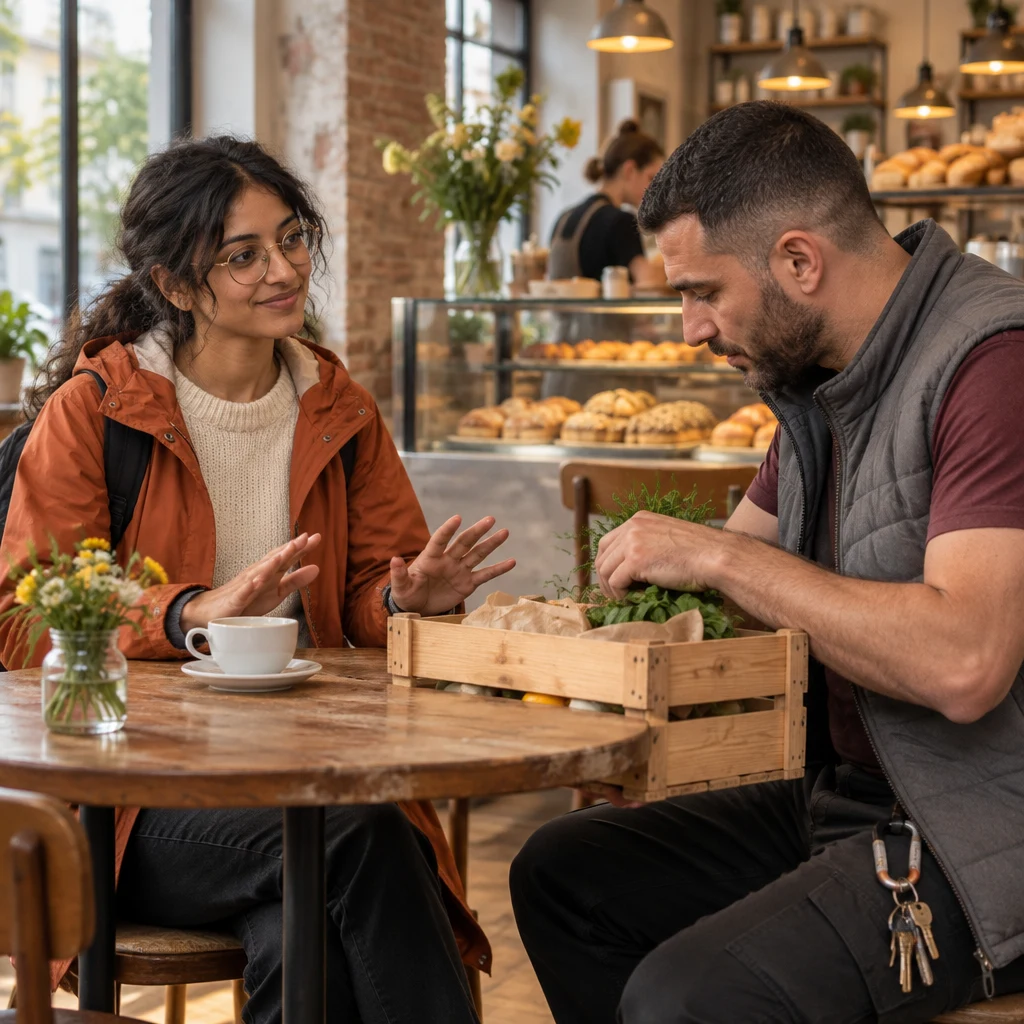
Lass uns die Kirche im Dorf lassen.
Let's not get carried away.
When to use it: Use this when a story or plan is getting too big.
The second lassen sits at the end of this call to stay grounded.
Say it: Kirche uses the soft ch sound, as in ich.

Da haben wir den Salat.
Well, that's just great.
When to use it: Say this when a situation has just gone wrong.
Da starts the line and the verb haben stays in second place.
Story — not his Bier
Watch Deniz push his treasure theory at the bakery. Anton wants out. Priya keeps everyone on the ground.
The highlighted words are the lines you just learned. Turn on Show English if you need it.
- Deniz points at the Fundkiste. He does not sit until Priya nods.
 PriyaSetz dich.Have a seat.
 DenizAlso, der Schlüssel. Das ist ein Schatz, ganz klar.So, the key. That is treasure, quite clearly.
 AntonIch verstehe nur Bahnhof.I don't understand a word of this.
- Deniz leans over the table. Renate stays at the coffee machine.
- DenizHast du Tomaten auf den Augen?Can you not see what's right in front of you?
- AntonWas soll ich denn sehen?What am I supposed to see?
- PriyaLass uns nicht abschweifen.Let's not get sidetracked.
- DenizIch schweife nicht ab. Er liegt doch da.I'm not getting sidetracked. It's right there.
- PriyaLass uns die Kirche im Dorf lassen.Let's not get carried away.
- Renate looks at the open box, then at Deniz.
 RenateDas ist nicht das Gelbe vom Ei.That's not exactly ideal.
- AntonDas ist nicht mein Bier.That's not my problem.
- PriyaKönnte man das auch anders sehen?Could there be another way to look at it?
- DenizAnders? Es ist doch offensichtlich.Another way? It's obvious, though.
- AntonIch war nur zufällig in der Gegend.I just happened to be in the area.
- PriyaDu sitzt hier jeden Sonntag.You sit here every Sunday.
- Renate shuts the lid. Nobody takes the key.
- DenizDa haben wir den Salat.Well, that's just great.
- RenateWatt, die Kiste bleibt zu.Right, the box stays shut.
Practice — six set phrases
Ten short tasks wait here. You will listen, fill a gap, swap a word, and build a line.
They keep the idioms in real bakery talk, not in a list.
0 of 10 done
What did you hear?
What did you hear?
What do you say?
What do you say?
A friend is still standing by the table. Ask them to sit, the informal way.
What does it mean?
What does it mean?
Das ist nicht das Gelbe vom Ei.
Fill the gap
Fill the gap
That's not my problem.
Das ist nicht mein ____.
Pick the reply
Deniz says:
Pick the reply
Morgen graben wir im Hof, ganz bestimmt.
Tomorrow we will definitely dig in the courtyard.
And you reply with:
Build the line
Build the line
Can you not see what's right in front of you?
?
Tap the words in order.
Swap the word
Swap the word
The plan has just collapsed. React with the dry idiom.
Da haben wir den ____.
What do you say?
What do you say?
A friend is sure of a wild theory. Ask if there might be another way to look at it.
True or false?
True or false?
Say this when you want people to stay on the actual topic.
Find the mistake
Find the mistake
Say it — say it at the table
Now you're Priya at the bakery table. When it's your turn, tap the microphone and speak the line.
Tap ▶ first if you want to hear the line. Your recording stays on your device.
- DenizDer Schlüssel ist ganz klar ein Schatz.The key is clearly treasure.
- Priya (you)Tell him you don't understand a word of this.
Tell him you don't understand a word of this.
Ich verstehe nur Bahnhof.
I don't understand a word of this.
0 of 6 said
Recap — what you can say now
| German | English | Play |
|---|---|---|
| Ich verstehe nur Bahnhof. | I don't understand a word of this. | |
| Das ist nicht mein Bier. | That's not my problem. | |
| Hast du Tomaten auf den Augen? | Can you not see what's right in front of you? | |
| Das ist nicht das Gelbe vom Ei. | That's not exactly ideal. | |
| Lass uns die Kirche im Dorf lassen. | Let's not get carried away. | |
| Da haben wir den Salat. | Well, that's just great. |
Save your progress — it’s free
Keep your place in the course and see which lines you’ve learned.
Want the next lesson in your inbox?
Get the next lesson by email, one a day.
Join the newsletterDaily lesson emails are coming soon. Newsletter subscribers get them first.
Keep practicing with Yak Cards
Want to keep these idioms handy? Grab the Yak Cards for this lesson and review them anywhere.
A short Yak Cards round each day keeps the idioms ready for bakery talk.
Open Yak Cards