
New here? This is lesson 196 of a free 240-lesson German course.
Storm day indoors in German
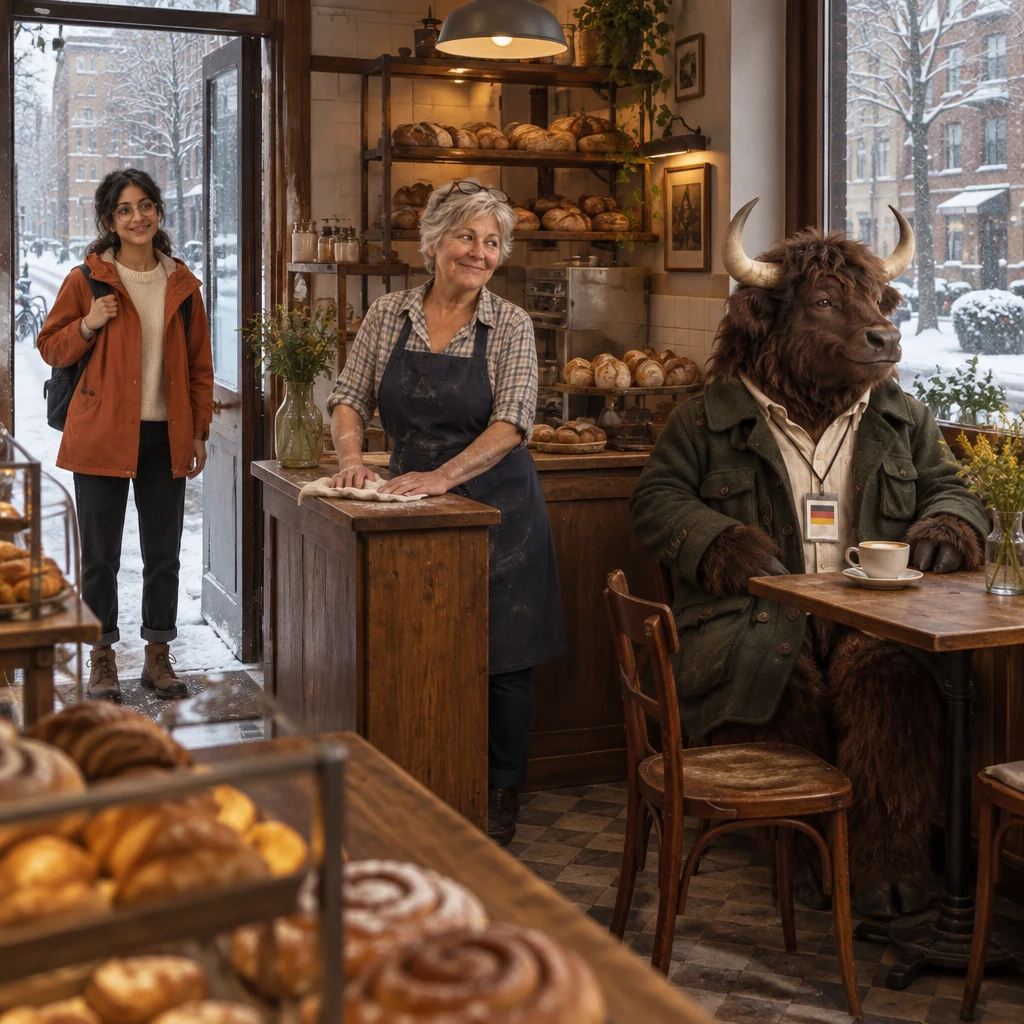
Snow has closed Fliederstraße. Priya walks into Bäckerei Krause instead of the canal, and Renate is already at the coffee machine.
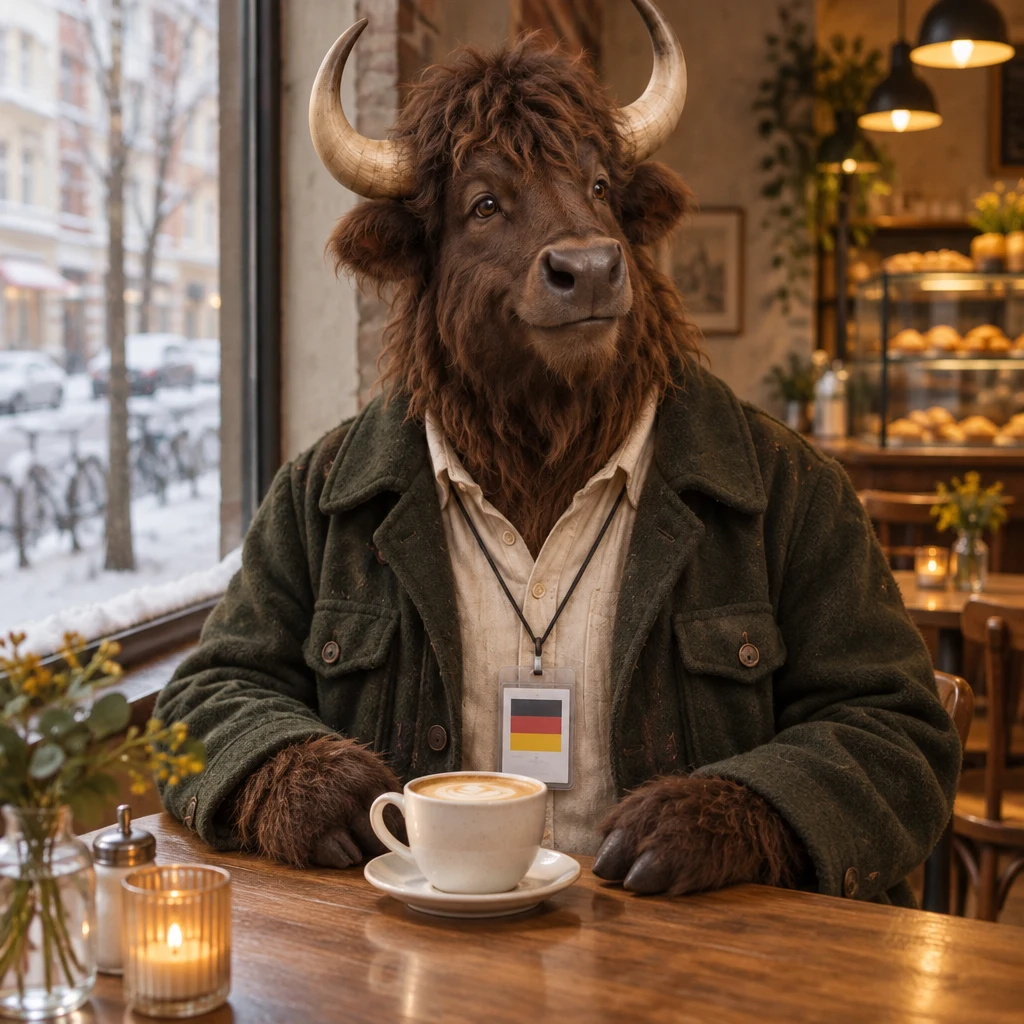
Anton sits at the corner table with a Pfannkuchen and a Milchkaffee he still has not finished.
By the end, you'll stay inside on a storm day, wait it out, and follow a story that stops halfway.
Anton starts a tale about the first time, then looks at the Fundkiste and goes quiet.
By the end of this lesson
Stay inside on a storm day, wait it out, and follow a story that stops halfway.
- Heute bleibe ich lieber drinnen.I'd rather stay inside today.
- Bei dem Wetter gehe ich nicht raus.I'm not going out in this weather.
- Dann warten wir das hier ab.We'll wait it out here then.
- Das ist eine lange Geschichte.It's a long story.
- Es war beim ersten Mal ganz anders.It was very different the first time.
- Mitten im Satz hat er aufgehört.He stopped in the middle of the sentence.
Scene — snow at the bakery
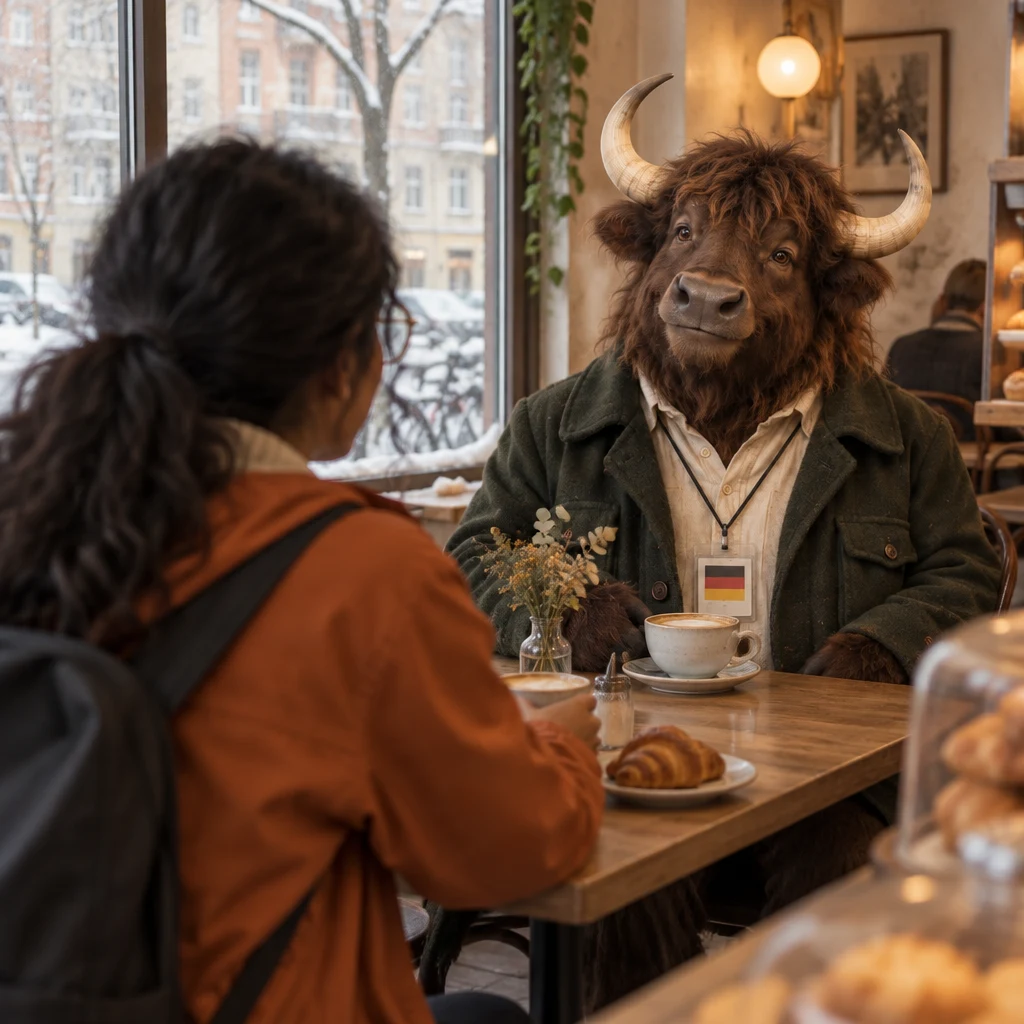
Sunday snow on Fliederstraße. Priya shakes her coat at the bakery door. Renate wipes the counter and nods at the empty street.
Anton has both chairs at the corner table. His Milchkaffee sits untouched. The Fundkiste is behind the counter, as always.
Learn — stay in and wait
Six lines cover staying in, waiting out the weather, and picking up a story that stops.
You'll also say it was different the first time.

Heute bleibe ich lieber drinnen.
I'd rather stay inside today.
When to use it: Say this when you would rather stay in than go out.
In a main clause the verb comes second, so bleibe follows Heute.
Say it: Bleibe puts the stress on the first syllable.
Bei dem Wetter gehe ich nicht raus.
I'm not going out in this weather.
When to use it: Say this when bad weather keeps you from going out.
After Bei, Wetter takes dem, the form that follows bei.
Say it: Wetter puts the stress on the first syllable.

Dann warten wir das hier ab.
We'll wait it out here then.
When to use it: Say this when you choose to wait somewhere until it passes.
The prefix of a separable verb stands at the end of the clause.

Das ist eine lange Geschichte.
It's a long story.
When to use it: Say this when the full tale would take too long to tell.
Learn eine with Geschichte; keep the article with the noun.
Say it: Geschichte has a soft ch in the middle, as in ich.

Es war beim ersten Mal ganz anders.
It was very different the first time.
When to use it: Say this when the first time was not like now.
Verb second still holds: war comes right after Es.
Mitten im Satz hat er aufgehört.
He stopped in the middle of the sentence.
When to use it: Say this when someone stops talking before the end.
After the opening phrase, the verb still comes second, so hat follows Satz.
Say it: Aufgehört rounds the lips for the ö sound.
Story — he stops halfway
Watch Priya wait out the snow at the bakery. Anton starts a story, then stops.
The highlighted words are the lines you just learned. Turn on Show English if you need it.
- Snow blows in as Priya shuts the door.
 RenatePriya. Komm, hier ist's warm.Priya. Come in, it's warm here.
 PriyaHeute bleibe ich lieber drinnen.I'd rather stay inside today.
- She stamps the snow off her boots.
- RenateSetz dich. Wie ist das Wetter?Have a seat. What's the weather like?
- PriyaBei dem Wetter gehe ich nicht raus.I'm not going out in this weather.
- RenateDann warten wir das hier ab.We'll wait it out here then.
- Anton looks up from the corner table. His Milchkaffee is still full.
 AntonIhr bleibt hier. Sehr vernünftig.You're staying here. Very sensible.
- PriyaErzähl doch mal was.Go on, tell us something.
- AntonDas ist eine lange Geschichte.It's a long story.
- PriyaWir haben Zeit. Fang an.We've got time. Start.
- AntonEs war beim ersten Mal ganz anders.It was very different the first time.
- He glances at the Fundkiste and the words stop.
- PriyaUnd dann?And then?
- AntonEs schneite. Und ich wollte... halt.It was snowing. And I just wanted to...
- RenateNa, wa? Mitten im Satz hat er aufgehört.Well, right? He stopped in the middle of the sentence.
- PriyaNa ja. Dann warten wir.Oh well. Then we'll wait.
Practice — inside or out
Ten quick exercises wait here. You'll listen, pick, match, fill a gap, and build a line.
They stay tiny, so the round moves fast.
0 of 10 done
What did you hear?
What did you hear?
Match the pairs
German
Heute bleibe ich lieber drinnen.Drop the English hereDas ist eine lange Geschichte.Drop the English hereMitten im Satz hat er aufgehört.Drop the English hereEnglish
What do you say?
What do you say?
Snow is heavy. You would rather not leave the bakery.
Fill the gap
Fill the gap
We'll wait it out here then.
Dann warten wir das hier ____.
What does it mean?
What does it mean?
Es war beim ersten Mal ganz anders.
Swap the word
Swap the word
Someone asks for the whole tale. Say it would take too long.
Das ist eine ____ Geschichte.
Pick the reply
Renate says:
Pick the reply
Was macht er da?
What's he doing?
And you reply with:
Build the line
Build the line
We'll wait it out here then.
.
Tap the words in order.
What do you say?
What do you say?
A friend comes in from the snow. Offer her a seat.
Fill the gap
Fill the gap
What's the weather like?
Wie ist das ____?
Say it — say it back
Now you're Priya on a snowy Sunday at the bakery. When it's your turn, tap the microphone and speak the line.
Tap ▶ first if you want to hear the line. Your recording stays on your device.
- RenateWie ist das Wetter?What's the weather like?
- Priya (you)Tell her you are not going out in this weather.
Tell her you are not going out in this weather.
Bei dem Wetter gehe ich nicht raus.
I'm not going out in this weather.
0 of 5 said
Recap — what you can say now
| German | English | Play |
|---|---|---|
| Heute bleibe ich lieber drinnen. | I'd rather stay inside today. | |
| Bei dem Wetter gehe ich nicht raus. | I'm not going out in this weather. | |
| Dann warten wir das hier ab. | We'll wait it out here then. | |
| Das ist eine lange Geschichte. | It's a long story. | |
| Es war beim ersten Mal ganz anders. | It was very different the first time. | |
| Mitten im Satz hat er aufgehört. | He stopped in the middle of the sentence. |
Save your progress — it’s free
Keep your place in the course and see which lines you’ve learned.
Want the next lesson in your inbox?
Get the next lesson by email, one a day.
Join the newsletterDaily lesson emails are coming soon. Newsletter subscribers get them first.
Keep practicing with Yak Cards
Want to keep these storm-day lines handy? Grab the Yak Cards for this lesson and review them anywhere.
A short Yak Cards round keeps the indoor lines ready for the next grey Sunday.
Open Yak Cards