
New here? This is lesson 233 of a free 240-lesson German course.
Say thanks properly in German
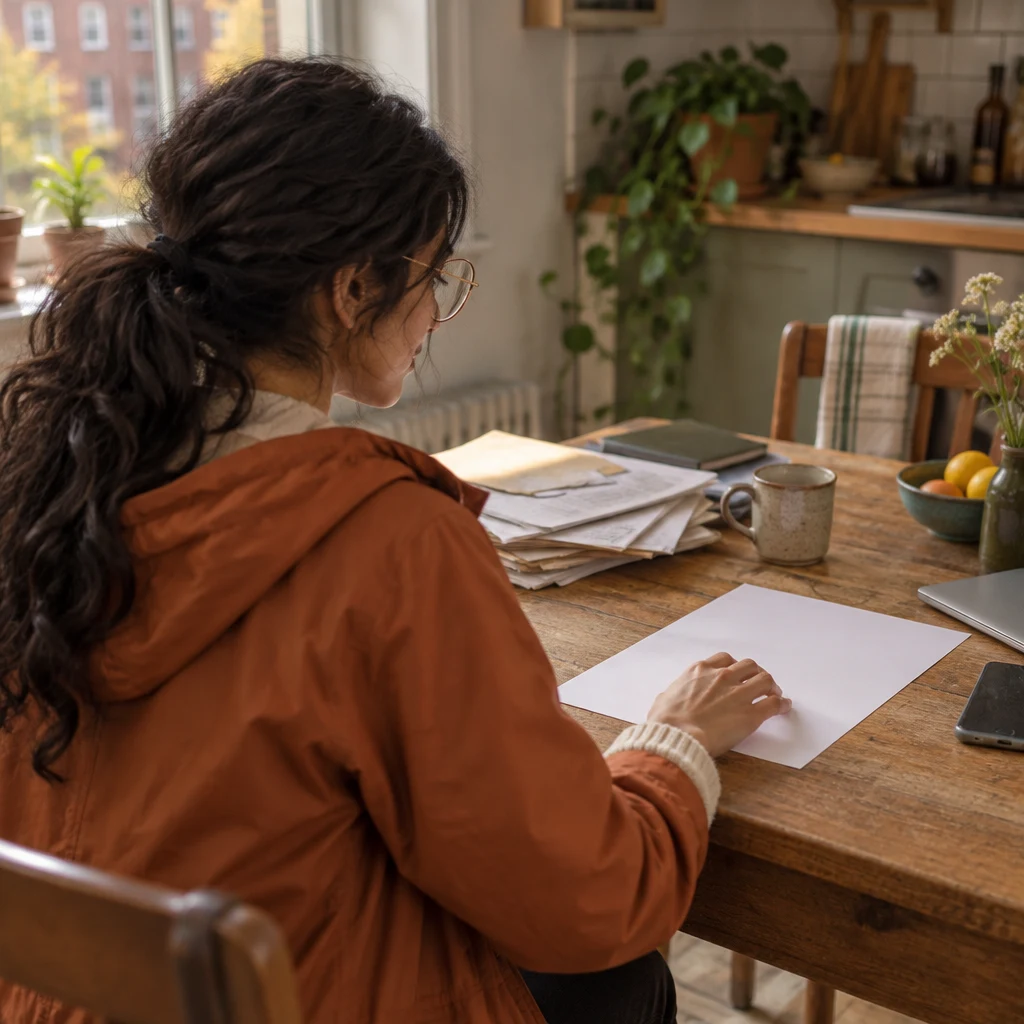
After the tenants' meeting, Priya sits down to write Herr Schulze a proper letter. It is thanks, not a goodbye: she is staying on Fliederstraße.
Letter German uses Sie, and it has its own formulas. Warm thanks, a small gift, and a closing that sounds like farewell without anyone leaving.
By the end you'll write a formal thank-you and close it cleanly.
By the end of this lesson
Write a formal thank-you letter in Sie and close it without sounding as if you are leaving.
- Ich möchte mich herzlich für Ihre Unterstützung bedanken.I'd like to thank you warmly for your support.
- Anbei finden Sie ein kleines Dankeschön.Please find a small thank-you enclosed.
- Ich habe Ihre Hilfe nie als selbstverständlich gesehen.I have never taken your help for granted.
- Ich hoffe sehr, dass wir in Kontakt bleiben.I very much hope we'll stay in touch.
- Für die Zukunft wünsche ich Ihnen alles Gute.I wish you all the best for the future.
- Nochmals vielen Dank und herzliche Grüße.Thank you once again and warm regards.
Scene — the kitchen table
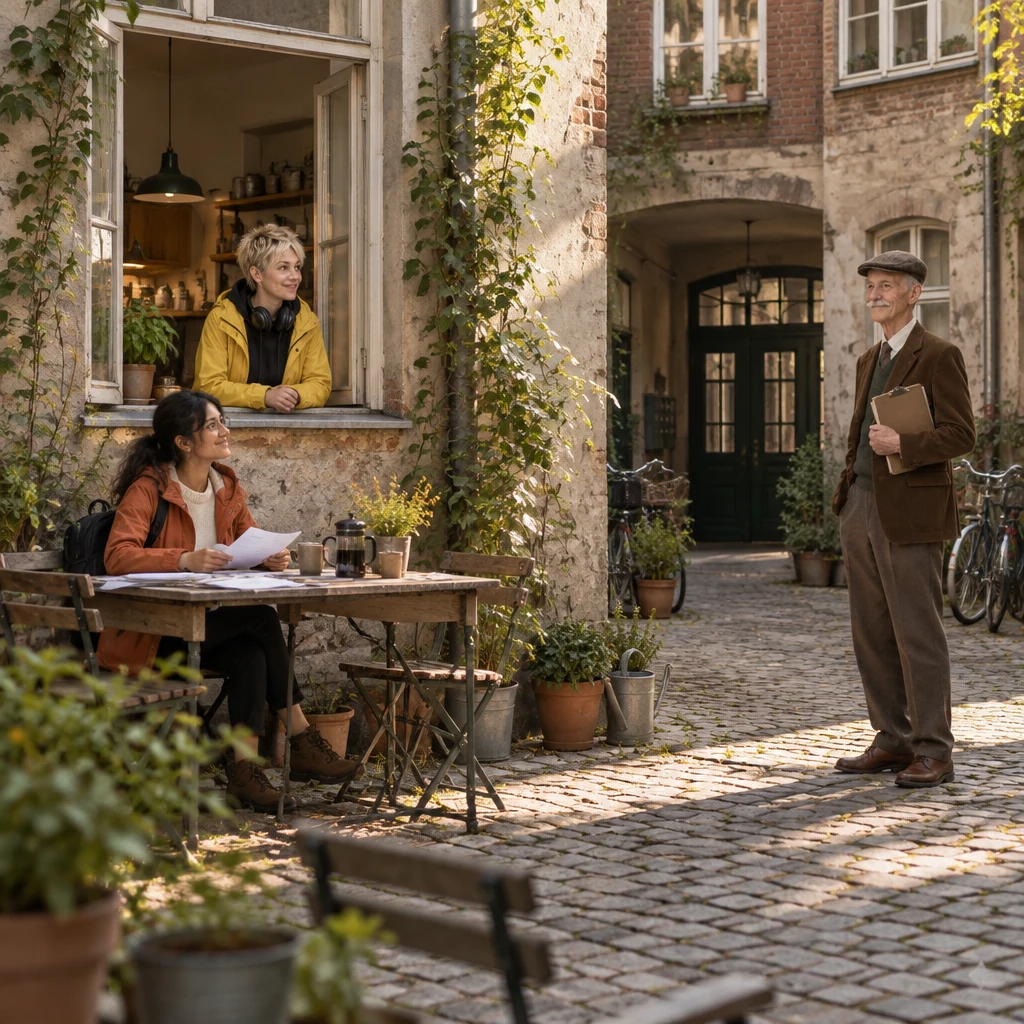
The courtyard meeting is over. Priya's kitchen table in the Hinterhaus is a mess of paper.
Jule leans on the windowsill with Keks at her feet. Across the cobbles, Herr Schulze still has his clipboard.
Priya wants one clean letter: thanks for his help, not a goodbye.
Learn — a proper thank-you
Six lines for a formal thank-you letter in Sie.
You'll open with warm thanks, mention a small gift, and close without sounding as if you are leaving.
Ich möchte mich herzlich für Ihre Unterstützung bedanken.
I'd like to thank you warmly for your support.
When to use it: Open a formal Sie letter when you want to thank someone for their support.
Use Sie here; Herr Schulze is the landlord, not a friend.
Say it: The ch in herzlich is the soft ich sound.

Anbei finden Sie ein kleines Dankeschön.
Please find a small thank-you enclosed.
When to use it: Use this when a small gift or card goes in the envelope.
Anbei comes first, so finden stays in second place.
Say it: Dankeschön's ö is a rounded vowel, lips pushed forward.

Ich habe Ihre Hilfe nie als selbstverständlich gesehen.
I have never taken your help for granted.
When to use it: Add this when the help mattered and you do not want it to sound automatic.
habe is second; gesehen waits at the end of the clause.

Ich hoffe sehr, dass wir in Kontakt bleiben.
I very much hope we'll stay in touch.
When to use it: Write this when you want to stay in touch, even if nobody is leaving.
After dass the verb bleiben comes last in that clause.

Für die Zukunft wünsche ich Ihnen alles Gute.
I wish you all the best for the future.
When to use it: Use this as a polite future wish, not as a real goodbye.
Ihnen is the form you use with Sie, not a friend.
Say it: Zukunft puts the stress on the first syllable.
Nochmals vielen Dank und herzliche Grüße.
Thank you once again and warm regards.
When to use it: End the letter with thanks again and warm regards.
This closes the letter; it does not mean you are moving out.
Say it: Grüße has ü, a tight rounded vowel.
Story — not a goodbye
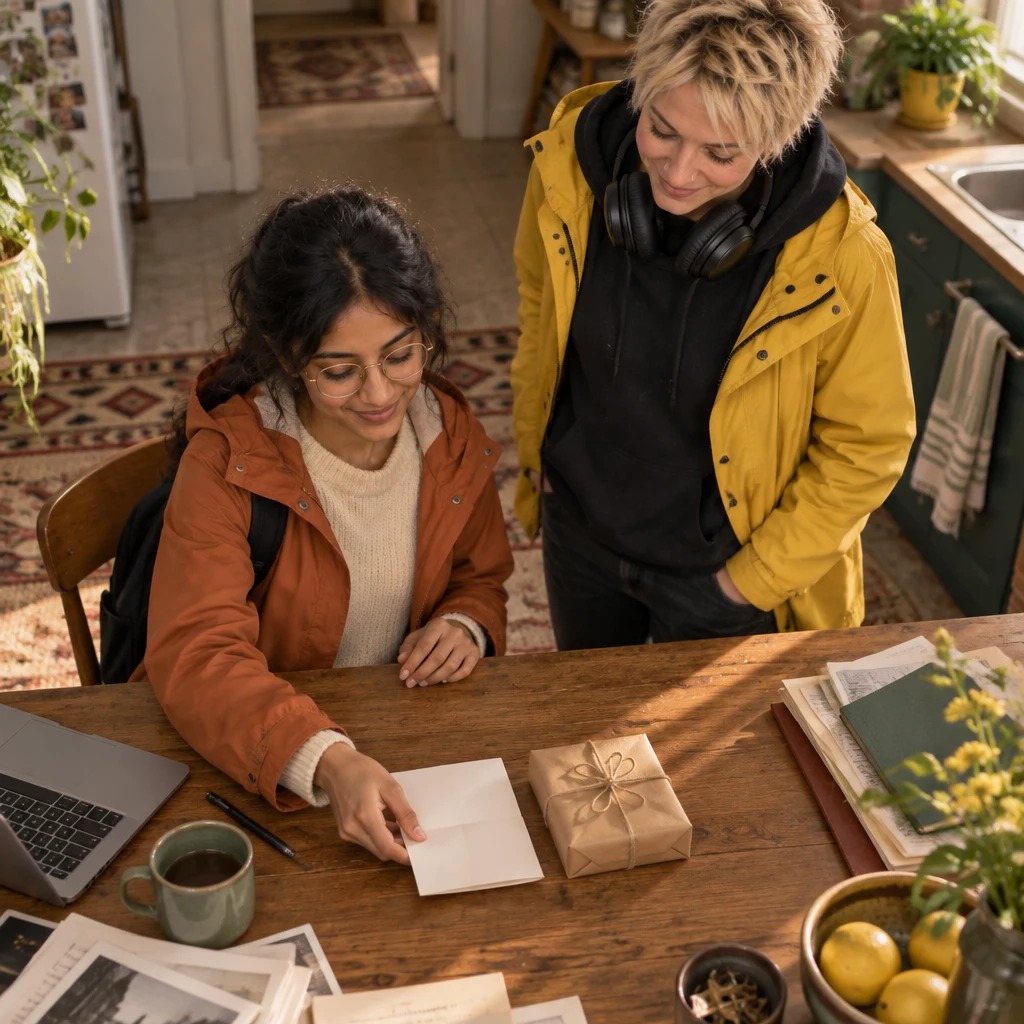
Priya drafts the letter with Jule, then hands it to Herr Schulze in the courtyard.
The highlighted words are the lines you just learned. Turn on Show English if you need it.
- The meeting is over. Priya's table is a mess of paper.
 JuleDie Versammlung ist vorbei. Schreibst du ihm wirklich einen Brief?The meeting is over. Are you really writing him a letter?
 PriyaJa. Ich möchte mich herzlich für Ihre Unterstützung bedanken.Yes. I'd like to thank you warmly for your support.
- JuleNa ja. Halt ihn kurz. Er hasst lange Briefe.Well, keep it short. He hates long letters.
- PriyaIch habe Ihre Hilfe nie als selbstverständlich gesehen.I have never taken your help for granted.
- JuleGut. Und das Päckchen?Good. And the little parcel?
- PriyaAnbei finden Sie ein kleines Dankeschön.Please find a small thank-you enclosed.
- JuleSchrippen von Renate. Das klingt nicht nach Abschied, oder?Rolls from Renate. That doesn't sound like a goodbye, does it?
- PriyaIch ziehe nicht aus. Ich hoffe sehr, dass wir in Kontakt bleiben.I'm not moving out. I very much hope we'll stay in touch.
- JuleDann wünsch ihm noch etwas Nettes für später.Then wish him something kind for later.
- PriyaFür die Zukunft wünsche ich Ihnen alles Gute.I wish you all the best for the future.
- JuleSchlusszeile, und du bist fertig.Closing line, and you're done.
- PriyaNochmals vielen Dank und herzliche Grüße.Thank you once again and warm regards.
- Next morning in the courtyard. Herr Schulze has his clipboard under one arm.
- PriyaGuten Morgen. Wie geht es Ihnen?Good morning. How are you?
 Herr SchulzeGut, danke. Ist das für mich?I'm good, thanks. Is that for me?
- PriyaJa, ein kurzer Brief. Danke, dass Sie sich das angehört haben.Yes, a short letter. Thank you for hearing me out.
- Herr SchulzeDie Heizung kommt nächste Woche. Der Brief war nicht nötig.The heating comes next week. The letter wasn't necessary.
- PriyaIch wollte es trotzdem schriftlich sagen.I wanted to say it in writing anyway.
- Herr SchulzeBleiben Sie im Haus. Das reicht.Stay in the building. That's enough.
Practice — letter formulas
Eleven short tasks mix listening, matching, gaps, and picking a closing.
They keep Sie in place, so a bakery Tschüss never sneaks into the closing.
0 of 11 done
What did you hear?
What did you hear?
Match the pairs
German
Anbei finden Sie ein kleines Dankeschön.Drop the English hereIch hoffe sehr, dass wir in Kontakt bleiben.Drop the English hereNochmals vielen Dank und herzliche Grüße.Drop the English hereEnglish
Fill the gap
Fill the gap
I have never taken your help for granted.
Ich habe Ihre Hilfe nie als ____ gesehen.
What do you say?
What do you say?
You need the line that specifically says a small thank-you is enclosed.
What does it mean?
What does it mean?
Für die Zukunft wünsche ich Ihnen alles Gute.
Swap the word
Swap the word
You already know him and want the letter to say you will stay in touch.
Ich hoffe sehr, dass wir in Kontakt ____.
Fill the gap
Fill the gap
Thank you once again and warm regards.
____ vielen Dank und herzliche Grüße.
Find the mistake
Find the mistake
Pick the reply
Herr Schulze says:
Pick the reply
Guten Morgen.
Good morning.
And you reply with:
True or false?
True or false?
This thanks someone for listening, not for a gift in an envelope.
Put the chat in order
- JuleWhat comes first?
- Priya…
- Jule…
- Priya…
Say it — read it out
Now you're Priya finishing the letter and handing it over. When it's your turn, tap the microphone and speak the line.
Tap ▶ first if you want to hear the line. Your recording stays on your device.
- JuleNa, der erste Satz.Right, the first sentence.
- Priya (you)Thank him warmly for the support he gave.
Thank him warmly for the support he gave.
Ich möchte mich herzlich für Ihre Unterstützung bedanken.
I'd like to thank you warmly for your support.
0 of 7 said
Recap — what you can say now
| German | English | Play |
|---|---|---|
| Ich möchte mich herzlich für Ihre Unterstützung bedanken. | I'd like to thank you warmly for your support. | |
| Anbei finden Sie ein kleines Dankeschön. | Please find a small thank-you enclosed. | |
| Ich habe Ihre Hilfe nie als selbstverständlich gesehen. | I have never taken your help for granted. | |
| Ich hoffe sehr, dass wir in Kontakt bleiben. | I very much hope we'll stay in touch. | |
| Für die Zukunft wünsche ich Ihnen alles Gute. | I wish you all the best for the future. | |
| Nochmals vielen Dank und herzliche Grüße. | Thank you once again and warm regards. |
Save your progress — it’s free
Keep your place in the course and see which lines you’ve learned.
Want the next lesson in your inbox?
Get the next lesson by email, one a day.
Join the newsletterDaily lesson emails are coming soon. Newsletter subscribers get them first.
Keep practicing with Yak Cards
Want these letter lines on paper? Grab the Yak Cards for this lesson and review them anywhere.
A short round with the Yak Cards keeps the Sie closings ready for the next envelope.
Open Yak Cards