
New here? This is lesson 222 of a free 240-lesson German course.
Not what I expected in German
Deniz was sure the key would prove a bigger story this week. At Bäckerei Krause it was only Anton, remembering a Pfannkuchen, and Priya laughs at herself.
You will say an outcome was not the picture you had, that it was surprisingly simple or much harder, and that nobody saw it coming.
Afterwards the whole thing can seem almost funny.
These lines are for expectation versus outcome, not a jump scare.
By the end of this lesson
Say that something turned out unlike what you expected.
- So hatte ich mir das nicht vorgestellt.That's not how I had pictured it
- Es war überraschend unkompliziert.It was surprisingly straightforward
- Es hat sich als viel schwieriger herausgestellt.It turned out to be much harder
- Das ist ganz anders gelaufen als gedacht.It went completely differently than I thought
- Damit hatte wirklich niemand gerechnet.Nobody really saw that coming
- Hinterher wirkt die ganze Sache fast komisch.Afterwards the whole thing seems almost funny
Scene — the bakery after lunch
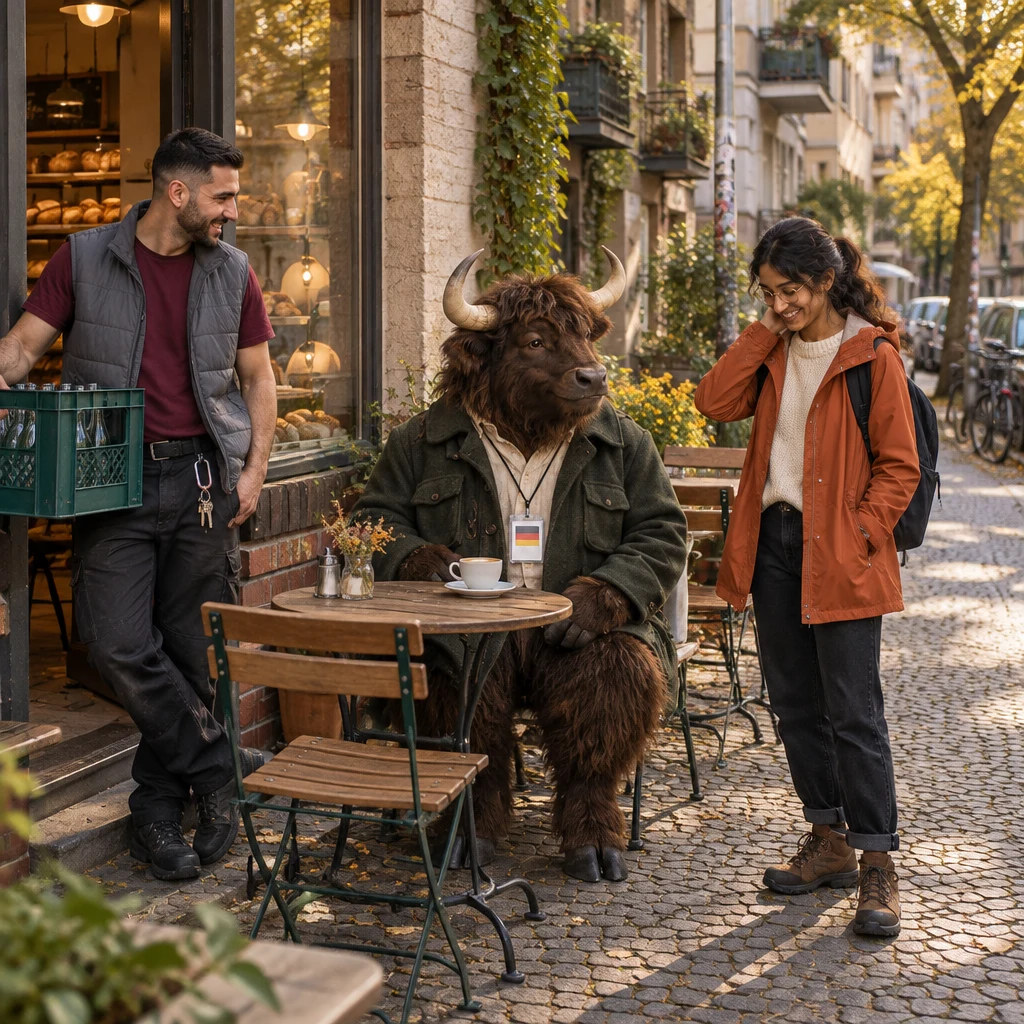
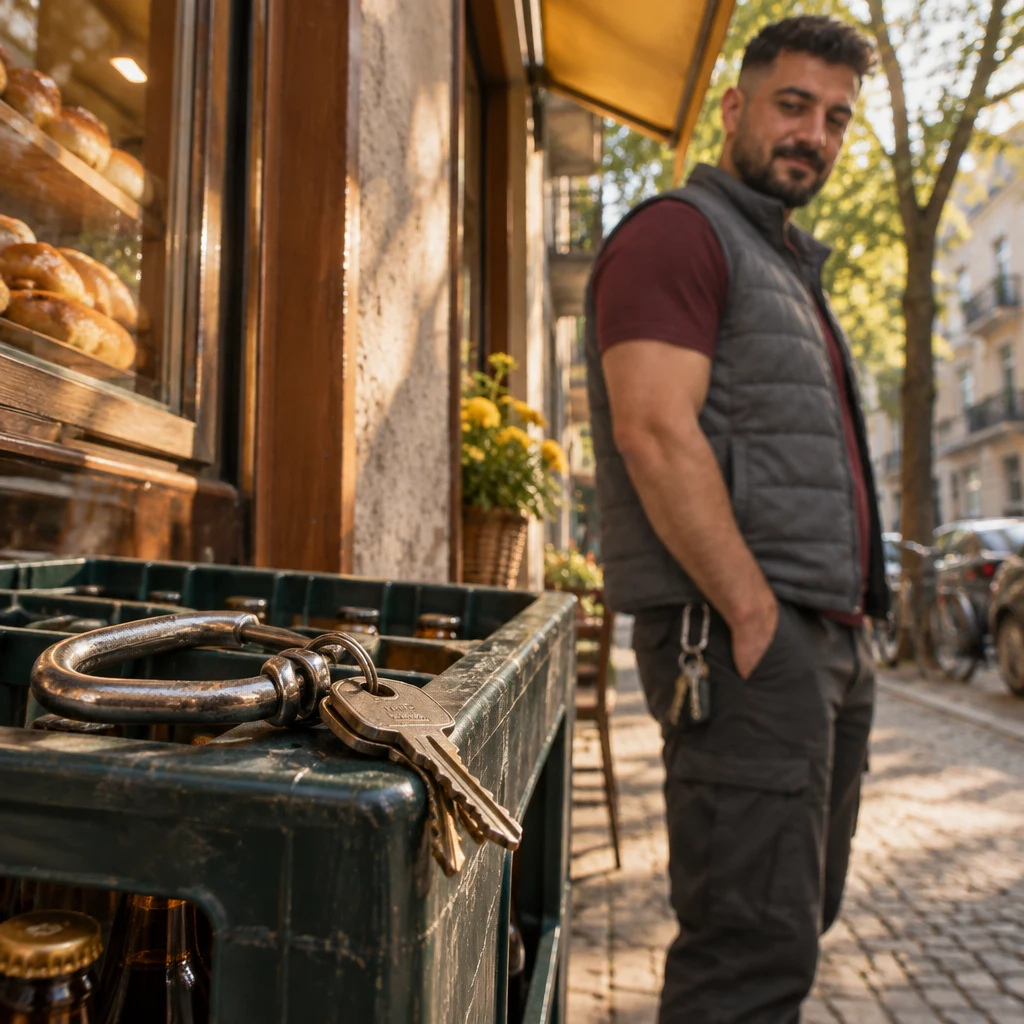
Late afternoon on Fliederstraße. Deniz has a crate of bottles by the bakery door, still sure the key will prove something this week.
Anton sits at the corner table with two chairs. His Milchkaffee is full. Priya is already laughing at herself, a little.
Learn — not what you pictured
Six lines let you say a result was not the picture you had, that it was simple or much harder, and that it even seems funny later.
You will also hear that nobody really saw it coming.

So hatte ich mir das nicht vorgestellt.
That's not how I had pictured it
When to use it: Say this when the real outcome does not match the picture you had.
Use mir for the person forming the picture; das is the thing you had pictured.
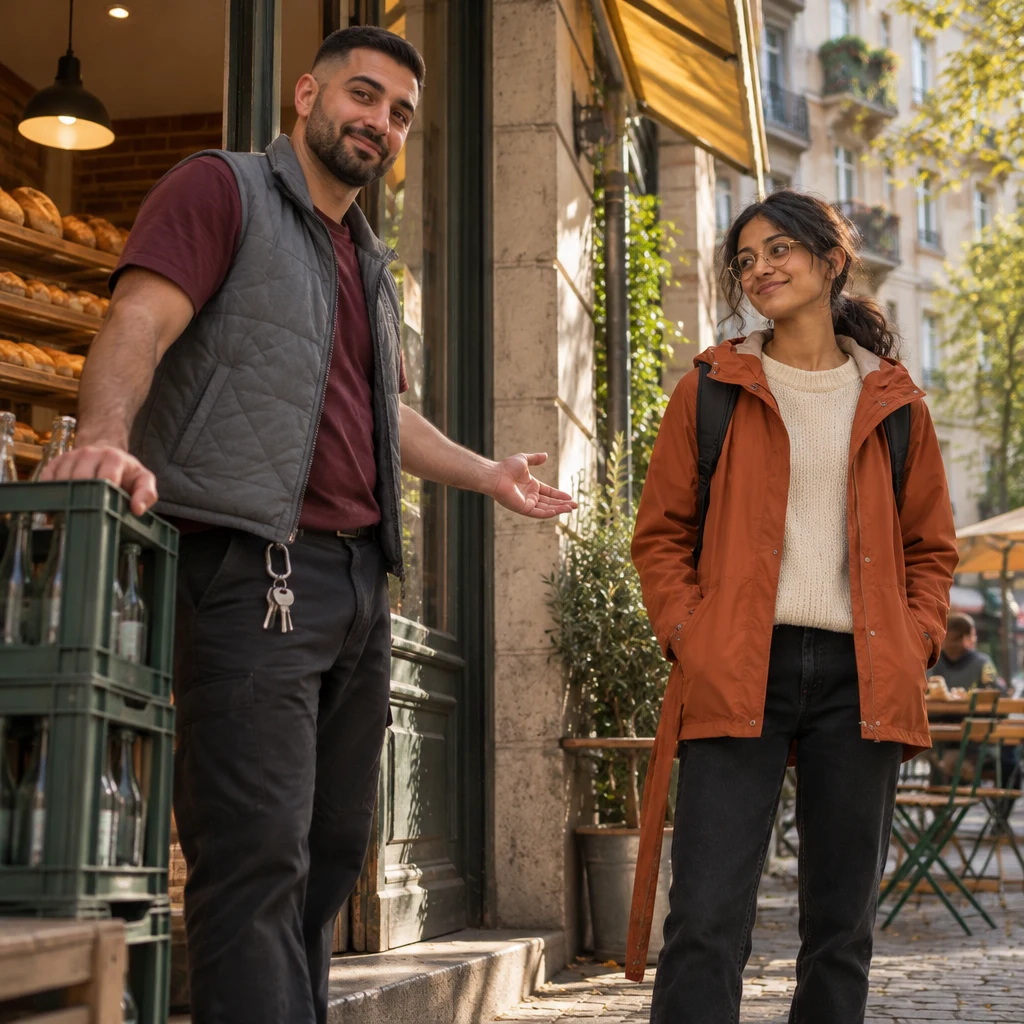
Es war überraschend unkompliziert.
It was surprisingly straightforward
When to use it: Use this when a task or story turned out simpler than you feared.
War sits in second place in this main clause, right after es.
Say it: The ü in überraschend is rounded, with the tongue forward.
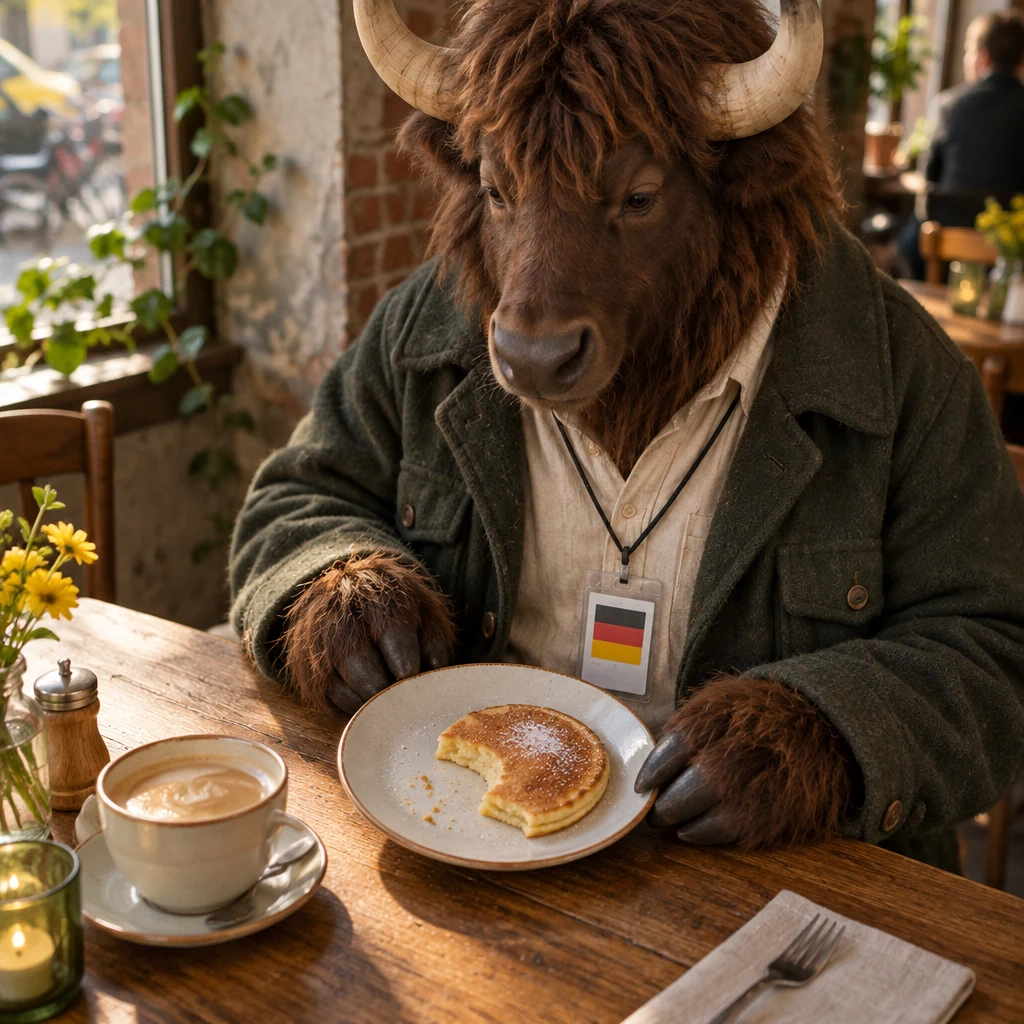
Es hat sich als viel schwieriger herausgestellt.
It turned out to be much harder
When to use it: Say this when something proved much harder than you expected.
Herausgestellt waits at the end of the clause, after the rest of the news.
Say it: schwieriger starts with sch, like a long English sh.
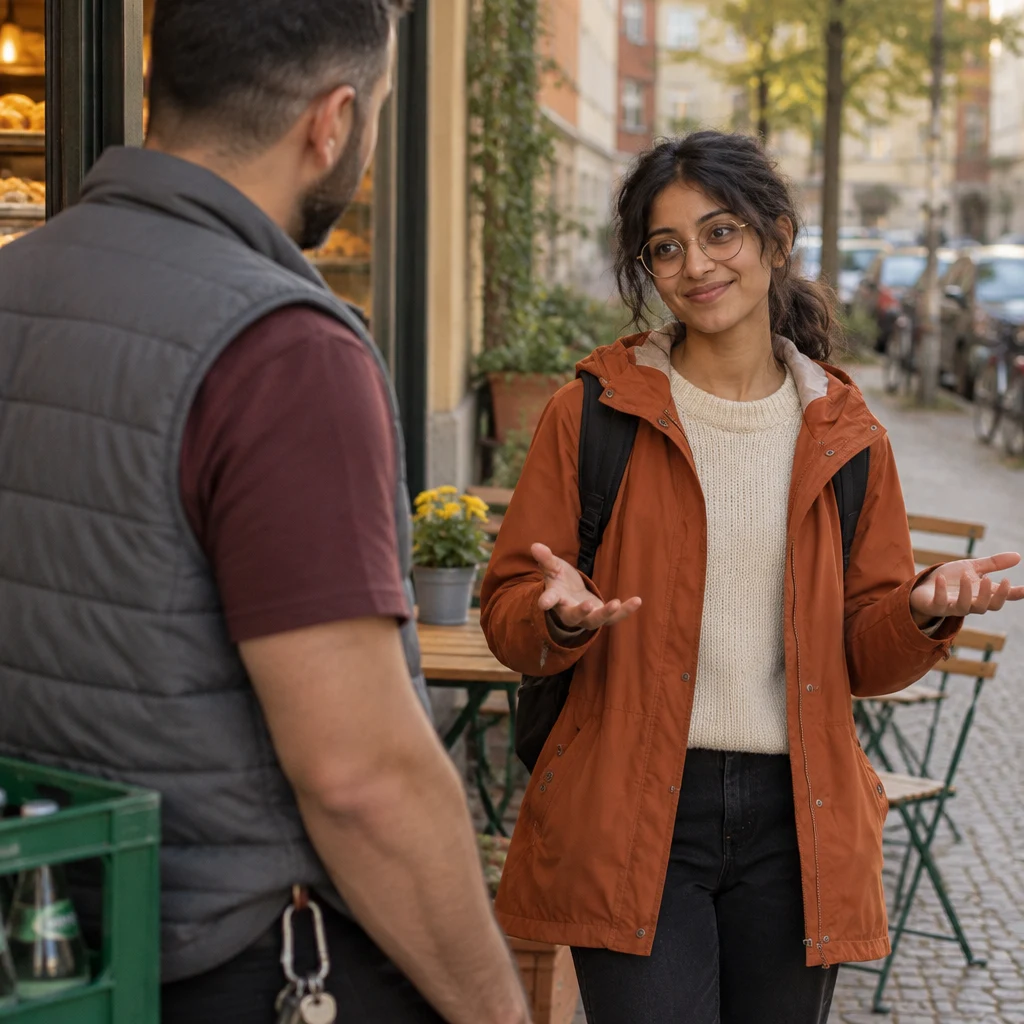
Das ist ganz anders gelaufen als gedacht.
It went completely differently than I thought
When to use it: Use this when events took a completely different path than your plan.
The verb ist stays second; gelaufen carries the outcome at the end.
Damit hatte wirklich niemand gerechnet.
Nobody really saw that coming
When to use it: Say this when an outcome truly surprised everyone in the room.
Damit points back to the thing, because this verb goes with mit.
Say it: The ch in gerechnet is the front ich sound, after e.

Hinterher wirkt die ganze Sache fast komisch.
Afterwards the whole thing seems almost funny
When to use it: Use this when, looking back, the whole episode seems almost funny.
Wirkt stays second in this main clause, right after hinterher.
Say it: Komisch puts the stress on the first syllable.
Story — only a doughnut
Watch Deniz wait for a bigger key story, then hear Anton remember a Pfannkuchen.
The highlighted words are the lines you just learned. Turn on Show English if you need it.
- The lunch rush is over. Deniz leans on the door with a crate of bottles. Anton sits at the corner table.
 DenizPriya, komm kurz rüber. Diese Woche sollte der Schlüssel endlich eine Geschichte erklären.Priya, come over a second. This week the key was finally supposed to explain a story.
 PriyaSo hatte ich mir das nicht vorgestellt.That's not how I had pictured it.
- Renate wipes flour from the counter. She does not look at the Fundkiste.
 RenateIhr macht das wieder zu groß, wa?You two are making it too big again, aren't you?
- DenizDu meinst, meine Theorie war zu wild?You mean my theory was too wild?
- PriyaJa, ein bisschen. Es hat sich als viel schwieriger herausgestellt, den Schlüssel zu erklären.Yes, a bit. It turned out to be much harder to explain the key.
- Anton turns his plate. A Pfannkuchen still sits on it, with a little sugar on top.
 AntonDen Schlüssel? Ich dachte nur an einen Pfannkuchen. Hier, an diesem Tisch, vor Jahren.The key? I was only thinking of a jam doughnut. Here, at this table, years ago.
- DenizDamit hatte wirklich niemand gerechnet.Nobody really saw that coming.
- PriyaDu erinnerst dich also nur an den Pfannkuchen?So you only remember the jam doughnut?
- AntonJa, ich erinnere mich nur an den Pfannkuchen. Es war überraschend unkompliziert.Yes, I only remember the jam doughnut. It was surprisingly straightforward.
- DenizDas ist ganz anders gelaufen als gedacht.It went completely differently than I thought.
- PriyaIch frage mich, ob das immer stimmt.I wonder if that's always true.
- DenizNa ja. Du lachst über dich selbst, oder?Well. You're laughing at yourself, aren't you?
- PriyaJa. Hinterher wirkt die ganze Sache fast komisch. Ich wollte eine große Geschichte, und es war nur ein Pfannkuchen.Yes. Afterwards the whole thing seems almost funny. I wanted a big story, and it was only a jam doughnut.
- AntonIst es gleich fertig?Is it almost ready?
- RenateDer Pfannkuchen steht vor dir. Du guckst nur nicht hin.The jam doughnut is right in front of you. You're just not looking.
Practice — expectation versus outcome
Ten short tasks wait here. You will listen, fill a gap, build a line, and swap a word.
They stay on expectation versus outcome, so the round stays tight.
0 of 10 done
What did you hear?
What did you hear?
What does it mean?
What does it mean?
Es war überraschend unkompliziert.
Fill the gap
Fill the gap
Nobody really saw that coming
Damit hatte wirklich ____ gerechnet.
What do you say?
What do you say?
The doughnut story is over, and you laugh at yourself because the whole thing seems almost funny now.
Build the line
Build the line
It turned out to be much harder
.
Tap the words in order.
Pick the reply
Deniz says:
Pick the reply
Der Schlüssel passt immer zu einer richtigen Geschichte, oder?
The key always fits a real story, right?
And you reply with:
Swap the word
Swap the word
The week did not follow Deniz's plan, so you say it went another way than you thought.
Das ist ganz anders gelaufen als ____.
Match the pairs
German
So hatte ich mir das nicht vorgestellt.Drop the English hereDas ist ganz anders gelaufen als gedacht.Drop the English hereHinterher wirkt die ganze Sache fast komisch.Drop the English hereEnglish
Which one doesn’t belong?
Which one doesn’t belong?
Find the mistake
Find the mistake
Say it — laugh at yourself
Now you're Priya at the bakery, after Deniz's theory falls flat. When it's your turn, tap the microphone and speak the line.
Tap ▶ first if you want to hear the line. Your recording stays on your device.
- DenizPriya, ich war mir diese Woche so sicher.Priya, I was so sure this week.
- Priya (you)Tell him this is not the picture you had in mind.
Tell him this is not the picture you had in mind.
So hatte ich mir das nicht vorgestellt.
That's not how I had pictured it
0 of 6 said
Recap — what you can say now
| German | English | Play |
|---|---|---|
| So hatte ich mir das nicht vorgestellt. | That's not how I had pictured it | |
| Es war überraschend unkompliziert. | It was surprisingly straightforward | |
| Es hat sich als viel schwieriger herausgestellt. | It turned out to be much harder | |
| Das ist ganz anders gelaufen als gedacht. | It went completely differently than I thought | |
| Damit hatte wirklich niemand gerechnet. | Nobody really saw that coming | |
| Hinterher wirkt die ganze Sache fast komisch. | Afterwards the whole thing seems almost funny |
Save your progress — it’s free
Keep your place in the course and see which lines you’ve learned.
Want the next lesson in your inbox?
Get the next lesson by email, one a day.
Join the newsletterDaily lesson emails are coming soon. Newsletter subscribers get them first.
Keep practicing with Yak Cards
Want to keep these outcome lines handy? Grab the Yak Cards for this lesson and review them anywhere.
A few minutes with the Yak Cards keeps these outcome lines ready for the next surprise.
Open Yak Cards