German - Hesitation

Lesson 91 of 158

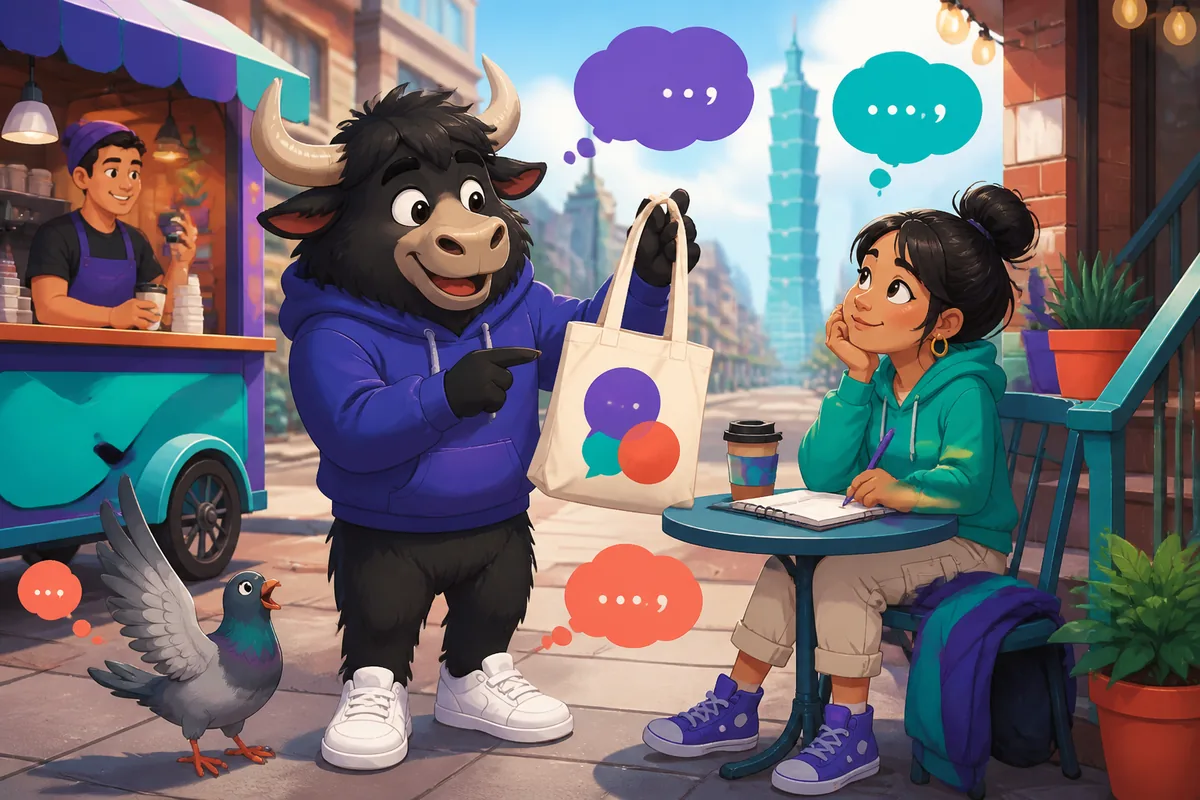
Learner practicing German hesitation phrases aloud in a cozy café, focusing on social conversation.

Goal: Softening your speech with casual fillers

Free German lessons with guided practice, audio, and speaking support.

A quick, friendly lesson to help you sound natural when you hesitate or correct yourself. Try saying the lines out loud — hesitation is social glue!

Level A2: In Lesson 91 you'll practice four casual hesitation phrases used in everyday German: Weißt du, ___.; Es ist eher ___.; Oder so was.; and Warte, ich meine ___. These short frames help you buy time, soften opinions, and self-correct — great for conversation practice. (CEFR-aligned phrasing for A2 learners.)

After this lesson you'll be able to:

  • Use simple hesitation phrases to sound more natural in conversation.
  • Practice softening or qualifying statements with Es ist eher ___.
  • Self-correct smoothly with Warte, ich meine ___.
  • Hear the phrases in a short dialogue and repeat them aloud (A2).
Two friends deciding where to meet — English learners hearing casual German hesitation phrases.

Ready? Let's go!

When you tap play on phrases, we track your progress through this lesson.

1. Reading + Listening Practice

Hear core phrases, repeat aloud.

Weißt du, ___.

You know, ___.

Meaning: You know, ___.

When to use: Use this informal starter (du form) to gently introduce an idea or example while you think. For formal situations use "Wissen Sie, ___."

Tip: Don't use this in formal settings — switch to "Wissen Sie, ..." for politeness.

Weißt du, ob das Café noch offen ist?
You know, if the café is still open?
Weißt du, ich habe das schon einmal gesehen.
You know, I've seen that before.

Es ist eher ___.

It's more like ___.

Meaning: It's more like ___.

When to use: Use to give an approximation when the exact label isn't right. If a noun follows, remember nominative form: e.g. "Es ist eher ein Problem."

Es ist eher ein Treffpunkt als ein richtiges Restaurant.
It's more like a meeting spot than a real restaurant.
Es ist eher kompliziert, nicht schlecht oder gut.
It's more like complicated, not bad or good.

Oder so was.

Or something like that.

Meaning: Or something like that.

When to use: Add this after an approximate statement to signal uncertainty or a loose example. Casual speech: "oder so was."

Wir brauchen mehr Zeit, oder so was.
We need more time, or something like that.
Er spielt Gitarre, oder so was in der Art.
He plays guitar, or something like that.

Warte, ich meine ___.

Wait, I mean ___.

Meaning: Wait, I mean ___.

When to use: Use this quick self-correction to fix what you just said. Casual and common in spoken German.

Warte, ich meine, wir treffen uns nächsten Donnerstag.
Wait, I mean, we'll meet next Thursday.
Warte, ich meine, das war nicht richtig beschrieben.
Wait, I mean, that wasn't described correctly.

2. Conversational Listening Practice

Hear phrases in a real mini-conversation.

Deciding where to meet

Anna and David using short hesitation chunks while weighing options about a meeting place.

What are Anna and David unsure about?

Portrait of Anna in a German lesson dialogue

Anna

Weißt du, ob das Café noch offen ist?

You know, if the café is still open?

Portrait of David in a German lesson dialogue

David

Ich glaube schon. Es ist eher ein Treffpunkt für Studenten.

I think so. It's more like a hangout for students.

Portrait of Anna in a German lesson dialogue

Anna

Hm, oder so was.

Hm, or something like that.

Portrait of David in a German lesson dialogue

David

Warte, ich meine, der neue Ort ist neben der Bibliothek.

Wait, I mean, the new place is next to the library.

Portrait of Anna in a German lesson dialogue

Anna

Okay, dann treffen wir uns dort.

Okay, then we'll meet there.

3. Guided Practice

Quizzes and matching to lock in meaning.

Which German phrase starts a thought like 'You know, ___'?

Which phrase means 'It's more like ___'?

Which phrase adds a casual 'Or something like that'?

Which phrase is a quick self-correction 'Wait, I mean ___'?

I forgot the exact time — Wait, I mean ___ (self-correction).

I forgot the exact time — ___.

It's not a formal meeting; it's more like a casual meetup.

It's not a formal meeting; ___.

She added 'Or something like that' to show uncertainty.

She wasn't sure about the exact style and added, '___' at the end.

Match the core phrases

Match the extra phrases

4. Speaking Practice

Say phrases yourself (mic/recording).

Recording stays on your device only. Check speech uses your browser's speech tools when available.

Say this phrase out loud:

Weißt du, ___.

You know, ___.

Say this phrase out loud:

Es ist eher ___.

It's more like ___.

Say this phrase out loud:

Oder so was.

Or something like that.

Say this phrase out loud:

Warte, ich meine ___.

Wait, I mean ___.