
New here? This is lesson 197 of a free 240-lesson German course.
Cooking at home in German
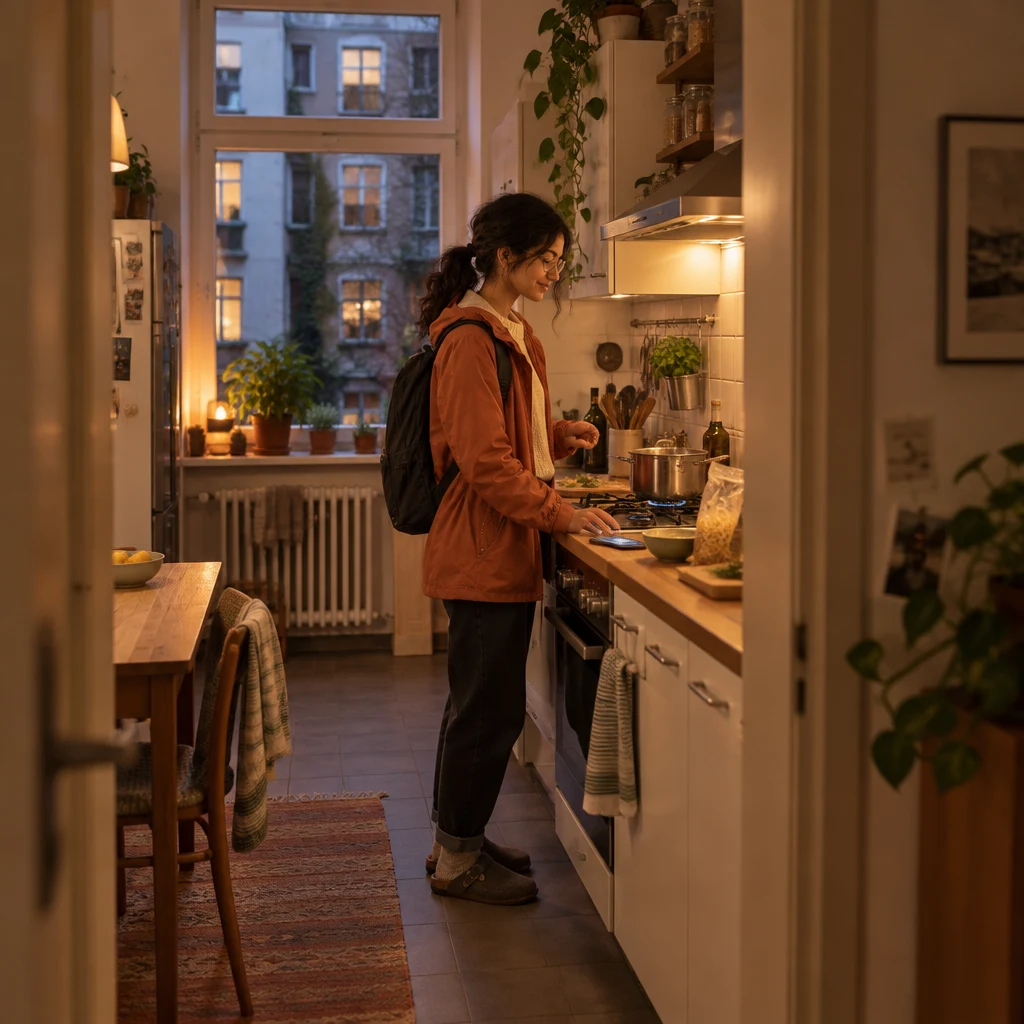
Priya is in her small Kreuzberg kitchen with a pot, a bag of noodles, and her phone on speaker.
Jule talks her through dinner on a live call. Under Jule's table, Keks waits for something to drop.
By the end, you'll give a simple noodle recipe in steps, then say you do not cook much otherwise.
German recipes keep the verb last in the infinitive. Listen for zuerst, dann, and zum Schluss.
By the end of this lesson
Follow a simple recipe in steps, then say you do not cook much.
- Zuerst das Wasser aufkochen.Boil the water first.
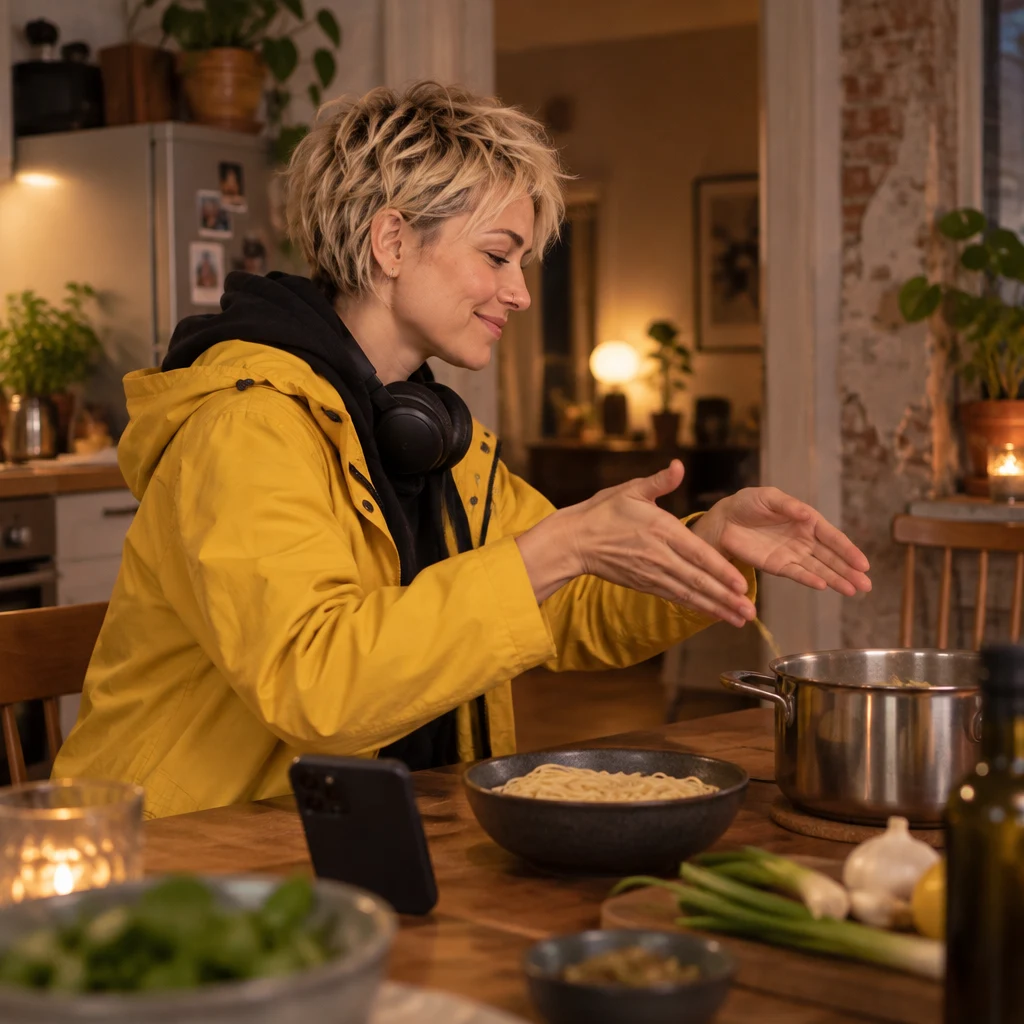
- Dann die Nudeln ins Wasser geben.Then put the noodles in the water.
- Fünf Minuten reichen völlig.Five minutes is plenty.
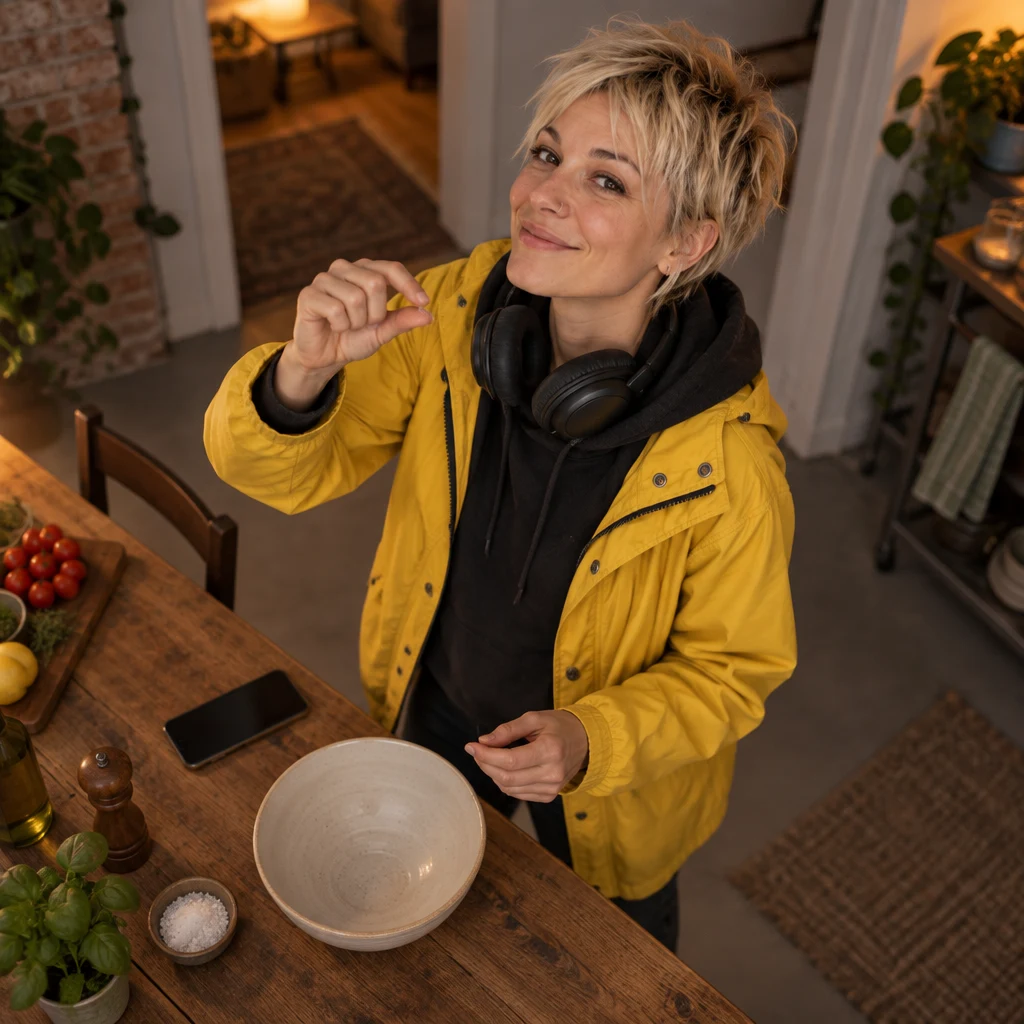
- Zum Schluss etwas Salz dazugeben.Add a little salt at the end.
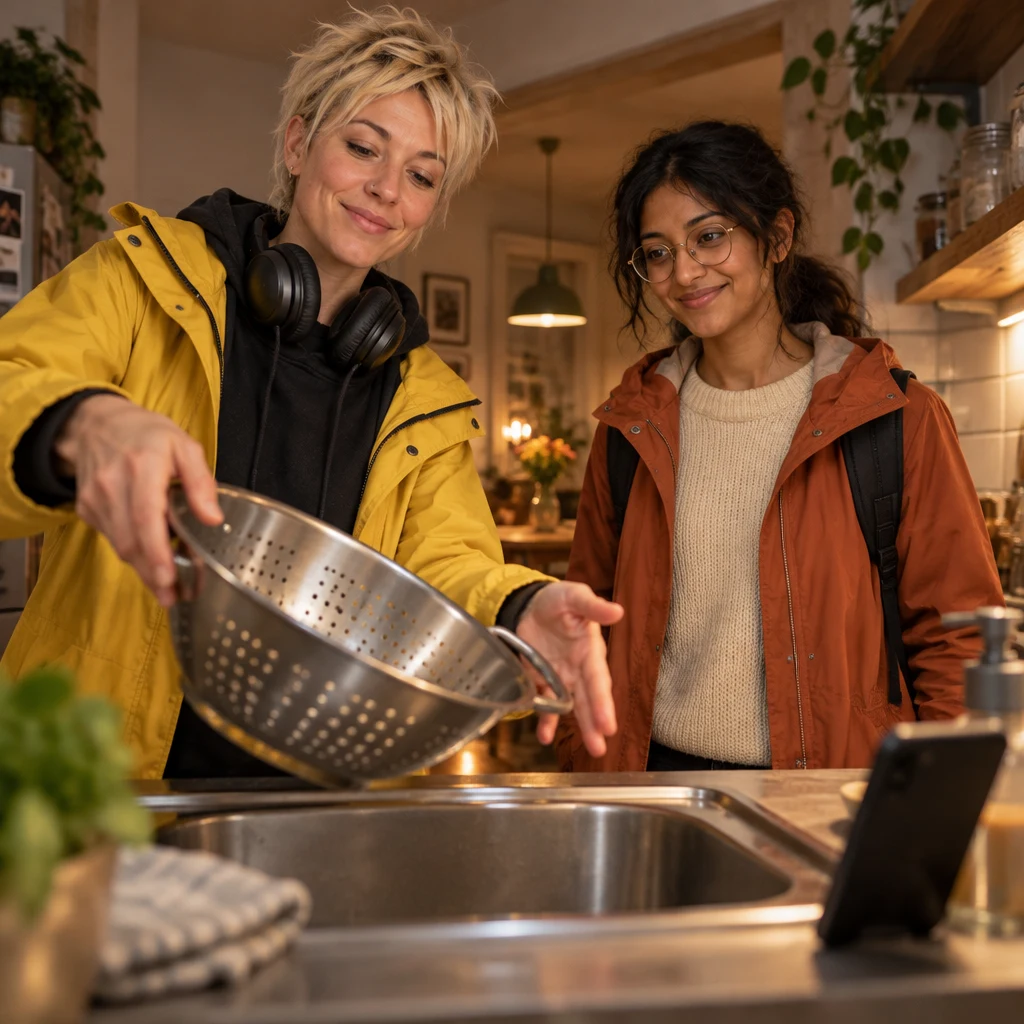
- Abgießen, wenn sie weich sind.Drain them when they're soft.
- Ich koche sonst eher selten.I don't cook much otherwise.
Scene — the small kitchen
Evening in the Hinterhaus on Fliederstraße. Priya stands at her small kitchen stove with a pot and a bag of noodles.
Her phone is on the counter, speaker on. Jule is on the line from across Kreuzberg. Keks waits under Jule's table.
Learn — recipe in steps
Six lines walk through a pot of noodles: boil, add, wait, salt, drain.
The last line is an honest aside: you don't cook much otherwise.

Zuerst das Wasser aufkochen.
Boil the water first.
When to use it: Use this as the first step when you talk someone through a recipe.
German recipes keep the verb last in the infinitive, as one piece.
Say it: In aufkochen, ch after e is the ich sound.
Dann die Nudeln ins Wasser geben.
Then put the noodles in the water.
When to use it: Use this for the next step after the water is boiling.
Dann marks the next step, and the verb geben stays last.
Say it: Nudeln puts the stress on the first syllable.

Fünf Minuten reichen völlig.
Five minutes is plenty.
When to use it: Use this to say a short cooking time is enough.
In a full sentence the verb reichen comes second, after the time.
Say it: The ö in völlig is a tight rounded vowel.
Zum Schluss etwas Salz dazugeben.
Add a little salt at the end.
When to use it: Use this for a last recipe step, just before you finish.
Zum Schluss marks the last step, with the infinitive last.
Say it: Schluss starts with sch, like English sh.
Abgießen, wenn sie weich sind.
Drain them when they're soft.
When to use it: Use this when the noodles are done and you empty the pot.
After wenn, the verb sind comes last in that part.
Say it: In weich, ch after i is the ich sound.

Ich koche sonst eher selten.
I don't cook much otherwise.
When to use it: Use this when cooking is not your usual habit.
This is a normal sentence, so the verb koche comes second.
Say it: Koche puts the stress on the first syllable.
Story — noodles on speaker
Watch Priya follow Jule's call at the stove. The highlighted words are the lines you just learned.
Turn on Show English if you need it.
- The pot is already on. Priya's phone sits on the counter with the speaker up.
 PriyaKannst du mir helfen?Can you help me?
 JuleZuerst das Wasser aufkochen.Boil the water first.
- PriyaDas Wasser kocht, glaub ich.The water is boiling, I think.
- JuleDann die Nudeln ins Wasser geben.Then put the noodles in the water.
- PriyaAlle auf einmal?All at once?
- JuleJa, einfach alle.Yes, just all of them.
- PriyaUnd wie lange?And how long?
- JuleFünf Minuten reichen völlig.Five minutes is plenty.
- Under Jule's table, Keks waits for something to drop.
- PriyaUnd das Salz?And the salt?
- JuleZum Schluss etwas Salz dazugeben.Add a little salt at the end.
- PriyaOkay. Wann gieße ich ab?Okay. When do I drain them?
- JuleAbgießen, wenn sie weich sind.Drain them when they're soft.
- PriyaIch hab's verstanden.I've got it.
- JuleKochst du oft?Do you cook often?
- PriyaIch koche sonst eher selten.I don't cook much otherwise.
- JuleDeshalb leite ich dich durch.That's why I'm walking you through it.
- PriyaDanke, das hilft echt.Thanks, that really helps.
Practice — first, then, last
Eleven quick exercises wait here. You'll listen, fill a gap, swap a word, and put steps in order.
They stay on the noodle steps, so the round moves fast.
0 of 11 done
What did you hear?
What did you hear?
Match the pairs
German
Zuerst das Wasser aufkochen.Drop the English hereDann die Nudeln ins Wasser geben.Drop the English hereZum Schluss etwas Salz dazugeben.Drop the English hereEnglish
Fill the gap
Fill the gap
Then put the noodles in the water.
Dann die ____ ins Wasser geben.
What does it mean?
What does it mean?
Fünf Minuten reichen völlig.
Swap the word
Swap the word
You are on the last noodle step and need to add a little salt.
Zum Schluss etwas ____ dazugeben.
Fill the gap
Fill the gap
Drain them when they're soft.
Abgießen, wenn sie ____ sind.
Pick the reply
Jule says:
Pick the reply
Kochst du oft?
Do you cook often?
And you reply with:
What do you say?
What do you say?
Jule just told you when to drain the noodles. Show her you followed that.
Put the chat in order
- JuleWhat comes first?
- Priya…
- Jule…
- Priya…
- Jule…
True or false?
True or false?
This means cooking is your usual daily habit.
What do you say?
What do you say?
You are at the stove and need Jule to walk you through dinner. Ask her for help.
Say it — at the stove
Now you're Priya in your kitchen, with Jule on speaker. When it's your turn, tap the microphone and speak the line.
Tap ▶ first if you want to hear the line. Your recording stays on your device.
- JuleNa, bereit?Ready?
- Priya (you)Do the first step with the water.
Do the first step with the water.
Zuerst das Wasser aufkochen.
Boil the water first.
0 of 6 said
Recap — what you can say now
| German | English | Play |
|---|---|---|
| Zuerst das Wasser aufkochen. | Boil the water first. | |
| Dann die Nudeln ins Wasser geben. | Then put the noodles in the water. | |
| Fünf Minuten reichen völlig. | Five minutes is plenty. | |
| Zum Schluss etwas Salz dazugeben. | Add a little salt at the end. | |
| Abgießen, wenn sie weich sind. | Drain them when they're soft. | |
| Ich koche sonst eher selten. | I don't cook much otherwise. |
Save your progress — it’s free
Keep your place in the course and see which lines you’ve learned.
Want the next lesson in your inbox?
Get the next lesson by email, one a day.
Join the newsletterDaily lesson emails are coming soon. Newsletter subscribers get them first.
Keep practicing with Yak Cards
Want to keep these recipe steps handy? Grab the Yak Cards for this lesson and review them anywhere.
A quick round with the Yak Cards each day keeps zuerst, dann, and zum Schluss ready at the stove.
Open Yak Cards