
New here? This is lesson 203 of a free 240-lesson German course.
If, then in German
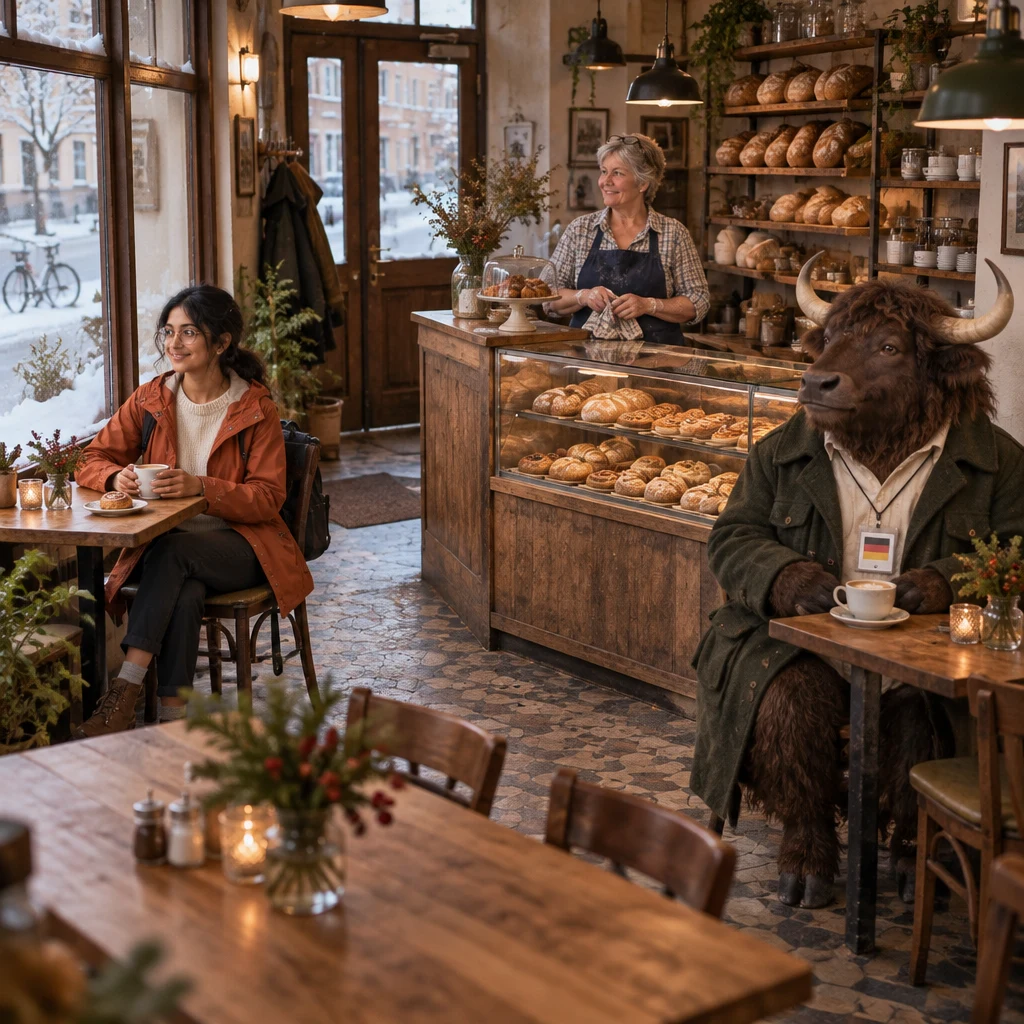
Snow keeps falling on Fliederstraße, and Priya has already chosen the bakery over a walk.
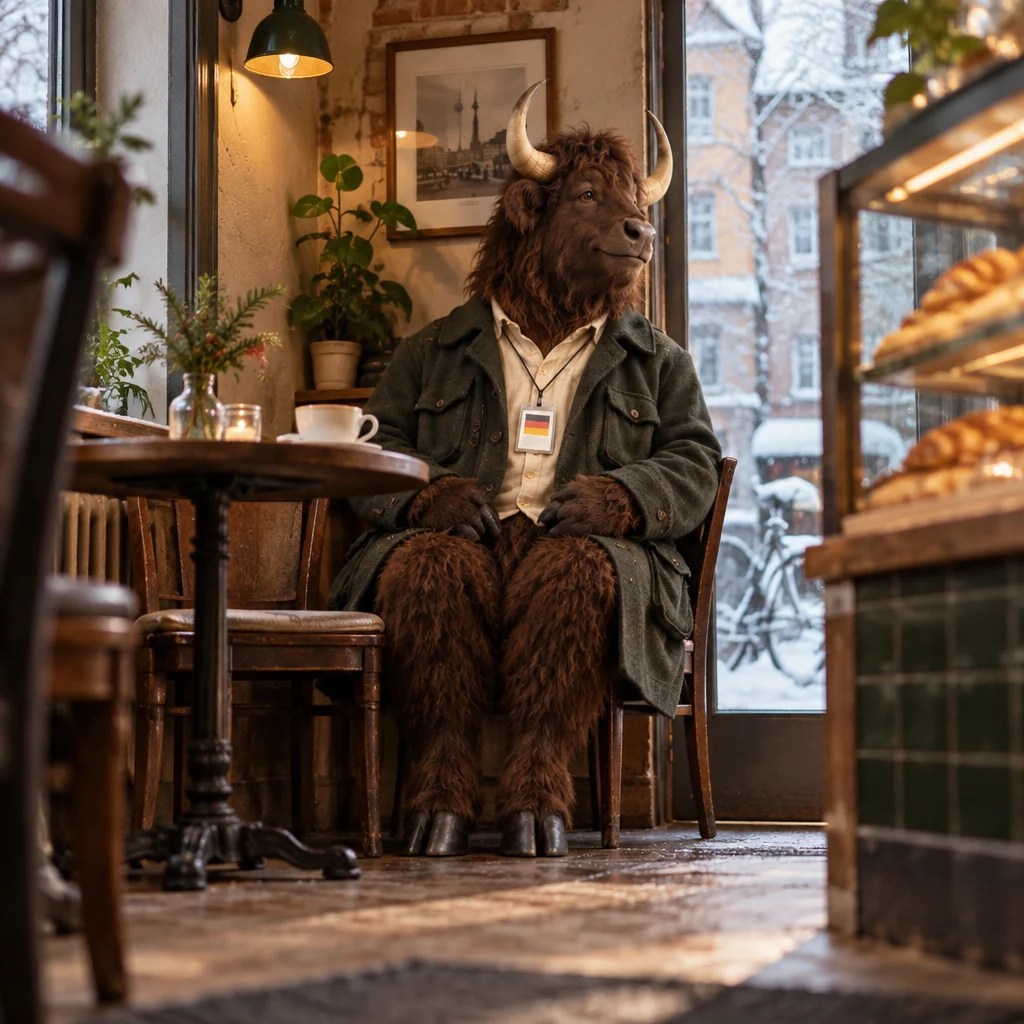
Jule may still come, if a chair is free and she has time. Anton sits in the corner with a Milchkaffee he has not finished.
By the end, you'll set a condition and say what follows from it: if, in case, as long as, only if, and otherwise.
By the end of this lesson
Make a condition and say what follows from it.
- Wenn es regnet, bleibe ich zu Hause.If it rains, I'll stay home.
- Falls du Zeit hast, komm einfach vorbei.If you've got time, just come by.
- Solange du Zeit hast, können wir bleiben.We can stay as long as you've got time.
- Was machen wir, wenn wir das nicht schaffen?What do we do if we don't make it?
- Nur wenn du einverstanden bist.Only if you agree.
- Ansonsten verschieben wir das auf morgen.Otherwise we'll move it to tomorrow.
Scene — the snowy bakery
A snowy Sunday on Fliederstraße. Priya is already at a small table in Bäckerei Krause, coat still on.
Jule is on her way. Anton uses two chairs in the corner, his Milchkaffee untouched. Renate watches the door from the counter.
Learn — if and then
Six lines for if, in case, as long as, only if, and otherwise.
After wenn, the verb waits at the end of that clause. You'll also ask what happens if a plan fails.

Wenn es regnet, bleibe ich zu Hause.
If it rains, I'll stay home.
When to use it: Say this when rain means you will stay in.
After wenn, the verb sits at the end of that clause.
Falls du Zeit hast, komm einfach vorbei.
If you've got time, just come by.
When to use it: Invite a friend to drop in if they have time.
After falls, the verb sits at the end of that clause.
Solange du Zeit hast, können wir bleiben.
We can stay as long as you've got time.
When to use it: Say how long you can stay, tied to their time.
After solange, the verb sits at the end of that clause.
Say it: können rounds the lips for the ö sound.

Was machen wir, wenn wir das nicht schaffen?
What do we do if we don't make it?
When to use it: Ask for a backup when a plan might fail.
After wenn, the verb still sits at the end of that clause.
Say it: Schaffen starts with the sh sound of sch.

Nur wenn du einverstanden bist.
Only if you agree.
When to use it: Make the plan depend on the other person's yes.
After wenn, the verb sits at the end of this short clause.
Ansonsten verschieben wir das auf morgen.
Otherwise we'll move it to tomorrow.
When to use it: Give the backup when the condition does not hold.
The verb comes second: verschieben follows Ansonsten in this main clause.
Story — a chair is free
Watch Priya and Jule make a Sunday plan around the snow. If the walk fails, they already have a backup.
The highlighted words are the lines you just learned. Turn on Show English if you need it.
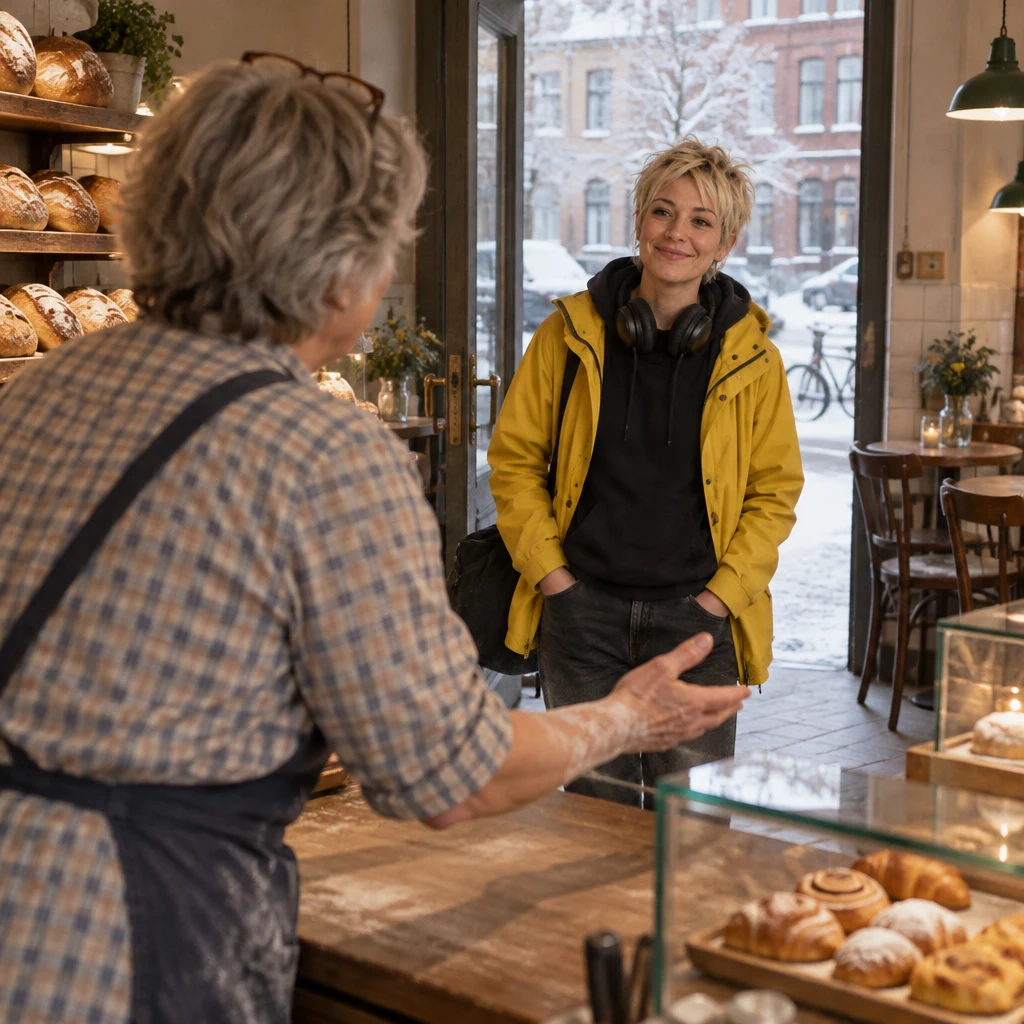
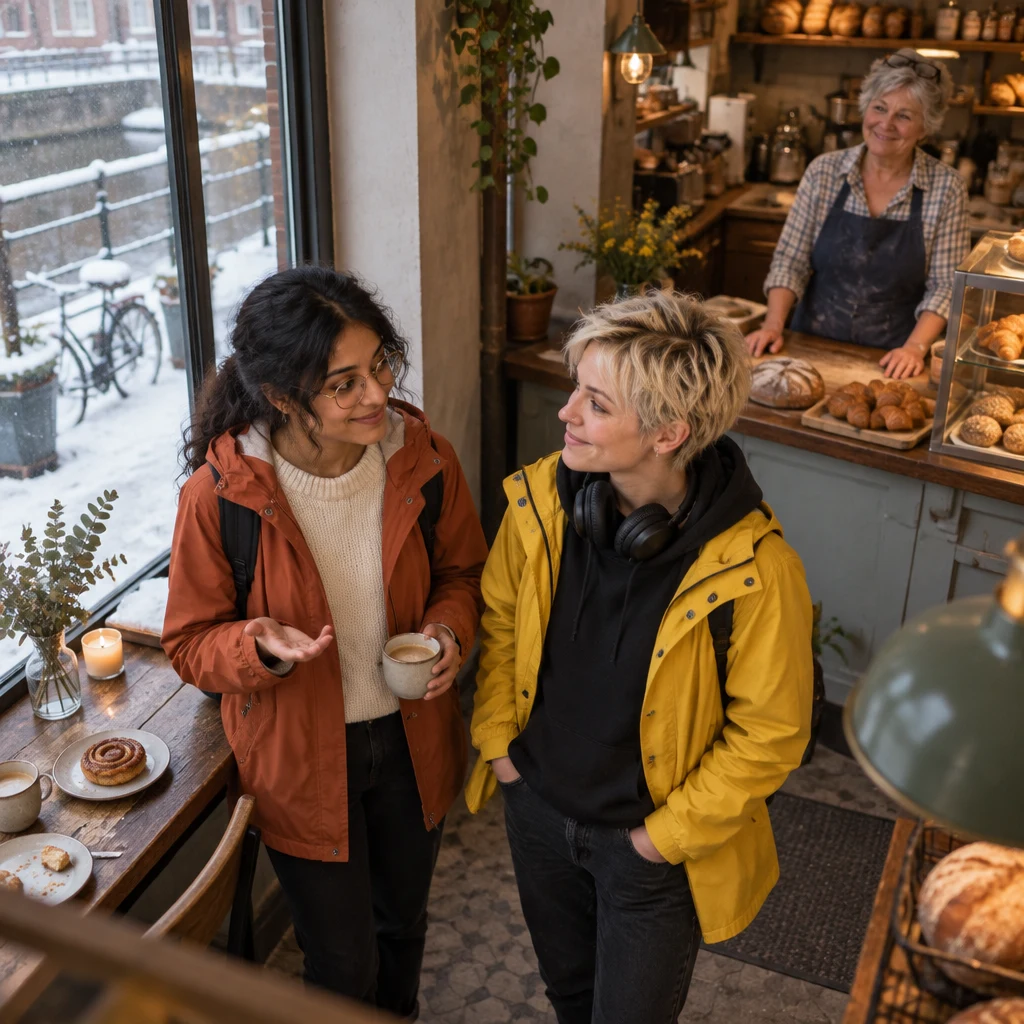
- Snow sticks to the bakery window. Jule comes in with snow on her yellow jacket. Priya already has a table.
 JuleGehst du noch raus heute?Are you still going out today?
 PriyaHeute bleibe ich lieber drinnen.I'd rather stay inside today.
- JuleEs schneit einfach weiter.The snow just keeps coming.
 AntonHier ist es wenigstens warm.At least it's warm here.
- JuleUnd wenn es später regnet?And if it rains later?
- PriyaWenn es regnet, bleibe ich zu Hause.If it rains, I'll stay home.
- Jule hangs her yellow jacket. She grins at her phone.
- JuleDu hast geschrieben: „Falls du Zeit hast, komm einfach vorbei.“You wrote: if you've got time, just come by.
- PriyaSolange du Zeit hast, können wir bleiben.We can stay as long as you've got time.
- AntonAm Fenster ist noch ein Platz frei.There's still a seat free by the window.
- They had planned a short walk to the canal after coffee.
- JuleGehen wir nach dem Kaffee noch zum Kanal?Shall we still go to the canal after coffee?
- PriyaNur wenn du einverstanden bist.Only if you agree.
- JuleIch bin einverstanden. Was machen wir, wenn wir das nicht schaffen?I agree. What do we do if we don't make it?
- PriyaAnsonsten verschieben wir das auf morgen.Otherwise we'll move it to tomorrow.
- JuleBis morgen.See you tomorrow.
Practice — pick the condition
Ten short tasks wait here. You'll listen, fill a gap, swap a word, and build a line.
They stay on today's if-then lines, plus a few you already know.
0 of 10 done
What did you hear?
What did you hear?
What does it mean?
What does it mean?
Falls du Zeit hast, komm einfach vorbei.
Fill the gap
Fill the gap
We can stay as long as you've got time.
____ du Zeit hast, können wir bleiben.
What do you say?
What do you say?
You and a friend may miss a later walk. Ask what you do then.
Pick the reply
Jule says:
Pick the reply
Sollen wir zusammen zum Kanal gehen?
Shall we go to the canal together?
And you reply with:
Build the line
Build the line
Otherwise we'll move it to tomorrow.
.
Tap the words in order.
Swap the word
Swap the word
Rain is the reason you will stay in.
Wenn es ____, bleibe ich zu Hause.
True or false?
True or false?
She is heading out into the weather today.
Fill the gap
Fill the gap
It's raining.
Es ____.
What do you say?
What do you say?
You postponed until tomorrow. Close the plan that way.
Say it — say the if-then
Now you're Priya at the bakery on a snowy Sunday. When it's your turn, tap the microphone and speak the line.
Tap ▶ first if you want to hear the line. Your recording stays on your device.
- JuleUnd wenn es später regnet?And if it rains later?
- Priya (you)Say you'll stay home if it rains.
Say you'll stay home if it rains.
Wenn es regnet, bleibe ich zu Hause.
If it rains, I'll stay home.
0 of 6 said
Recap — what you can say now
| German | English | Play |
|---|---|---|
| Wenn es regnet, bleibe ich zu Hause. | If it rains, I'll stay home. | |
| Falls du Zeit hast, komm einfach vorbei. | If you've got time, just come by. | |
| Solange du Zeit hast, können wir bleiben. | We can stay as long as you've got time. | |
| Was machen wir, wenn wir das nicht schaffen? | What do we do if we don't make it? | |
| Nur wenn du einverstanden bist. | Only if you agree. | |
| Ansonsten verschieben wir das auf morgen. | Otherwise we'll move it to tomorrow. |
Save your progress — it’s free
Keep your place in the course and see which lines you’ve learned.
Want the next lesson in your inbox?
Get the next lesson by email, one a day.
Join the newsletterDaily lesson emails are coming soon. Newsletter subscribers get them first.
Keep practicing with Yak Cards
Want to keep these if-then lines handy? Grab the Yak Cards for this lesson and review them anywhere.
A quick round with the Yak Cards each day keeps your conditions ready for a snowy Sunday.
Open Yak Cards