
New here? This is lesson 236 of a free 240-lesson German course.
Retelling the year in German
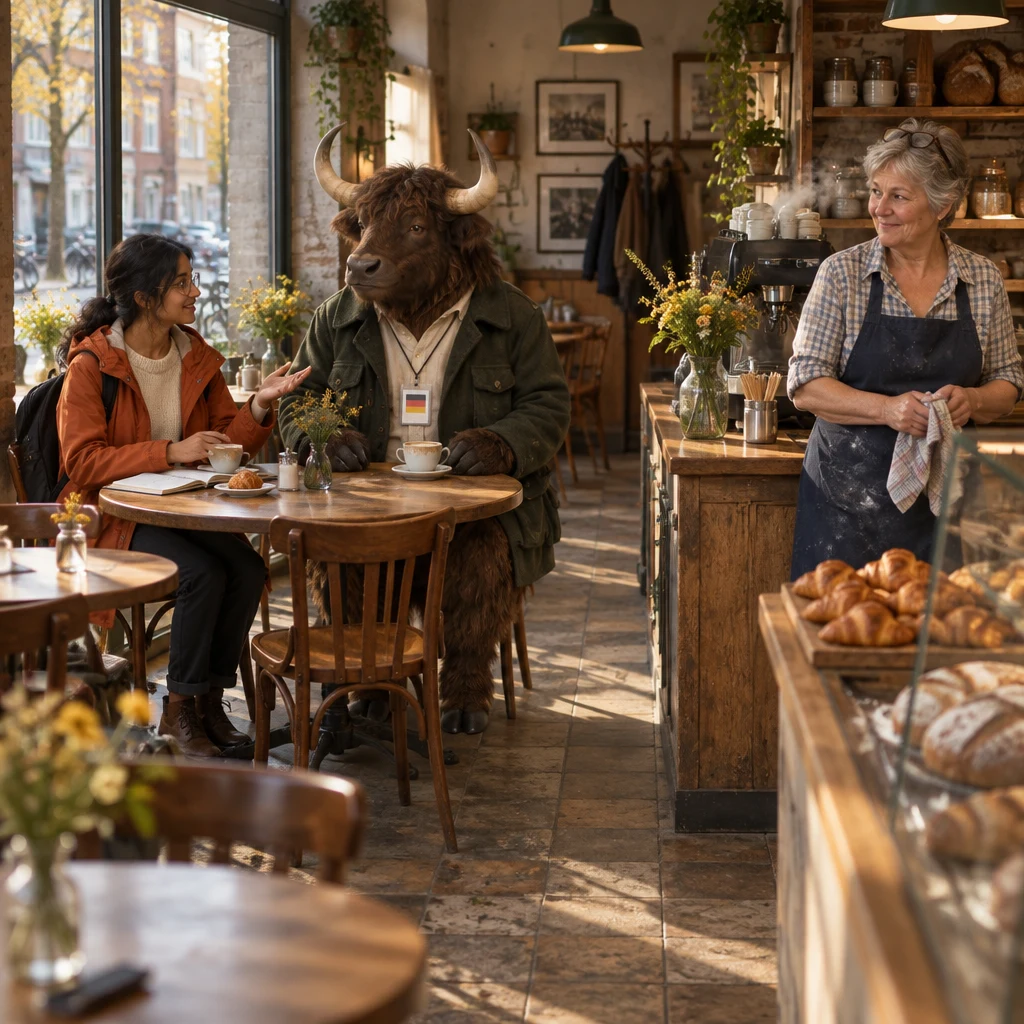
Priya sits at the corner table at Bäckerei Krause and looks back on her year in Kreuzberg. Renate wipes the counter and waits for the point, not a speech.
Anton almost starts a story of his own, then stops.
By the end, you'll tell a year with a beginning, a surprise, and a point: it comes down to the people.
By the end of this lesson
Tell the story of your year with a point.
- Dieses Jahr ist unglaublich viel passiert.An incredible amount has happened this year.
- Als ich ankam, konnte ich kaum ___.When I arrived, I could hardly ___.
- Inzwischen klappt das meiste ganz gut.By now most of it works out pretty well.
- Am meisten überrascht hat mich ___.What surprised me most was ___.
- Von heute auf morgen ging das nicht.It didn't happen overnight.
- Am Ende kommt es auf die Leute an.In the end it comes down to the people.
Scene — the corner table
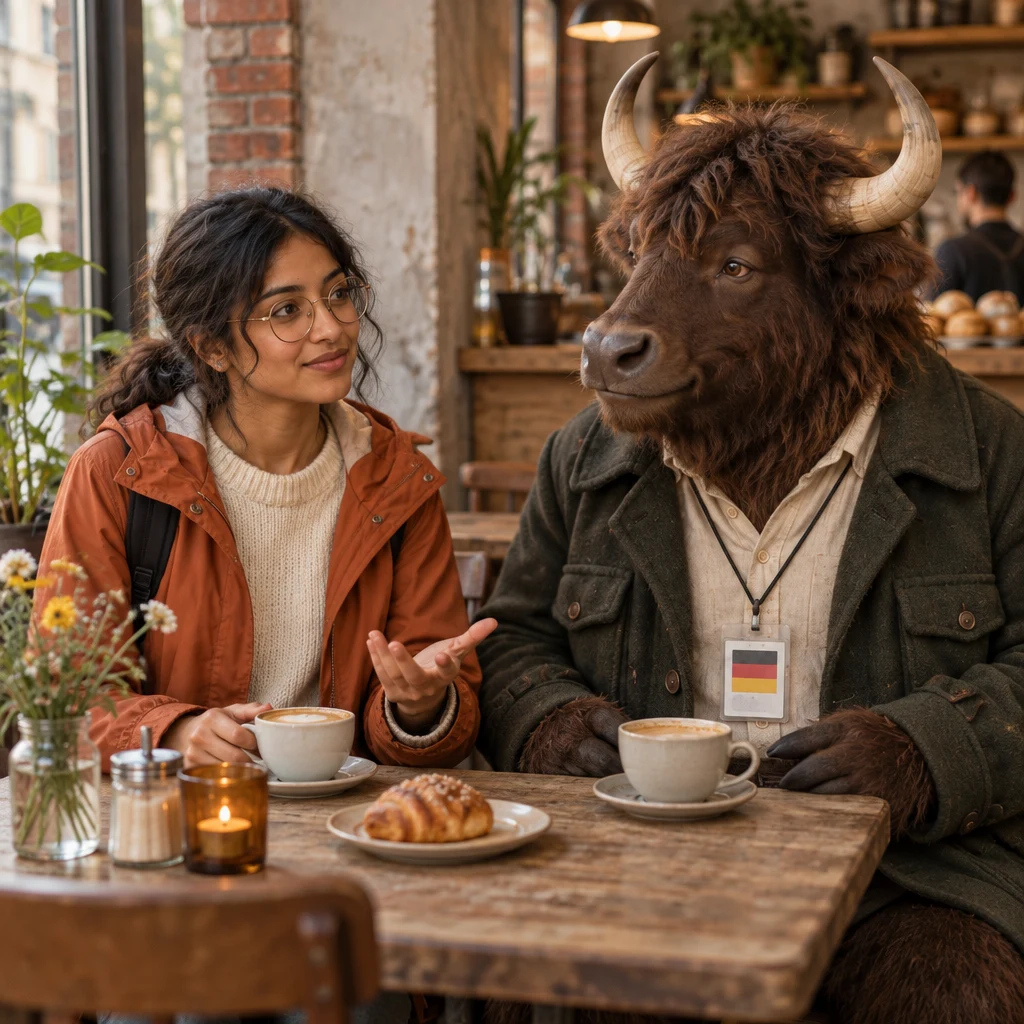
Late afternoon at Bäckerei Krause. Priya sits at the corner table with Anton and his unfinished Milchkaffee.
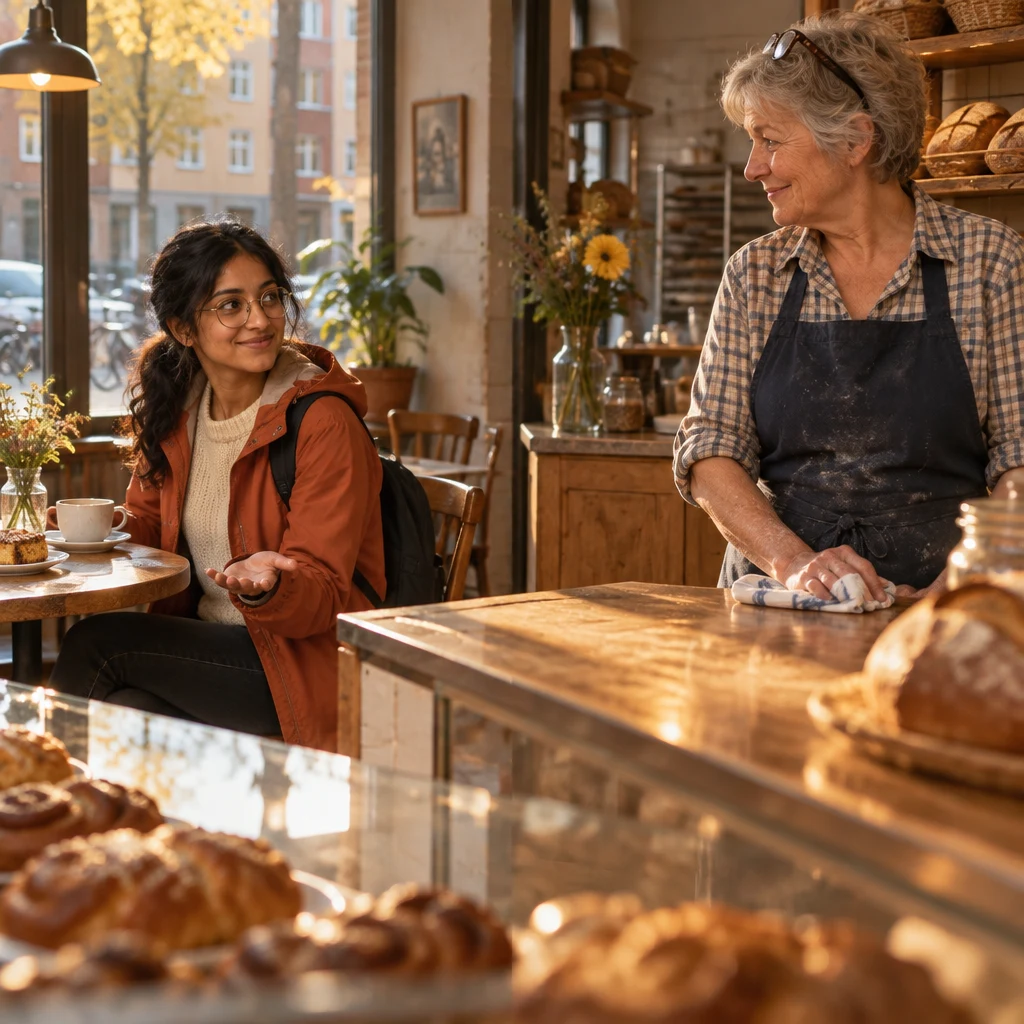
Renate wipes the wooden counter, then looks over. She wants the year in a few lines, with a point, not a speech.
Learn — a year with a point
Six lines help you tell a year with a point: a lot happened, you could hardly start, and most of it works now.
You'll also name a surprise, say it took time, and land on the people.
Dieses Jahr ist unglaublich viel passiert.
An incredible amount has happened this year.
When to use it: Use this to open a year story before you get to the point.
The verb ist stays second, even after Dieses Jahr.

Als ich ankam, konnte ich kaum ___.
When I arrived, I could hardly ___.
When to use it: Use this to start the year from the day you arrived.
After Als, the verb waits at the end of that clause.

Inzwischen klappt das meiste ganz gut.
By now most of it works out pretty well.
When to use it: Use this when the hard start is over and daily life works.
Inzwischen comes first, so klappt stays in second place.

Am meisten überrascht hat mich ___.
What surprised me most was ___.
When to use it: Use this when you name the biggest surprise in the story.
Hat stays second even when the surprise comes first.
Say it: The ä in überrascht is an open vowel, like the vowel in English 'bed'.

Von heute auf morgen ging das nicht.
It didn't happen overnight.
When to use it: Use this when a change took time, not one night.
Ging stays second after the whole phrase Von heute auf morgen.
Am Ende kommt es auf die Leute an.
In the end it comes down to the people.
When to use it: Use this to close a story with a point about people.
The little word an waits at the end of the clause.
Story — he almost tells it
Watch Priya tell her year at the corner table. Renate wants a point, and Anton almost starts his own story.
The highlighted words are the lines you just learned. Turn on Show English if you need it.
- The coffee machine hisses. Renate wipes the counter and looks at the corner table.
 RenateNa, Priya. Erzähl mal von dem Jahr.Right, Priya. Tell me about the year.
 PriyaDieses Jahr ist unglaublich viel passiert.An incredible amount has happened this year.
 AntonDann fang ruhig an. Ich höre zu.Go ahead and start. I'm listening.
- PriyaAls ich ankam, konnte ich kaum Deutsch sprechen.When I arrived, I could hardly speak German.
- AntonAch so. Und dann?Ah. And then?
- PriyaAm Anfang ist mir das ziemlich schwergefallen.I found that pretty hard at first.
- RenateWatt, du bestellst doch schon wie eine Stammkundin.What, you already order like a regular.
- PriyaInzwischen klappt das meiste ganz gut.By now most of it works out pretty well.
- AntonAm Anfang war ich genauso unsicher.I was just as unsure at the start.
- PriyaMittlerweile habe ich mich gut eingelebt.I've settled in well by now.
- RenateUnd was hat dich am meisten überrascht?And what surprised you most?
- PriyaAm meisten überrascht hat mich der Kiez.What surprised me most was the neighbourhood.
- AntonDer Kiez. Der hält einen fest.The neighbourhood. It holds on to you.
- PriyaVon heute auf morgen ging das nicht.It didn't happen overnight.
- Anton starts to speak, then looks at his Milchkaffee and stops.
- AntonDas erste Mal, da wollte ich etwas erzählen, aber...The first time, I wanted to tell you something, but...
- PriyaJa?Yes?
- AntonSpäter. Heute geht es um dein Jahr.Later. Today is about your year.
- PriyaAm Ende kommt es auf die Leute an.In the end it comes down to the people.
- RenateGenau. Ohne die Leute wäre das hier nur Mehl.Exactly. Without the people this place would just be flour.
- AntonDie Leute. Und ein Milchkaffee, den ich noch nicht fertig habe.The people. And a Milchkaffee I still haven't finished.
Practice — start, surprise, people
Eleven quick exercises wait here. You'll listen, fill a gap, swap a word, build a line, and put a short year in order.
They stay short, so you can check the year without a long drill.
0 of 11 done
What did you hear?
What did you hear?
Swap the word
Swap the word
When you arrived, you could hardly do it, not almost.
Als ich ankam, konnte ich ____ ___.
What does it mean?
What does it mean?
Inzwischen klappt das meiste ganz gut.
Swap the word
Swap the word
You want the surprise, not what annoyed you most this year.
Am meisten ____ hat mich ___.
Fill the gap
Fill the gap
It didn't happen overnight.
Von heute auf ____ ging das nicht.
Build the line
Build the line
In the end it comes down to the people.
.
Tap the words in order.
True or false?
True or false?
This line says you found that pretty hard at first.
What do you say?
What do you say?
You want to say you have settled in well by now.
What does it mean?
What does it mean?
Am Anfang war ich genauso unsicher.
Swap the word
Swap the word
Open your year story: an incredible amount has happened.
Dieses Jahr ist unglaublich ____ passiert.
Put the chat in order
- PriyaWhat comes first?
- Renate…
- Priya…
- Anton…
- Priya…
Say it — tell the year back
Now you're Priya at the corner table, telling the year with a point. When it's your turn, tap the microphone and speak the line.
Tap ▶ first if you want to hear the line. Your recording stays on your device.
- RenateNa, erzähl mal. Wie war dein Jahr?Go on, tell me. How was your year?
- Priya (you)Open the year: an incredible amount has happened.
Open the year: an incredible amount has happened.
Dieses Jahr ist unglaublich viel passiert.
An incredible amount has happened this year.
0 of 6 said
Recap — what you can say now
| German | English | Play |
|---|---|---|
| Dieses Jahr ist unglaublich viel passiert. | An incredible amount has happened this year. | |
| Als ich ankam, konnte ich kaum ___. | When I arrived, I could hardly ___. | |
| Inzwischen klappt das meiste ganz gut. | By now most of it works out pretty well. | |
| Am meisten überrascht hat mich ___. | What surprised me most was ___. | |
| Von heute auf morgen ging das nicht. | It didn't happen overnight. | |
| Am Ende kommt es auf die Leute an. | In the end it comes down to the people. |
Save your progress — it’s free
Keep your place in the course and see which lines you’ve learned.
Want the next lesson in your inbox?
Get the next lesson by email, one a day.
Join the newsletterDaily lesson emails are coming soon. Newsletter subscribers get them first.
Keep practicing with Yak Cards
Want to keep this year story handy? Grab the Yak Cards for this lesson and review them anywhere.
A quick round with the Yak Cards each day keeps your year story ready at the corner table.
Open Yak Cards