
New here? This is lesson 237 of a free 240-lesson French course.
The Lyon story, told properly in French
Sam is back at Café des Tilleuls with the Lyon weekend still in his pocket.
He wants to tell it in order this time: the wrong train, a traboule, the snack they ordered twice.
Inès sits two stools down. She already knows she will add a floor.
By the end, you'll open a story, mark the snag, drop the funny bit, and land the punchline.
By the end of this lesson
Retell one story with details and a punchline.
- Au départ, tout se passait bien.At the start, everything was going fine.
- Sauf qu'on a pris le mauvais train.Except we got on the wrong train.
- Le détail, c'est qu'Inès jurait du contraire.The thing is, Inès swore the opposite.
- Et là, on s'est retrouvés dans une traboule.And that's when we found ourselves in a traboule.
- Tu vas rire : on l'a commandée deux fois.You'll laugh: we ordered it twice.
- La chute, c'est qu'elle raconte encore plus fort.The punchline is she tells it even bigger now.
Scene — two stools down
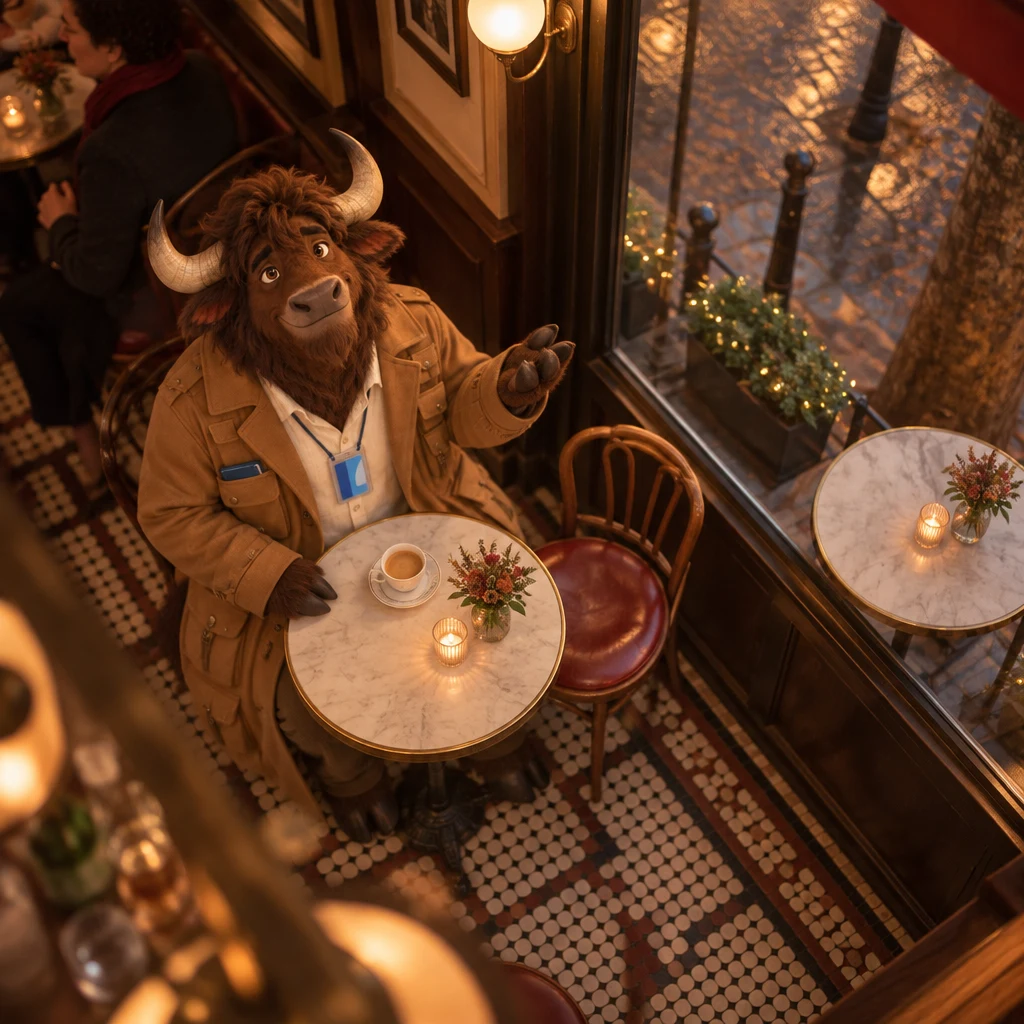
Evening at Café des Tilleuls. Sam has a stool at the zinc counter. Inès is two stools down, denim jacket on, already smiling.
Odile wipes a glass and waits for the story. Gaspard sits at the table next to the window table, café crème untouched, two chairs as usual.
The blank brass sign stays on the window table.

Learn — start to punchline
Six lines walk a story from a calm start to the punchline.
You'll mark the snag, the detail, the turn, the laugh, and how it grows.

Au départ, tout se passait bien.
At the start, everything was going fine.
When to use it: Open a story by saying things were going fine at first.
Au départ sets the start of the story, before you name what went wrong.

Sauf qu'on a pris le mauvais train.
Except we got on the wrong train.
When to use it: Add the first snag after a story that started well.
Sauf que introduces the exception, and que plus on is written qu'on.
Say it: In qu'on, the e of que drops before on.

Le détail, c'est qu'Inès jurait du contraire.
The thing is, Inès swore the opposite.
When to use it: Add the detail that someone else remembers it differently.
C'est que plus a name drops the e, so you write qu'Inès.
Say it: In Inès, the final s is silent.
Et là, on s'est retrouvés dans une traboule.
And that's when we found ourselves in a traboule.
When to use it: Mark the moment the story takes its turn.
Et là points to that moment; keep traboule as itself in the line.
Say it: In retrouvés, the final s is silent.

Tu vas rire : on l'a commandée deux fois.
You'll laugh: we ordered it twice.
When to use it: Warn a friend that a funny bit is coming next.
L'a is the object plus a; commandée matches the thing they ordered.
Say it: In l'a, le or la drops the vowel before a.

La chute, c'est qu'elle raconte encore plus fort.
The punchline is she tells it even bigger now.
When to use it: Close the story by naming the punchline.
La chute is the punchline; qu'elle keeps que elided before elle.
Story — she adds a floor
Sam tells the Lyon weekend in order at the counter. Inès is two stools down and cannot help herself.
The highlighted words are the lines you just learned. Turn on Show English if you need it.
- Evening lamps. Sam has a stool; Inès is two stools down.
 OdileAlors, ce week-end à Lyon ?So, that weekend in Lyon?
 SamAu départ, tout se passait bien.At the start, everything was going fine.
- OdileEt après ?And then?
- SamSauf qu'on a pris le mauvais train.Except we got on the wrong train.
 GaspardLe mauvais train ?The wrong train?
- SamLe détail, c'est qu'Inès jurait du contraire.The thing is, Inès swore the opposite.
 InèsJ'étais sûre, moi.I was sure, I was.
- Odile sets the glass down. The window table stays empty.
- OdileEt vous êtes arrivés où, alors ?And where did you end up, then?
- SamEt là, on s'est retrouvés dans une traboule.And that's when we found ourselves in a traboule.
- GaspardDans une traboule.In a traboule.
- OdileEt la tarte ?And the tart?
- SamTu vas rire : on l'a commandée deux fois.You'll laugh: we ordered it twice.
- InèsDeux fois, et un étage de plus dans ma version.Twice, and one extra floor in my version.
- SamLa chute, c'est qu'elle raconte encore plus fort.The punchline is she tells it even bigger now.
- OdilePlus tu racontes, plus ça grossit.The more you tell it, the more it grows.
- InèsUn peu, oui.A bit, yes.
Practice — tell it in order
Eleven quick exercises wait here. You'll listen, fill a gap, build a line, and pick the right moment.
They stay short, so the round moves fast.
0 of 11 done
What did you hear?
What did you hear?
What does it mean?
What does it mean?
Sauf qu'on a pris le mauvais train.
What do you say?
What do you say?
You're past the train snag. Add the detail that Inès swore you had it right.
Fill the gap
Fill the gap
And that's when we found ourselves in a traboule.
Et là, on s'est retrouvés dans une ____.
Swap the word
Swap the word
You're about to tell Odile the snack bit. Warn her she'll laugh.
Tu vas ____ : on l'a commandée deux fois.
Build the line
Build the line
The punchline is she tells it even bigger now.
, .
Tap the words in order.
Pick the reply
Inès says:
Pick the reply
Deux fois, et un étage de plus dans ma version.
Twice, and one extra floor in my version.
And you reply with:
What do you say?
What do you say?
Odile wants the short fact, not the whole setup. Tell her you got the wrong train.
True or false?
True or false?
This line is the punchline: she tells the story even bigger now.
Match the pairs
French
Au départ, tout se passait bien.Drop the English hereLe détail, c'est qu'Inès jurait du contraire.Drop the English hereLa chute, c'est qu'elle raconte encore plus fort.Drop the English hereEnglish
Put the chat in order
- SamWhat comes first?
- Odile…
- Sam…
- Inès…
Say it — your turn to tell it
Now you're Sam at the counter, telling the Lyon weekend in order. When it's your turn, tap the microphone and speak the line.
Tap ▶ first if you want to hear the line. Your recording stays on your device.
- OdileAlors, ce week-end à Lyon ?So, that weekend in Lyon?
- Sam (you)Start the story: at first, everything was going fine.
Start the story: at first, everything was going fine.
Au départ, tout se passait bien.
At the start, everything was going fine.
0 of 6 said
Recap — what you can say now
| French | English | Play |
|---|---|---|
| Au départ, tout se passait bien. | At the start, everything was going fine. | |
| Sauf qu'on a pris le mauvais train. | Except we got on the wrong train. | |
| Le détail, c'est qu'Inès jurait du contraire. | The thing is, Inès swore the opposite. | |
| Et là, on s'est retrouvés dans une traboule. | And that's when we found ourselves in a traboule. | |
| Tu vas rire : on l'a commandée deux fois. | You'll laugh: we ordered it twice. | |
| La chute, c'est qu'elle raconte encore plus fort. | The punchline is she tells it even bigger now. |
Save your progress — it’s free
Keep your place in the course and see which lines you’ve learned.
Want the next lesson in your inbox?
Get the next lesson by email, one a day.
Join the newsletterDaily lesson emails are coming soon. Newsletter subscribers get them first.
Keep practicing with Yak Cards
Want to keep these story beats handy? Grab the Yak Cards for this lesson and review them anywhere.
A quick round with the Yak Cards keeps the start, the snag, and the punchline ready.
Open Yak Cards