
New here? This is lesson 218 of a free 240-lesson French course.
Link a story in French
Sam wants to tell the Lyon weekend in order at Café des Tilleuls. Gaspard keeps sliding in the weather, so Sam has to loop back.
You'll learn six linkers that move a story: the start, a return to the thread, the moment it clicked, a change in the meantime, a picture for the listener, and where things stand.
Keep the full Lyon tale for later. Today is the spine.
By the end of this lesson
Move through a story with linking words.
- Au départ, ___.At first, ___.
- Pour revenir à ___.Going back to ___.
- Et c'est là que je m'en suis rendu compte.And that's when I realised.
- Au final, voilà où on en est.In the end, that's where we stand.
- Entre-temps, on avait changé de plan.Meanwhile we'd changed the plan.
- Pour que tu te fasses une idée.Just so you get the picture.
Scene — the rain keeps winning
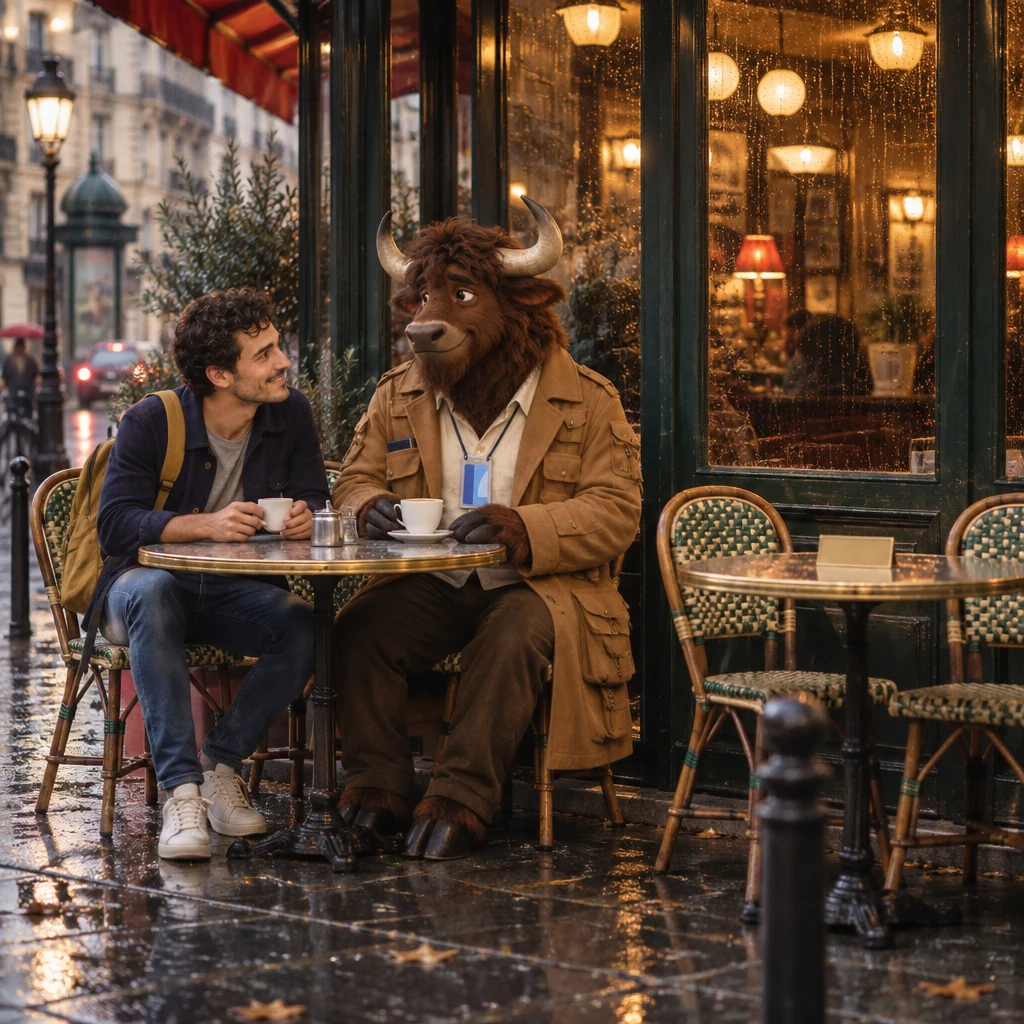
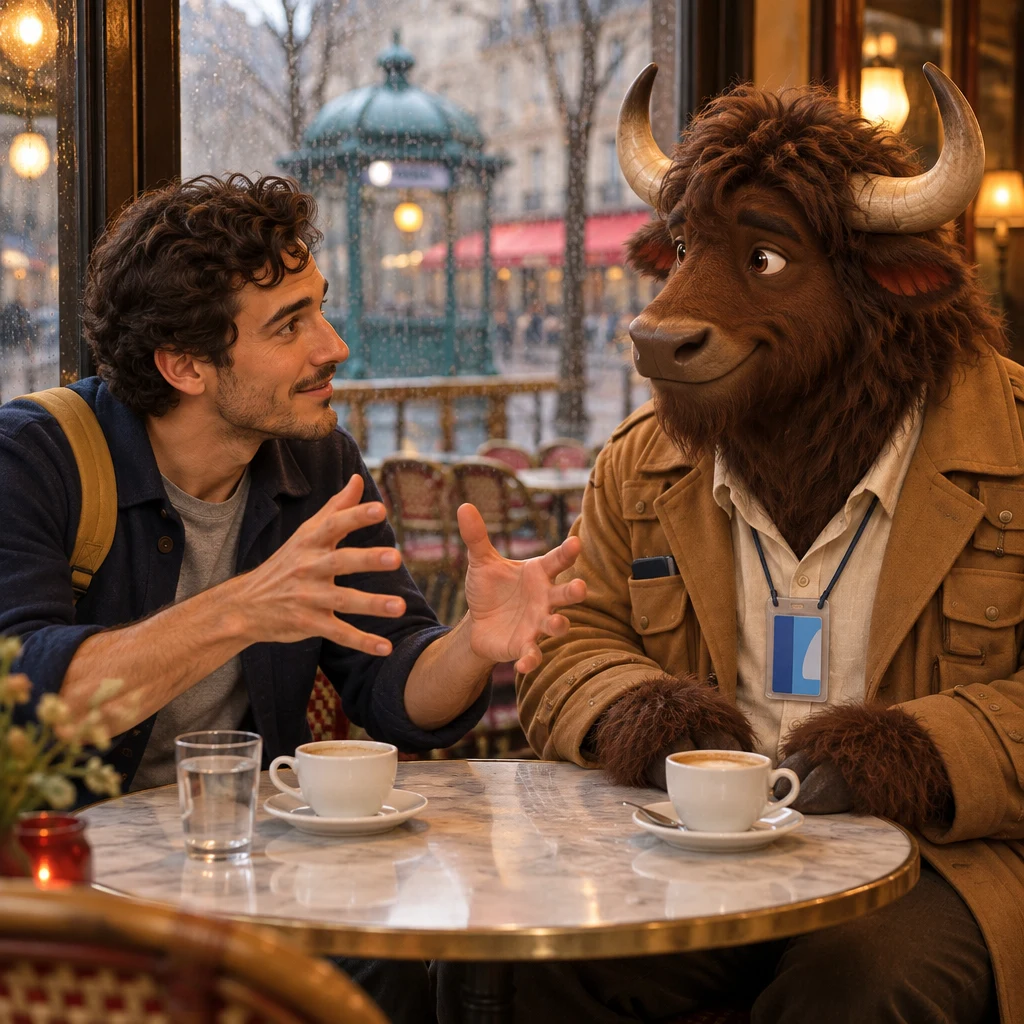
Late afternoon at Café des Tilleuls. Rain on the terrace. Sam sits with Gaspard at the table next to the window table.
The blank brass sign is still on the window table. Gaspard's café crème is still full. Sam wants to tell Lyon in order.
Learn — the joints of a story
Six lines help you start a story, loop back, mark a realization, note a change, give a picture, and close.
They are the joints, not the whole Lyon weekend.
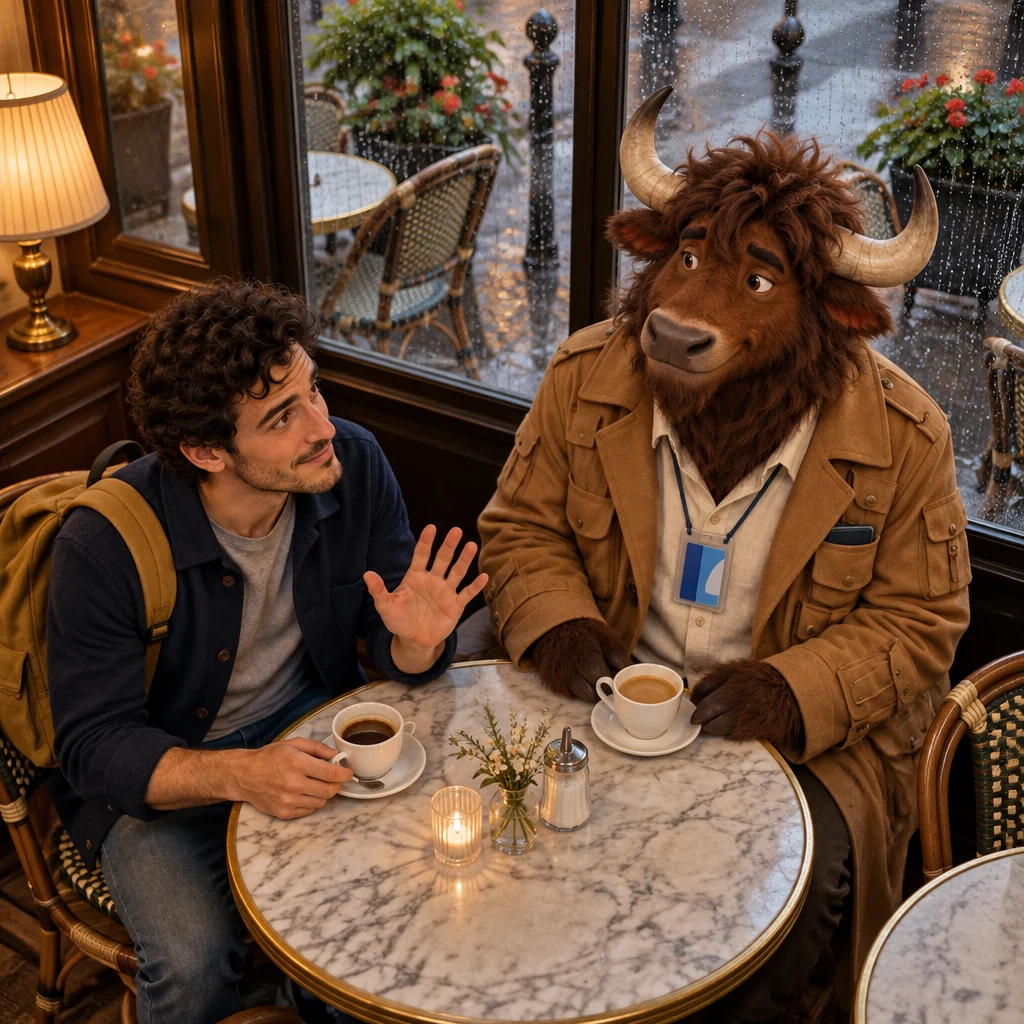
Au départ, ___.
At first, ___.
When to use it: Use this to open the first beat of a story.
It names the starting point, then you fill in what the plan or mood was.

Pour revenir à ___.
Going back to ___.
When to use it: Use this when you loop back after someone pulls you off the thread.
After à, name the topic you left, like a place or a part of the story.

Et c'est là que je m'en suis rendu compte.
And that's when I realised.
When to use it: Use this at the instant something clicked in the story.
Là points to that moment, then you say what you suddenly understood.
Say it: In m'en, the e of me drops before en.
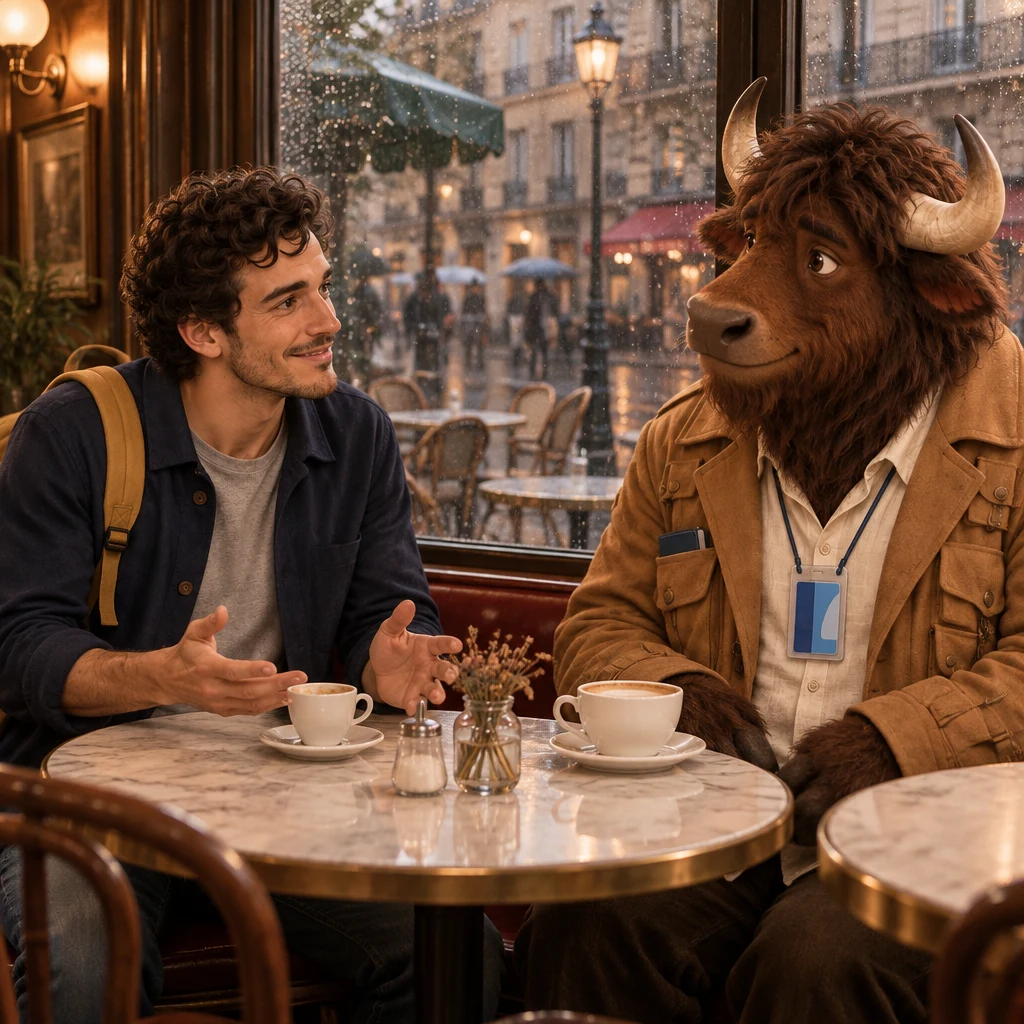
Au final, voilà où on en est.
In the end, that's where we stand.
When to use it: Use this to close the story and show where things stand now.
On en est is the current situation, not a new event in the past.
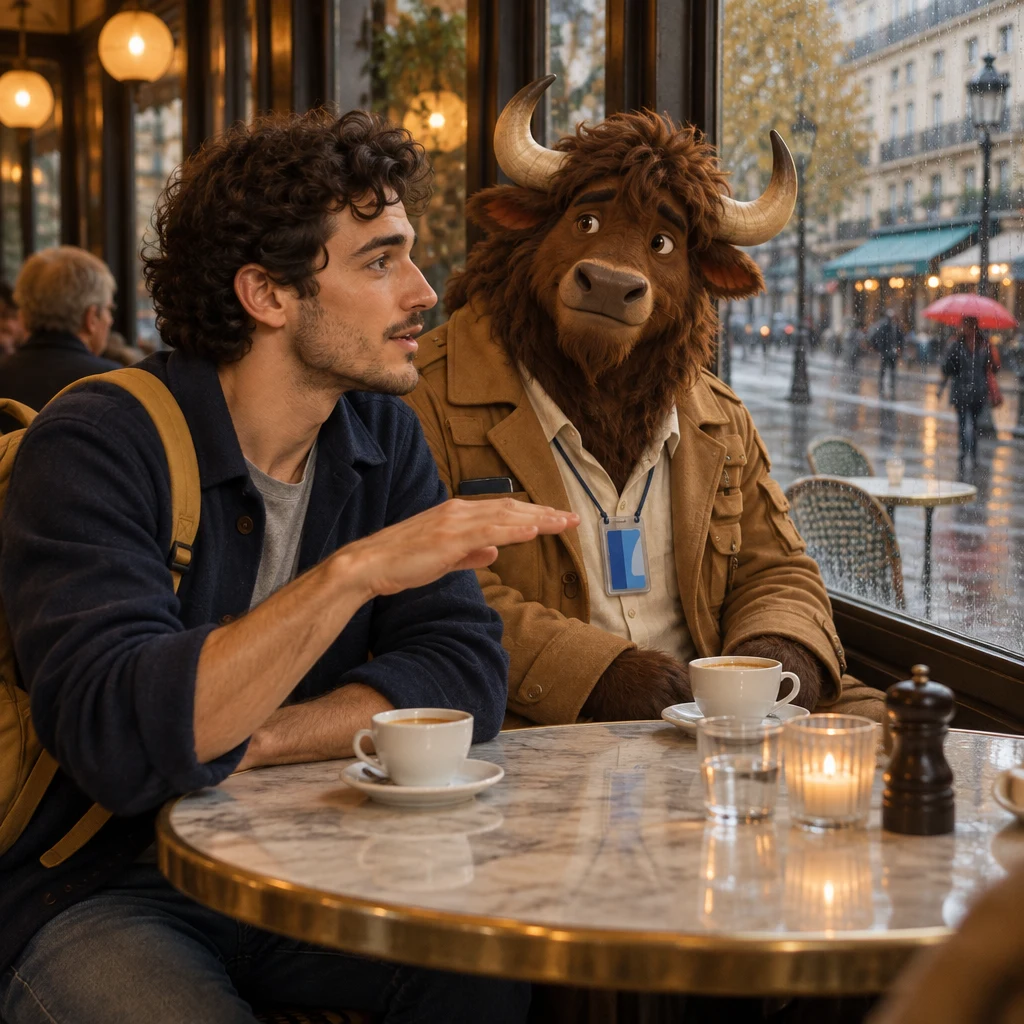
Entre-temps, on avait changé de plan.
Meanwhile we'd changed the plan.
When to use it: Use this for something that happened in the background, in the meantime.
On avait changé puts that change before the moment you have reached.
Say it: The p in temps is silent, and the vowel is nasal.
Pour que tu te fasses une idée.
Just so you get the picture.
When to use it: Use this before a short detail that helps a friend picture the scene.
After pour que tu, French uses fasses, not fais.
Story — he loops back
Sam tries to tell the Lyon weekend in order. Gaspard keeps pulling in the rain, so Sam has to loop back.
The highlighted words are today's lines. Turn on Show English if you need it.
- Rain on the glass. Gaspard has two chairs and an untouched café crème.
 GaspardAllez, raconte. Lyon, c'était comment ?Go on, tell me. What was Lyon like?
 SamC'est une longue histoire.It's a long story.
- Sam sets his cup down and starts in order. The window table stays empty.
- SamAu départ, on avait un plan simple.At first, we had a simple plan.
- SamOn partait vendredi soir, deux nuits près du centre.We were leaving Friday evening, two nights near the centre.
- GaspardIl a plu tout le samedi, non ?It rained all Saturday, didn't it?
- SamOui, un peu. Pour revenir à Lyon.Yes, a bit. Going back to Lyon.
- SamOn a pris le TGV, et au début ça allait.We took the high-speed train, and at first it was going fine.
- GaspardIci aussi, il a fallu rester au chaud.Here too, we had to stay somewhere warm.
- SamAttends, où est-ce que j'en étais ?Wait, where was I?
- SamPour revenir à l'histoire.Going back to the story.
- SamEntre-temps, on avait changé de plan.Meanwhile we'd changed the plan.
- GaspardÀ cause du ciel, j'imagine.Because of the sky, I imagine.
- SamPour que tu te fasses une idée.Just so you get the picture.
- SamOn n'était plus à la gare où on devait être.We weren't at the station we were supposed to be at any more.
- SamEt c'est là que je m'en suis rendu compte.And that's when I realised.
- GaspardCompte de quoi ?Realised what?
- SamQu'on n'allait pas pouvoir respecter l'horaire prévu.That we weren't going to be able to stick to the planned timetable.
- GaspardEt le ciel, du coup ?And the sky, then?
- SamIl a plu, oui, mais ce n'est pas ça qui nous a fait changer de plan. Pour en revenir à ce que je disais.It rained, yes, but that's not what made us change the plan. Getting back to what I was saying.
- SamAu final, voilà où on en est : on est rentrés à Paris.In the end, that's where we stand: we're back in Paris.
- GaspardBon. La suite, tu me la dois.Right. You owe me the rest.
Practice — start, return, close
Ten short tasks mix listening, building, swapping, and a true or false.
You will also reuse three lines from earlier stories.
0 of 10 done
What did you hear?
What did you hear?
What do you say?
What do you say?
You start telling Gaspard the Lyon weekend. Open with how it began.
Fill the gap
Fill the gap
Meanwhile we'd changed the plan.
Entre-temps, on avait ____ de plan.
What does it mean?
What does it mean?
Au final, voilà où on en est.
Build the line
Build the line
Just so you get the picture.
.
Tap the words in order.
What did you hear?
What did you hear?
What do you say?
What do you say?
Gaspard's weather talk made you lose your place. You want to find where you were in the story.
What do you say?
What do you say?
Gaspard has gone off on the rain again. Get back to what you were saying.
True or false?
True or false?
This line means you boarded the wrong train.
Match the pairs
French
Au départ, ___.Drop the English hereEt c'est là que je m'en suis rendu compte.Drop the English hereAu final, voilà où on en est.Drop the English herePour que tu te fasses une idée.Drop the English hereEnglish
Say it — keep the thread
Now you're Sam at the café, trying to keep the story on track. When it's your turn, tap the microphone and speak the line.
Tap ▶ first if you want to hear it. Your recording stays on your device.
- GaspardAllez, raconte. Lyon, c'était comment ?Go on, tell me. What was Lyon like?
- Sam (you)Open the story with how it began.
Open the story with how it began.
Au départ, ___.
At first, ___.
0 of 7 said
Recap — what you can say now
| French | English | Play |
|---|---|---|
| Au départ, ___. | At first, ___. | |
| Pour revenir à ___. | Going back to ___. | |
| Et c'est là que je m'en suis rendu compte. | And that's when I realised. | |
| Au final, voilà où on en est. | In the end, that's where we stand. | |
| Entre-temps, on avait changé de plan. | Meanwhile we'd changed the plan. | |
| Pour que tu te fasses une idée. | Just so you get the picture. |
Save your progress — it’s free
Keep your place in the course and see which lines you’ve learned.
Want the next lesson in your inbox?
Get the next lesson by email, one a day.
Join the newsletterDaily lesson emails are coming soon. Newsletter subscribers get them first.
Keep practicing with Yak Cards
Want these story linkers handy? Grab the Yak Cards for this lesson and review them anywhere.
A quick round with the Yak Cards keeps the spine of a story ready when someone interrupts.
Open Yak Cards