
New here? This is lesson 231 of a free 240-lesson French course.
Back home and here in French
Sam and Inès walk the canal and compare Paris with the places they started, without ranking either city.
Gaspard sits nearby with a croissant he likes more than the debate.
You'll say how things work back home, how lost you felt at first, and what you like here now.
You'll also say what still doesn't click, and that different is not better or worse.
By the end of this lesson
Compare life back home with life in Paris, fairly.
- Chez moi, on ne fait pas comme ça.Back home, we don't do it like that.
- Au début, j'étais complètement perdu.At first I was completely lost.
- Maintenant, je commence à trouver mes marques.Now I'm starting to find my feet.
- Ce que je préfère ici, c'est le café du coin.What I like best here is the corner café.
- Il y a des choses que je ne capte toujours pas.There are things I still don't get.
- Ni mieux, ni moins bien : différent.Not better or worse: different.
Scene — on the canal
Sam and Inès sit on the stone quay at Canal Saint-Martin. Plane trees, still water, an iron footbridge.
Gaspard has taken two chairs on the path, croissant in one pocket, café crème unfinished.
Nobody ranks a city. They just compare how life felt at the start and how it feels now.

Learn — home and here
Six lines help you compare home and Paris without ranking them.
You'll cover first weeks, what you like here, and what still doesn't click.

Chez moi, on ne fait pas comme ça.
Back home, we don't do it like that.
When to use it: Say this when a habit here is not how people did it where you grew up.
On here means we, the people back home, not a person named On.

Au début, j'étais complètement perdu.
At first I was completely lost.
When to use it: Use this for the first weeks in a new city, when nothing felt familiar.
Sam says perdu; a woman speaking about herself would say perdue.
Say it: The om in complètement is nasal.

Maintenant, je commence à trouver mes marques.
Now I'm starting to find my feet.
When to use it: Say this when a new place starts to feel workable, even if you are still learning.
Trouver mes marques is one piece: you begin to know how things work here.
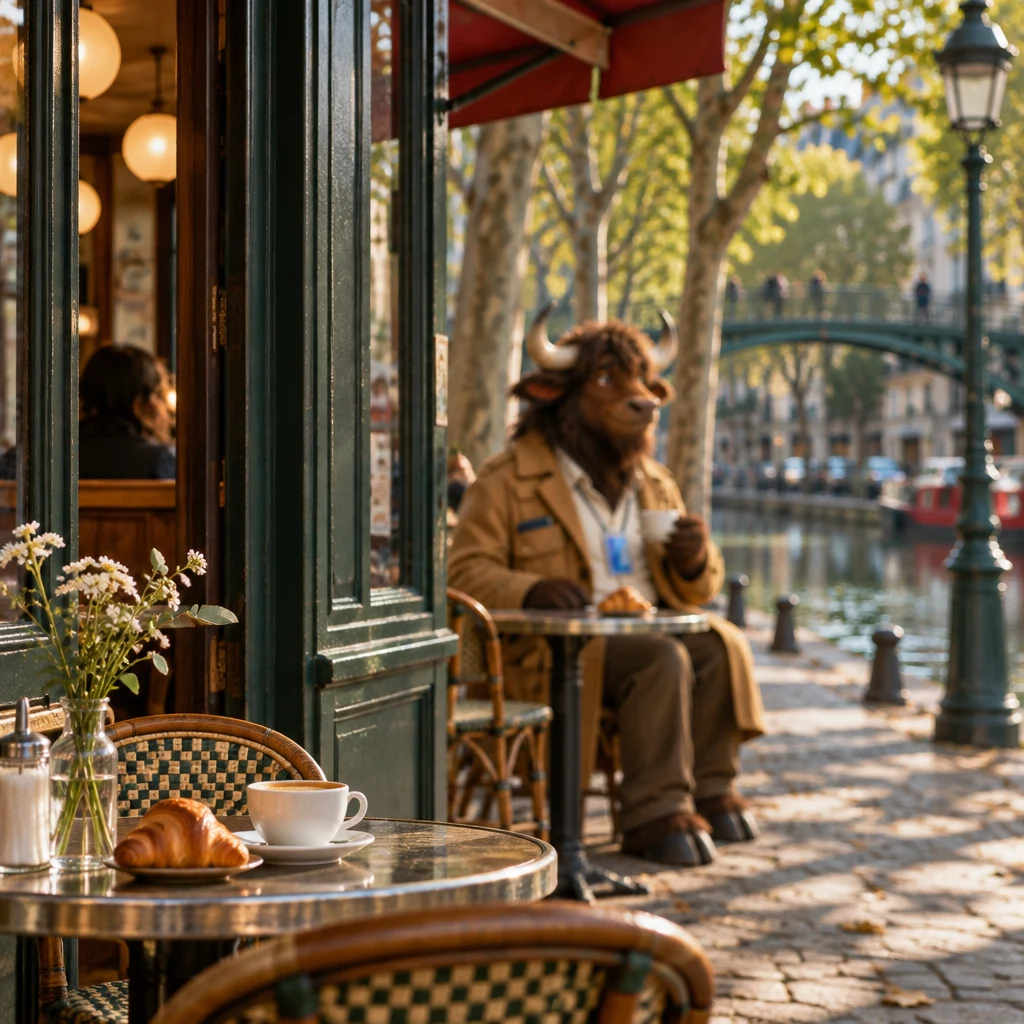
Ce que je préfère ici, c'est le café du coin.
What I like best here is the corner café.
When to use it: Name the one thing here you like most, without ranking the whole city.
Ce que followed by c'est picks out one favourite, here the neighbourhood café.

Il y a des choses que je ne capte toujours pas.
There are things I still don't get.
When to use it: Admit that some habits or jokes here still do not land for you.
Capter is spoken French for get it; keep ne in this line.

Ni mieux, ni moins bien : différent.
Not better or worse: different.
When to use it: Close a comparison without ranking either place as better.
Ni mieux, ni moins bien refuses to rank either place as better than the other.
Story — neither ranks a city
Sam and Inès talk on the canal. Gaspard prefers the croissant to the ranking game.
Highlighted words are the lines you just learned. Turn on Show English if you need it.
- Late afternoon on Canal Saint-Martin. Inès leans on the stone. Sam sits beside her.
 InèsTu as vu ? Ici, les gens prennent souvent leur café debout au comptoir.Did you see? Here, people often have their coffee standing at the counter.
 SamChez moi, on ne fait pas comme ça.Back home, we don't do it like that.
- InèsTu viens d'où, déjà ?Where are you from, again?
- SamLoin d'ici. J'habite à Paris, maintenant.A long way from here. I live in Paris now.
- InèsAu début, tu étais comment ?At the start, how were you?
- SamAu début, j'étais complètement perdu.At first I was completely lost.
- InèsJ'étais un peu pareille, ma première année ici.I was a bit the same, my first year here.
- SamMaintenant, je commence à trouver mes marques.Now I'm starting to find my feet.
- InèsEt maintenant, tu préfères quoi, ici ?And now, what do you like best here?
- SamCe que je préfère ici, c'est le café du coin.What I like best here is the corner café.
- Gaspard settles on two chairs, croissant in reach, café crème still full.
 GaspardMoi, ce que je préfère, c'est le croissant.What I like best is the croissant.
- SamIl y a des choses que je ne capte toujours pas.There are things I still don't get.
- InèsComme les files à la boulangerie ?Like the queues at the bakery?
- SamOui. Et les blagues trop rapides.Yes. And the jokes that go too fast.
- InèsJe comprends les deux points de vue.I can see both sides.
- GaspardParis ou ailleurs, ce n'est pas un concours.Paris or elsewhere, it's not a contest.
- SamNi mieux, ni moins bien : différent.Not better or worse: different.
- GaspardDifférent, d'accord. Le croissant, lui, ne change pas.Different, fair enough. The croissant, though, doesn't change.
Practice — fair, not better
Ten short tasks mix listening, gaps, matching, and a swap.
You'll pick the fair line, not the one that ranks a city.
0 of 10 done
What did you hear?
What did you hear?
What does it mean?
What does it mean?
Il y a des choses que je ne capte toujours pas.
What do you say?
What do you say?
Inès asks if Paris is better than back home. Stay fair; do not rank.
Fill the gap
Fill the gap
At first I was completely lost.
Au début, j'étais complètement ____.
Fill the gap
Fill the gap
Now I'm starting to find my feet.
Maintenant, je commence à trouver mes ____.
Swap the word
Swap the word
Name the one thing you like best here: the café on the corner.
Ce que je préfère ici, c'est le ____ du coin.
Match the pairs
French
Chez moi, on ne fait pas comme ça.Drop the English hereMaintenant, je commence à trouver mes marques.Drop the English hereNi mieux, ni moins bien : différent.Drop the English hereEnglish
Pick the reply
Inès says:
Pick the reply
Tu vois le point de vue de Karim, ou le mien ?
Do you see Karim's view, or mine?
And you reply with:
True or false?
True or false?
This line names the country you came from.
What do you say?
What do you say?
You want to ask a friend where they started, without naming a country.
Say it — say it on the quay
Now you're Sam on the quay. When it's your turn, tap the microphone and speak the line.
Tap ▶ first if you want to hear it. Your recording stays on your device.
- InèsTu as vu ? Ici, les gens prennent souvent leur café debout au comptoir.Did you see? Here, people often have their coffee standing at the counter.
- Sam (you)Say people don't do it that way where you grew up.
Say people don't do it that way where you grew up.
Chez moi, on ne fait pas comme ça.
Back home, we don't do it like that.
0 of 6 said
Recap — what you can say now
| French | English | Play |
|---|---|---|
| Chez moi, on ne fait pas comme ça. | Back home, we don't do it like that. | |
| Au début, j'étais complètement perdu. | At first I was completely lost. | |
| Maintenant, je commence à trouver mes marques. | Now I'm starting to find my feet. | |
| Ce que je préfère ici, c'est le café du coin. | What I like best here is the corner café. | |
| Il y a des choses que je ne capte toujours pas. | There are things I still don't get. | |
| Ni mieux, ni moins bien : différent. | Not better or worse: different. |
Save your progress — it’s free
Keep your place in the course and see which lines you’ve learned.
Want the next lesson in your inbox?
Get the next lesson by email, one a day.
Join the newsletterDaily lesson emails are coming soon. Newsletter subscribers get them first.
Keep practicing with Yak Cards
Want to keep these comparisons handy? Grab the Yak Cards for this lesson and review them anywhere.
A short round with the Yak Cards keeps home-and-here lines ready for the canal.
Open Yak Cards