
New here? This is lesson 170 of a free 240-lesson French course.
A trip that went wrong in French
Sam sits down with Inès at Café des Tilleuls and tells her how his trip to Paris went wrong.
He got lost, then found the fourth-floor walk-up. Gaspard is at the next table, café crème still full.
You'll learn how to say a trip did not go to plan, what happened on the way, and what you'll do next time.
Inès already has Lyon in mind. She says that weekend will be calmer.
By the end of this lesson
Tell what went wrong on a trip and how you got through it.
- Le voyage ne s'est pas passé comme prévu.The trip didn't go as planned.
- Je me suis perdu, mais j'ai retrouvé mon chemin.I got lost, but I found my way again.
- Sur le trajet, ___ est arrivé.On the way, something happened.
- C'était plus compliqué que prévu.It was more complicated than expected.
- La prochaine fois, je ___.Next time, I'll write down the address.
- Je n'oublierai jamais le moment où on a failli rater le train.I'll never forget the moment we nearly missed the train.
Scene — lost, then found
Same afternoon at Café des Tilleuls. Inès is already at a round table, denim jacket on the chair.
Sam sits down with his mustard backpack. The window table still has its blank brass sign.
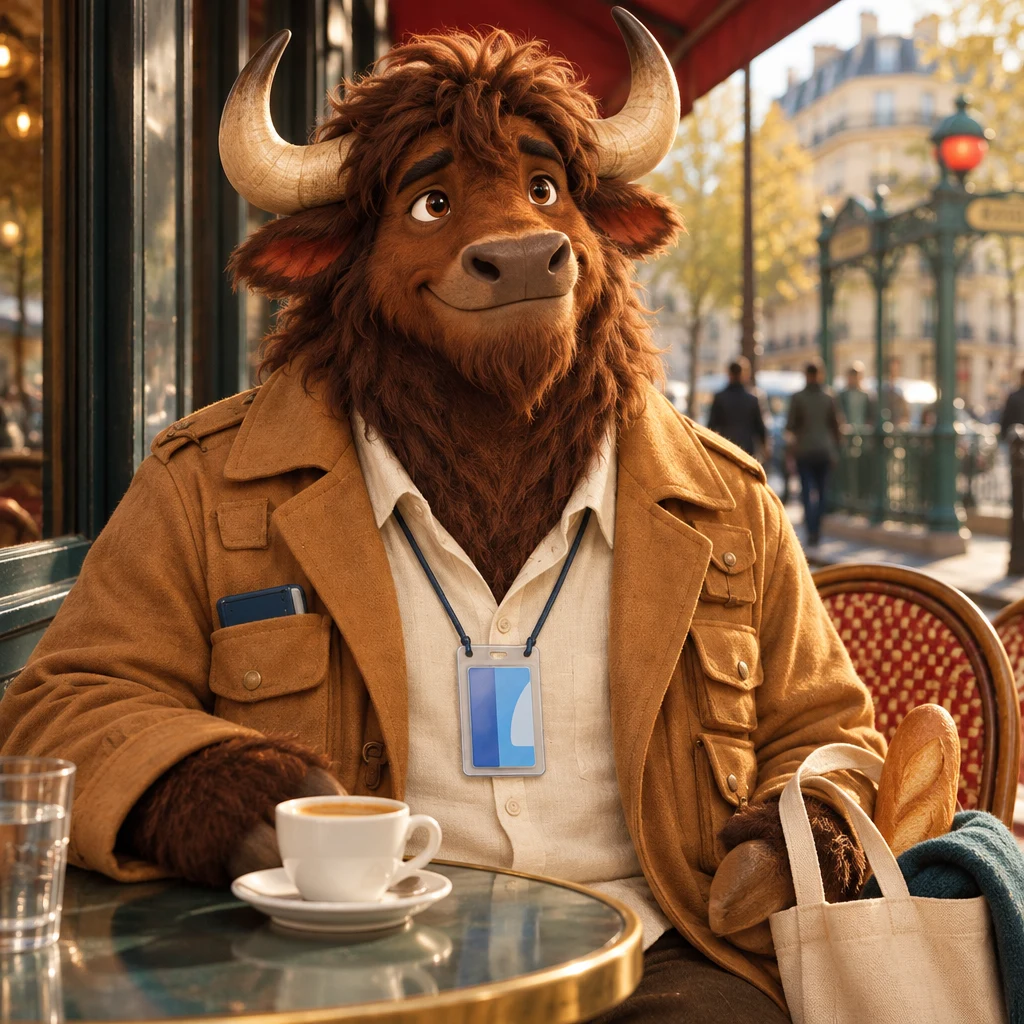
Gaspard sits on two chairs at the next table, café crème untouched, baguette in his tote.

Learn — what went wrong
Six lines cover a trip that went wrong, getting lost, and what you'll do next time.
You'll also get a line for a moment you still remember, like nearly missing a train.

Le voyage ne s'est pas passé comme prévu.
The trip didn't go as planned.
When to use it: Use this when a trip did not go the way you had hoped.
Keep ne and pas around the verb to say the trip did not go that way.
Say it: s'est is se plus est, said as one short beat.

Je me suis perdu, mais j'ai retrouvé mon chemin.
I got lost, but I found my way again.
When to use it: Say this after you got lost and then found your way.
A man says perdu about himself; a woman says perdue.

Sur le trajet, ___ est arrivé.
On the way, something happened.
When to use it: Use this when something went wrong while you were still on the way.
Quelque chose is masculine, so it is followed by est arrivé.
Say it: The last t in trajet is silent.

C'était plus compliqué que prévu.
It was more complicated than expected.
When to use it: Use this when things turned out harder than you had thought.
Plus que prévu means more than you had planned for.
Say it: C'était is ce plus était, said as one word.

La prochaine fois, je ___.
Next time, I'll write down the address.
When to use it: Say this when you will write the address down next time.
The present after je names what you will do next time.
Je n'oublierai jamais le moment où on a failli rater le train.
I'll never forget the moment we nearly missed the train.
When to use it: Use this for a close call on a trip you still remember.
Failli rater means you nearly missed it, but you caught it.
Say it: In on a, the n links into a.
Story — he tells Inès
Watch Sam tell Inès how the trip to Paris went wrong, from getting lost to the walk-up.
The highlighted words are the lines you just learned. Turn on Show English if you need it.
- Inès turns her glass. The blank brass sign is still on the window table.
 InèsAlors, ce voyage jusqu'à Paris ?So, that trip to Paris?
 SamLe voyage ne s'est pas passé comme prévu.The trip didn't go as planned.
- InèsQu'est-ce qui s'est passé ?What happened?
- SamSur le trajet, quelque chose est arrivé.On the way, something happened.
- InèsAh bon ?Oh really?
- SamJe me suis perdu, mais j'ai retrouvé mon chemin.I got lost, but I found my way again.
- She leans in. Gaspard stays on two chairs, café crème still full.
- InèsTu as dit quoi, à ce moment-là ?What did you say, at that moment?
- SamJe suis perdu.I'm lost.
- InèsEt l'appartement, il est où ?And the apartment, where is it?
- SamC'est au quatrième étage.It's on the fourth floor.
- InèsSans ascenseur, je sais.No lift, I know.
- SamC'était plus compliqué que prévu.It was more complicated than expected.
- InèsEt la prochaine fois ?And next time?
- SamLa prochaine fois, je note l'adresse.Next time, I'll write down the address.
- InèsEt le train ?And the train?
- SamJe n'oublierai jamais le moment où on a failli rater le train.I'll never forget the moment we nearly missed the train.
- InèsPour Lyon, tu verras. Ce sera plus calme.For Lyon, you'll see. It'll be calmer.
Practice — the trip, again
Eleven quick exercises wait here. You'll listen, pick, match, fill a gap, and swap a word.
They stay short, so the round moves fast.
0 of 11 done
What did you hear?
What did you hear?
Match the pairs
French
Le voyage ne s'est pas passé comme prévu.Drop the English hereJe me suis perdu, mais j'ai retrouvé mon chemin.Drop the English hereC'était plus compliqué que prévu.Drop the English hereEnglish
What do you say?
What do you say?
Inès asked what happened after you left the station. You were lost, then you found the street again.
Fill the gap
Fill the gap
It was more complicated than expected.
C'était plus ____ que prévu.
What does it mean?
What does it mean?
Je n'oublierai jamais le moment où on a failli rater le train.
What did you hear?
What did you hear?
Put the chat in order
- InèsWhat comes first?
- Sam…
- Inès…
- Sam…
Find the mistake
Find the mistake
What did you hear?
What did you hear?
What do you say?
What do you say?
You're on rue des Tilleuls and you cannot find the door. You are still lost.
True or false?
True or false?
This means the apartment is on the fifth floor.
Say it — tell the story
Now you're Sam at the café, telling Inès about the trip. When it's your turn, tap the microphone and speak the line.
Tap ▶ first if you want to hear the line. Your recording stays on your device.
- InèsAlors, ce voyage jusqu'à Paris ?So, that trip to Paris?
- Sam (you)Tell her the trip did not go as planned.
Tell her the trip did not go as planned.
Le voyage ne s'est pas passé comme prévu.
The trip didn't go as planned.
0 of 6 said
Recap — what you can say now
| French | English | Play |
|---|---|---|
| Le voyage ne s'est pas passé comme prévu. | The trip didn't go as planned. | |
| Je me suis perdu, mais j'ai retrouvé mon chemin. | I got lost, but I found my way again. | |
| Sur le trajet, ___ est arrivé. | On the way, something happened. | |
| C'était plus compliqué que prévu. | It was more complicated than expected. | |
| La prochaine fois, je ___. | Next time, I'll write down the address. | |
| Je n'oublierai jamais le moment où on a failli rater le train. | I'll never forget the moment we nearly missed the train. |
Save your progress — it’s free
Keep your place in the course and see which lines you’ve learned.
Want the next lesson in your inbox?
Get the next lesson by email, one a day.
Join the newsletterDaily lesson emails are coming soon. Newsletter subscribers get them first.
Keep practicing with Yak Cards
Want to keep these trip lines handy? Grab the Yak Cards for this lesson and review them anywhere.
A quick round with the Yak Cards each day keeps your trip story ready for the café.
Open Yak Cards