
New here? This is lesson 124 of a free 240-lesson French course.
Trip stories in French
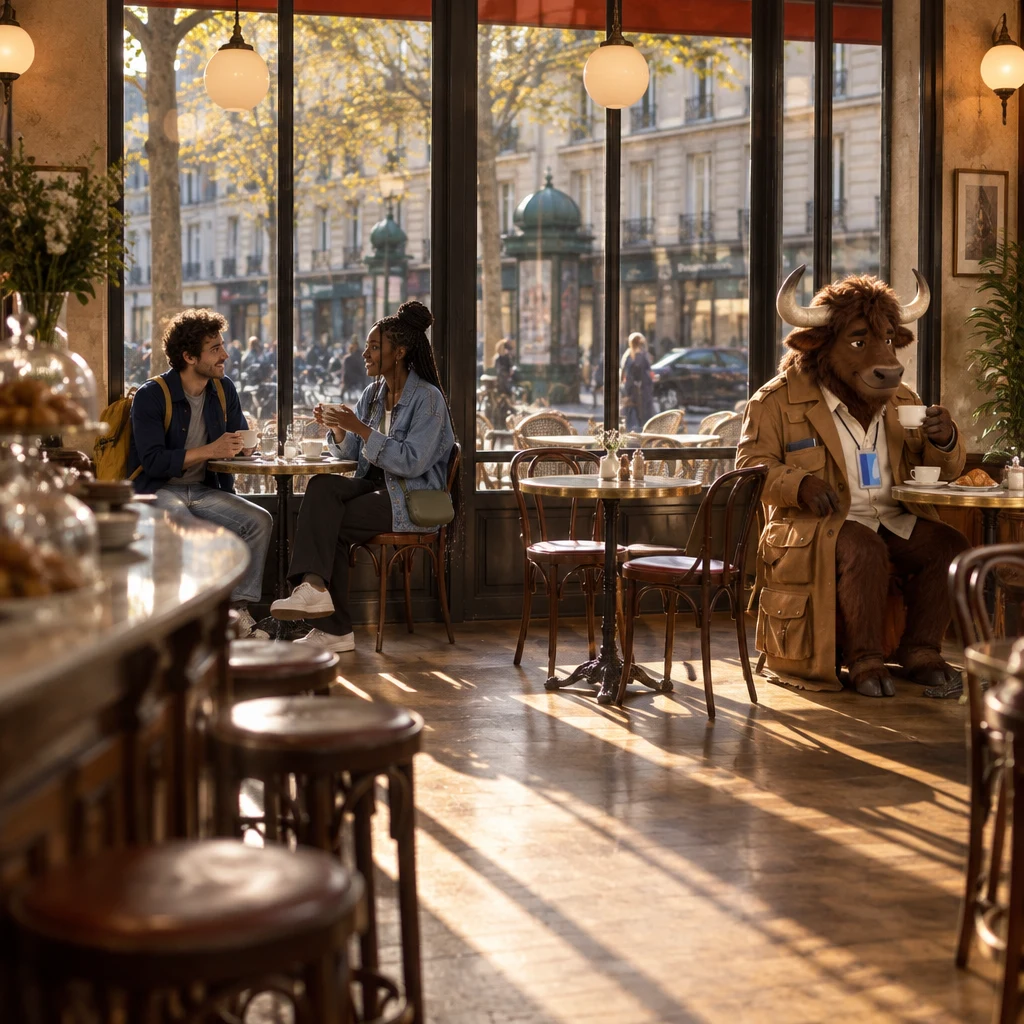
Inès is at Café des Tilleuls with a story from last year: a trip home and a lot of walking.
Gaspard listens, then claims the snack was the best part. He cannot name the city.
By the end, you'll say where you went, what was best, what surprised you, and that you'll go back.
Sam's line uses allé. A woman writes allée.
By the end of this lesson
Say where you went, what was best, and what surprised you.
- Je suis allé à ___ l'année dernière.I went to ___ last year.
- Le meilleur moment, c'était ___.The best part was ___.
- J'ai été surpris par la nourriture.I was surprised by the food.
- On a beaucoup marché.We walked a lot.
- C'était un des meilleurs voyages de ma vie.It was one of the best trips of my life.
- J'y retournerai.I'll go back.
Scene — he forgets the city
Late afternoon at Café des Tilleuls. Sam and Inès share a table near the window. The blank brass sign still sits on the empty window table.
Gaspard occupies two chairs at the next table, a croissant beside a café crème he has not finished.
Learn — where you went
Six lines help you tell a trip story: where you went last year, the best part, a surprise, and a promise to go back.
A woman says allée, not allé.

Je suis allé à ___ l'année dernière.
I went to ___ last year.
When to use it: Use this to name a place you visited last year.
A woman writes allée here, not allé.
Say it: The s in suis links into allé as a z sound.

Le meilleur moment, c'était ___.
The best part was ___.
When to use it: Use this to name the best part of a trip.
Fill the blank with the moment you liked most.

J'ai été surpris par la nourriture.
I was surprised by the food.
When to use it: Say this when the food was not what you expected.
A woman writes surprise here, not surpris.
Say it: The last s in surpris is silent.
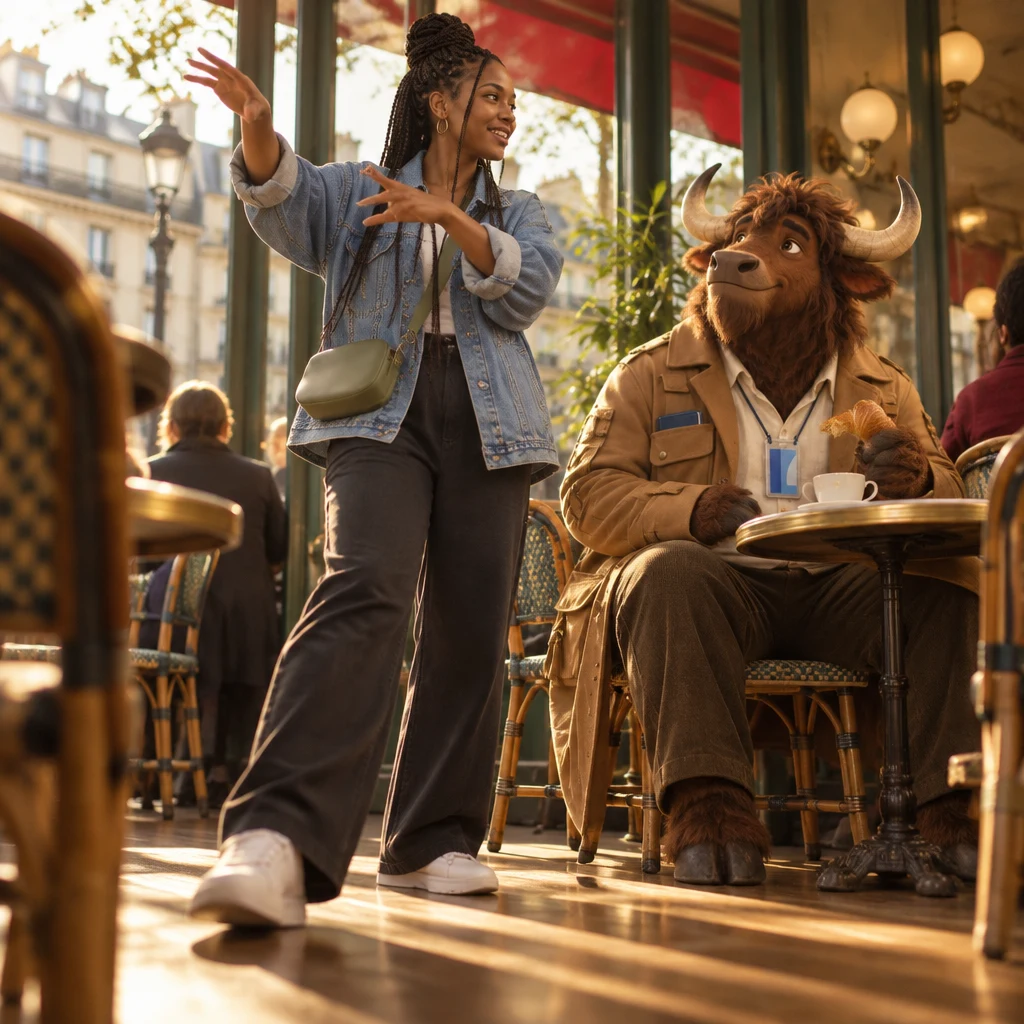
On a beaucoup marché.
We walked a lot.
When to use it: Use this when you walked a lot on a trip.
On here means we, not one person.

C'était un des meilleurs voyages de ma vie.
It was one of the best trips of my life.
When to use it: Use this for a trip you still count among your best.
Un des takes a plural word after it.
Say it: The s in des links into meilleurs as a z sound.

J'y retournerai.
I'll go back.
When to use it: Say this when you plan to visit that place again.
Y stands for the place already named.
Say it: The apostrophe in J'y marks an elision.
Story — the snack
Inès talks about a trip home last year. Sam shares one of his own. Gaspard gets stuck on the snack.
The highlighted words are the lines you just learned. Turn on Show English if you need it.
- Inès sits across from Sam. The window table stays empty.
 InèsAlors, je rentre de chez moi.So, I'm back from home.
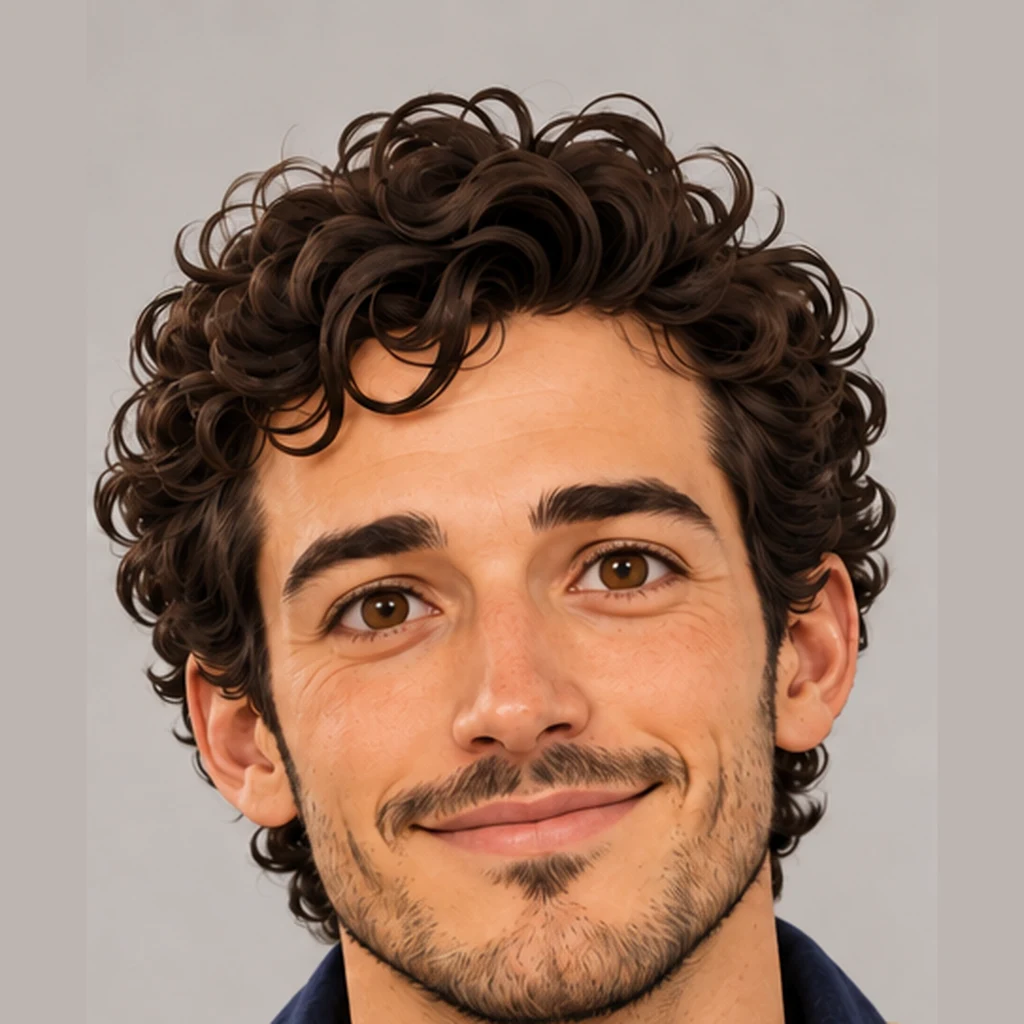 SamC'était comment ?What was it like?
- InèsOn a beaucoup marché.We walked a lot.
- InèsLe meilleur moment, c'était le marché.The best part was the market.
- SamC'était où, ça ?Where was that?
- InèsChez moi. J'y retournerai.At home. I'll go back.
- Gaspard looks up from the croissant he has not finished.
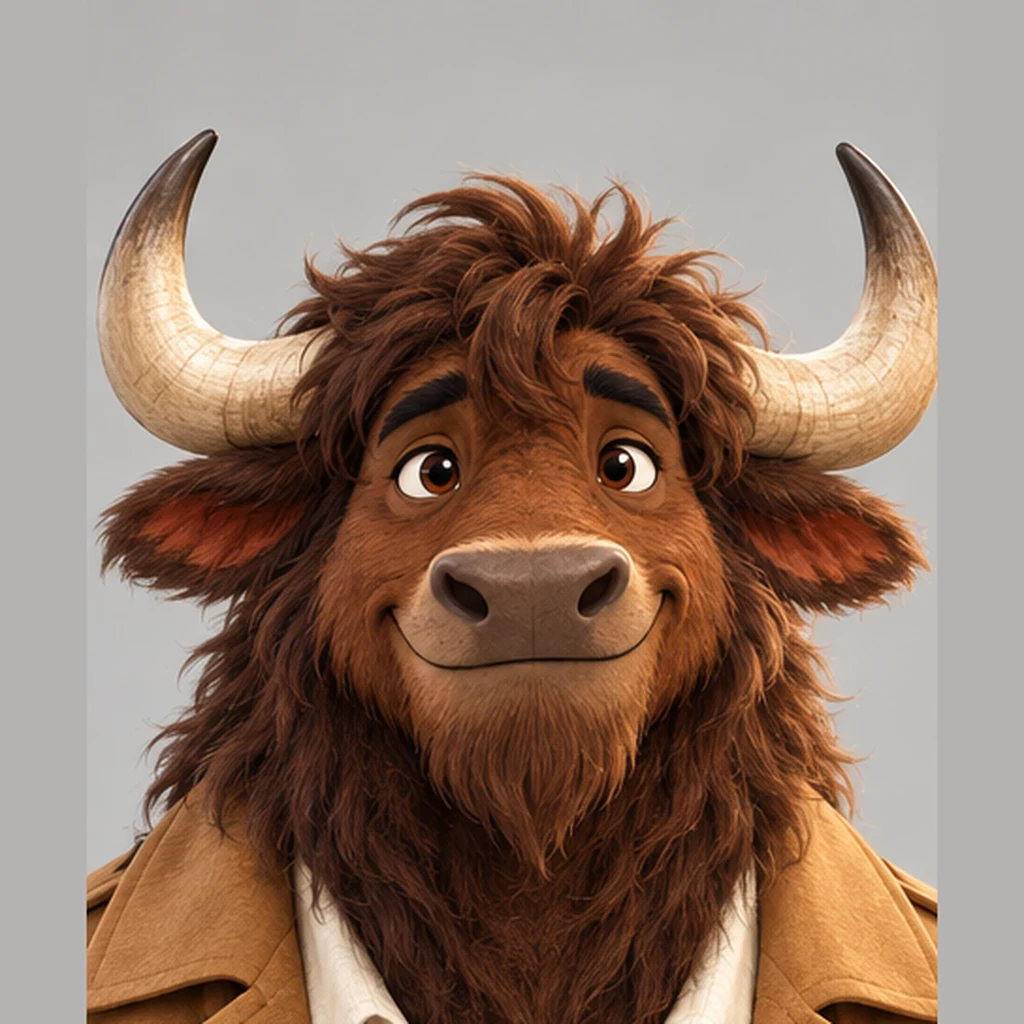 GaspardLe meilleur moment, c'était le croissant.The best part was the croissant.
- InèsC'était un des meilleurs voyages de ma vie.It was one of the best trips of my life.
- GaspardC'était à Nantes, ça ?That was in Nantes?
- InèsNon, pas Nantes.No, not Nantes.
- SamJe suis allé à Marseille l'année dernière.I went to Marseille last year.
- SamJ'ai été surpris par la nourriture.I was surprised by the food.
- Gaspard nods, then loses the thread. He does not sit at the window table.
Practice — best part
Eleven short exercises wait here. You'll listen, fill a gap, build a line, and pick what to say about a trip.
They stay tiny, so the round moves fast.
0 of 11 done
What did you hear?
What did you hear?
What does it mean?
What does it mean?
Le meilleur moment, c'était ___.
What do you say?
What do you say?
A friend asks about your trip. The food was not what you expected.
Fill the gap
Fill the gap
It was one of the best trips of my life.
C'était un des ____ voyages de ma vie.
Build the line
Build the line
We walked a lot.
.
Tap the words in order.
Swap the word
Swap the word
You are Sam. Tell them you went to a city last year.
Je suis ____ à ___ l'année dernière.
Pick the reply
Inès says:
Pick the reply
Tu y retournes ?
Are you going back there?
And you reply with:
Match the pairs
French
Le meilleur moment, c'était ___.Drop the English hereOn a beaucoup marché.Drop the English hereJ'y retournerai.Drop the English hereEnglish
What do you say?
What do you say?
A friend just mentioned a trip home. Ask what it was like.
What does it mean?
What does it mean?
C'était où, ça ?
Find the mistake
Find the mistake
Say it — tell the trip
Now you're Sam at the café, swapping trip stories with Inès. When it's your turn, tap the microphone and speak the line.
Tap ▶ first if you want to hear the line. Your recording stays on your device.
- InèsC'était comment ?What was it like?
- Sam (you)Tell her you walked a lot.
Tell her you walked a lot.
On a beaucoup marché.
We walked a lot.
0 of 6 said
Recap — what you can say now
| French | English | Play |
|---|---|---|
| Je suis allé à ___ l'année dernière. | I went to ___ last year. | |
| Le meilleur moment, c'était ___. | The best part was ___. | |
| J'ai été surpris par la nourriture. | I was surprised by the food. | |
| On a beaucoup marché. | We walked a lot. | |
| C'était un des meilleurs voyages de ma vie. | It was one of the best trips of my life. | |
| J'y retournerai. | I'll go back. |
Save your progress — it’s free
Keep your place in the course and see which lines you’ve learned.
Want the next lesson in your inbox?
Get the next lesson by email, one a day.
Join the newsletterDaily lesson emails are coming soon. Newsletter subscribers get them first.
Keep practicing with Yak Cards
Want these trip lines on the go? Grab the Yak Cards for this lesson and review them anywhere.
A quick round with the Yak Cards keeps last year's trip ready to tell.
Open Yak Cards