
New here? This is lesson 11 of a free 240-lesson French course.
Is it or isn't it in French
Gaspard is already at the next table, and he checks the order before Sam has read the chalkboard.
Sam has no idea if this is it, or not.
You will ask a yes-or-no question both ways: is this it, or isn't it.
One check is casual. One is careful. Odile still wants Bonjour first.
By the end of this lesson
Ask a yes-or-no question both ways.
- Est-ce que c'est ça ?Is this it?
- C'est ça, ou pas ?Is that it, or not?
- Hein ?Right?
- N'est-ce pas ?Isn't that so?
- C'est pour moi, ou pas ?Is this for me, or not?
- Oui ou non ?Yes or no?
Scene — the chalkboard
Same morning on rue des Tilleuls. Sam is at the zinc counter. He has not read the chalkboard yet.
Odile waits with a cup. Gaspard sits at the table next to the window table on two chairs, croissant in reach, café crème untouched.
The window table still has its blank brass sign.

Learn — yes or no
Six short lines help you check a fact both ways, yes or no.
You get a casual check, a careful check, and a blunt yes or no.

Est-ce que c'est ça ?
Is this it?
When to use it: Ask this to check if this thing is the one.
Learn it as one piece to check what is in front of you.
Say it: The t is silent in est-ce.

C'est ça, ou pas ?
Is that it, or not?
When to use it: Use this when both yes and no are still open.
Learn it as one piece when you offer both answers.

Hein ?
Right?
When to use it: Use this casual check with a friend or regular.
Learn it as one piece, a short casual check.
Say it: Hein has a short nasal vowel.

N'est-ce pas ?
Isn't that so?
When to use it: Use this careful check with someone new or with staff.
Learn it as one piece, a careful check.
Say it: The t is silent in n'est-ce.
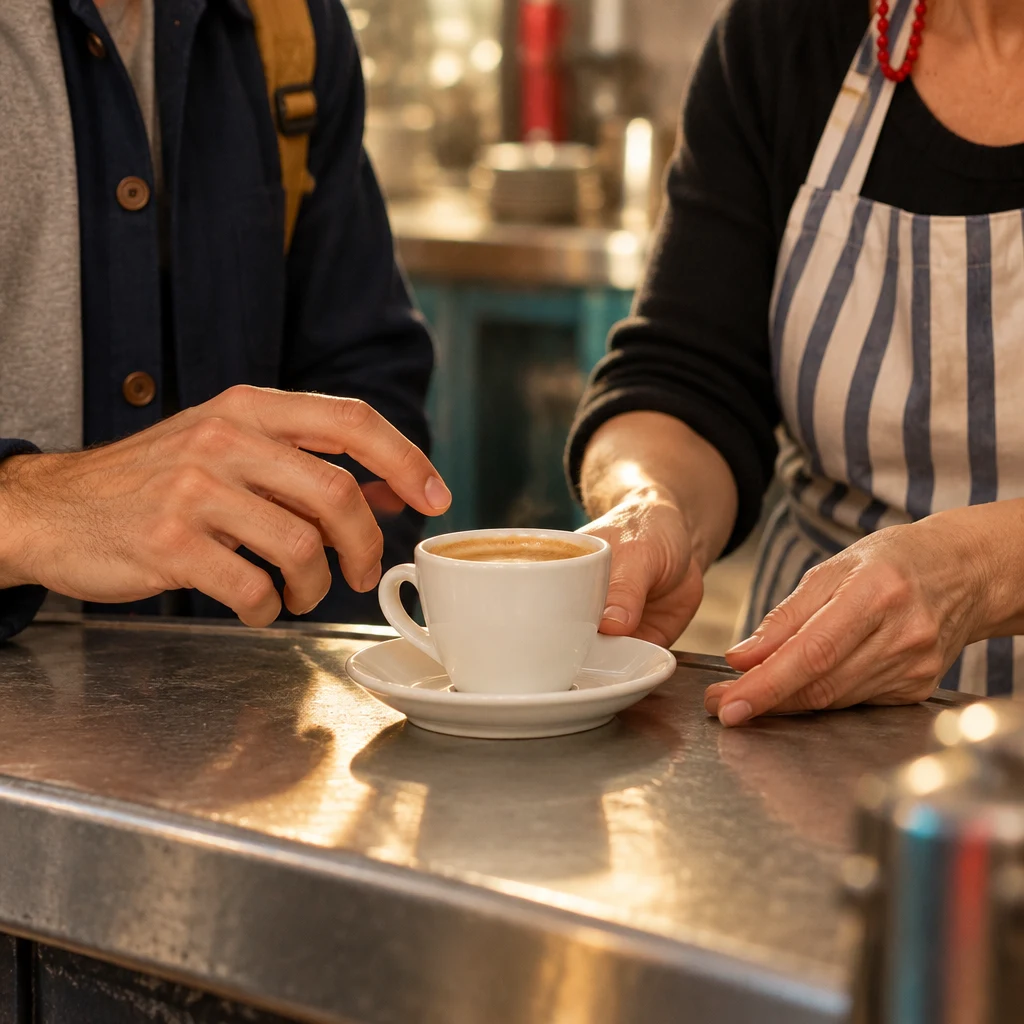
C'est pour moi, ou pas ?
Is this for me, or not?
When to use it: Ask this when a cup or plate might be yours.
Learn it as one piece when something is placed near you.

Oui ou non ?
Yes or no?
When to use it: Use this when you need a clear yes or no.
Learn it as one piece when you want a clear answer.
Story — he checks first
Watch Gaspard check the order before Sam can read the chalkboard.
The highlighted words are the lines you just learned. Turn on Show English if you need it.
- The chalkboard is still wet. Sam has not read it.
 OdileBonjour.Hello.
 SamBonjour.Hello.
- Gaspard points at the chalkboard from the next table.
 GaspardEst-ce que c'est ça ?Is this it?
- Sam looks at the board. He has no idea.
- SamJe ne sais pas. C'est ça, ou pas ?I don't know. Is that it, or not?
- GaspardOui.Yes.
- SamHein ?Right?
- GaspardOui.Yes.
- SamOui ou non ?Yes or no?
- GaspardOui.Yes.
- Odile sets a cup on the zinc.
- SamC'est pour moi, ou pas ?Is this for me, or not?
- OdileC'est pour vous, n'est-ce pas ?This is for you, isn't it?
- SamOui.Yes.
Practice — this or not
Eleven quick exercises wait here. You will listen, pick, fill a gap, and build a line.
They stay tiny, so the round moves fast.
0 of 11 done
What did you hear?
What did you hear?
Match the pairs
French
Est-ce que c'est ça ?Drop the English hereHein ?Drop the English hereN'est-ce pas ?Drop the English hereOui ou non ?Drop the English hereEnglish
What do you say?
What do you say?
A cup lands in front of you at the counter. You are not sure it is yours.
What does it mean?
What does it mean?
Hein ?
Fill the gap
Fill the gap
Is that it, or not?
C'est ça, ou ____ ?
Build the line
Build the line
Yes or no?
?
Tap the words in order.
Find the mistake
Find the mistake
True or false?
True or false?
This asks how someone is.
What do you say?
What do you say?
You walk into Café des Tilleuls in the morning. Odile looks at you and waits.
Pick the reply
Odile says:
Pick the reply
Entrez.
Come in.
And you reply with:
Fill the gap
Fill the gap
Please sit down
Asseyez-____.
Say it — ask both ways
Now you're Sam at the counter, still unsure about the order. When it's your turn, tap the microphone and speak the line.
Tap ▶ first if you want to hear the line. Your recording stays on your device.
- OdileBonjour.Hello.
- Sam (you)Gaspard pointed at the board. Check if this is the one.
Gaspard pointed at the board. Check if this is the one.
Est-ce que c'est ça ?
Is this it?
0 of 6 said
Recap — what you can say now
| French | English | Play |
|---|---|---|
| Est-ce que c'est ça ? | Is this it? | |
| C'est ça, ou pas ? | Is that it, or not? | |
| Hein ? | Right? | |
| N'est-ce pas ? | Isn't that so? | |
| C'est pour moi, ou pas ? | Is this for me, or not? | |
| Oui ou non ? | Yes or no? |
Save your progress — it’s free
Keep your place in the course and see which lines you’ve learned.
Want the next lesson in your inbox?
Get the next lesson by email, one a day.
Join the newsletterDaily lesson emails are coming soon. Newsletter subscribers get them first.
Keep practicing with Yak Cards
Want to keep these checks handy? Grab the Yak Cards for this lesson and review them anywhere.
A quick round with the Yak Cards each day keeps your yes-or-no checks ready at the counter.
Open Yak Cards