
New here? This is lesson 209 of a free 240-lesson French course.
Festivals and traditions in French
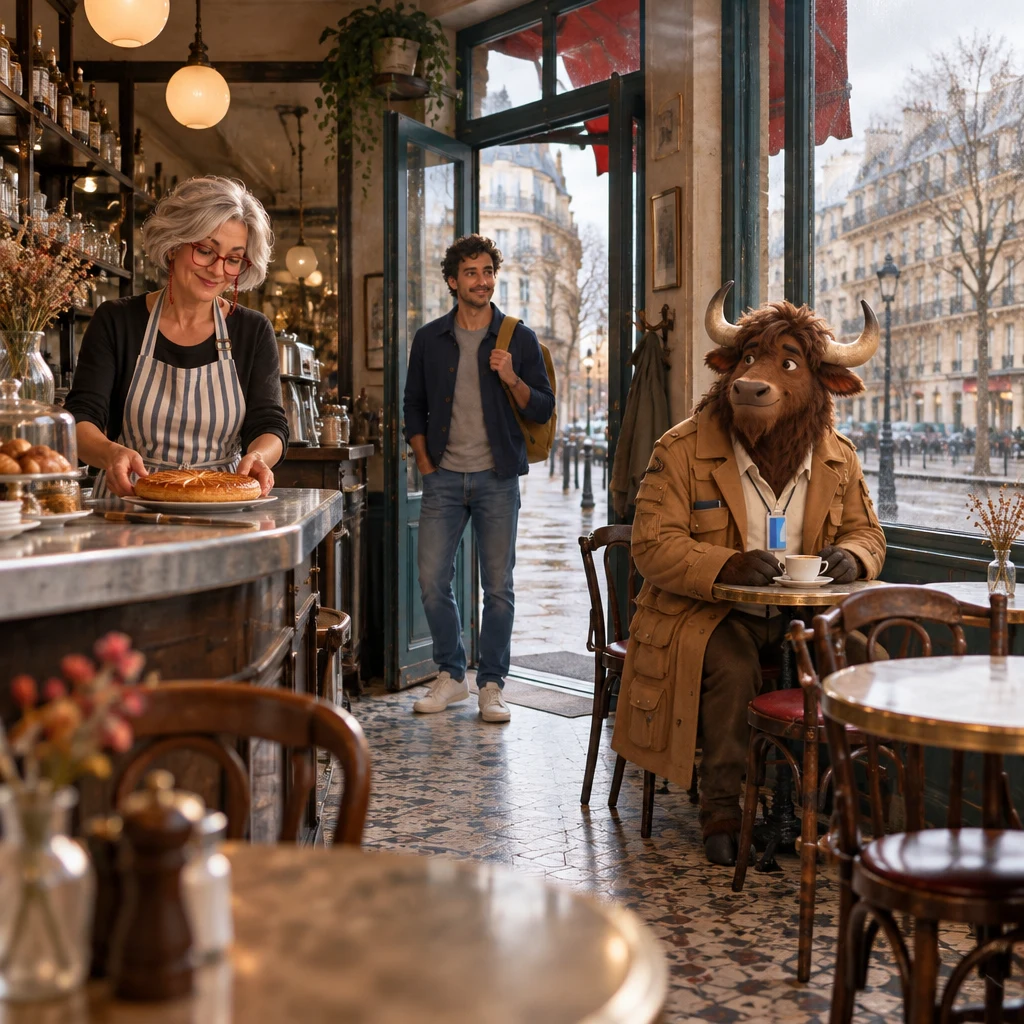
January at Café des Tilleuls means galette on the zinc counter. Odile cuts slices for whoever is in, and Gaspard leans in as if the charm will pick him.
You'll greet the year, name Music Day, talk about the fève, and ask about 14 July.
Keep it light: no politics, just cake, music in the street, and how people mark a day.
By the end of this lesson
Greet people at French festivals and talk about the traditions.
- Bonne année !Happy New Year!
- Meilleurs vœux !Best wishes!
- C'est la Fête de la musique ce soir.It's Music Day tonight.
- J'ai eu la fève dans la galette.I got the charm in the king cake.
- Tu fais quelque chose pour le 14 juillet ?Are you doing anything for the 14th of July?
- Ça se fête comment, chez toi ?How do you celebrate at yours?
Scene — the galette
Same café, a grey January afternoon. Odile has a round galette on the counter and a knife ready.
Sam is in from the cold. Gaspard sits at the table next to the window table, two chairs, café crème unfinished.
The blank brass sign is still on the window table. Nobody sits there.
Learn — year, cake, and July
Six lines cover New Year greetings, Music Day, the charm in the galette, and two questions about how people celebrate.
You will hear them at the counter, then use them yourself.
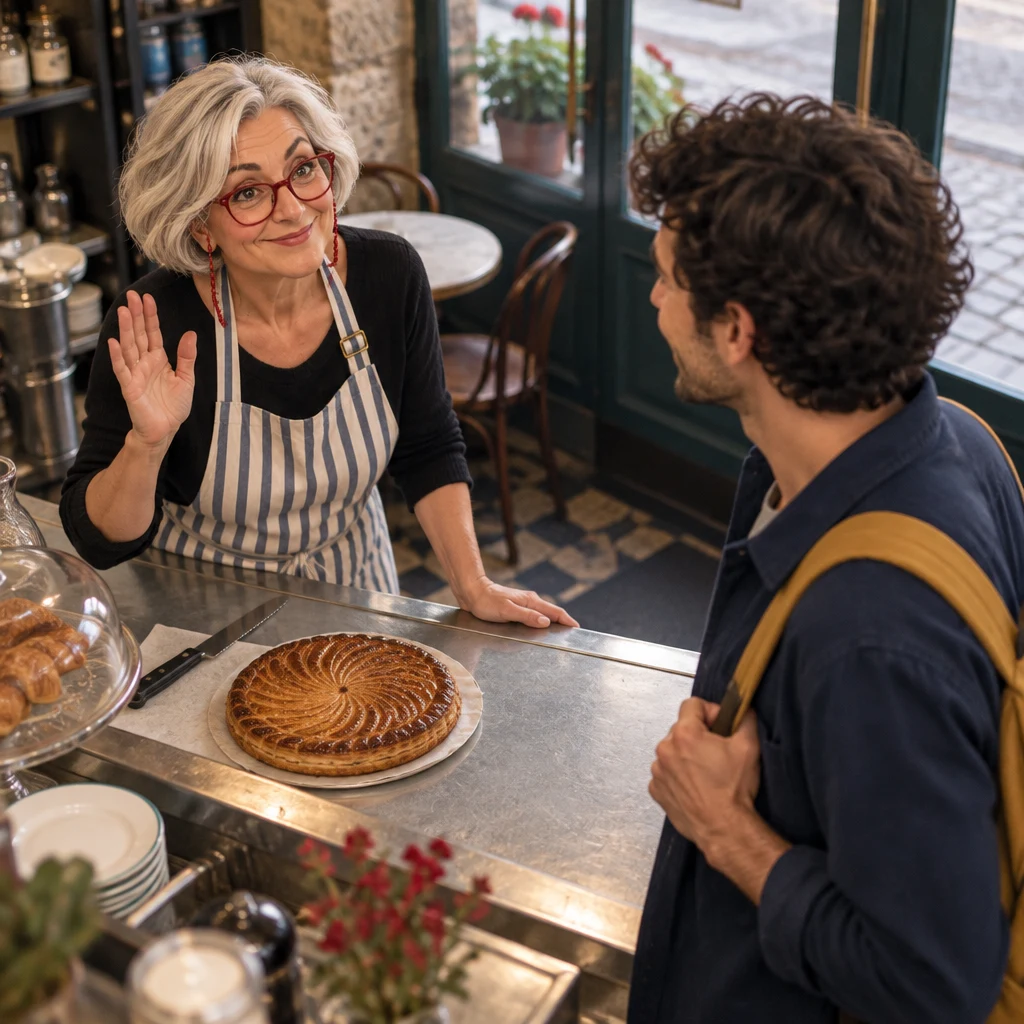
Bonne année !
Happy New Year!
When to use it: Say this from New Year's Day through early January.
Use it with friends, regulars, and people you have just met.
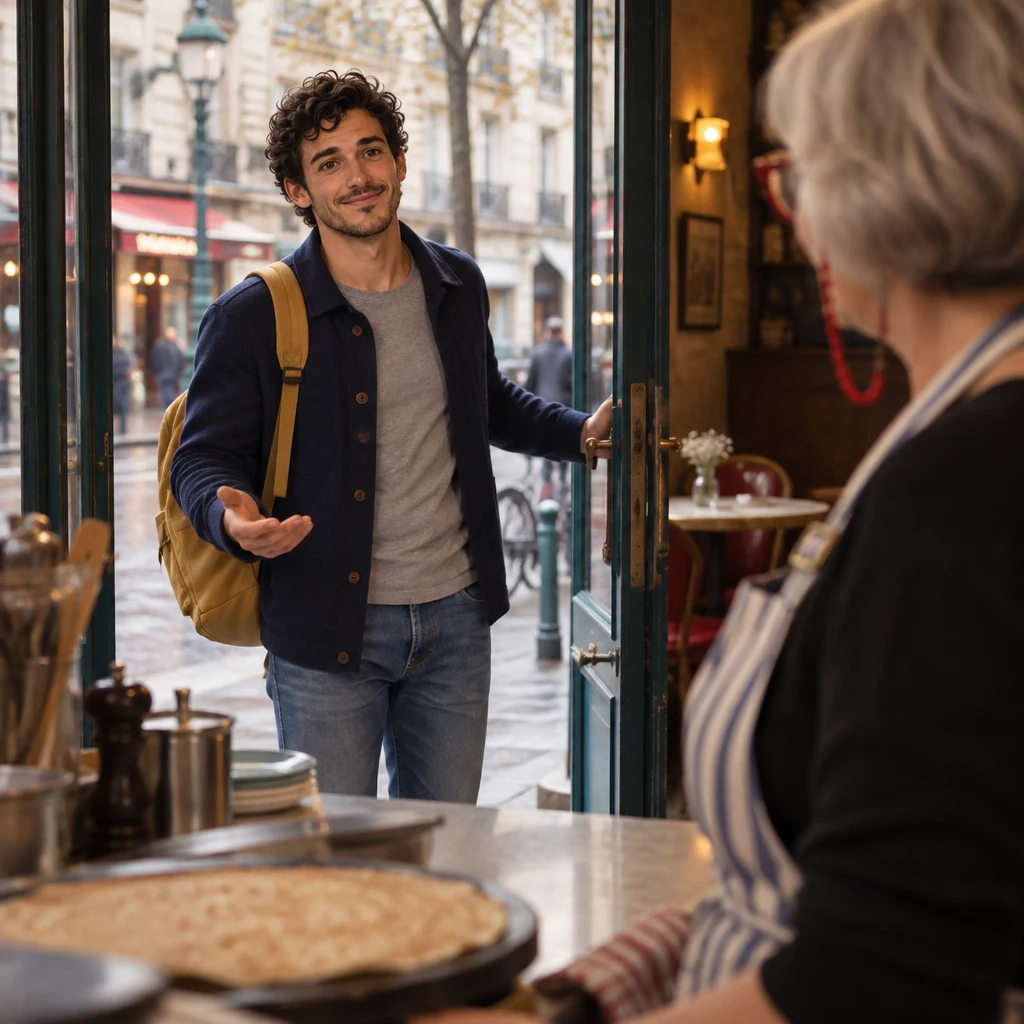
Meilleurs vœux !
Best wishes!
When to use it: Add this after a New Year hello, in person or on a card.
It sends good wishes; it does not replace hello at the door.
Say it: The x at the end of vœux is silent.
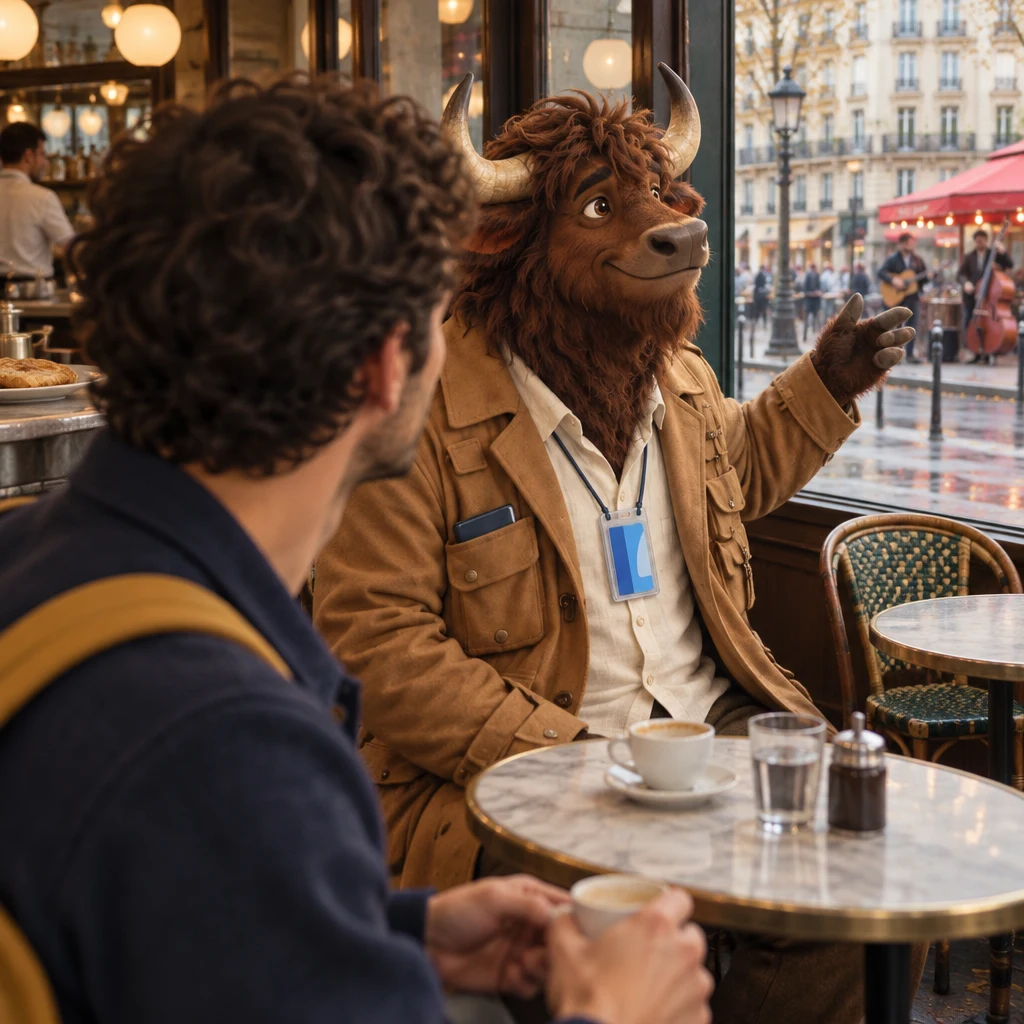
C'est la Fête de la musique ce soir.
It's Music Day tonight.
When to use it: Use this on the June night when bands play in the street.
Keep this festival name as one piece in everyday talk.
Say it: C'est joins ce and est into one sound.
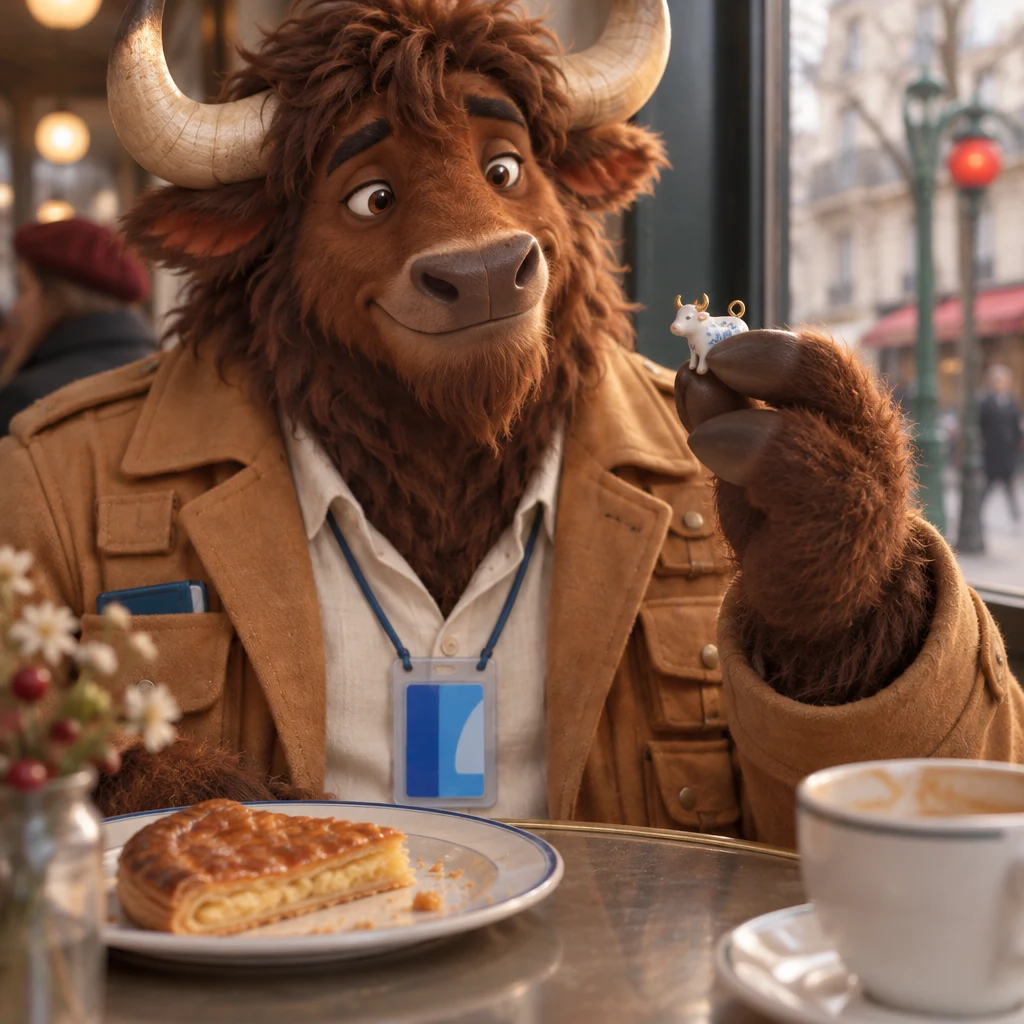
J'ai eu la fève dans la galette.
I got the charm in the king cake.
When to use it: Say this when you find the charm in your slice of cake.
J'ai eu is how you say you got something, in the past.
Say it: The last e of galette is almost silent.
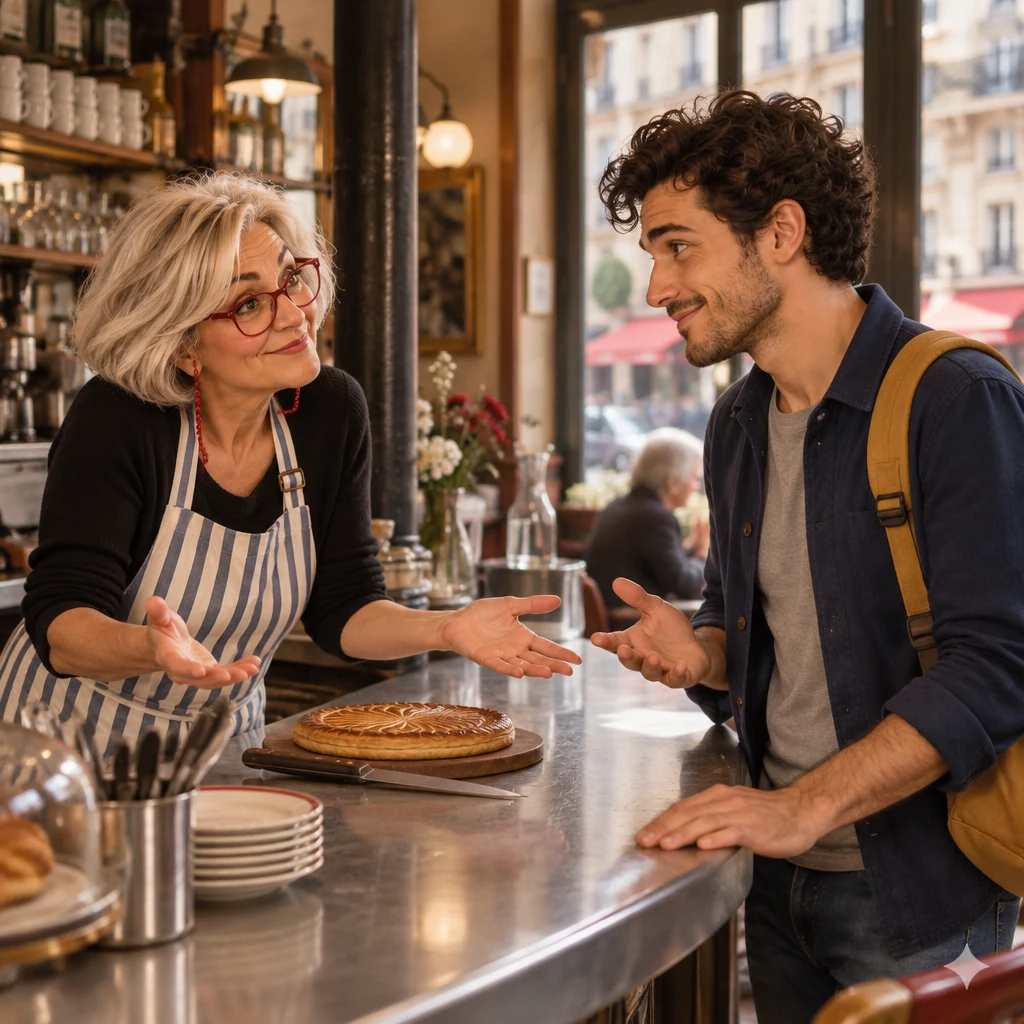
Tu fais quelque chose pour le 14 juillet ?
Are you doing anything for the 14th of July?
When to use it: Ask a friend if they have plans for that July day.
Tu is for friends and regulars; a stranger still gets vous.
Say it: The last t in juillet is silent.
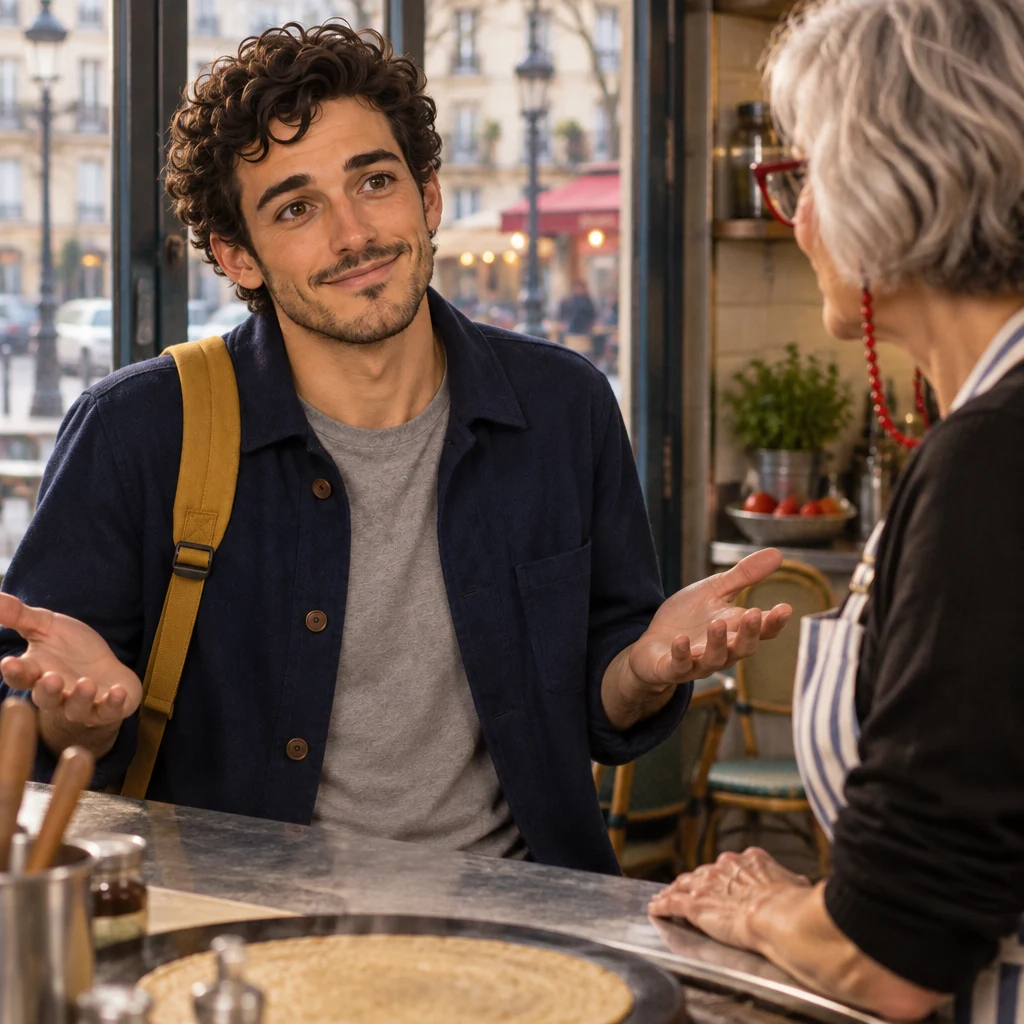
Ça se fête comment, chez toi ?
How do you celebrate at yours?
When to use it: Ask a friend how they mark a day at home.
Chez toi means at your place, not how the whole city does it.
Story — the charm
Odile cuts the galette. Watch who gets the charm, then how the talk turns to July and Music Day.
Highlighted words are the lines you just learned. Turn on Show English if you need it.
- Odile sets the galette on the zinc. The window table stays empty.
 OdileBonjour.Hello.
 SamBonjour. Bonne année !Hello. Happy New Year!
- OdileMeilleurs vœux !Best wishes!
- SamMerci.Thank you.
- OdileEn janvier, on partage ça.In January, we share this.
- She cuts a slice. Gaspard watches the knife.
 GaspardJ'ai eu la fève dans la galette.I got the charm in the king cake.
- He looks at the charm. For a second he looks far ahead, then blinks.
- GaspardIl reste de la galette ?Is there any king cake left?
- OdileOui, encore un bout.Yes, another bit.
- Months later, a warm June evening. Music comes in from the street.
- GaspardC'est la Fête de la musique ce soir.It's Music Day tonight.
- SamOui. Tu fais quelque chose pour le 14 juillet ?Yes. Are you doing anything for the 14th of July?
- OdileOn ira au canal. Ça se fête comment, chez toi ?We'll go to the canal. How do you celebrate at yours?
- SamPas grand-chose. On regarde, voilà.Not much. We watch, that's it.
- GaspardIl reste de la galette ?Is there any king cake left?
- OdileEn juin ? Non, mon grand. Amuse-toi bien.In June? No, dear. Have fun.
Practice — which festival
Eleven short tasks mix listening, matching, a gap, and a swap.
They stay on the café talk, so you pick the line that fits the moment.
0 of 11 done
What did you hear?
What did you hear?
Match the pairs
French
Bonne année !Drop the English hereMeilleurs vœux !Drop the English hereC'est la Fête de la musique ce soir.Drop the English hereEnglish
What do you say?
What do you say?
It is early January at Café des Tilleuls. Wish Odile a happy new year.
Fill the gap
Fill the gap
I got the charm in the king cake.
J'ai eu la ____ dans la galette.
What does it mean?
What does it mean?
C'est la Fête de la musique ce soir.
Swap the word
Swap the word
Ask a friend if they have any plans for the 14th of July.
Tu fais quelque chose pour le 14 ____ ?
Fill the gap
Fill the gap
How do you celebrate at yours?
Ça se fête ____, chez toi ?
Pick the reply
Odile says:
Pick the reply
Bonne année !
Happy New Year!
And you reply with:
True or false?
True or false?
This means in July.
Find the mistake
Find the mistake
What do you say?
What do you say?
A friend is heading out to the street concerts. Tell them to have fun.
Say it — your turn at the counter
Now you are Sam at the counter on galette day. When it is your turn, tap the microphone and speak.
Tap ▶ first if you want to hear the line. Your recording stays on your device.
- OdileBonjour.Hello.
- Sam (you)Wish her a happy new year.
Wish her a happy new year.
Bonne année !
Happy New Year!
0 of 4 said
Recap — what you can say now
| French | English | Play |
|---|---|---|
| Bonne année ! | Happy New Year! | |
| Meilleurs vœux ! | Best wishes! | |
| C'est la Fête de la musique ce soir. | It's Music Day tonight. | |
| J'ai eu la fève dans la galette. | I got the charm in the king cake. | |
| Tu fais quelque chose pour le 14 juillet ? | Are you doing anything for the 14th of July? | |
| Ça se fête comment, chez toi ? | How do you celebrate at yours? |
Save your progress — it’s free
Keep your place in the course and see which lines you’ve learned.
Want the next lesson in your inbox?
Get the next lesson by email, one a day.
Join the newsletterDaily lesson emails are coming soon. Newsletter subscribers get them first.
Keep practicing with Yak Cards
Want to keep these festival lines handy? Grab the Yak Cards for this lesson and review them anywhere.
A short Yak Cards round keeps New Year wishes and the fève ready when the cake comes out.
Open Yak Cards