
New here? This is lesson 70 of a free 240-lesson French course.
School and study in French
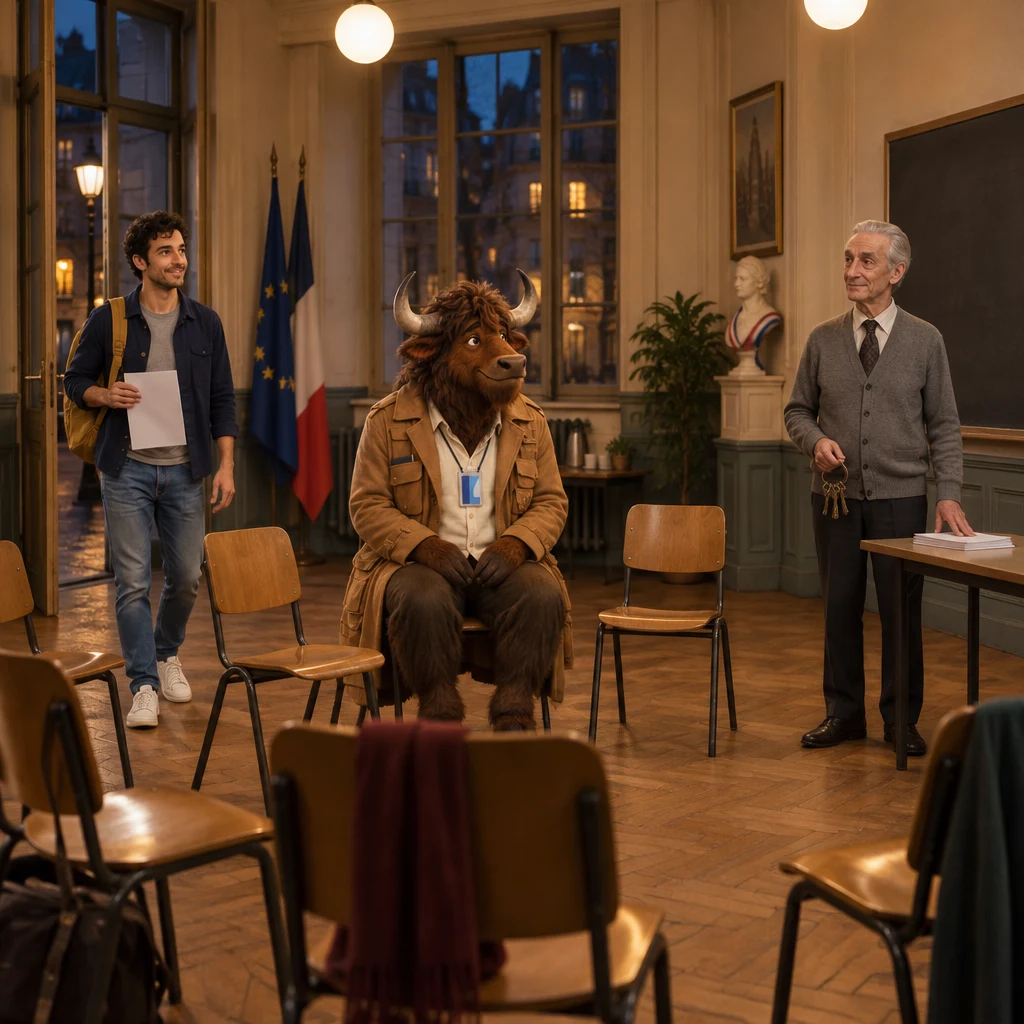
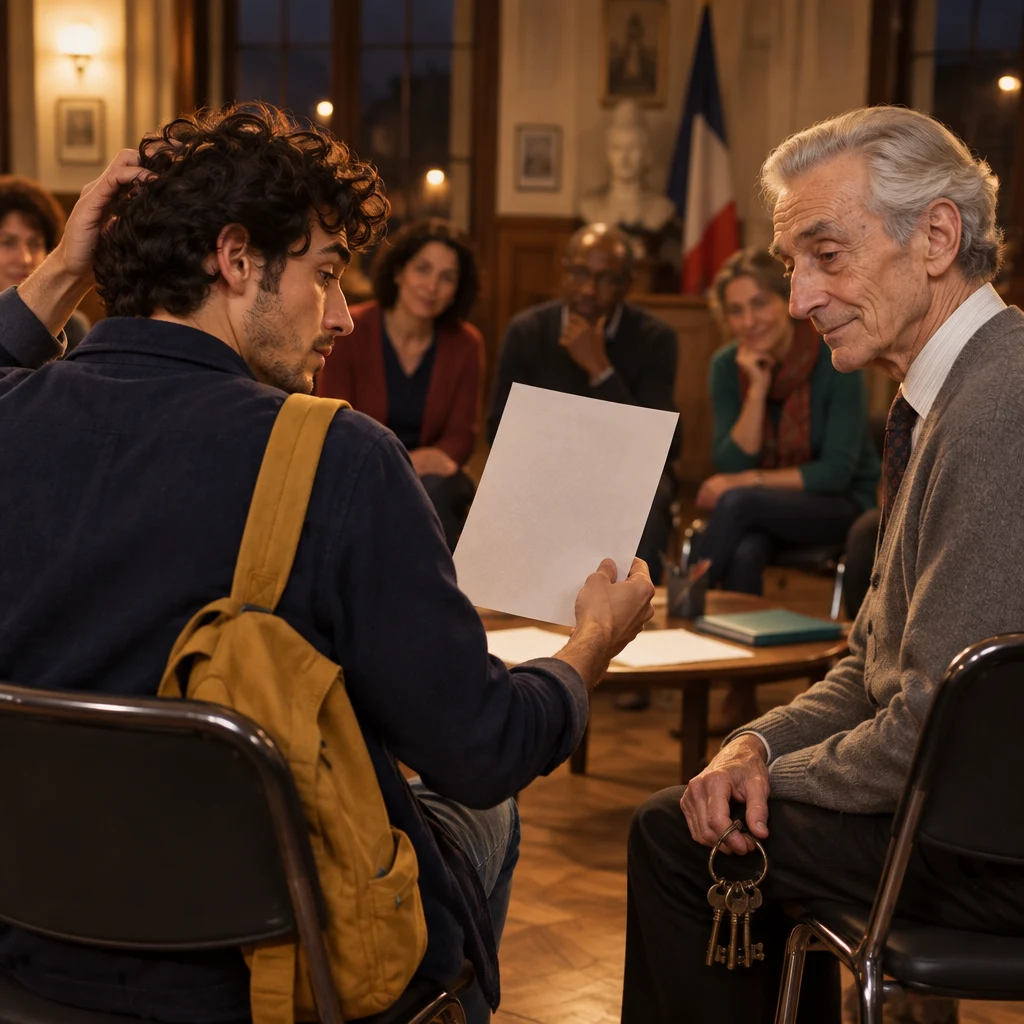
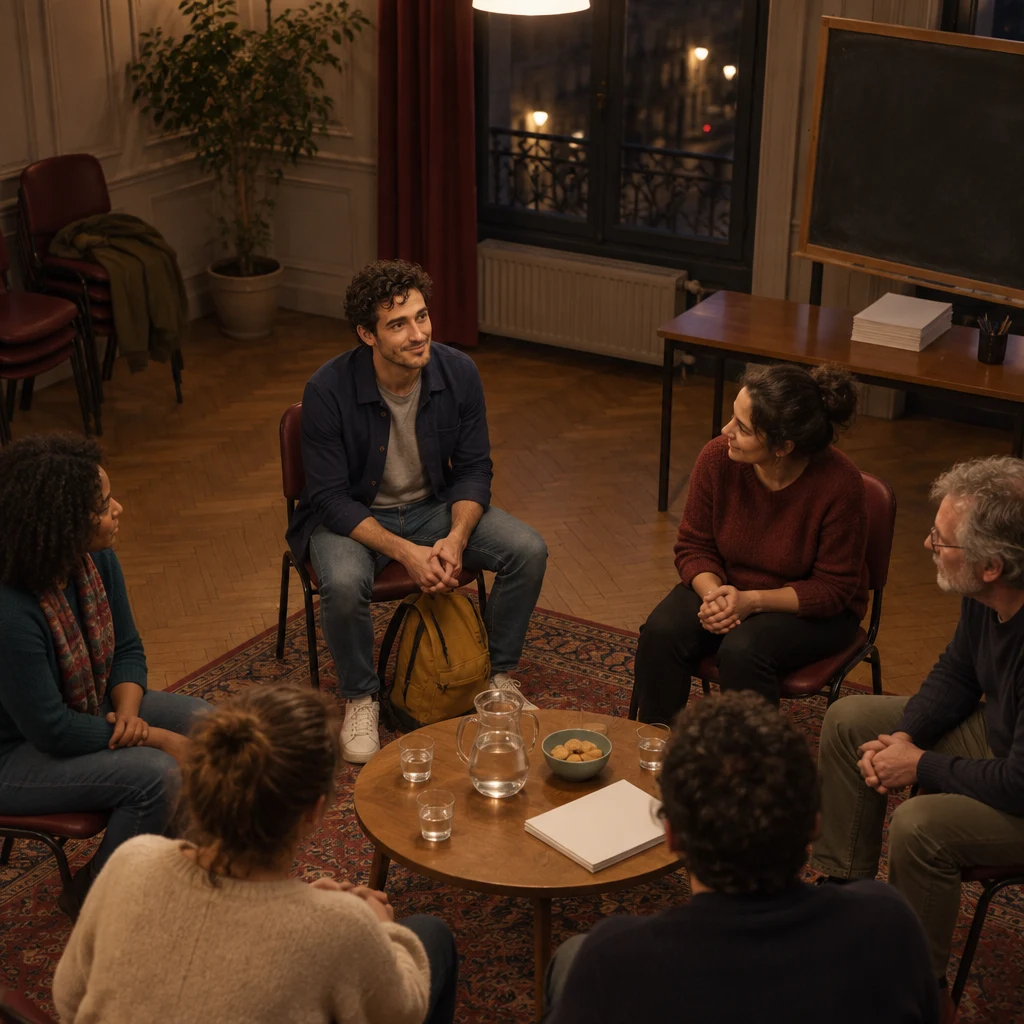
Thursday evening, Sam walks to the mairie for his French class. The room is small, with chairs in a circle, and last week's photocopy is still in his hand.
The teacher looks up and asks what page they are on.
By the end, you'll say what you study, when class is, what you like best, and ask about a test.
A contrôle is a test. Evening classes meet after work.
By the end of this lesson
Say what you study, when classes are, and what you like best.
- J'étudie le français.I'm studying French.
- J'ai cours de ___ le ___.I have ___ class on ___.
- Ma matière préférée, c'est l'histoire.My favorite subject is history.
- C'est quand, le contrôle ?When's the test?
- On est à quelle page ?What page are we on?
- Je prends des cours du soir.I take evening classes.
Scene — thursday at the mairie
The community room at the mairie is already lit. Chairs sit in a loose circle. Sam comes in with last week's photocopy still in his hand.
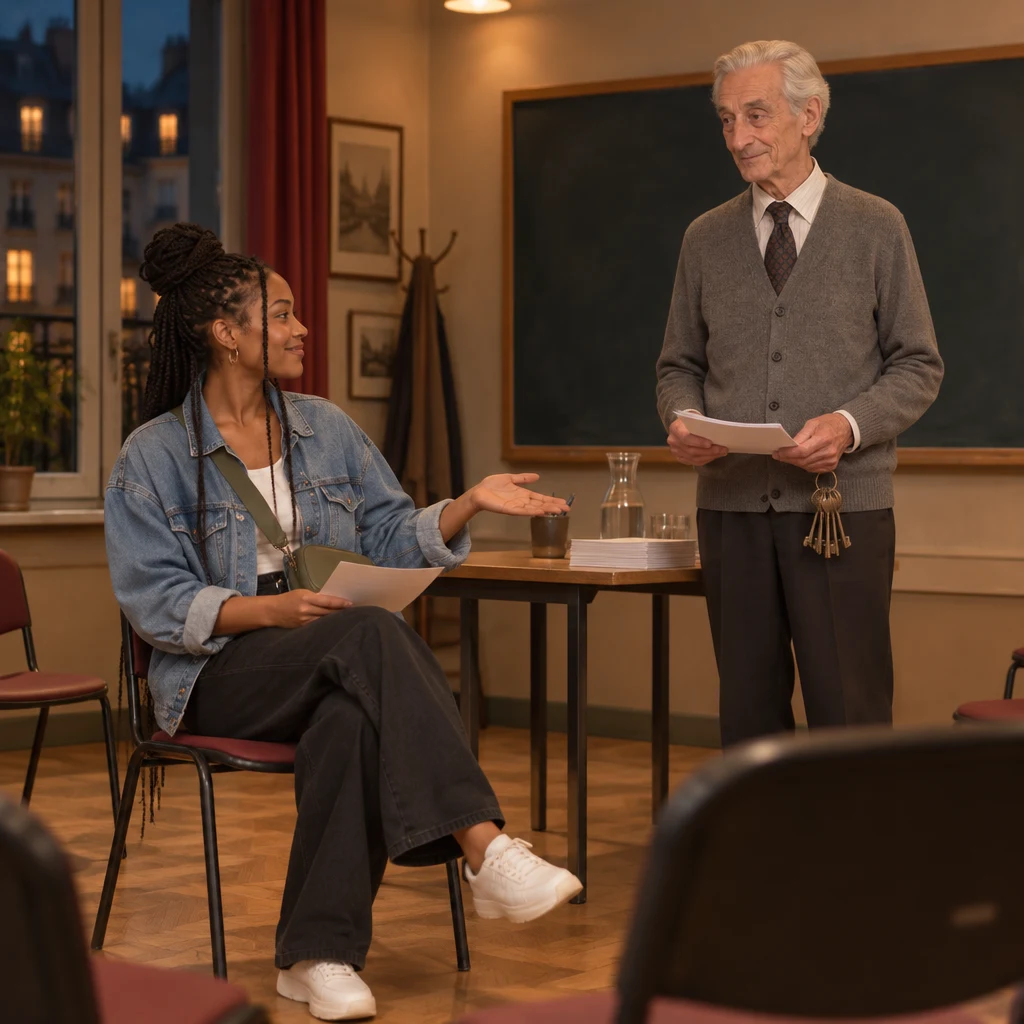
The teacher stands by a small table with a stack of papers. The chalkboard on the wall is blank.
Learn — what you study
Six short lines cover what you study, when class is, a favorite subject, a test, and evening classes.
You'll also ask what page you are on.

J'étudie le français.
I'm studying French.
When to use it: Say this when someone asks what you study.
Use le with français; language names take le or l'.
Say it: The last s in français is silent.
J'ai cours de ___ le ___.
I have ___ class on ___.
When to use it: Use this to name the subject and the day of class.
After de you name the subject; after le you name the day.

Ma matière préférée, c'est l'histoire.
My favorite subject is history.
When to use it: Say this to name the school subject you like most.
Préférée takes e because matière is feminine.
Say it: Histoire starts with a silent h, so you use l'.
C'est quand, le contrôle ?
When's the test?
When to use it: Ask this when you need the date of a test.
A contrôle is a class test, not a check at the door.
Say it: The on in contrôle is a nasal sound.
On est à quelle page ?
What page are we on?
When to use it: Ask this in class when you need the page number.
Quelle goes with page because page is feminine.
Say it: The t in est can link into à.
Je prends des cours du soir.
I take evening classes.
When to use it: Say this when your classes meet after work.
Des cours means more than one class; du soir marks the evening.
Say it: The s in des is silent before cours; there is no liaison.
Story — last week's photocopy
Watch Sam's Thursday class at the mairie. The teacher asks what page they are on, and Sam still has last week's photocopy.
The highlighted words are the lines you just learned. Turn on Show English if you need it.
- Thursday evening. The community room at the mairie is already lit.
- TeacherBonsoir.Good evening.
 SamBonsoir.Good evening.
- TeacherAsseyez-vous.Please sit down.
- Sam sits. Last week's photocopy is still in his hand.
- TeacherAlors, vous étudiez quoi ?So, what are you studying?
- SamJ'étudie le français.I'm studying French.
- TeacherEt le soir ?And in the evening?
- SamJe prends des cours du soir.I take evening classes.
- TeacherQuel cours, et quel jour ?Which class, and which day?
- SamJ'ai cours de français le jeudi.I have French class on Thursday.
- TeacherEt la matière préférée ?And your favorite subject?
- SamMa matière préférée, c'est l'histoire.My favorite subject is history.
- SamC'est quand, le contrôle ?When's the test?
- TeacherLa semaine prochaine. Bonne chance.Next week. Good luck.
- The teacher looks at the photocopy in his hand.
- TeacherOn est à quelle page ?What page are we on?
- SamJe ne sais pas.I don't know.
Practice — class and test
Eleven quick exercises wait here. You'll listen, pick, match, fill a gap, and build a line.
They stay tiny, so the round moves fast.
0 of 11 done
What did you hear?
What did you hear?
Match the pairs
French
J'étudie le français.Drop the English hereJ'ai cours de ___ le ___.Drop the English hereMa matière préférée, c'est l'histoire.Drop the English hereC'est quand, le contrôle ?Drop the English hereJe prends des cours du soir.Drop the English hereEnglish
What do you say?
What do you say?
You walk into the mairie classroom on Thursday evening. The teacher looks up.
What does it mean?
What does it mean?
J'étudie le français.
Fill the gap
Fill the gap
I have ___ class on ___.
J'ai ____ de ___ le ___.
Build the line
Build the line
I take evening classes.
.
Tap the words in order.
Pick the reply
Teacher says:
Pick the reply
Il y a un contrôle.
There's a test.
And you reply with:
Swap the word
Swap the word
A classmate asks what subject you like most.
Ma matière préférée, c'est ____.
What do you say?
What do you say?
Another student looks nervous. The test is soon.
Put the chat in order
- TeacherWhat comes first?
- Sam…
- Teacher…
True or false?
True or false?
This is how a teacher politely asks you to sit down.
Say it — your turn in class
Now you're Sam at Thursday's class in the mairie. When it's your turn, tap the microphone and speak the line.
Tap ▶ first if you want to hear the line. Your recording stays on your device.
- TeacherBonsoir.Good evening.
- Sam (you)Say good evening back.
Say good evening back.
Bonsoir.
Good evening
0 of 6 said
Recap — what you can say now
| French | English | Play |
|---|---|---|
| J'étudie le français. | I'm studying French. | |
| J'ai cours de ___ le ___. | I have ___ class on ___. | |
| Ma matière préférée, c'est l'histoire. | My favorite subject is history. | |
| C'est quand, le contrôle ? | When's the test? | |
| On est à quelle page ? | What page are we on? | |
| Je prends des cours du soir. | I take evening classes. |
Save your progress — it’s free
Keep your place in the course and see which lines you’ve learned.
Want the next lesson in your inbox?
Get the next lesson by email, one a day.
Join the newsletterDaily lesson emails are coming soon. Newsletter subscribers get them first.
Keep practicing with Yak Cards
Want to keep these class lines handy? Grab the Yak Cards for this lesson and review them anywhere.
A quick round with the Yak Cards each day keeps your class lines ready for Thursday.
Open Yak Cards