
New here? This is lesson 119 of a free 240-lesson French course.
Last weekend in French
Monday morning at Café des Tilleuls. Odile asks Sam about the weekend, and she uses tu now: he is a regular.
Sam stayed in with the cold. Gaspard talks about a long canal walk that may live more in his head than on the path.
By the end, you'll ask what someone did last weekend, say you stayed in or went out, and react when it sounds fun.
By the end of this lesson
Say what you did last weekend.
- Tu as fait quoi ce week-end ?What did you do last weekend?
- Je suis allé à ___ samedi.I went to ___ on Saturday.
- Je n'ai pas fait grand-chose.I didn't do much.
- Je suis resté chez moi.I stayed at home.
- J'ai dîné avec des amis.I had dinner with friends.
- Ça a l'air sympa.That sounds fun.
Scene — monday at the counter
It is Monday on rue des Tilleuls. Sam comes in quietly with a rough voice. Odile is already at the zinc counter, apron on, ready to ask about last weekend.
Gaspard sits at the table next to the window table, on two chairs. His café crème is still full. The blank brass sign is still on the window table.

Learn — last weekend
Six lines cover last weekend: the question, a Saturday trip, a quiet stay at home, dinner with friends, and a warm reaction.
Sam says allé and resté. A woman adds e: allée, restée.

Tu as fait quoi ce week-end ?
What did you do last weekend?
When to use it: Ask a friend or regular what they did last weekend.
Tu is right with Odile now; she treats Sam as a regular.
Say it: The last t in fait is silent.

Je suis allé à ___ samedi.
I went to ___ on Saturday.
When to use it: Say where you went on Saturday.
Sam says allé; a woman writes allée for the same trip.
Say it: The s in suis links into allé like a z.

Je n'ai pas fait grand-chose.
I didn't do much.
When to use it: Say you didn't do much last weekend.
Keep ne and pas around the verb in this line.
Say it: n'ai drops the e of ne before ai.
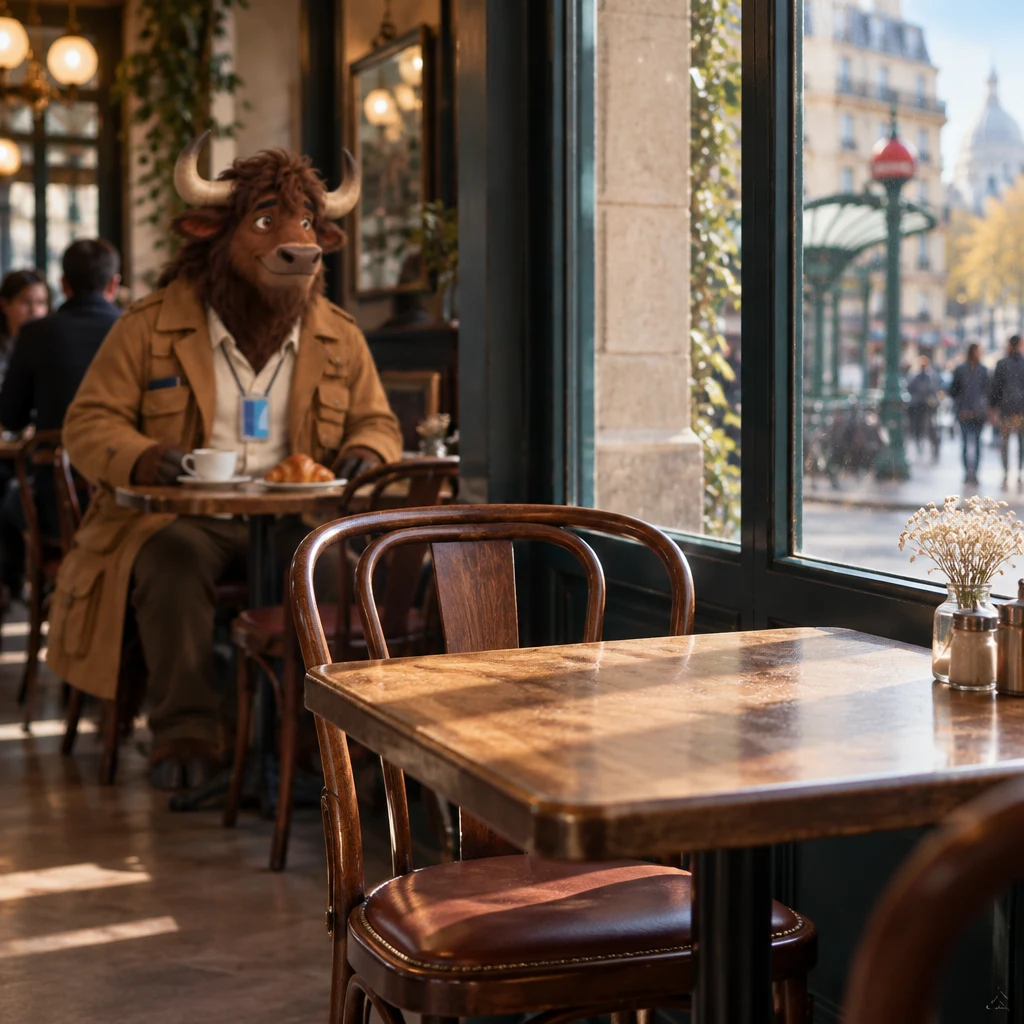
Je suis resté chez moi.
I stayed at home.
When to use it: Say you stayed home and did not go out.
Sam says resté; a woman writes restée for staying home.

J'ai dîné avec des amis.
I had dinner with friends.
When to use it: Say you had dinner with friends.
J'ai marks a finished action; des amis means some friends.

Ça a l'air sympa.
That sounds fun.
When to use it: React when someone's weekend sounds fun.
Say this after a friend tells you about their weekend.
Say it: l'air drops the e of le before a vowel.
Story — he stayed in
Watch a Monday chat about last weekend at Café des Tilleuls. Odile asks first; Sam stayed in with the cold.
The highlighted words are the lines you just learned. Turn on Show English if you need it.
- Monday. Odile looks up from the zinc counter.
 OdileBonjour.Hello.
 SamBonjour.Hello.
- OdileTu as fait quoi ce week-end ?What did you do last weekend?
- SamJe n'ai pas fait grand-chose.I didn't do much.
- OdileÀ cause du rhume ?Because of the cold?
- SamJe suis resté chez moi. Je crois que j'ai un rhume.I stayed at home. I think I've got a cold.
- Gaspard looks up from the unfinished café crème. The window table stays empty.
- OdileBon, et toi, Gaspard ?Right, and you, Gaspard?
 GaspardJe suis allé à Bastille samedi. J'ai dîné avec des amis.I went to Bastille on Saturday. I had dinner with friends.
- He looks at the window, then at his croissant. He does not sound sure.
- SamÇa a l'air sympa.That sounds fun.
- OdileTu vas souvent au canal ?Do you often go to the canal?
- GaspardParfois, je vais au canal.Sometimes I go to the canal.
Practice — stay in or go out
Ten short exercises wait here. You'll listen, fill a gap, build a line, and pick what fits a Monday chat.
They stay tiny, so the round moves fast.
0 of 10 done
What did you hear?
What did you hear?
Match the pairs
French
Je n'ai pas fait grand-chose.Drop the English hereJe suis resté chez moi.Drop the English hereÇa a l'air sympa.Drop the English hereEnglish
What do you say?
What do you say?
Odile asks about your weekend. You stayed in with the cold.
Fill the gap
Fill the gap
I didn't do much.
Je ____ pas fait grand-chose.
What does it mean?
What does it mean?
Ça a l'air sympa.
Fill the gap
Fill the gap
I had dinner with friends.
J'ai ____ avec des amis.
Swap the word
Swap the word
You are Sam. Tell a friend you went somewhere on Saturday.
Je suis ____ à ___ samedi.
Which one doesn’t belong?
Which one doesn’t belong?
True or false?
True or false?
This line means he thinks he has a cold.
What do you say?
What do you say?
Odile says bonjour; return her greeting.
Say it — tell her
Now you're Sam on Monday morning at the café, after a quiet weekend. When it's your turn, tap the microphone and speak the line.
Tap ▶ first if you want to hear the line. Your recording stays on your device.
- OdileTu as fait quoi ce week-end ?What did you do last weekend?
- Sam (you)You didn't do much last weekend.
You didn't do much last weekend.
Je n'ai pas fait grand-chose.
I didn't do much.
0 of 4 said
Recap — what you can say now
| French | English | Play |
|---|---|---|
| Tu as fait quoi ce week-end ? | What did you do last weekend? | |
| Je suis allé à ___ samedi. | I went to ___ on Saturday. | |
| Je n'ai pas fait grand-chose. | I didn't do much. | |
| Je suis resté chez moi. | I stayed at home. | |
| J'ai dîné avec des amis. | I had dinner with friends. | |
| Ça a l'air sympa. | That sounds fun. |
Save your progress — it’s free
Keep your place in the course and see which lines you’ve learned.
Want the next lesson in your inbox?
Get the next lesson by email, one a day.
Join the newsletterDaily lesson emails are coming soon. Newsletter subscribers get them first.
Keep practicing with Yak Cards
Want to keep last weekend handy? Grab the Yak Cards for this lesson and review them anywhere.
A quick round with the Yak Cards each day keeps your weekend lines ready for Monday.
Open Yak Cards