
New here? This is lesson 110 of a free 240-lesson French course.
At the pharmacy in French
Sam crosses rue des Tilleuls to the pharmacy under the green cross. He has Dr. Roche's note in his pocket.
Gaspard queues behind him, already sure a croissant is to blame.
By the end, you'll ask for something for a need, check if you need a prescription, and ask for a generic.
Staff get vous. Keep it short at the high counter.
By the end of this lesson
Ask for medicine at the pharmacy and say what you need it for.
- Je voudrais quelque chose pour ___.I'd like something for ___
- Vous avez un médicament contre le rhume ?Do you have anything for a cold?
- Est-ce qu'il faut une ordonnance ?Do I need a prescription?
- Voici l'ordonnance.Here's the prescription
- Vous avez un générique ?Do you have a generic?
- Je viens de chez le médecin.I've just come from the doctor
Scene — under the green cross
Sam crosses rue des Tilleuls to the pharmacy under the green cross, across from Café des Tilleuls.
The pharmacist waits at the high counter. Sam has Dr. Roche's folded note. Gaspard queues behind him, tote on his shoulder.
The window table stays empty back at the café. The boxes on the shelves stay blank.

Learn — something for a cold
Six lines cover asking for something for a need, cold medicine, and a prescription check.
You'll also ask for a generic and say you just left the doctor.
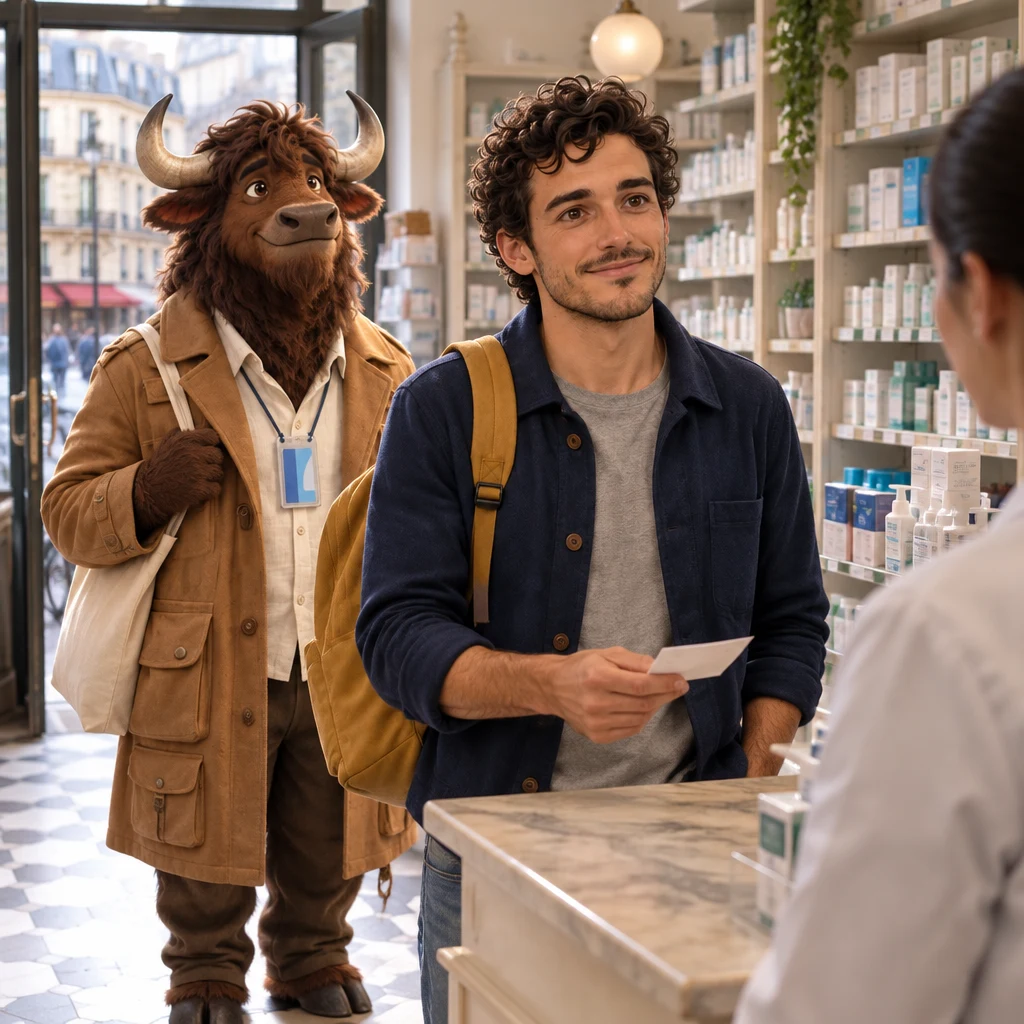
Je voudrais quelque chose pour ___.
I'd like something for ___
When to use it: Say this at the pharmacy when you name what you need.
Put the problem after pour, like a cold or a headache.

Vous avez un médicament contre le rhume ?
Do you have anything for a cold?
When to use it: Ask this when you want cold medicine without naming a brand.
Contre names what the medicine is meant to fight.
Say it: The s in Vous links into avez as a z.

Est-ce qu'il faut une ordonnance ?
Do I need a prescription?
When to use it: Ask this before you assume you can buy the medicine.
This checks if a doctor's note is required for that medicine.
Say it: Que and il join as qu'il, and the e drops.
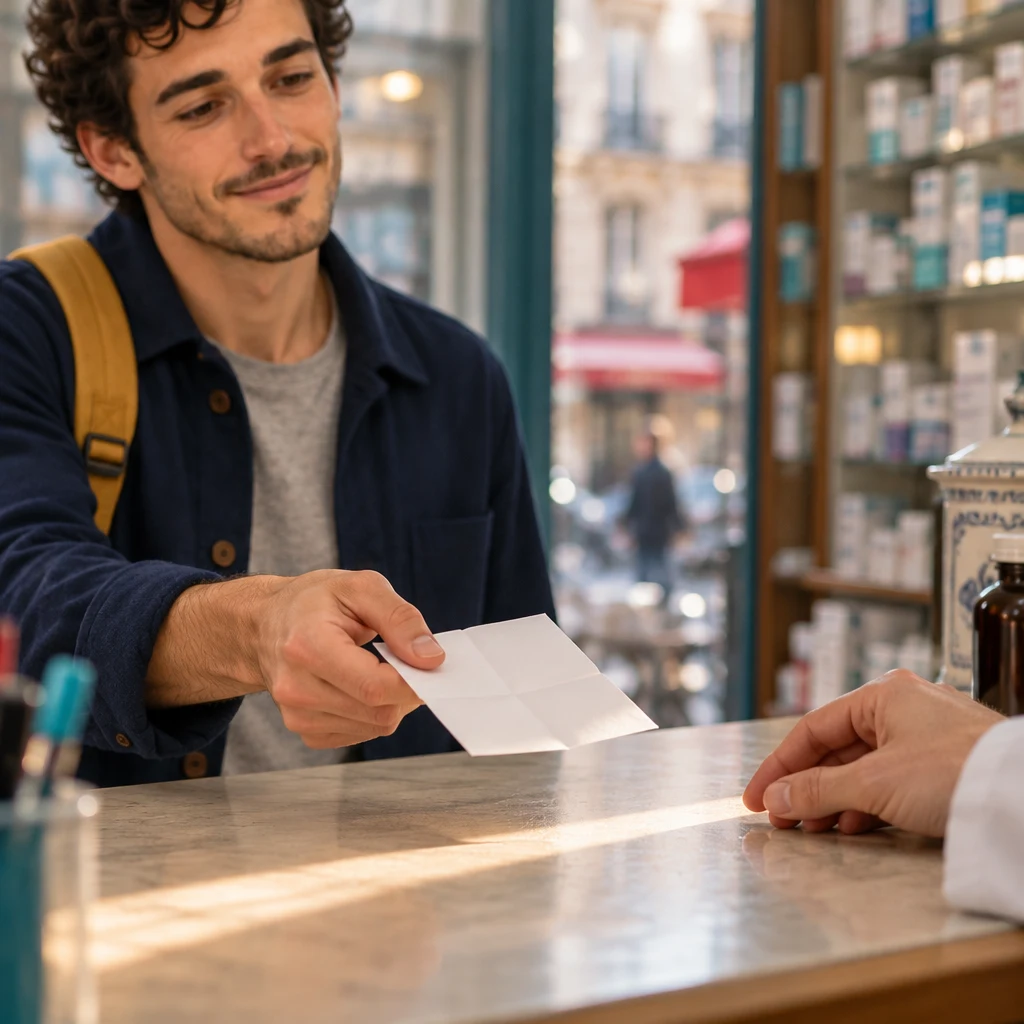
Voici l'ordonnance.
Here's the prescription
When to use it: Say this when you hand the doctor's note to staff.
Voici points to the paper you are holding out.
Say it: The a of la drops, giving l'ordonnance.

Vous avez un générique ?
Do you have a generic?
When to use it: Ask this when you want the cheaper copy of the same medicine.
A generic is the no-brand copy of the medicine on the note.
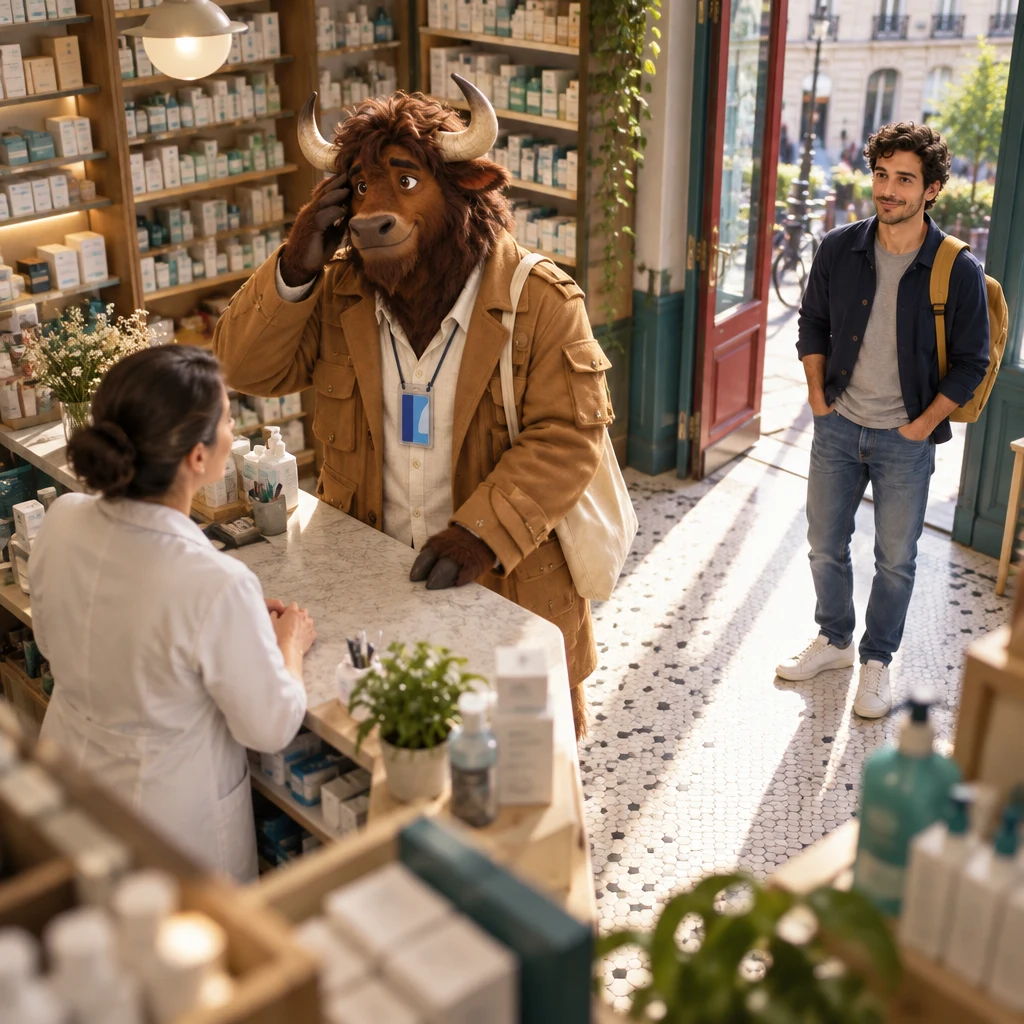
Je viens de chez le médecin.
I've just come from the doctor
When to use it: Say this so staff know you already saw the doctor.
Chez le médecin means the doctor's office you just left.
Say it: The vowel in viens is nasal; the n is not pronounced.
Story — a croissant headache
Watch Sam at the high counter with Dr. Roche's note. Gaspard waits, then asks for his head.
The highlighted words are the lines you just learned. Turn on Show English if you need it.
- The green cross is on. Sam still has a hand on Dr. Roche's note.
 SamBonjour.Hello.
- PharmacistBonjour.Hello.
- SamJe viens de chez le médecin.I've just come from the doctor.
- SamVous avez un médicament contre le rhume ?Do you have anything for a cold?
- PharmacistBien sûr.Of course.
- SamEst-ce qu'il faut une ordonnance ?Do I need a prescription?
- PharmacistOui.Yes.
- SamVoici l'ordonnance.Here's the prescription.
- SamVous avez un générique ?Do you have a generic?
- PharmacistBien sûr.Of course.
- SamMerci.Thank you.
- Gaspard steps up behind him, sure the croissant is to blame.
 GaspardBonjour.Hello.
- GaspardJe voudrais quelque chose pour un mal de tête.I'd like something for a headache.
- PharmacistD'accord.Okay.
- GaspardEst-ce qu'il faut une ordonnance ?Do I need a prescription?
- PharmacistNon.No.
Practice — at the counter
Ten quick exercises wait at the counter. You'll hear a line, pick a reply, fill a gap, and build a sentence.
Stay in the pharmacy in your head while you tap.
0 of 11 done
What did you hear?
What did you hear?
What do you say?
What do you say?
You step up to the pharmacy counter in the morning. Staff look at you and wait.
Fill the gap
Fill the gap
Do I need a prescription?
Est-ce qu'il faut une ____ ?
Pick the reply
Pharmacist says:
Pick the reply
Vous avez l'ordonnance ?
Do you have the prescription?
And you reply with:
What does it mean?
What does it mean?
Je viens de chez le médecin.
Swap the word
Swap the word
You want the cheaper copy of the medicine on the note.
Vous avez un ____ ?
What do you say?
What do you say?
You are past hello and have no note. You want something for a need you will name.
Build the line
Build the line
Do you have anything for a cold?
?
Tap the words in order.
What do you say?
What do you say?
The pharmacist has just given you the medicine. You need to thank them.
Find the mistake
Find the mistake
True or false?
True or false?
This asks if they have a generic.
Say it — ask for it
Now you're Sam at the pharmacy counter. When it's your turn, tap the microphone and speak the line.
Tap the play button first if you want to hear it. Your recording stays on your device.
- PharmacistBonjour.Hello.
- Sam (you)Tell the pharmacist you just left the doctor's office.
Tell the pharmacist you just left the doctor's office.
Je viens de chez le médecin.
I've just come from the doctor
0 of 5 said
Recap — what you can say now
| French | English | Play |
|---|---|---|
| Je voudrais quelque chose pour ___. | I'd like something for ___ | |
| Vous avez un médicament contre le rhume ? | Do you have anything for a cold? | |
| Est-ce qu'il faut une ordonnance ? | Do I need a prescription? | |
| Voici l'ordonnance. | Here's the prescription | |
| Vous avez un générique ? | Do you have a generic? | |
| Je viens de chez le médecin. | I've just come from the doctor |
Save your progress — it’s free
Keep your place in the course and see which lines you’ve learned.
Want the next lesson in your inbox?
Get the next lesson by email, one a day.
Join the newsletterDaily lesson emails are coming soon. Newsletter subscribers get them first.
Keep practicing with Yak Cards
Want these pharmacy lines handy? Grab the Yak Cards for this lesson and review them anywhere.
A quick round with the Yak Cards keeps your counter lines ready for the green cross.
Open Yak Cards