
New here? This is lesson 167 of a free 240-lesson French course.
On the one hand in French
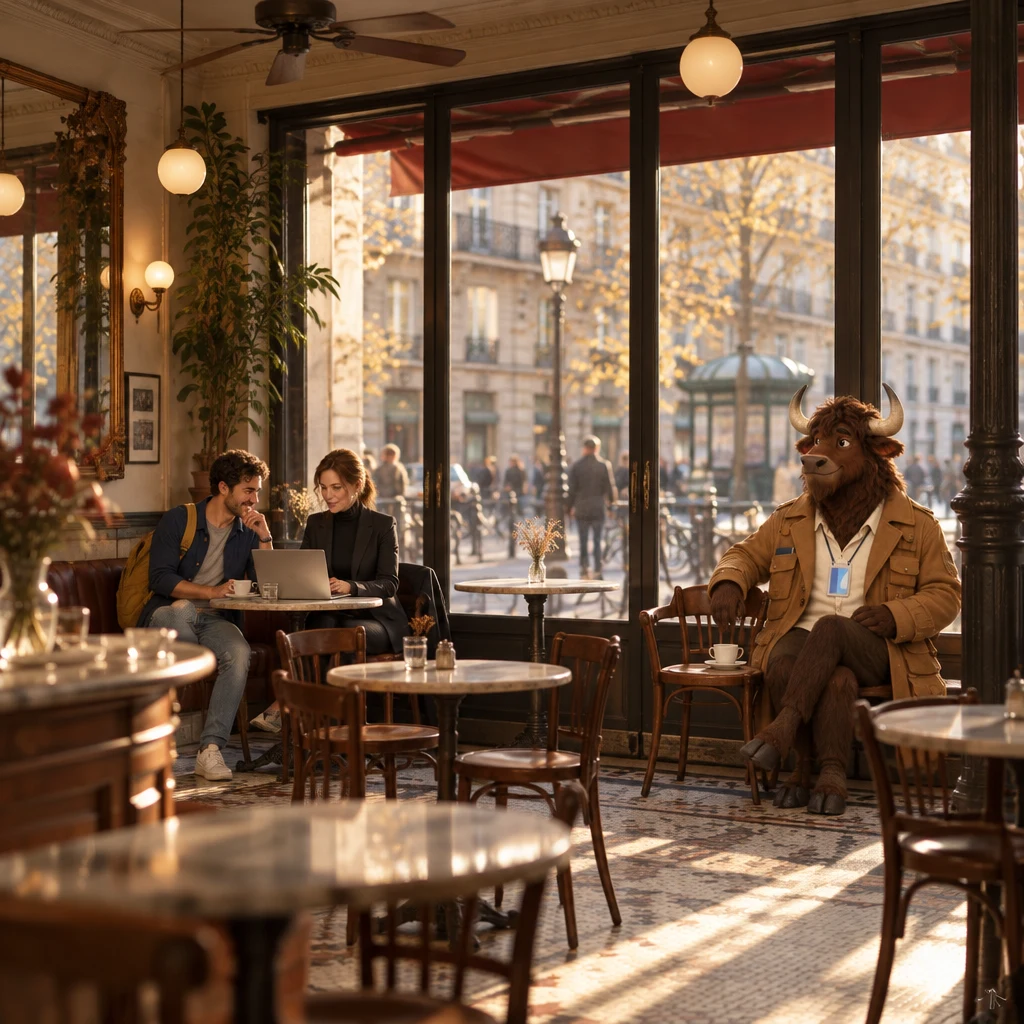
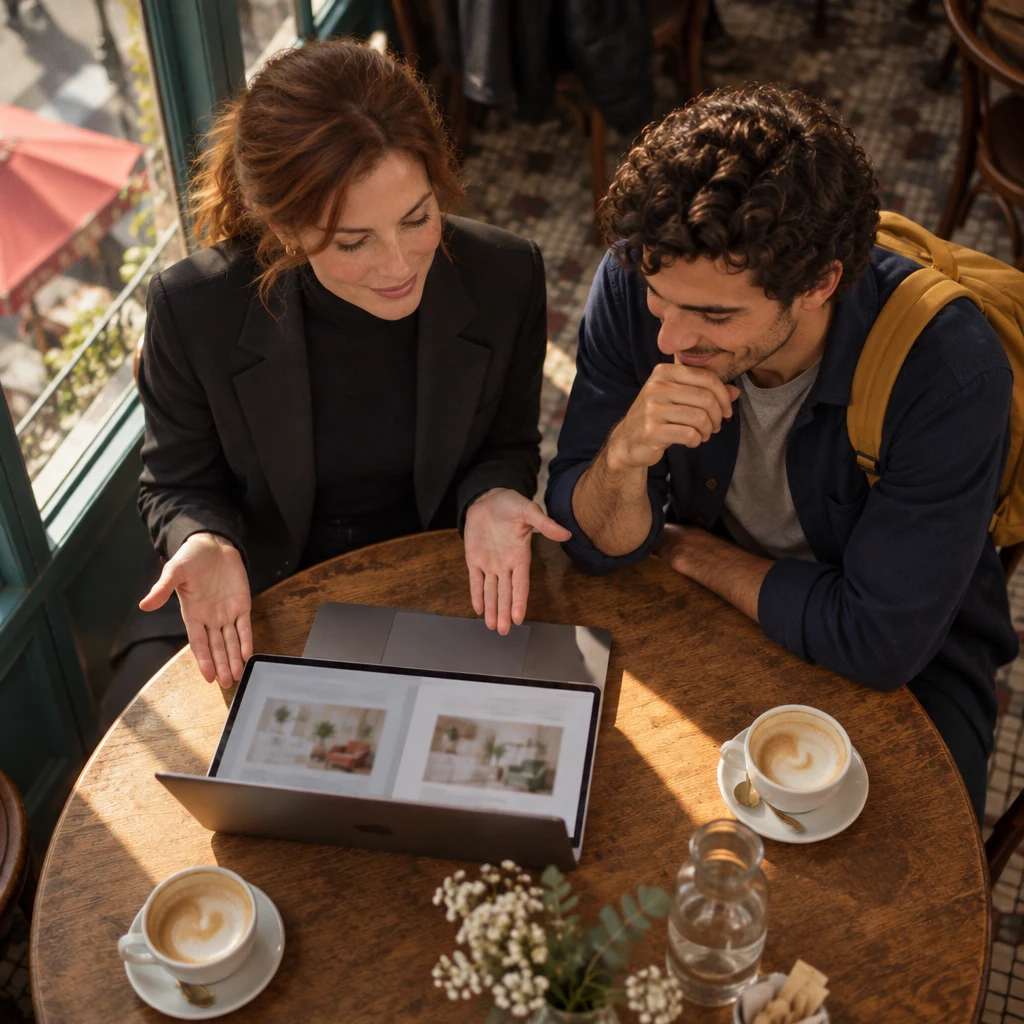
Claire wants a museum tour in two lengths, and Sam has to pick one for her. At Café des Tilleuls he lays both options out.
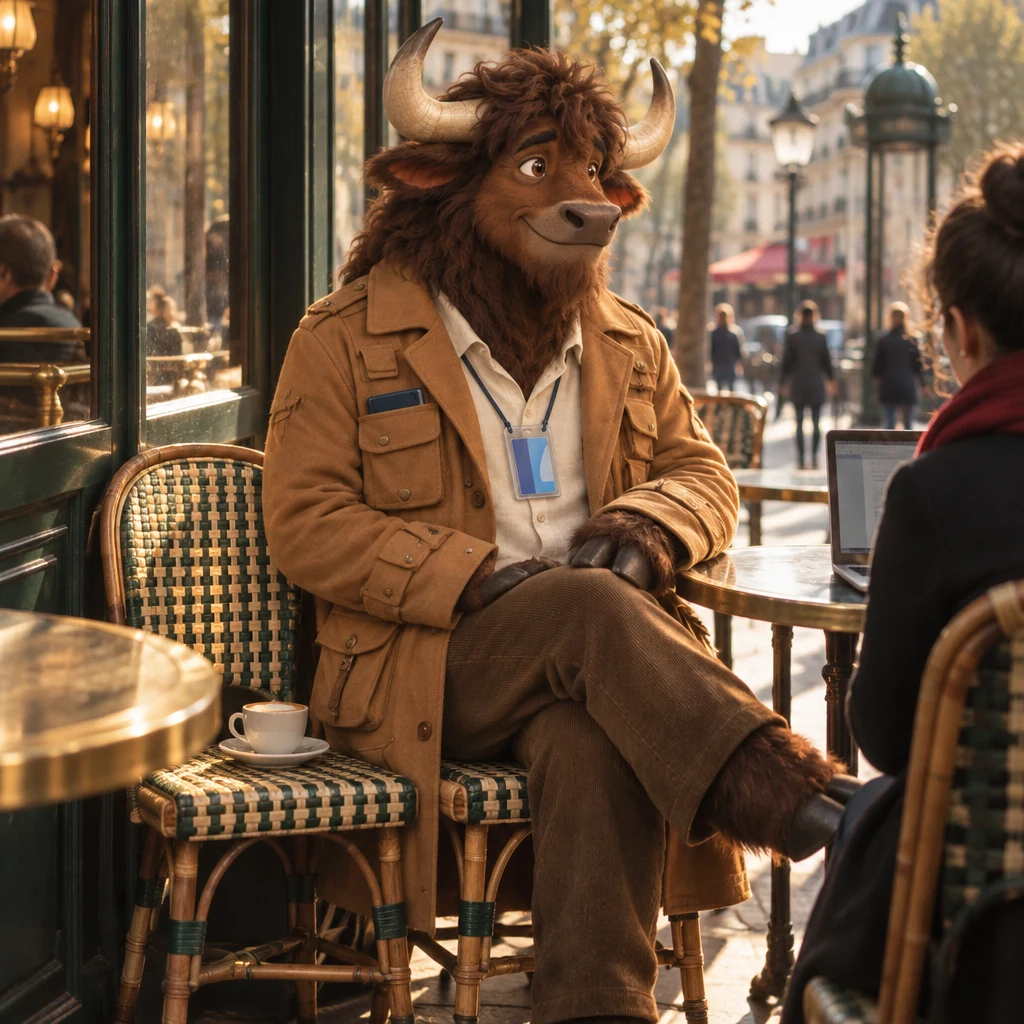
Gaspard listens, then weighs his usual two chairs against the empty window table.
By the end, you'll contrast two choices in a longer sentence, name the main difference, and ask which one is clearer.
By the end of this lesson
Contrast two options in a longer sentence.
- D'un côté, ___, de l'autre, ___.On the one hand ___, on the other ___.
- La principale différence, c'est ___.The main difference is ___.
- Ça dépend de ce dont tu as besoin.It depends on what you need.
- Il n'y a pas beaucoup de différence entre les deux.There isn't much difference between the two.
- La version courte n'est pas aussi complète que l'autre.The short version isn't as complete as the other one.
- Lequel est le plus clair ?Which one is clearer?
Scene — two tours
Late afternoon at Café des Tilleuls. Sam has two museum scripts on his laptop: a short loop and a full walk.
Claire wants one of them for the audio guide. Gaspard sits on two chairs beside the window table, café crème untouched.
The blank brass sign still stands on that table.
Learn — on the one hand
Six lines help you weigh two options: on the one hand, the main difference, and which one is clearer.
You'll also say it depends on what someone needs.

D'un côté, ___, de l'autre, ___.
On the one hand ___, on the other ___.
When to use it: Use this to weigh two options in one longer sentence.
Fill both blanks in the same sentence so the two sides stay together.
Say it: D'un drops the e of de before un.

La principale différence, c'est ___.
The main difference is ___.
When to use it: Name the one contrast that actually matters.
Principale stays feminine to match différence.
Ça dépend de ce dont tu as besoin.
It depends on what you need.
When to use it: Say this when the better choice hangs on what someone needs.
Dont points back to ce after a de, so you do not add que.
Say it: Dont ends with a nasal on sound.
Il n'y a pas beaucoup de différence entre les deux.
There isn't much difference between the two.
When to use it: Say this when the two options feel close.
Keep the ne; n'y is ne plus y before pas.
Say it: N'y drops the e of ne before y.

La version courte n'est pas aussi complète que l'autre.
The short version isn't as complete as the other one.
When to use it: Use this when the shorter option leaves something out.
Aussi pairs with que to mean as complete as the other.
Say it: N'est glides ne into est.

Lequel est le plus clair ?
Which one is clearer?
When to use it: Ask this of two masculine things, like two seats.
Use laquelle with a feminine noun like version; lequel matches a masculine noun like coin.
Say it: The s in plus is silent before clair.
Story — he stays put
Sam lays out the short tour and the full one. Gaspard weighs two seats, then stays put.
The highlighted words are the lines you just learned. Turn on Show English if you need it.
- Sam turns the laptop. Two museum scripts sit side by side.
 SamD'un côté, la version courte est plus simple, de l'autre, elle dit moins.On the one hand, the short version is simpler, on the other, it says less.
 GaspardLa principale différence, c'est la durée.The main difference is the length.
- SamLa version courte n'est pas aussi complète que l'autre.The short version isn't as complete as the other one.
- GaspardLaquelle est la plus claire ?Which one is clearer?
- SamÇa dépend.It depends.
- GaspardÇa dépend de ce dont tu as besoin.It depends on what you need.
- SamJe comprends les deux points de vue.I can see both sides.
- Gaspard looks at the empty window table, then at his two chairs.
- GaspardD'un côté, le coin près de la fenêtre, de l'autre, mon coin habituel.On the one hand, the corner by the window, on the other, my usual corner.
- SamLequel est le plus clair ?Which one is clearer?
- GaspardIl n'y a pas beaucoup de différence entre les deux.There isn't much difference between the two.
- SamLa principale différence, c'est la lumière.The main difference is the light.
- GaspardJe préfère ça.I prefer that.
- He stays on his two chairs. The café crème is still full. The window table stays empty.
Practice — short or full
Ten quick exercises wait here. You'll listen, pick, fill a gap, swap a word, and build a line.
They stay short, so the round moves fast.
0 of 10 done
What did you hear?
What did you hear?
Match the pairs
French
D'un côté, ___, de l'autre, ___.Drop the English hereLa principale différence, c'est ___.Drop the English hereLa version courte n'est pas aussi complète que l'autre.Drop the English hereEnglish
What do you say?
What do you say?
You are laying out the short tour and the full one for Claire in one sentence.
Fill the gap
Fill the gap
The short version isn't as complete as the other one.
La version courte n'est pas ____ complète que l'autre.
What does it mean?
What does it mean?
Ça dépend.
Swap the word
Swap the word
Name the one contrast that matters between the two tours.
La principale ____, c'est ___.
Pick the reply
Gaspard says:
Pick the reply
Tu crois que je serai mieux à la table près de la fenêtre pour lire ?
Do you think I'd be better at the window table for reading?
And you reply with:
Build the line
Build the line
There isn't much difference between the two.
.
Tap the words in order.
What do you say?
What do you say?
Gaspard has made a case for both seats. You want to show you see both sides.
True or false?
True or false?
This line picks one option instead of weighing both.
Say it — weigh both
Now you're Sam at the café, weighing the short tour against the full one. When it's your turn, tap the microphone and speak the line.
Tap ▶ first if you want to hear the line. Your recording stays on your device.
- GaspardTu hésites encore entre les deux versions ?Are you still stuck between the two versions?
- Sam (you)Lay out the short tour and the full one in one longer sentence.
Lay out the short tour and the full one in one longer sentence.
D'un côté, ___, de l'autre, ___.
On the one hand ___, on the other ___.
0 of 6 said
Recap — what you can say now
| French | English | Play |
|---|---|---|
| D'un côté, ___, de l'autre, ___. | On the one hand ___, on the other ___. | |
| La principale différence, c'est ___. | The main difference is ___. | |
| Ça dépend de ce dont tu as besoin. | It depends on what you need. | |
| Il n'y a pas beaucoup de différence entre les deux. | There isn't much difference between the two. | |
| La version courte n'est pas aussi complète que l'autre. | The short version isn't as complete as the other one. | |
| Lequel est le plus clair ? | Which one is clearer? |
Save your progress — it’s free
Keep your place in the course and see which lines you’ve learned.
Want the next lesson in your inbox?
Get the next lesson by email, one a day.
Join the newsletterDaily lesson emails are coming soon. Newsletter subscribers get them first.
Keep practicing with Yak Cards
Want to keep these contrasts handy? Grab the Yak Cards for this lesson and review them anywhere.
A quick round with the Yak Cards each day keeps on the one hand ready for Claire.
Open Yak Cards