
New here? This is lesson 129 of a free 240-lesson French course.
Emergencies in French
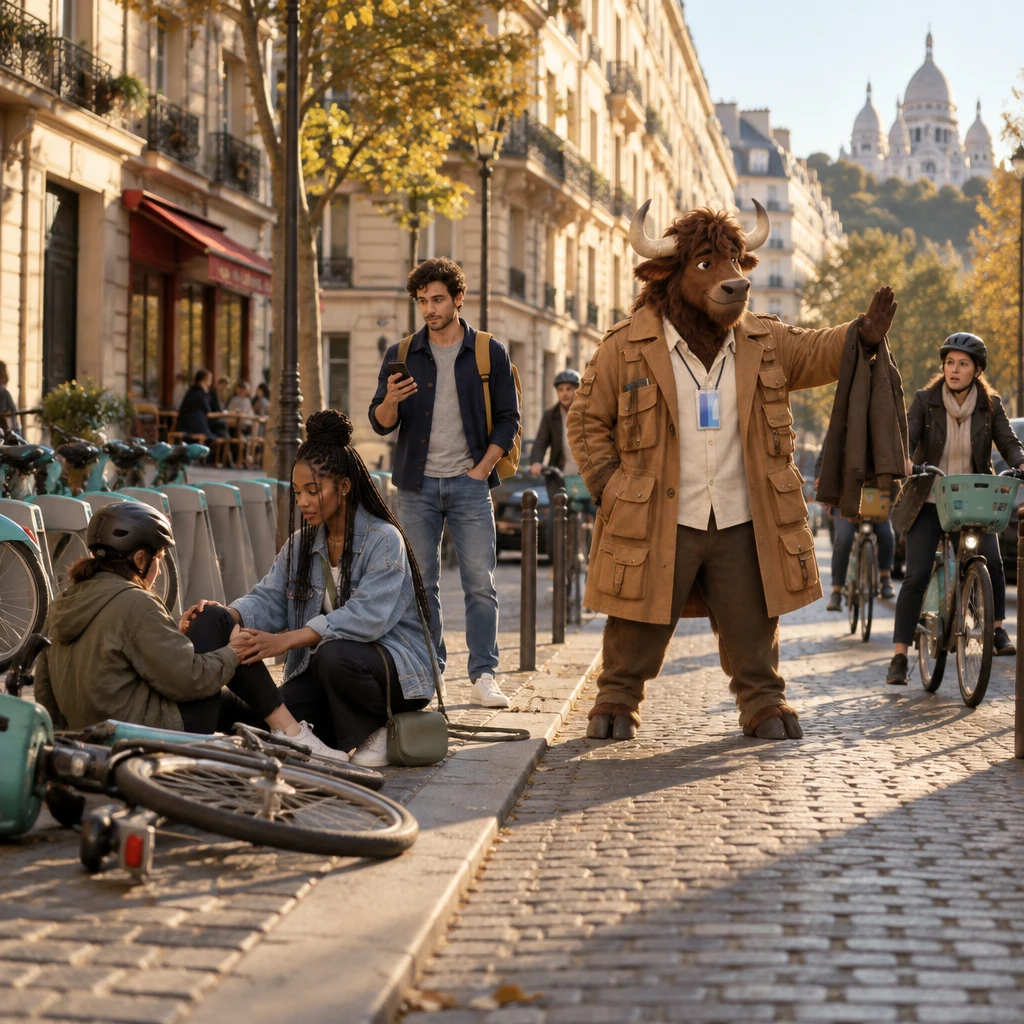
A cyclist goes down by the Vélib' dock on rue des Tilleuls. Inès is already there, in nurse mode, and Sam has his phone out.
Gaspard offers his coat and stands in the path so bikes cannot pass.
By the end, you'll flag an emergency, ask for help right now, and pick 15, 18, or 112.
Inès will tell you which number to call. Keep the line short.
By the end of this lesson
Call for help in an emergency and use the French emergency numbers.
- C'est une urgence.This is an emergency.
- J'ai besoin d'aide tout de suite.I need help right now.
- Appelez le 15, s'il vous plaît.Please call 15.
- Il y a le feu, appelez le 18 !There's a fire, call 18!
- Quelqu'un est blessé.Someone is hurt.
- Le 112 marche aussi.112 works too.
Scene — the bike is down
Same street, by the Vélib' dock. A cyclist is on the pavement, not getting up. Inès kneels beside him with her green bag.
Sam stands with his phone. Gaspard holds out his camel coat and plants himself in the bike path, Navigo still on the cord.
The window table is not in this scene.
Learn — call for help
Six lines cover an emergency, help right now, 15 for medical help, 18 for a fire, and 112.
You'll also say that someone is hurt.
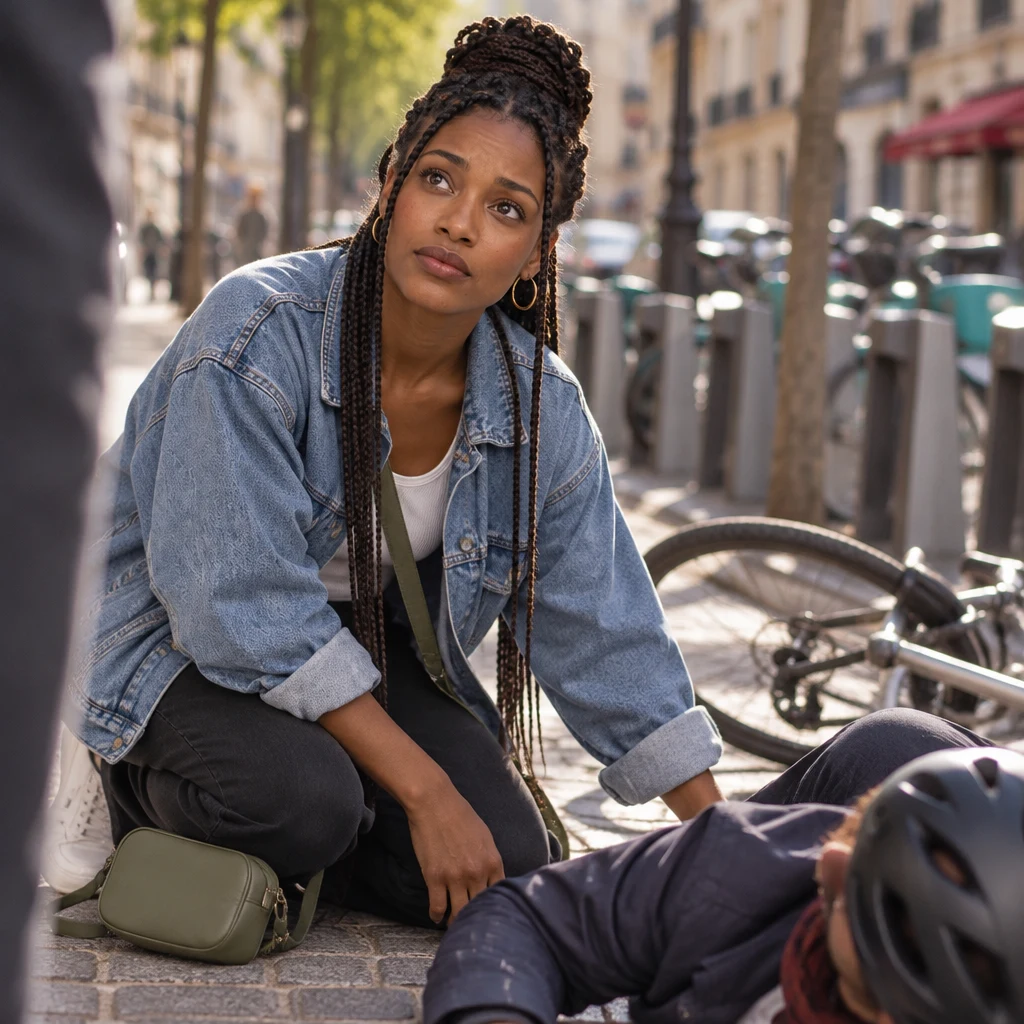
C'est une urgence.
This is an emergency.
When to use it: Use this to tell people the situation is serious now.
Une goes with urgence because the word is feminine.
Say it: The en in urgence is a nasal sound.

J'ai besoin d'aide tout de suite.
I need help right now.
When to use it: Say this when you cannot wait and need help now.
Tout de suite means right now, not in a few minutes.
Say it: De elides before aide: de aide becomes d'aide.
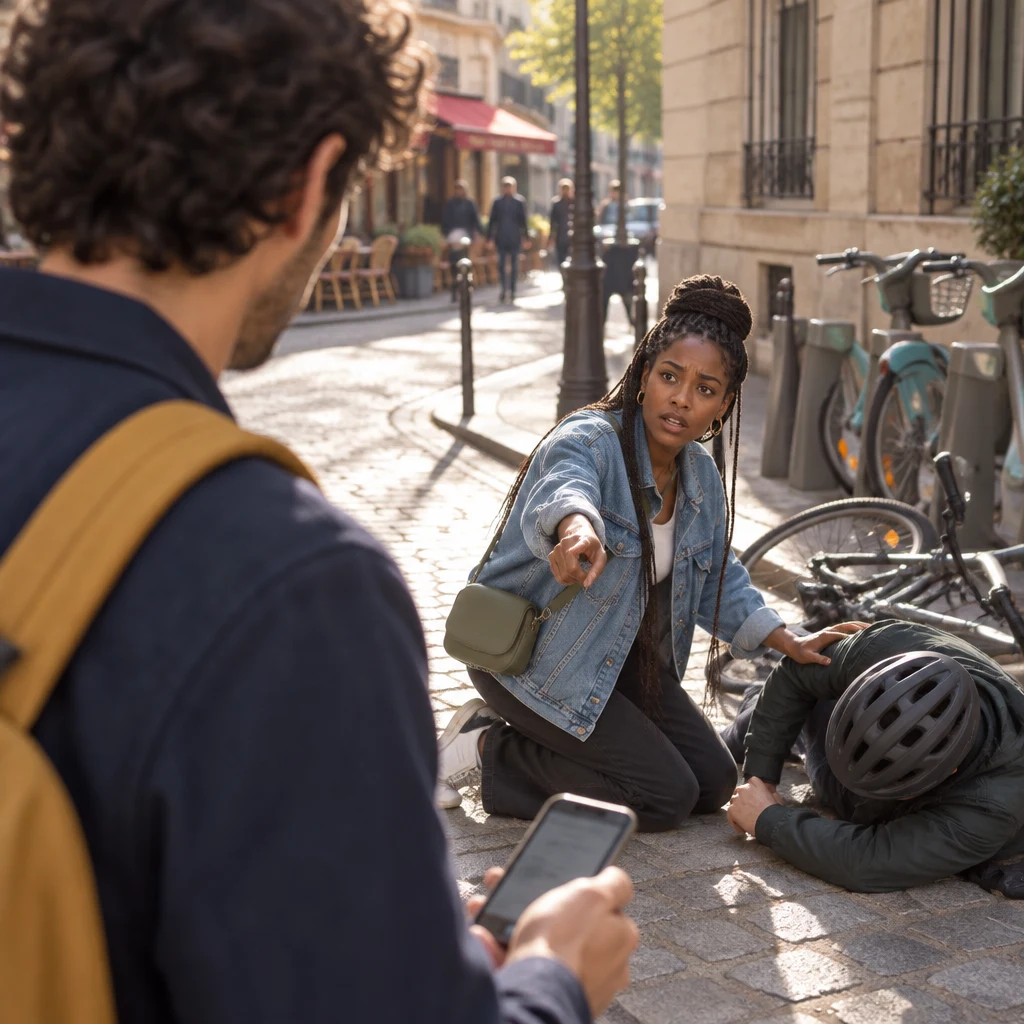
Appelez le 15, s'il vous plaît.
Please call 15.
When to use it: Ask a stranger to call 15 for medical help.
Appelez is the vous form, for a stranger or a passer-by.
Say it: The t in plaît is silent.
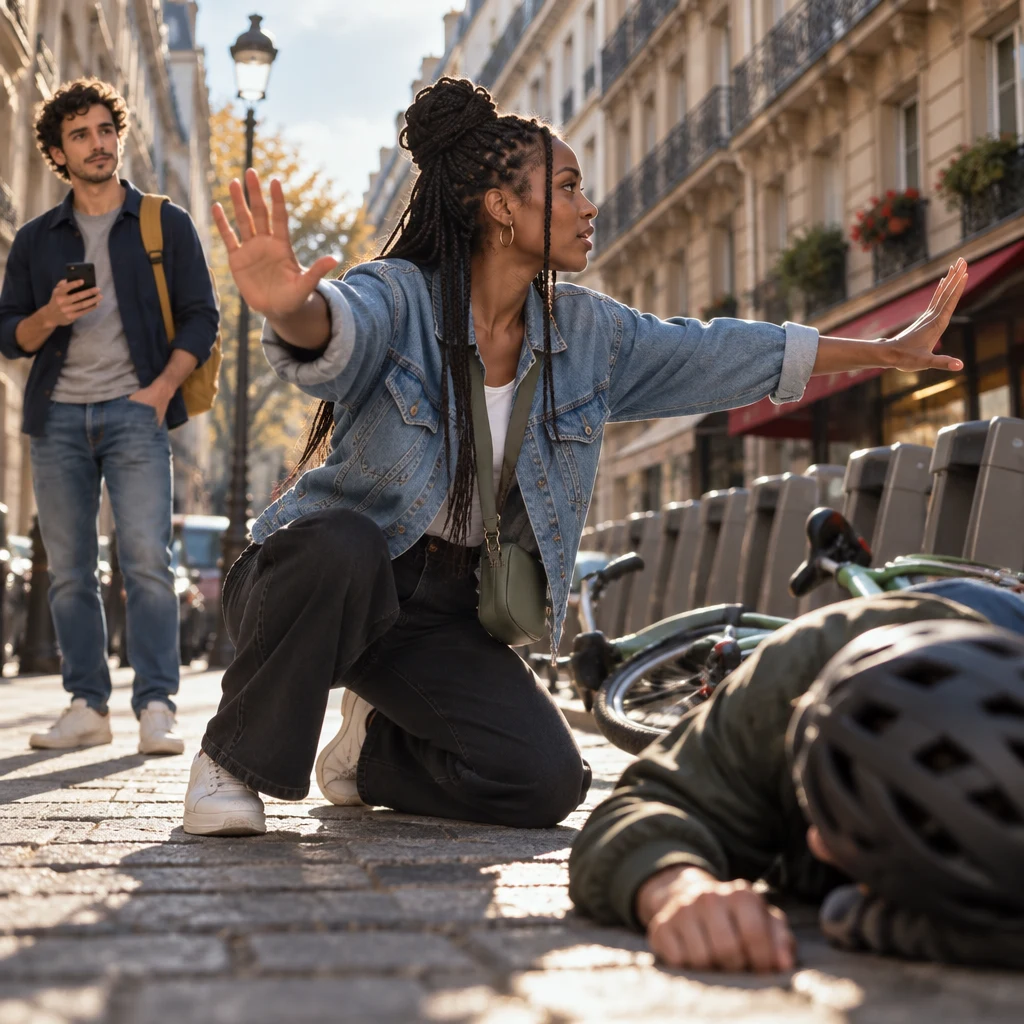
Il y a le feu, appelez le 18 !
There's a fire, call 18!
When to use it: Shout this when you see a fire and need 18.
18 is the fire number; do not use it for a fall.
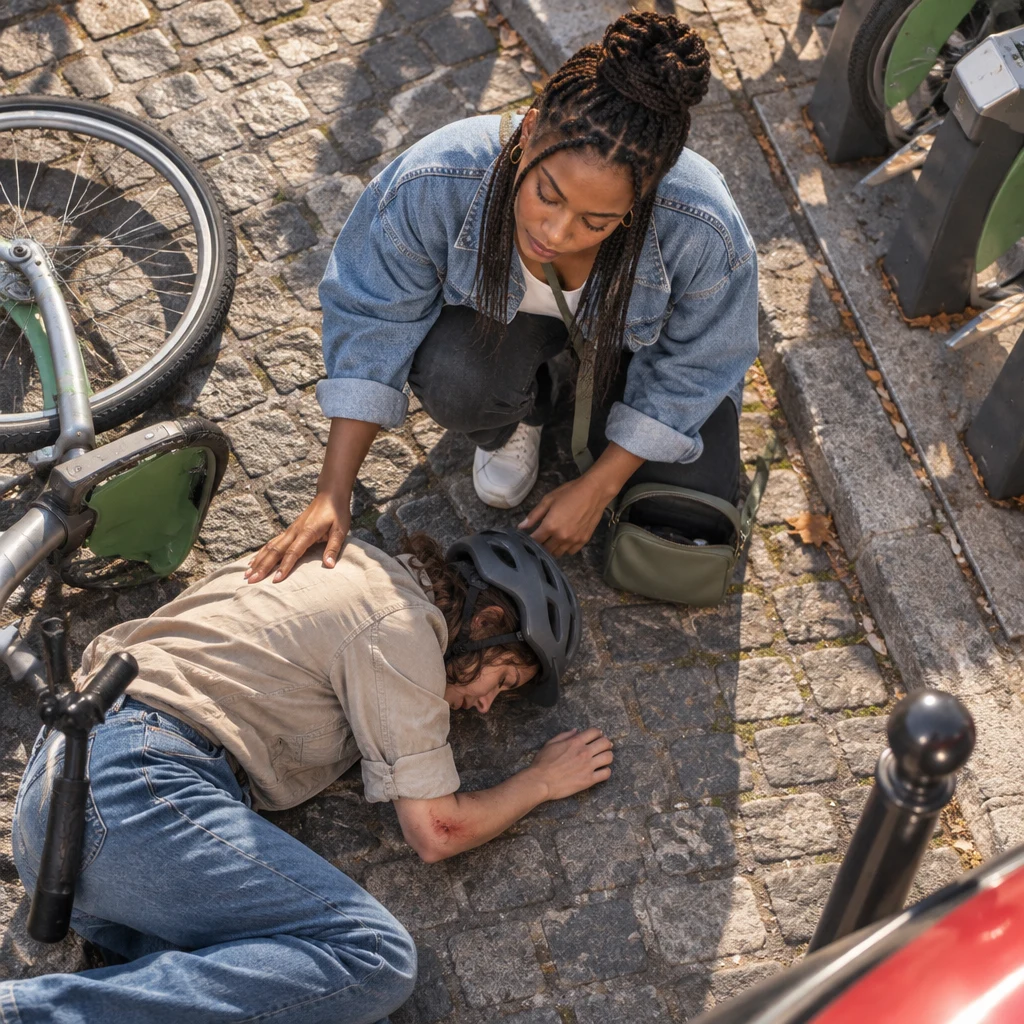
Quelqu'un est blessé.
Someone is hurt.
When to use it: Say this when a person is injured and needs help.
Blessé is the form for a man; for a woman say blessée.
Say it: Quelqu'un ends with a nasal un sound.

Le 112 marche aussi.
112 works too.
When to use it: Use this for the European emergency number, which also works in France.
112 is the European emergency number; it reaches help in France too.
Say it: The last e in marche is silent.
Story — the right number
Watch Sam and Inès at the Vélib' dock. A cyclist is down, and the numbers matter.
The highlighted words are the lines you just learned. Turn on Show English if you need it.
- A cyclist is on the pavement by the Vélib' dock. The bike lies on its side.
 InèsOh non !Oh no!
 SamC'est une urgence.This is an emergency.
- InèsQuelqu'un est blessé.Someone is hurt.
- SamJe dois faire quoi ?What should I do?
- InèsLe 15. Tout de suite.15. Right away.
- A passer-by has a phone in hand. Sam turns toward them.
- SamJ'ai besoin d'aide. Appelez le 15, s'il vous plaît.I need help. Please call 15.
- StrangerOui.Yes.
- SamJ'ai besoin d'aide tout de suite.I need help right now.
- Gaspard holds out his camel coat and stands in the bike path.
 GaspardLe 112 marche aussi.112 works too.
- InèsPour un feu : Il y a le feu, appelez le 18 !For a fire: There's a fire, call 18!
Practice — fifteen or eighteen
Ten quick exercises wait here. You'll listen, pick, match, fill a gap, and build a line.
They stay short, so the round moves fast.
0 of 10 done
What did you hear?
What did you hear?
Match the pairs
French
C'est une urgence.Drop the English hereQuelqu'un est blessé.Drop the English hereLe 112 marche aussi.Drop the English hereEnglish
What do you say?
What do you say?
Name the situation for people walking past: this is an emergency, not a request yet.
Fill the gap
Fill the gap
I need help right now.
J'ai besoin d'aide ____.
What does it mean?
What does it mean?
Quelqu'un est blessé.
Pick the reply
Inès says:
Pick the reply
Il est tombé. Je reste avec lui.
He fell. I'll stay with him.
And you reply with:
Swap the word
Swap the word
You see flames. Tell people to call the fire number.
Il y a le feu, ____ le 18 !
Build the line
Build the line
Someone is hurt.
.
Tap the words in order.
What do you say?
What do you say?
The cyclist falls in front of you. Give the exact short reaction Oh no.
True or false?
True or false?
This means you need a coffee.
Say it — make the call
Now you're Sam at the dock. When it's your turn, tap the microphone and speak the line.
Tap ▶ first if you want to hear the line. Your recording stays on your device.
- InèsOh non !Oh no!
- Sam (you)Tell her this is an emergency.
Tell her this is an emergency.
C'est une urgence.
This is an emergency.
0 of 5 said
Recap — what you can say now
| French | English | Play |
|---|---|---|
| C'est une urgence. | This is an emergency. | |
| J'ai besoin d'aide tout de suite. | I need help right now. | |
| Appelez le 15, s'il vous plaît. | Please call 15. | |
| Il y a le feu, appelez le 18 ! | There's a fire, call 18! | |
| Quelqu'un est blessé. | Someone is hurt. | |
| Le 112 marche aussi. | 112 works too. |
Save your progress — it’s free
Keep your place in the course and see which lines you’ve learned.
Want the next lesson in your inbox?
Get the next lesson by email, one a day.
Join the newsletterDaily lesson emails are coming soon. Newsletter subscribers get them first.
Keep practicing with Yak Cards
Want to keep these numbers handy? Grab the Yak Cards for this lesson and review them anywhere.
A quick round with the Yak Cards each day keeps 15, 18, and 112 ready if you need them.
Open Yak Cards