
New here? This is lesson 169 of a free 240-lesson French course.
In other words in French
Claire wants the museum audio guide to stay short. Twelve minutes, not a lecture.
Sam has to restate her rule in the meeting, so the rooms that do not fit get cut.
By the end, you'll say in other words, name the basic rule, and explain what that means.
A playlist is the picture that sticks: a few tracks, not a talk.
By the end of this lesson
Restate a rule and say what it means.
- Autrement dit, ___.In other words, ___.
- Ça veut dire que ___.That means that ___.
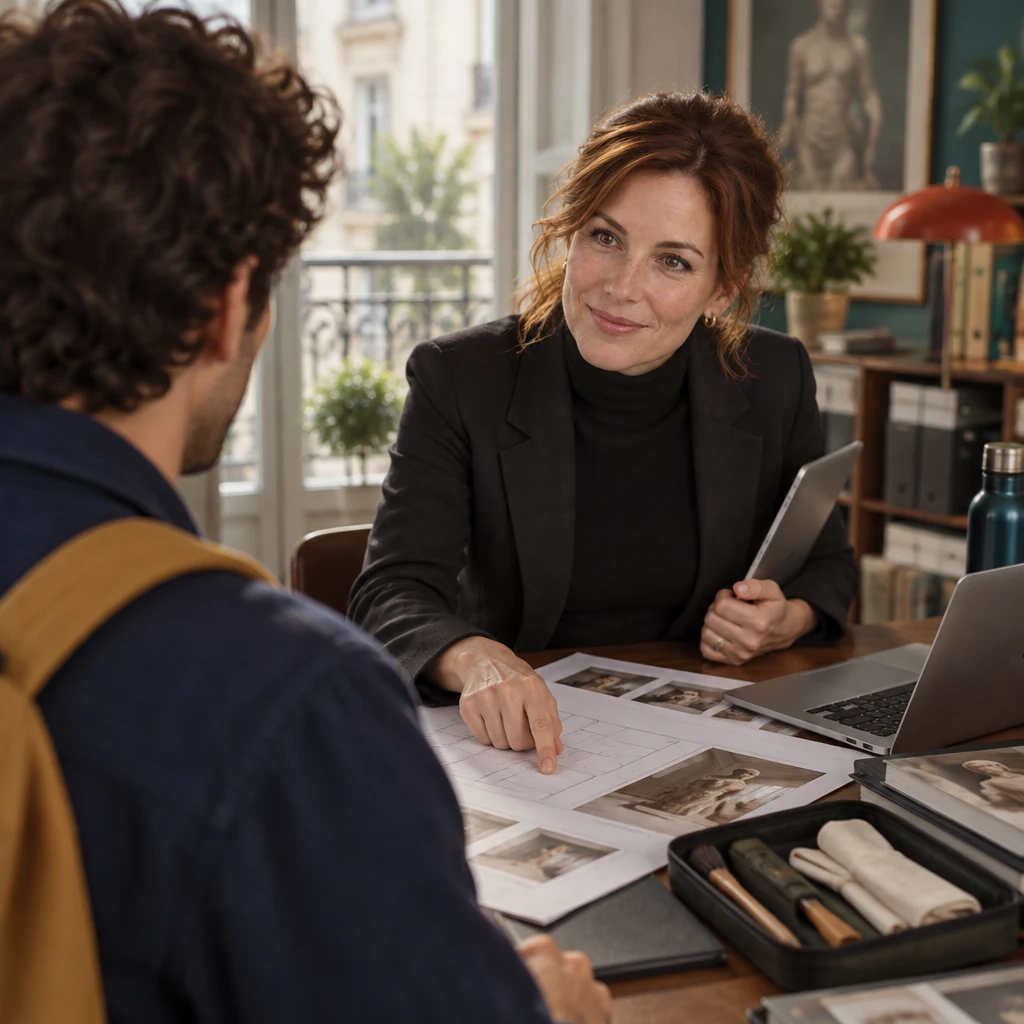
- La règle de base, c'est douze minutes.The basic rule is twelve minutes.
- Dans ce cas, on coupe la salle du fond.In that case, we cut the back room.
- Pour faire court, on n'a pas le temps.The short answer is we don't have time.
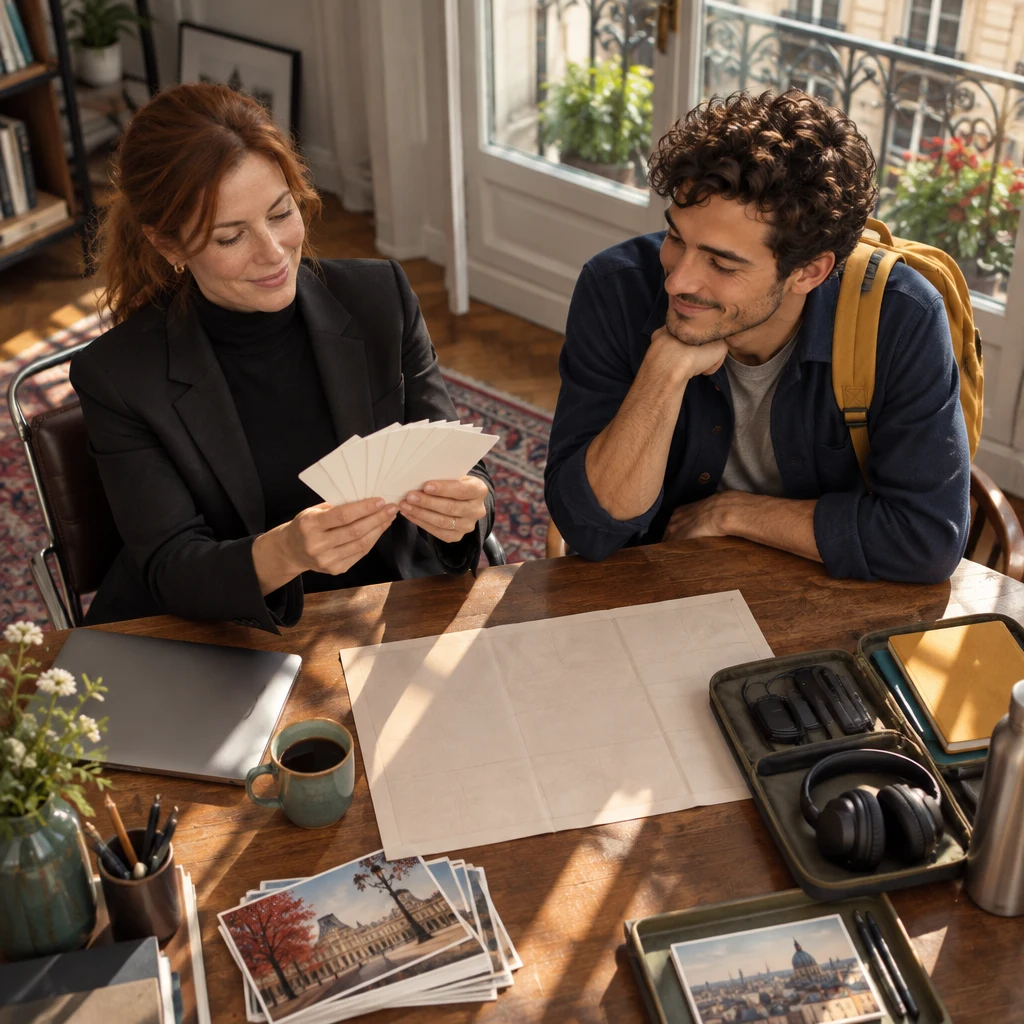
- C'est un peu comme une playlist.It's a bit like a playlist.
Scene — twelve minutes
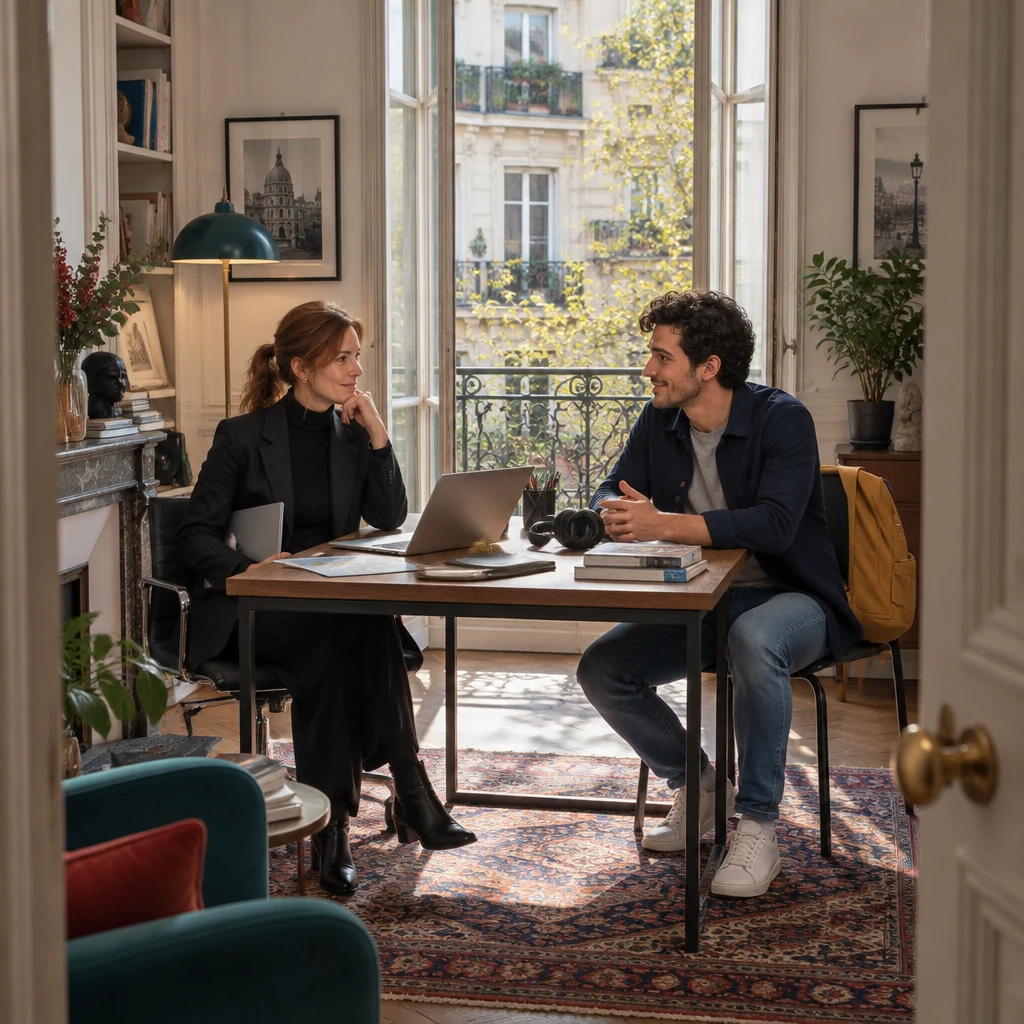
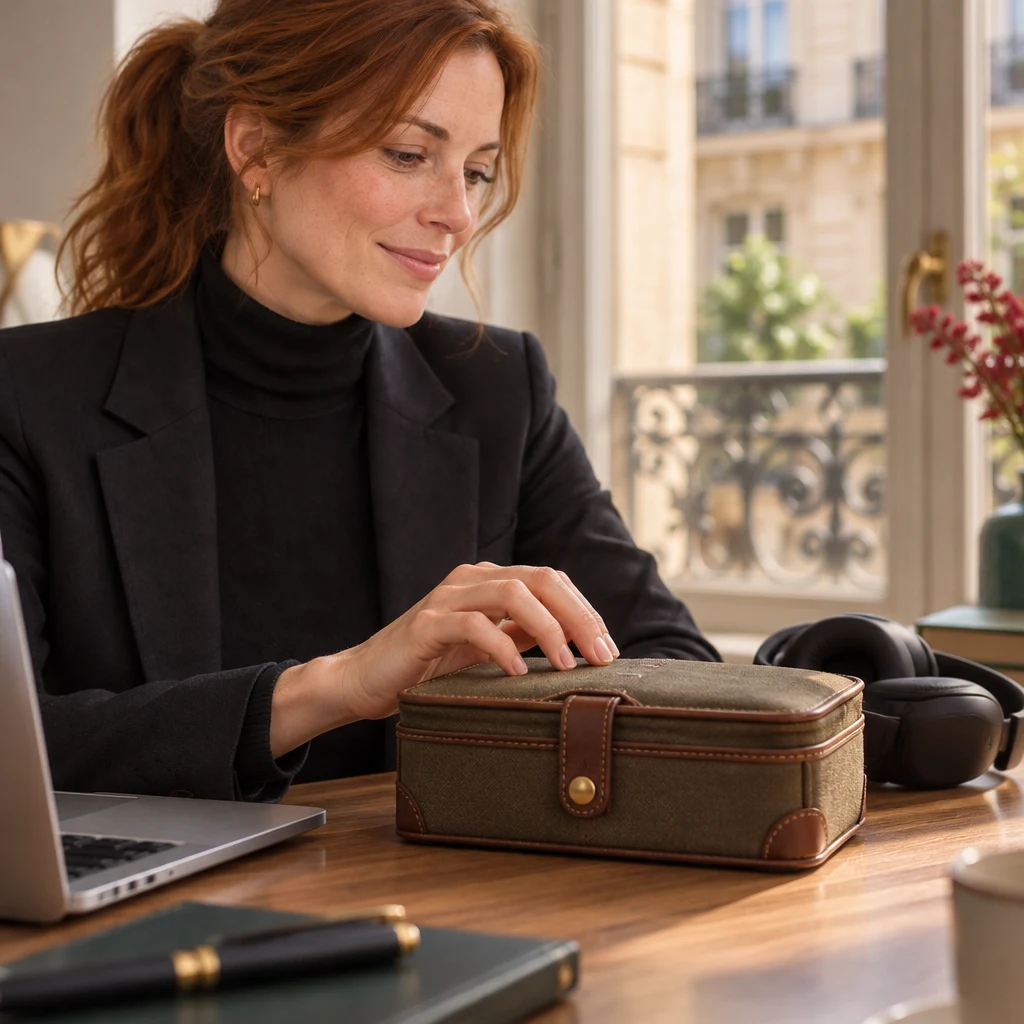
Same weekday at the office two metro stops from rue des Tilleuls. Claire has her laptop and a museum-guide kit on the desk.
Sam sits across from her. The courtyard window is open. They need the twelve-minute rule in plain words before the museum call.
Learn — in other words
Six lines help you restate a rule, say what it means, and cut it short.
You'll also get a picture: it's a bit like a playlist.
Autrement dit, ___.
In other words, ___.
When to use it: Say this when you restate an idea in simpler words.
Put the simpler version after dit, then keep going.
Say it: The t in dit is silent.

Ça veut dire que ___.
That means that ___.
When to use it: Use this to spell out what a rule actually means.
Que starts the part that names the meaning.
Say it: The t in veut is silent.
La règle de base, c'est douze minutes.
The basic rule is twelve minutes.
When to use it: Name the one rule everyone has to keep.
C'est points to the rule you must keep.
Say it: The s at the end of minutes is silent.

Dans ce cas, on coupe la salle du fond.
In that case, we cut the back room.
When to use it: Say this when the rule forces a cut.
On means we in speech, the whole team.

Pour faire court, on n'a pas le temps.
The short answer is we don't have time.
When to use it: Cut a long explanation down to the reason.
N'a keeps ne with a in one piece.
Say it: The n' in n'a is an elision.
C'est un peu comme une playlist.
It's a bit like a playlist.
When to use it: Give a simple picture so the rule sticks.
Comme une sets up the comparison that follows.
Say it: The t in est is pronounced before un.
Story — the back room
Watch Sam restate Claire's twelve-minute rule for the museum guide.
The highlighted words are the lines you just learned. Turn on Show English if you need it.
- Claire taps the museum kit. Headphones sit on the desk.
 ClaireBon. La règle de base, c'est douze minutes.Right. The basic rule is twelve minutes.
 SamÇa veut dire que le parcours ne passe pas par toutes les salles.That means that the tour does not go through every room.
- ClaireOui. Dans ce cas, on coupe la salle du fond.Yes. In that case, we cut the back room.
- Sam looks at the courtyard. He tries a shorter version.
- SamAutrement dit, on garde seulement l'essentiel.In other words, we only keep the essential.
- ClaireVoilà. C'est un peu comme une playlist.There. It's a bit like a playlist.
- SamPour faire court, on n'a pas le temps.The short answer is we don't have time.
- ClaireÀ mon avis, la version courte, c'est mieux.In my opinion, the short version is better.
- SamBonne idée.Good idea.
- Claire types a note. She does not look up.
- ClaireDu coup, le fond sort du parcours.So the back room leaves the tour.
- SamAutrement dit, c'est une playlist, pas une conférence.In other words, it's a playlist, not a lecture.
- ClaireÇa veut dire que les gens choisissent.That means that people choose.
- SamC'est noté.Noted.
- ClaireTrès bien. On envoie ça au musée demain.Great. We send that to the museum tomorrow.
Practice — a playlist, not a lecture
Eleven quick exercises wait here. You'll listen, pick, match, fill a gap, and build a line.
They stay tiny, so the round moves fast.
0 of 11 done
What did you hear?
What did you hear?
Match the pairs
French
Autrement dit, ___.Drop the English hereÇa veut dire que ___.Drop the English hereC'est un peu comme une playlist.Drop the English hereEnglish
Put the chat in order
- ClaireWhat comes first?
- Sam…
- Claire…
- Sam…
- Claire…
Fill the gap
Fill the gap
In that case, we cut the back room.
Dans ce cas, on ____ la salle du fond.
What does it mean?
What does it mean?
C'est un peu comme une playlist.
Build the line
Build the line
The short answer is we don't have time.
, .
Tap the words in order.
Swap the word
Swap the word
Name Claire's basic rule for the audio guide length.
La règle de base, c'est ____ minutes.
Pick the reply
Claire says:
Pick the reply
Vous m'expliquez ce que ça veut dire ?
Can you explain what that means?
And you reply with:
True or false?
True or false?
This line names Claire's twelve-minute rule.
What do you say?
What do you say?
You confirm you have written the rule in your notes.
What does it mean?
What does it mean?
Bonne idée.
Say it — say it back
Now you're Sam in the meeting with Claire. When it's your turn, tap the microphone and speak the line.
Tap ▶ first if you want to hear the line. Your recording stays on your device.
- ClaireLa règle de base, c'est douze minutes.The basic rule is twelve minutes.
- Sam (you)Say what that rule means for the back room.
Say what that rule means for the back room.
Dans ce cas, on coupe la salle du fond.
In that case, we cut the back room.
0 of 4 said
Recap — what you can say now
| French | English | Play |
|---|---|---|
| Autrement dit, ___. | In other words, ___. | |
| Ça veut dire que ___. | That means that ___. | |
| La règle de base, c'est douze minutes. | The basic rule is twelve minutes. | |
| Dans ce cas, on coupe la salle du fond. | In that case, we cut the back room. | |
| Pour faire court, on n'a pas le temps. | The short answer is we don't have time. | |
| C'est un peu comme une playlist. | It's a bit like a playlist. |
Save your progress — it’s free
Keep your place in the course and see which lines you’ve learned.
Want the next lesson in your inbox?
Get the next lesson by email, one a day.
Join the newsletterDaily lesson emails are coming soon. Newsletter subscribers get them first.
Keep practicing with Yak Cards
Want to keep these restatements handy? Grab the Yak Cards for this lesson and review them anywhere.
A quick round with the Yak Cards each day keeps these restatements ready for a meeting.
Open Yak Cards