
New here? This is lesson 226 of a free 240-lesson English course.
The noise next door in English
The third-floor neighbor's music has been running late. Ana needs to raise it without making an enemy.
She knocks, stays kind, and they look for a quieter hour. Mr. Kowalski stays out of it.
You'll name the noise, ask politely, and show you are not blaming them.
Would you mind is the polite ask. Keep it warm, and you can still live next door.
By the end of this lesson
Raise a neighbor problem about night noise without making enemies.
- It's been a little loud at night lately.The noise after dark has been too much.
- Would you mind keeping it down?Please make less noise.
- I'm not blaming you.I do not want to say this is all your fault.
- I know you've got a lot going on too.I understand you are busy and tired as well.
- Can we figure something out together?Can we find a plan that helps both of us?
- Thanks for being willing to listen.Thank you for hearing me without getting angry.
Scene — music through the ceiling
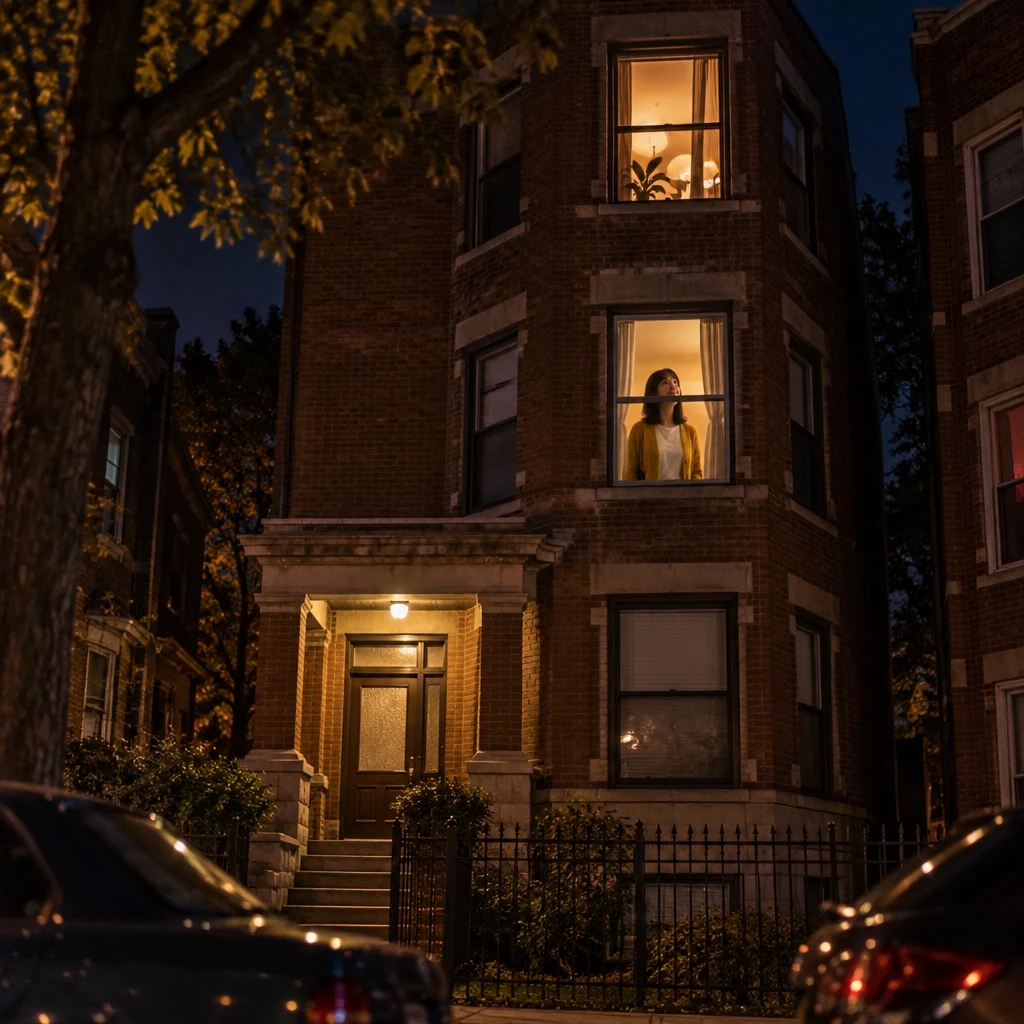
Night on Larch Street. Music comes through the ceiling of Ana's second-floor apartment, late again.
She walks up one flight and knocks. The third-floor neighbor opens the door a little.
Mr. Kowalski's porch light is on downstairs, but he stays out of this. This is neighbor to neighbor.
Learn — raise it kindly
Six lines help you raise a noise problem without a fight.
You name it, ask kindly, and look for a plan together.

It's been a little loud at night lately.
The noise after dark has been too much.
When to use it: Say this when night noise has gone on for some days.
Lately means this has been true for a while, not only tonight.

Would you mind keeping it down?
Please make less noise.
When to use it: Use this to ask someone, politely, to make less noise.
Would you mind plus the -ing form is a polite ask, not a demand.
Say it: Would and you can link.

I'm not blaming you.
I do not want to say this is all your fault.
When to use it: Say this so they do not feel this is an attack.
Use this right after you name the problem, so the talk stays calm.

I know you've got a lot going on too.
I understand you are busy and tired as well.
When to use it: Say this to show you see their side too.
You've got is a form you will hear for you have.
Say it: You've sounds like one short piece.

Can we figure something out together?
Can we find a plan that helps both of us?
When to use it: Use this when you want a shared plan, not a fight.
Figure something out means find a plan that works.

Thanks for being willing to listen.
Thank you for hearing me without getting angry.
When to use it: Say this after they hear you and stay calm.
This thanks them for the calm, not for the noise.
Story — they find an hour
Watch Ana knock and keep it kind. They agree on a quieter hour, and nobody calls the landlord.
The highlighted words are the lines you just learned.
- Ana stands on the third-floor landing. Bass comes through the door.
 AnaExcuse me.you say this to get someone's attention
- NeighborHey. Sorry, I wasn't expecting anyone.They are surprised you knocked.
- AnaIt's been a little loud at night lately.The noise after dark has been too much.
- NeighborThe music? I didn't think it went through the floor that much.They are surprised the sound reached your apartment.
- AnaWould you mind keeping it down?Please make less noise.
- NeighborOh. I work late, so this is how I relax after a shift.They play music to relax after late work.
- AnaI'm not blaming you.I do not want to say this is all your fault.
- NeighborOkay. I can try. I just didn't know it was a problem.They will try, and they did not know it bothered you.
- AnaI know you've got a lot going on too.I understand you are busy and tired as well.
- NeighborYeah. Double shifts this week, you know?They have been working a lot this week.
- AnaCan we figure something out together?Can we find a plan that helps both of us?
- NeighborLike what? I still like something on when I get home.They want an idea, but they still want music at home.
- AnaHow about we meet in the middle?Can we each give up a little?
- NeighborSo, music until ten, then I switch to headphones?They offer a quieter plan after ten.
- AnaYes, let's do that.You agree to follow their plan.
- NeighborTen is fair. I'll keep it down after that.They agree to be quieter after ten.
- AnaThanks for being willing to listen.Thank you for hearing me without getting angry.
- NeighborYeah. Thanks for coming up instead of calling the landlord.They are glad you talked to them first.
- Downstairs, Mr. Kowalski's porch light is still on. He never comes up.
Practice — noise without a fight
Eleven quick exercises wait here. You'll listen, pick, match, fill a gap, and build a line.
They stay short, so the round moves fast.
0 of 11 done
What did you hear?
What did you hear?
What do you say?
What do you say?
You already named the night noise. Now ask them, politely, to make less noise. You want to stay friends.
What does it mean?
What does it mean?
I'm not blaming you.
Fill the gap
Fill the gap
I understand you are busy and tired as well.
I know you've got a lot ____ on too.
Fill the gap
Fill the gap
Can we find a plan that helps both of us?
Can we figure something ____ together?
Pick the reply
Neighbor says:
Pick the reply
Okay. I hear you. I didn't mean to keep you up.
They stayed calm and heard you.
And you reply with:
Match the pairs
English
It's been a little loud at night lately.Drop the Simple English hereWould you mind keeping it down?Drop the Simple English hereI'm not blaming you.Drop the Simple English hereThanks for being willing to listen.Drop the Simple English hereSimple English
Swap the word
Swap the word
You want a polite ask for less noise, not more.
Would you mind keeping it ____?
True or false?
True or false?
You say this to start a fight with a neighbor.
Pick the reply
Neighbor says:
Pick the reply
I still want music when I get in, but I get that it's late.
They want a plan that helps both of you.
And you reply with:
Build the line
Build the line
You agree to follow their plan.
, .
Tap the words in order.
Say it — say it at the door
Now you're Ana at the third-floor door. When it's your turn, tap the microphone and speak the line.
Tap play first if you want to hear the line. Your recording stays on your device.
- NeighborHey. Is everything okay?They ask why you knocked.
- Ana (you)Name the night noise. Keep it calm.
Name the night noise. Keep it calm.
It's been a little loud at night lately.
The noise after dark has been too much.
0 of 7 said
Recap — what you can say now
| English | Simple English | Play |
|---|---|---|
| It's been a little loud at night lately. | The noise after dark has been too much. | |
| Would you mind keeping it down? | Please make less noise. | |
| I'm not blaming you. | I do not want to say this is all your fault. | |
| I know you've got a lot going on too. | I understand you are busy and tired as well. | |
| Can we figure something out together? | Can we find a plan that helps both of us? | |
| Thanks for being willing to listen. | Thank you for hearing me without getting angry. |
Save your progress — it’s free
Keep your place in the course and see which lines you’ve learned.
Want the next lesson in your inbox?
Get the next lesson by email, one a day.
Join the newsletterDaily lesson emails are coming soon. Newsletter subscribers get them first.
Keep practicing with Yak Cards
Want to keep these neighbor lines handy? Grab the Yak Cards for this lesson and review them anywhere.
A quick round with the Yak Cards each day keeps these polite asks ready for the landing.
Open Yak Cards