
New here? This is lesson 60 of a free 240-lesson English course.
And then what happened in English
Danny is at the Blue Plate again, telling the B7 story. Ana wants to keep him talking.
She will ask what happened next, when it was, and where it happened.
She will also ask who he was with, how he felt, and what about you.
These questions keep a story going. They do not fix a missed word.
By the end of this lesson
Ask follow-up questions that keep a story going.
- What happened next?What was the following thing in the story?
- When was that?At what time did this happen?
- Where did that happen?In what place did this happen?
- Who were you with?Which people were there with you?
- How did you feel about it?What was your feeling then?
- What about you?Now tell your side of the same thing
Scene — the empty slot
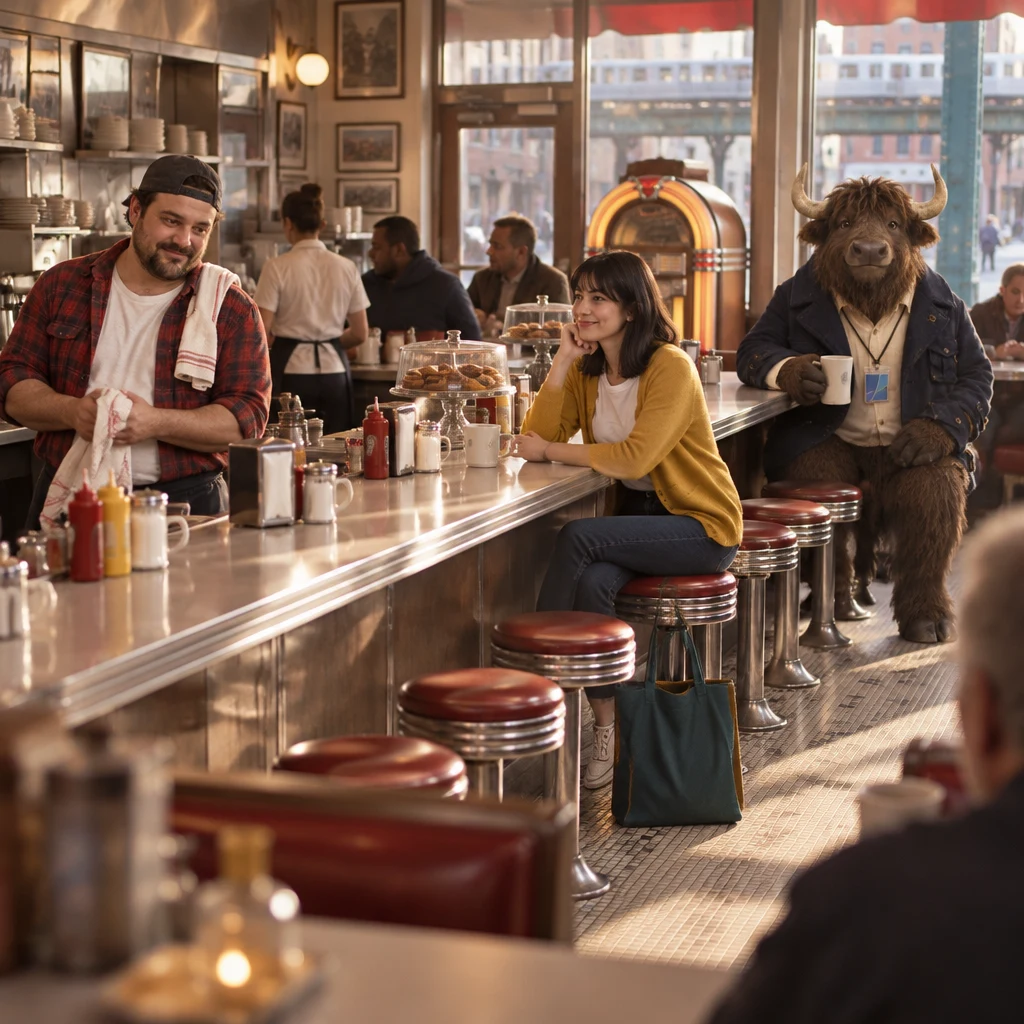
Late afternoon at the Blue Plate. Danny leans on the counter in his red flannel, still sure about B7.
Ana sits on a stool with her tote bag. Murray is on two stools at the end, with a coffee he has not finished.
The jukebox by the door stays quiet. One button still has a blank label.
Learn — keep a story going
Six short questions help you keep a story going.
You ask what came next, when, where, who, how it felt, and their side.

What happened next?
What was the following thing in the story?
When to use it: Ask this after someone starts a story.
Happened is the past tense in this question.
Say it: The -ed in happened sounds like a short d.
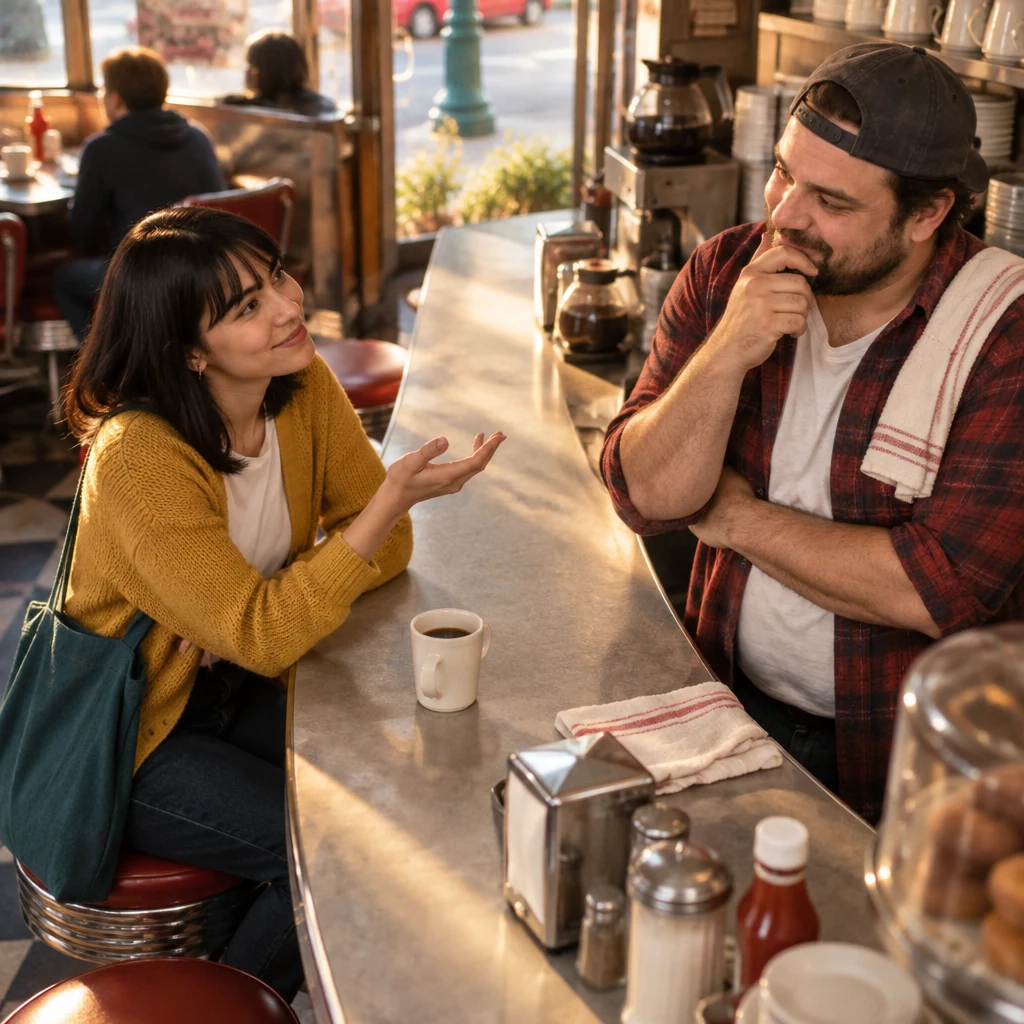
When was that?
At what time did this happen?
When to use it: Ask this to learn the time of a story.
Was keeps this time question in the past.
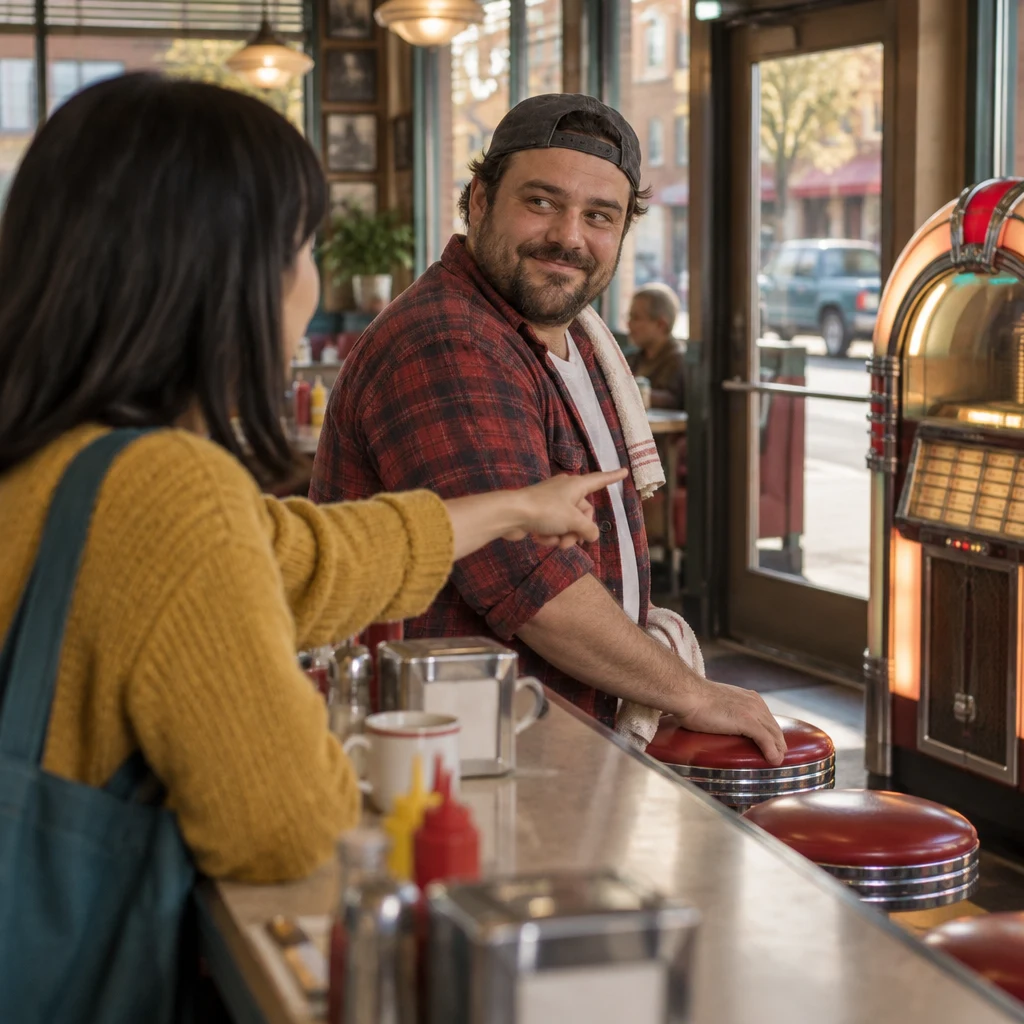
Where did that happen?
In what place did this happen?
When to use it: Ask this to learn the place in a story.
Did happen is the past tense in this question.
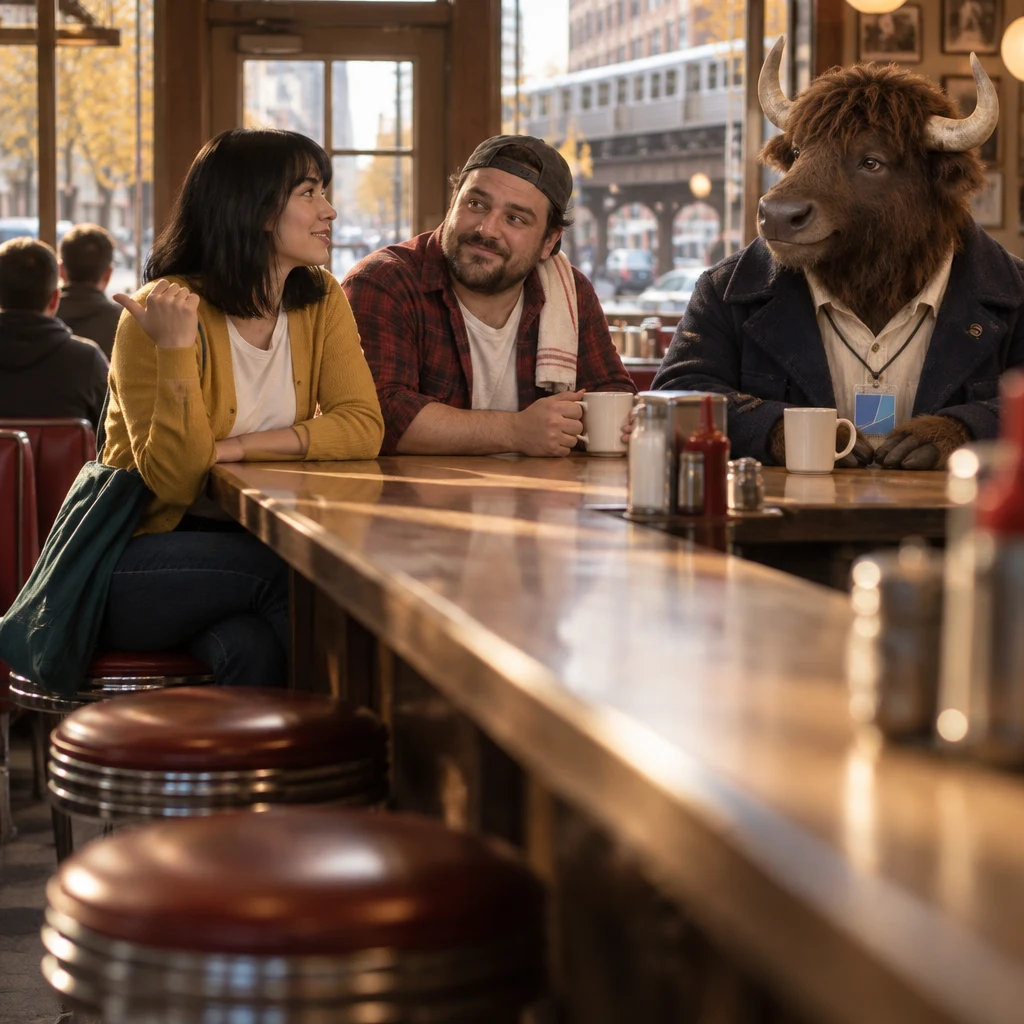
Who were you with?
Which people were there with you?
When to use it: Ask this to learn who else was there.
Were keeps this people question in the past.
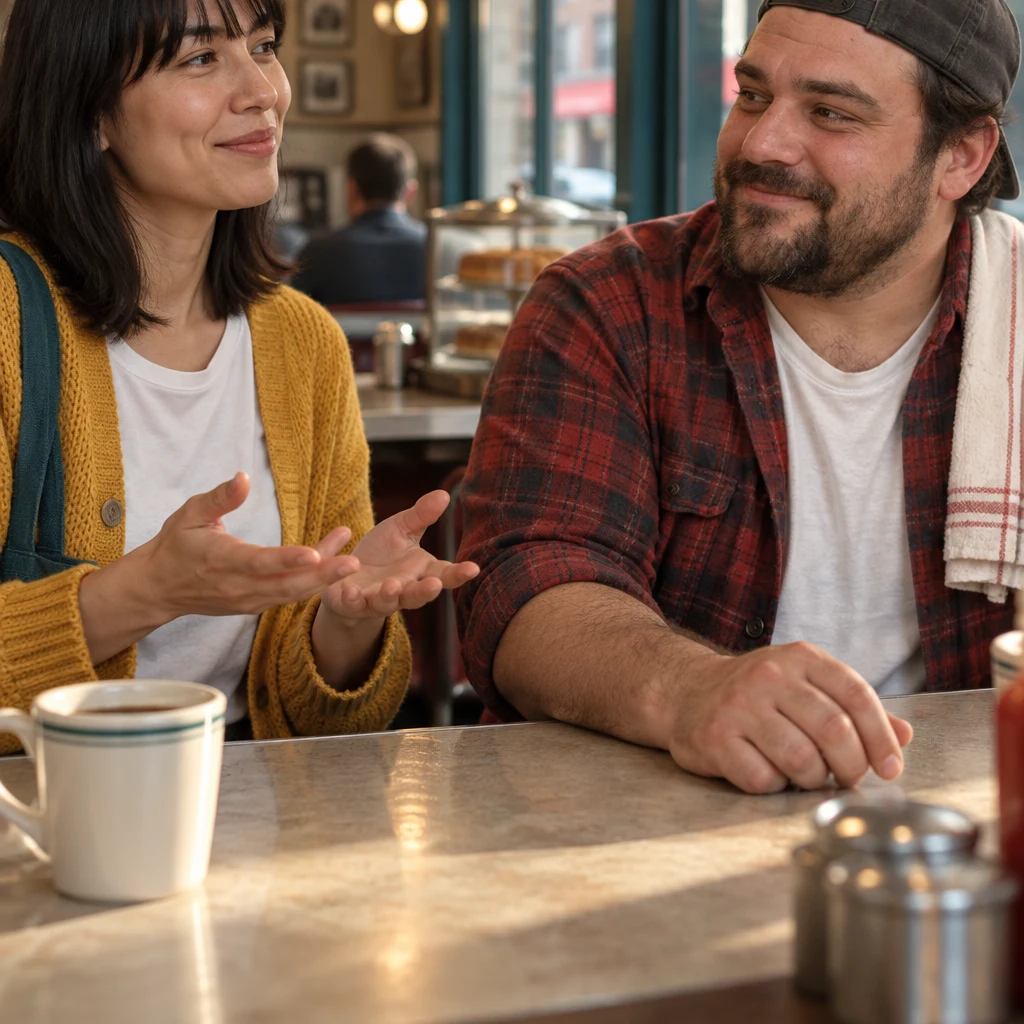
How did you feel about it?
What was your feeling then?
When to use it: Ask this to learn how the story felt.
Did feel is the past tense in this question.
Say it: Did and you can link in fast talk.

What about you?
Now tell your side of the same thing
When to use it: Ask this so the other person can talk too.
Say it as one piece after your own side.
Story — any day now
Watch Ana keep Danny's B7 story going. She asks what came next.
The highlighted words are the lines you just learned.
- Danny wipes his hands on the dish towel. He looks at the jukebox.
 DannySo last week, that slot clicked again.He says the empty slot made a sound last week.
- Ana looks at the empty slot.
 AnaWhat's that?you ask the name of a thing farther away
- DannyB7. When it plays, someone comes back.He names the empty slot and the old story about it.
- AnaWhat happened next?What was the following thing in the story?
- DannyNothing. It didn't play.He says there was no song after the click.
- AnaWhen was that?At what time did this happen?
- DannyLast Tuesday, after lunch.He names a day last week, after the midday meal.
- AnaWhere did that happen?In what place did this happen?
- DannyRight here, by the door.He says it was here, next to the diner door.
- AnaWho were you with?Which people were there with you?
- DannyDee and Murray. He didn't say a word.Dee and Murray were there. Murray stayed quiet then.
- AnaHow did you feel about it? Like a fight?She asks about his feeling, then takes feel as a fight.
- DannyNo. Just happy. You're doing fine. Any day now. It's gonna play.He says it is not a fight, and he still thinks the song will play soon.
- AnaWhat about you?Now tell your side of the same thing
- Murray looks at his peacoat and says nothing.
- His coffee is still full. The jukebox stays quiet.
Practice — one more question
Ten quick exercises wait here. You will listen, pick, match, fill a gap, and build a line.
They stay short, so the round moves fast.
0 of 10 done
What did you hear?
What did you hear?
Match the pairs
English
What happened next?Drop the Simple English hereWhen was that?Drop the Simple English hereWhere did that happen?Drop the Simple English hereWho were you with?Drop the Simple English hereSimple English
What do you say?
What do you say?
Danny already told you the place and the people. You only need the time of his story.
What does it mean?
What does it mean?
Where did that happen?
Fill the gap
Fill the gap
Which people were there with you?
Who were you ____?
Build the line
Build the line
What was your feeling then?
?
Tap the words in order.
What do you say?
What do you say?
You just told your diner story. Now you want Danny to tell his side too.
Swap the word
Swap the word
Danny's B7 story is already over. Ask him for the time in the past.
When ____ that?
True or false?
True or false?
You use this to ask the name of a person.
Which one doesn’t belong?
Which one doesn’t belong?
Say it — ask him more
Now you're Ana at the counter. Danny is telling the B7 story again.
When it's your turn, tap the microphone and speak the line.
- DannySo last week, B7 clicked again.He says the silent button made a sound last week.
- Ana (you)Ask for the following thing in his story.
Ask for the following thing in his story.
What happened next?
What was the following thing in the story?
0 of 6 said
Recap — what you can say now
| English | Simple English | Play |
|---|---|---|
| What happened next? | What was the following thing in the story? | |
| When was that? | At what time did this happen? | |
| Where did that happen? | In what place did this happen? | |
| Who were you with? | Which people were there with you? | |
| How did you feel about it? | What was your feeling then? | |
| What about you? | Now tell your side of the same thing |
Save your progress — it’s free
Keep your place in the course and see which lines you’ve learned.
Want the next lesson in your inbox?
Get the next lesson by email, one a day.
Join the newsletterDaily lesson emails are coming soon. Newsletter subscribers get them first.
Keep practicing with Yak Cards
Want to keep these questions handy? Grab the Yak Cards for this lesson and review them anywhere.
A quick round with the Yak Cards each day keeps your follow-up questions ready.
Open Yak Cards