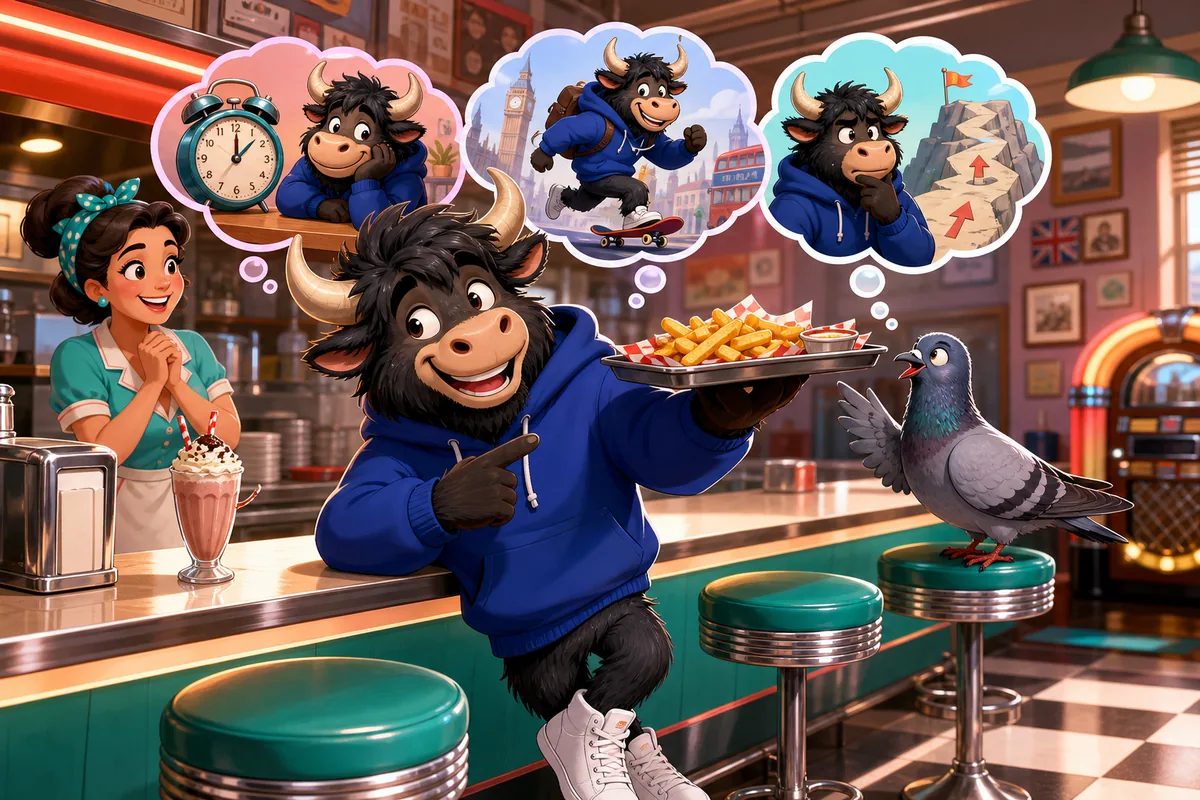
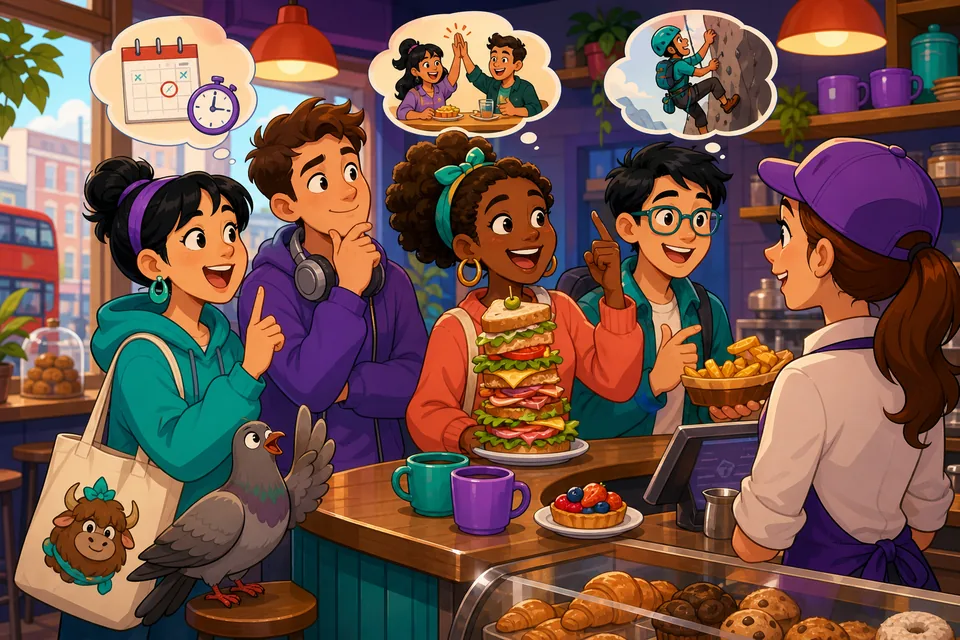
Welcome back! Today you get some small questions with big conversation power.
Level A2: In this lesson, you’ll practice follow-up questions like “What was it like?”, “Why is that?”, and “Can you be more specific?” These phrases help you ask for time, details, reasons, examples, and story order. Think of them as little conversation keys—Yak Yacker-approved.
After this lesson you'll be able to:
Ask about duration, frequency, and difficulty in a simple conversation.
Use follow-up questions to get more details in a personal story.
Check understanding politely when something is unclear.
At A2, keep a short conversation going with friendly questions.
Ready? Let's go!
When you tap play on phrases, we track your progress through this lesson.
1. Reading + Listening Practice
Hear core phrases, repeat aloud.
How long did it last?
Ask about the duration of an event or activity
Meaning: Ask about the duration of an event or activity.
When to use: Use it after someone mentions an event, meeting, trip, movie, class, or activity.
Tip: Use “did it last,” not “did it lasted.”
Anna: I went to a concert last night. David: How long did it last?
David asks about the time length of the concert.
You had a meeting this morning? How long did it last?
Ask how much time the meeting took.
What did you do after that?
Ask for the next action in a personal story
Meaning: Ask for the next action in a personal story.
When to use: Use it when someone is telling a story and you want to know the next step.
Anna: First, I called the hotel. David: What did you do after that?
David asks for the next action in Anna’s story.
You missed the bus? What did you do after that?
Ask what happened next.
Was it easy or hard?
Ask someone to clarify difficulty or ease
Meaning: Ask someone to say if something was easy or difficult.
When to use: Use it after someone talks about a task, test, decision, trip, or problem.
You fixed your bike yourself? Was it easy or hard?
Ask about the difficulty of fixing the bike.
Anna learned to make pasta. David asked, “Was it easy or hard?”
David asks if the activity was simple or difficult.
What was the best part?
Ask about the most positive part of an experience
Meaning: Ask about the most positive part of an experience.
When to use: Use it after someone describes a trip, event, class, meal, or day.
Your vacation sounds great. What was the best part?
Ask for the favorite part of the vacation.
Anna: The workshop was really fun. David: What was the best part?
David asks for the best moment.
Like what?
ask for a specific example or type
Meaning: Ask for a specific example or type.
When to use: Use it when someone says something general, and you want an example.
Tip: This is very short and spoken. In formal writing, use “For example?” instead.
Anna: We tried some new food. David: Like what?
David asks for examples of the food.
You said there were many problems. Like what?
Ask for specific examples of the problems.
Why is that?
ask for a reason or explanation
Meaning: Ask for a reason or explanation.
When to use: Use it after someone gives an opinion, feeling, or decision and you want to know the reason.
Anna: I don’t want to go back there. David: Why is that?
David asks for the reason.
You think this plan is better. Why is that?
Ask someone to explain their opinion.
What was it like?
ask someone to describe an experience or situation
Meaning: Ask someone to describe an experience or situation.
When to use: Use it when you want a general description of a place, event, job, class, or activity.
Tip: Do not answer only “yes” or “no.” This question asks for a description.
You visited the new museum? What was it like?
Ask for a description of the museum visit.
Anna: I had my first online interview. David: What was it like?
David asks Anna to describe the experience.
What happened before that?
ask for earlier details in a story or sequence
Meaning: Ask for earlier details in a story or sequence.
When to use: Use it when the story order is unclear and you want to know what happened earlier.
Anna: Then the manager called me. David: What happened before that?
David asks for the earlier part of the story.
You arrived late and then missed the start. What happened before that?
Ask what happened first.
Did I understand that right?
Check whether the listener understood the speaker correctly.
Meaning: Check whether you understood the speaker correctly.
When to use: Use it after you repeat or summarize something and want confirmation.
So the train was late, and you missed the meeting. Did I understand that right?
Check that your summary is correct.
You moved to a new apartment last week. Did I understand that right?
Ask if your understanding is correct.
How often does that happen?
Ask about the frequency of something the speaker mentioned.
Meaning: Ask about how frequently something happens.
When to use: Use it for routines, repeated problems, habits, or events that may happen again.
Your internet stops during meetings? How often does that happen?
Ask how many times the problem happens.
Anna: The bus is late sometimes. David: How often does that happen?
David asks about frequency.
Can you be more specific?
Ask someone to give clearer or more exact information.
Meaning: Ask someone to give clearer or more exact information.
When to use: Use it when an answer is too general or unclear.
Anna: The project has a problem. David: Can you be more specific?
David asks for clearer details.
You said the trip was strange. Can you be more specific?
Ask for more exact information.
2. Conversational Listening Practice
Hear phrases in a real mini-conversation.
Anna tells David about a weekend hiking trip.
Anna
I went hiking on Saturday with my cousin.
Anna says she went hiking with her cousin.
David
Nice! What was it like?
David asks Anna to describe the hike.
Anna
It was beautiful, but the last part was very steep.
Anna says it was beautiful but difficult at the end.
David
Was it easy or hard?
David asks about the difficulty.
Anna
Hard! We walked for almost four hours.
Anna says it was hard and long.
David
Wow. What was the best part?
David asks about the best moment.
Anna
The view from the top. We could see the whole city.
Anna says the view was the best part.
David
So the climb was hard, but the view was amazing. Did I understand that right?
David checks his understanding.
3. Guided Practice
Quizzes and matching to lock in meaning.
Your friend says, “The meeting started at 9 and ended later.” What can you ask to know the duration?
Someone says, “I tried some unusual food.” Which question asks for examples?
You are not sure you understood the story correctly. What should you ask?
Your friend says, “This happens every week sometimes.” You want to know the frequency. What do you ask?
Anna: I joined a cooking class yesterday. David: Really? What was it like? Was it fun?
Anna: I joined a cooking class yesterday. David: Really? ___ Was it fun?
David: The website crashed again during my meeting. Anna: Oh no. How often does that happen?
David: The website crashed again during my meeting. Anna: Oh no. ___
Anna: The trip was difficult because something happened at the airport. David: Can you be more specific? What happened at the airport?
Anna: The trip was difficult because something happened at the airport. David: ___ What happened at the airport?
Match the core phrases
Match the extra phrases
4. Speaking Practice
Say phrases yourself (mic/recording).
Recording stays on your device only. Check speech uses your browser's speech tools when available.
Say this phrase out loud:
How long did it last?
Ask about the duration of an event or activity.
Say this phrase out loud:
What did you do after that?
Ask for the next action in a personal story.
Say this phrase out loud:
Was it easy or hard?
Ask someone to clarify difficulty or ease.
Say this phrase out loud:
What was the best part?
Ask about the most positive part of an experience.
Say this phrase out loud:
Like what?
Ask for a specific example or type.
Say this phrase out loud:
Why is that?
Ask for a reason or explanation.
Say this phrase out loud:
What was it like?
Ask someone to describe an experience or situation.
Say this phrase out loud:
What happened before that?
Ask for earlier details in a story or sequence.
Say this phrase out loud:
Did I understand that right?
Check whether you understood the speaker correctly.
Say this phrase out loud:
How often does that happen?
Ask about the frequency of something.
Say this phrase out loud:
Can you be more specific?
Ask someone to give clearer or more exact information.