
New here? This is lesson 117 of a free 240-lesson English course.
Last weekend in English
Monday morning at the Blue Plate. Dee asks Ana about Saturday and Sunday. Americans still say this weekend on Monday.
Ana stayed home. She did not go out. She rested.
Murray says he walked to Milwaukee. He did not. Dee does not believe him.
By the end, you'll ask what someone did this weekend. You'll say where you went, who you were with, or that you stayed home.
By the end of this lesson
Ask what someone did last weekend, and say what you did.
- What did you do this weekend?Ask about their Saturday and Sunday that just passed.
- I went to ___ on Saturday.You name a place you visited last Saturday.
- I stayed home and relaxed.You did not go out. You rested.
- I didn't do much.Your weekend was quiet and simple.
- I spent time with ___.You were with this person in your free time.
- That sounds fun.You are happy for them. Their weekend was nice.
Scene — monday at the counter
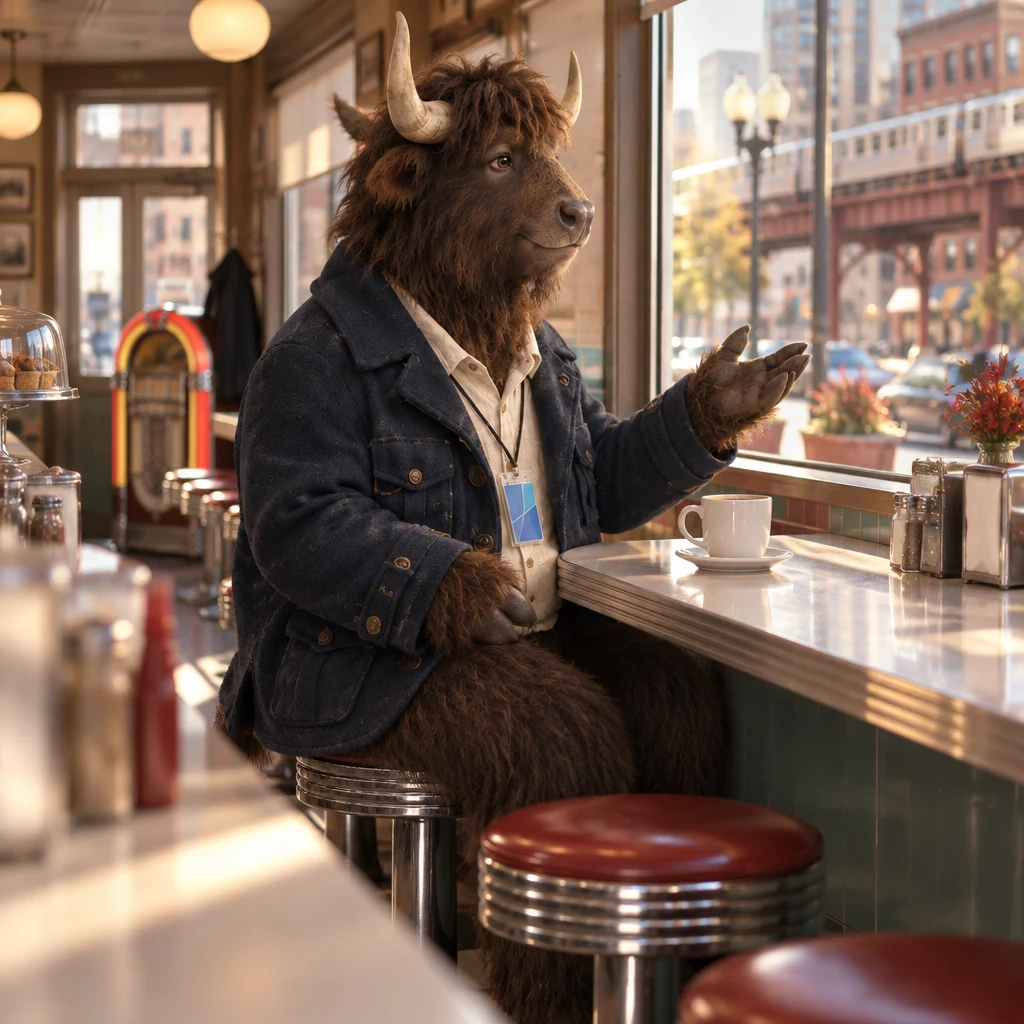
It is Monday morning at the Blue Plate. Dee is behind the counter with the coffee pot. Ana sits on a stool with a cup she did not finish.
Murray is on two stools at the end. His coffee is still full. The jukebox by the door is quiet. Button B7 stays blank.

Learn — last saturday and sunday
Six short lines help you talk about last weekend. You ask, you answer, and you react.
You'll say where you went, who you were with, or that you stayed home.

What did you do this weekend?
Ask about their Saturday and Sunday that just passed.
When to use it: Ask this on Monday about Saturday and Sunday.
This weekend can mean last Saturday and Sunday, even on Monday.
Say it: Stress falls on week in weekend.

I went to ___ on Saturday.
You name a place you visited last Saturday.
When to use it: Name a place you visited last Saturday.
Went is the past tense of go. Learn it as one piece.

I stayed home and relaxed.
You did not go out. You rested.
When to use it: Say this when you did not go out.
Stayed and relaxed are the past tense.
Say it: The -ed on stayed sounds like d.
I didn't do much.
Your weekend was quiet and simple.
When to use it: Say this when your weekend was quiet.
Didn't is did not as one piece.
Say it: The n in didn't is quick and light.

I spent time with ___.
You were with this person in your free time.
When to use it: Name who you were with in your free time.
Spent is the past tense of spend. Learn it as one piece.

That sounds fun.
You are happy for them. Their weekend was nice.
When to use it: Say this when their weekend sounds nice.
You say this now, after you hear their weekend.
Story — he walked to milwaukee
Watch Dee ask about the weekend. Ana stayed home. Murray has a long story.
The highlighted words are the lines you just learned.
- Monday morning. Dee pours coffee and looks at Ana.
 DeeHow was your weekend?Ask about Saturday and Sunday.
 AnaThe weekend is not here yet. It is Monday.She thinks this weekend is still coming.
- DeeLast Saturday and Sunday, hon. What did you do this weekend?She explains, then asks about the days that just passed.
- AnaI stayed home and relaxed.You did not go out. You rested.
- DeeThat sounds fun.You are happy for them. Their weekend was nice.
- AnaI didn't do much. I spent time with my couch.Her weekend was quiet. She takes the line too literally.
- DeeJust say, "I stayed home and relaxed," hon.She wants a short answer, not extra details.
- Dee looks down the counter at Murray.
- DeeWhat about you?Now tell your side of the same thing.
 MurrayI went to Milwaukee on Saturday. I walked.He says he went to a place last Saturday.
- AnaThat sounds fun.You are happy for them. Their weekend was nice.
- DeeYou did not, hon. That's a long walk.She does not believe him. Milwaukee is far.
- MurrayI didn't do much.Your weekend was quiet and simple.
Practice — quiet or fun
Ten quick exercises wait here. You'll listen, pick, match, fill a gap, and build a line.
They stay short, so the round moves fast.
0 of 10 done
What did you hear?
What did you hear?
Match the pairs
English
What did you do this weekend?Drop the Simple English hereI stayed home and relaxed.Drop the Simple English hereI didn't do much.Drop the Simple English hereThat sounds fun.Drop the Simple English hereSimple English
What do you say?
What do you say?
It is Monday at the diner. You did not go out. You rested.
What does it mean?
What does it mean?
I didn't do much.
Fill the gap
Fill the gap
You did not go out. You rested.
I stayed home and ____.
Build the line
Build the line
You are happy for them. Their weekend was nice.
.
Tap the words in order.
Pick the reply
Dee says:
Pick the reply
What did you do this weekend?
Ask about their Saturday and Sunday that just passed.
And you reply with:
What do you say?
What do you say?
You visited Milwaukee last Saturday. Tell Dee where you went.
True or false?
True or false?
This line asks about next Saturday and Sunday.
What do you say?
What do you say?
You already told Dee about your weekend. Ask for her turn now.
Say it — say your weekend
Now you're Ana on a Monday at the diner. When it's your turn, tap the microphone and speak the line.
Tap play first if you want to hear the line. Your recording stays on your device.
- DeeWhat did you do this weekend?Ask about their Saturday and Sunday that just passed.
- Ana (you)You did not go out. You rested.
You did not go out. You rested.
I stayed home and relaxed.
You did not go out. You rested.
0 of 3 said
Recap — what you can say now
| English | Simple English | Play |
|---|---|---|
| What did you do this weekend? | Ask about their Saturday and Sunday that just passed. | |
| I went to ___ on Saturday. | You name a place you visited last Saturday. | |
| I stayed home and relaxed. | You did not go out. You rested. | |
| I didn't do much. | Your weekend was quiet and simple. | |
| I spent time with ___. | You were with this person in your free time. | |
| That sounds fun. | You are happy for them. Their weekend was nice. |
Save your progress — it’s free
Keep your place in the course and see which lines you’ve learned.
Want the next lesson in your inbox?
Get the next lesson by email, one a day.
Join the newsletterDaily lesson emails are coming soon. Newsletter subscribers get them first.
Keep practicing with Yak Cards
Want to keep these weekend lines handy? Grab the Yak Cards for this lesson and review them anywhere.
A quick round with the Yak Cards each day keeps your weekend talk ready for Monday.
Open Yak Cards