
New here? This is lesson 175 of a free 240-lesson English course.
Old warehouse streets in English
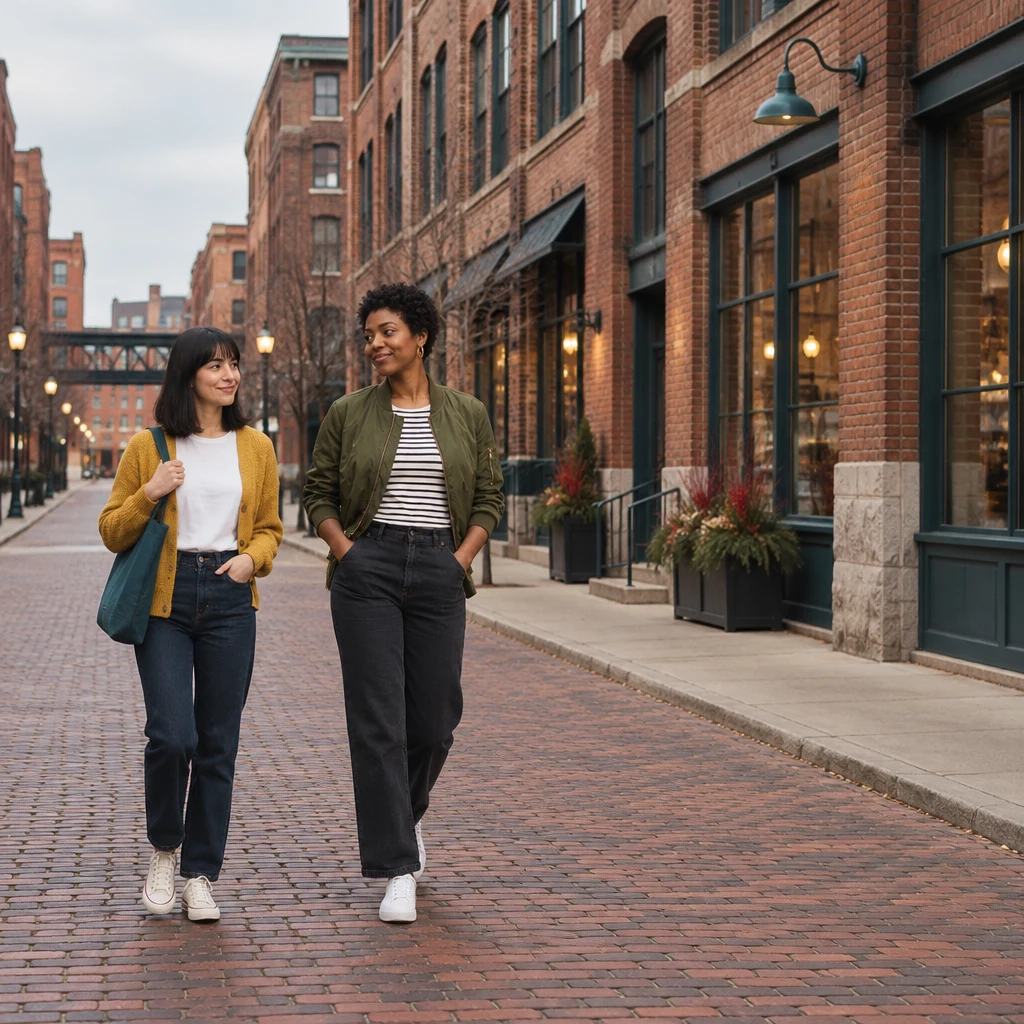
Tasha takes Ana through the Third Ward in Milwaukee. The streets are old brick, and the river is close.
These buildings used to store goods. Now many of them are shops.
By the end, you'll talk about an old neighborhood, what the buildings used to be, and how they changed.
You'll also say how a place feels different from Chicago, and you'll suggest a walk toward the river.
By the end of this lesson
Describe an old neighborhood, what the buildings used to be, and how they changed.
- This neighborhood is over a hundred years old.This area began more than one hundred years ago.
- These used to be warehouses.In the past, these buildings stored goods.
- They turned the old buildings into shops.People changed the old buildings into stores.
- You can still see the old brick.The old brick is still easy to see.
- It's different from Chicago.This city does not feel like Chicago.
- Let's walk toward the river.We should walk in the direction of the water.
Scene — old brick streets
Ana and Tasha walk a quiet brick street in Milwaukee's Third Ward. Old warehouses stand in a row, now with shop windows. The river is a short walk away.
Tasha grew up here, so she talks about the past. Ana looks up at the brick and tries to picture the old loading doors.
Learn — warehouses and shops
Six lines help you talk about an old street and what it used to be.
You'll also say how a place feels different, and suggest a walk to the river.
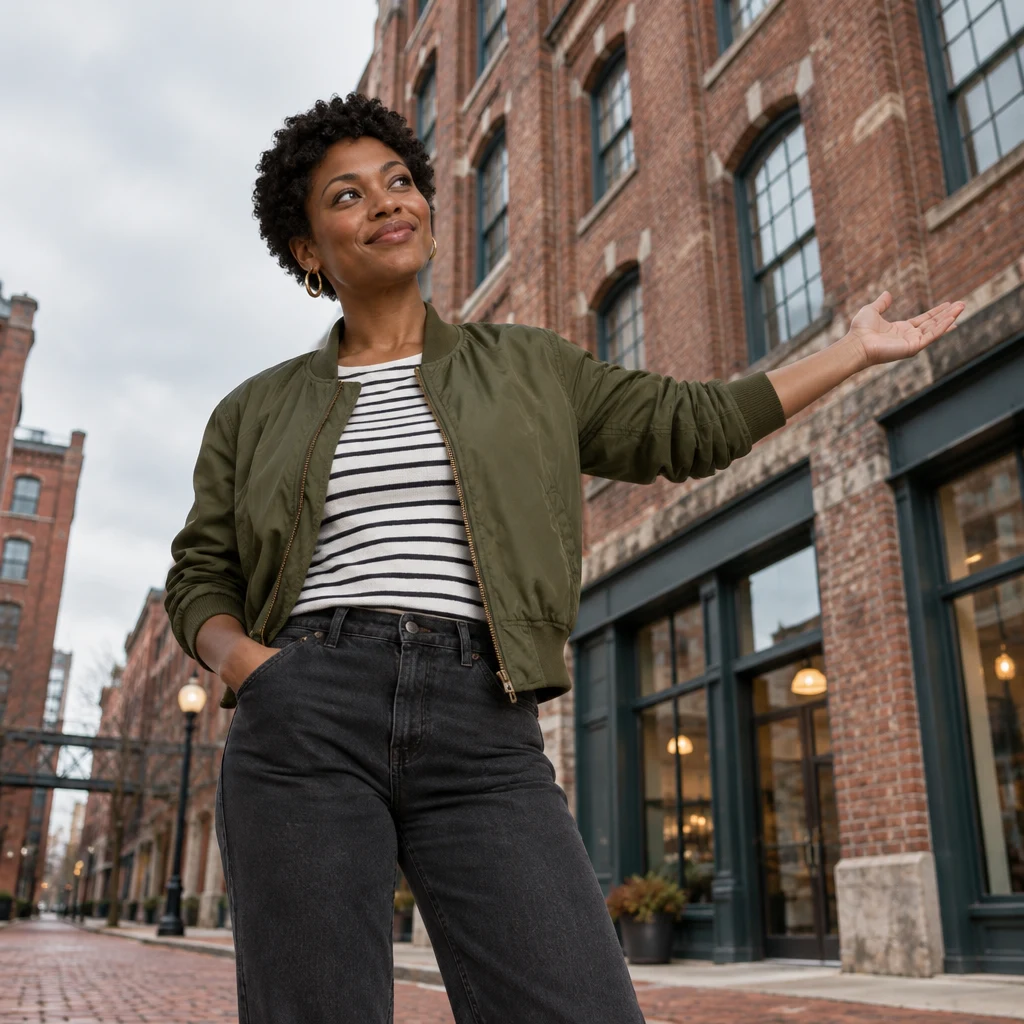
This neighborhood is over a hundred years old.
This area began more than one hundred years ago.
When to use it: Say this when an area began a long time ago.
Over a hundred means more than one hundred.
Say it: The stress in hundred is on the first part.
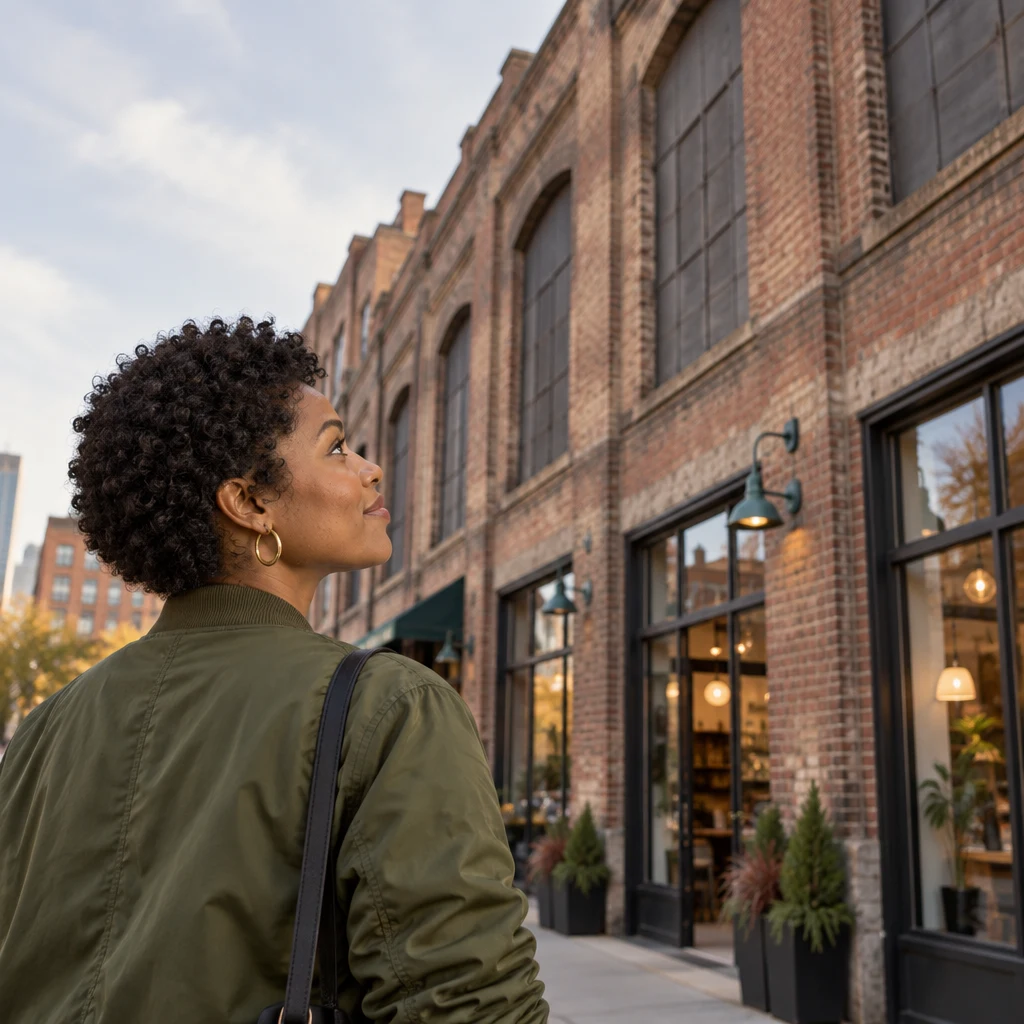
These used to be warehouses.
In the past, these buildings stored goods.
When to use it: Say this when buildings had a different use in the past.
Used to names a past fact that is not true now.
Say it: In used to, to often sounds like tuh.
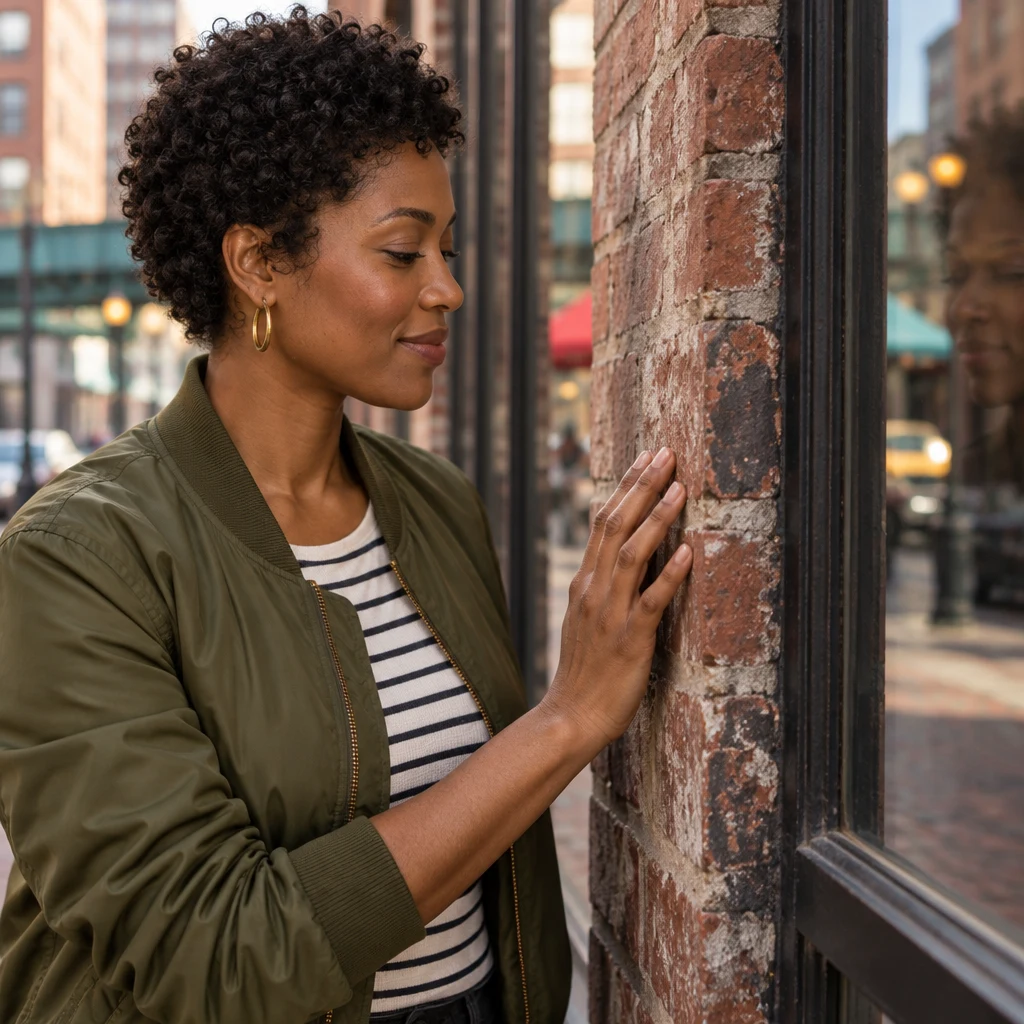
They turned the old buildings into shops.
People changed the old buildings into stores.
When to use it: Say this when people made old buildings into stores.
Turned is the past tense. It tells what people did then.
Say it: The -ed in turned sounds like d.
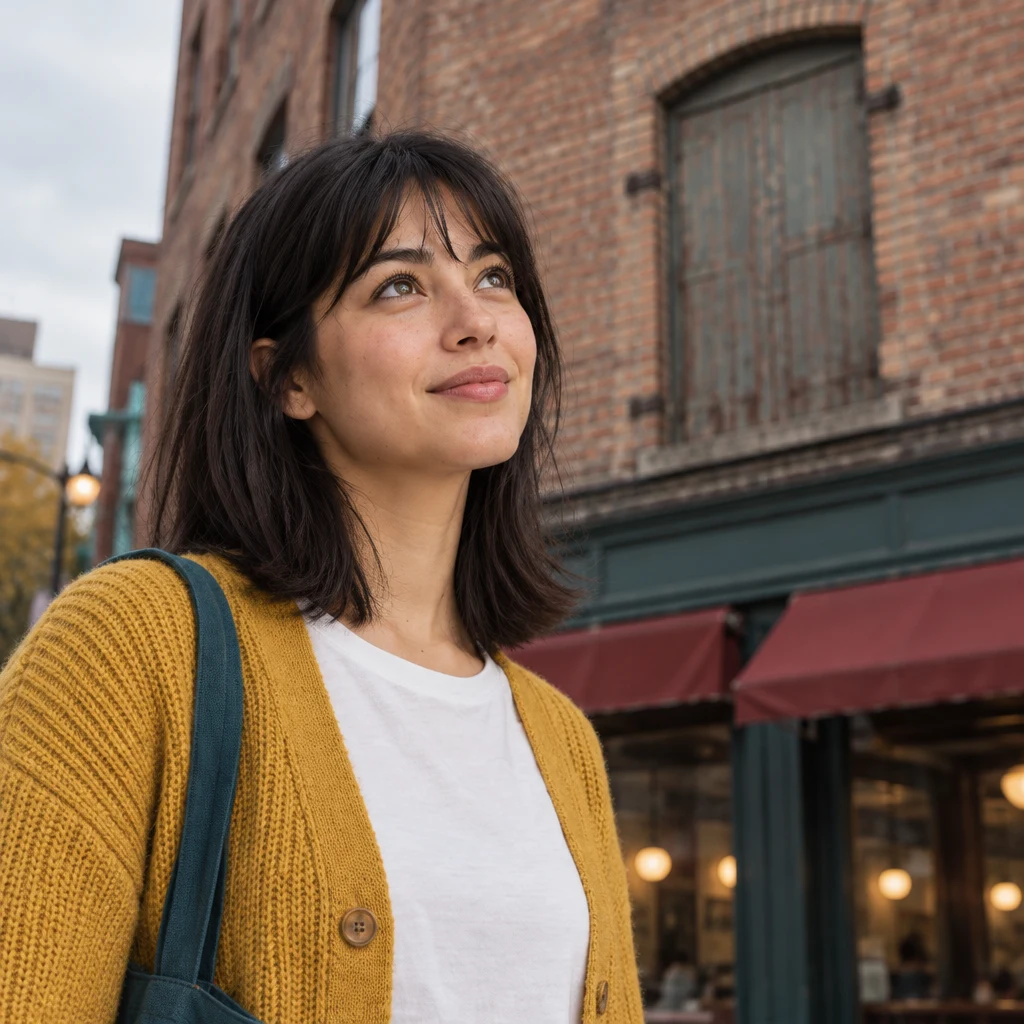
You can still see the old brick.
The old brick is still easy to see.
When to use it: Say this when the old brick is easy to see now.
Still means this is true even now, after a long time.
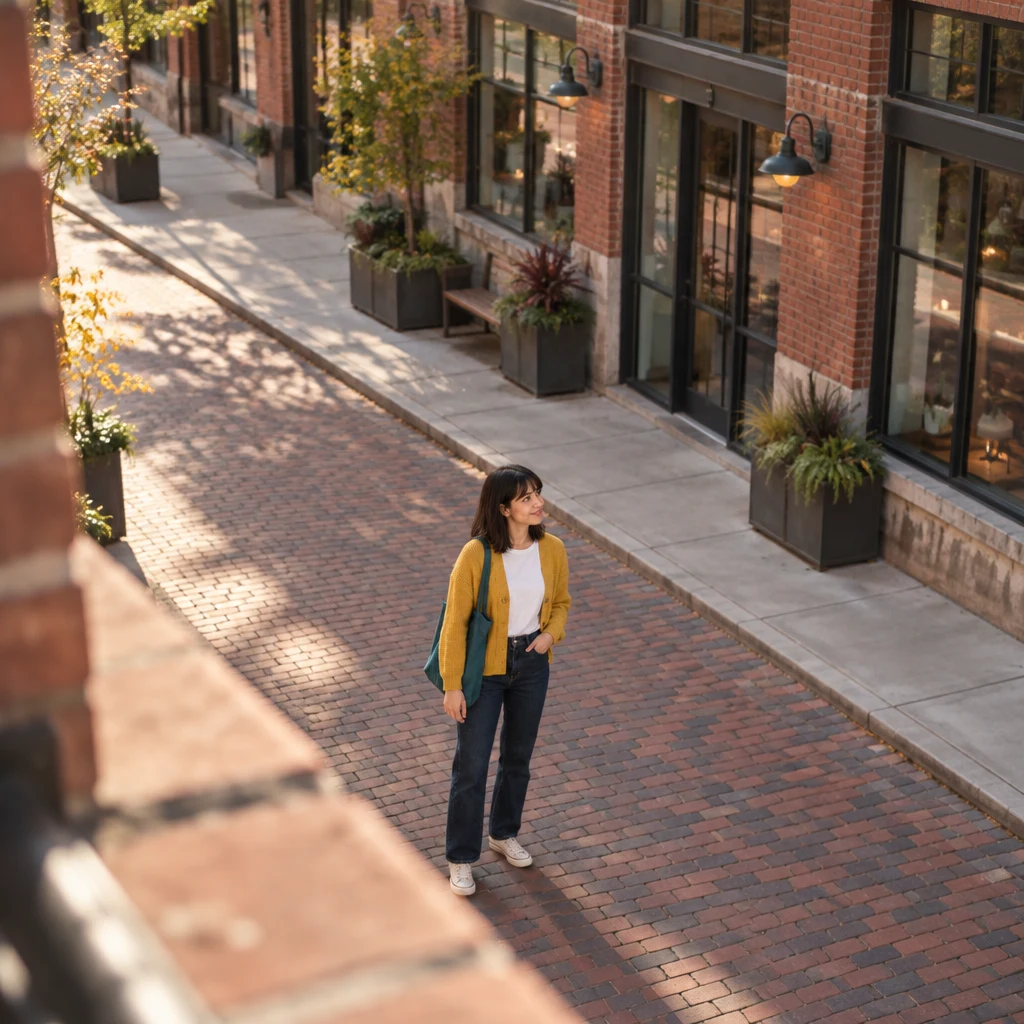
It's different from Chicago.
This city does not feel like Chicago.
When to use it: Say this when a place does not feel like Chicago.
It's is one piece. After different, use from.
Say it: The stress in Chicago is on the second part.
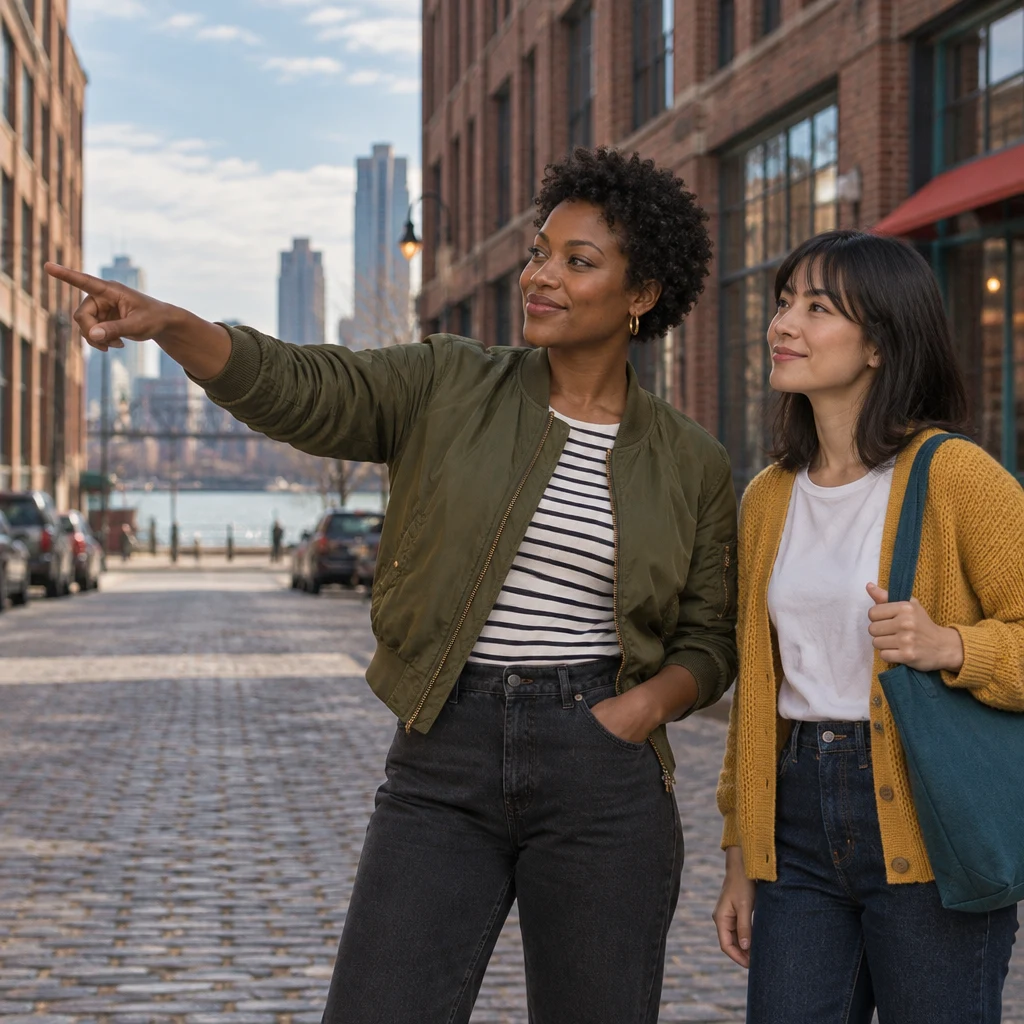
Let's walk toward the river.
We should walk in the direction of the water.
When to use it: Say this when you want to walk toward the water.
Let's is one piece. It means we should do this together.
Say it: Toward has the stress on the second part.
Story — she pictures the past
Watch Tasha walk Ana through the old warehouse streets. Ana tries to picture the past.
The highlighted words are the lines you just learned.
- A cold sky sits over the Third Ward. Tasha slows down on the brick.
 TashaSo, this neighborhood is over a hundred years old.This area began more than one hundred years ago.
 AnaA hundred years. I keep trying to picture that.She wants to see the past in her mind.
- TashaThese used to be warehouses.In the past, these buildings stored goods.
- AnaSo they stored goods here?She checks that the buildings held things in the past.
- TashaYeah. Boats came up the river with crates.She says boats brought boxes here on the water.
- She taps a thick wall with her fingers.
- TashaThey turned the old buildings into shops.People changed the old buildings into stores.
- AnaYou can still see the old brick.The old brick is still easy to see.
- TashaYou can. I'd rather keep the old windows.She would prefer not to change the windows.
- AnaIt's different from Chicago.This city does not feel like Chicago.
- TashaIt is. The streets are quieter, I mean.She agrees. These streets feel less busy.
- They reach a corner. A wide sky shows between the brick buildings.
- AnaWhere's the water? Is it near here?She asks if the river is close.
- TashaIt's on the left. Let's walk toward the river.The river is on the left. She wants to walk toward the water.
- AnaYeah. I want to see it.She agrees and wants to go to the water.
Practice — brick and river
Eleven quick exercises wait here. You'll listen, pick, match, fill a gap, and build a line.
They stay short, so the round moves fast.
0 of 11 done
What did you hear?
What did you hear?
What does it mean?
What does it mean?
These used to be warehouses.
What do you say?
What do you say?
The old buildings are stores now. Say what people did.
Fill the gap
Fill the gap
The old brick is still easy to see.
You can still see the old ____.
Build the line
Build the line
This city does not feel like Chicago.
.
Tap the words in order.
Pick the reply
Tasha says:
Pick the reply
The river is a few blocks that way.
She says the water is close.
And you reply with:
Swap the word
Swap the word
You are saying how old this neighborhood is.
This neighborhood is ____ a hundred years old.
Match the pairs
English
This neighborhood is over a hundred years old.Drop the Simple English hereThese used to be warehouses.Drop the Simple English hereThey turned the old buildings into shops.Drop the Simple English hereYou can still see the old brick.Drop the Simple English hereSimple English
True or false?
True or false?
You say this to ask if a place is far away.
What do you say?
What do you say?
Someone asks where the river is. You can see it on the left.
Fill the gap
Fill the gap
I would prefer not to change the windows.
I'd rather keep the old ____.
Say it — say it on the walk
Now you're Ana on this walk with Tasha. When it's your turn, tap the microphone and speak the line.
Tap play first if you want to hear the line. Your recording stays on your device.
- TashaLook at these streets.She wants Ana to look at the streets.
- Ana (you)Tell her this area began a very long time ago.
Tell her this area began a very long time ago.
This neighborhood is over a hundred years old.
This area began more than one hundred years ago.
0 of 6 said
Recap — what you can say now
| English | Simple English | Play |
|---|---|---|
| This neighborhood is over a hundred years old. | This area began more than one hundred years ago. | |
| These used to be warehouses. | In the past, these buildings stored goods. | |
| They turned the old buildings into shops. | People changed the old buildings into stores. | |
| You can still see the old brick. | The old brick is still easy to see. | |
| It's different from Chicago. | This city does not feel like Chicago. | |
| Let's walk toward the river. | We should walk in the direction of the water. |
Save your progress — it’s free
Keep your place in the course and see which lines you’ve learned.
Want the next lesson in your inbox?
Get the next lesson by email, one a day.
Join the newsletterDaily lesson emails are coming soon. Newsletter subscribers get them first.
Keep practicing with Yak Cards
Want to keep these lines handy? Grab the Yak Cards for this lesson and review them anywhere.
A quick round with the Yak Cards each day keeps these old-street lines ready.
Open Yak Cards