
New here? This is lesson 66 of a free 240-lesson English course.
My work schedule in English
Ana stops at the Blue Plate before work. Dee is already pouring a to-go cup and asks about her hours.
Ana starts at nine and finishes at six, except Wednesday class at the library.
You will say when you start, when you finish, and when you have a day off.
You will also ask to leave early, say you are working late, or say you cannot come in.
By the end of this lesson
Say when you start, finish, and take time off.
- I start work at ___.This is the time my workday begins.
- I finish work at ___.This is the time my workday ends.
- I have a day off on Wednesday.I do not work on Wednesday.
- Can I leave early today?May I go home before the usual time today?
- I'm working late today.I will stay at work past my usual finish time.
- I can't come to work today.I have to miss work today.
Scene — the to-go cup
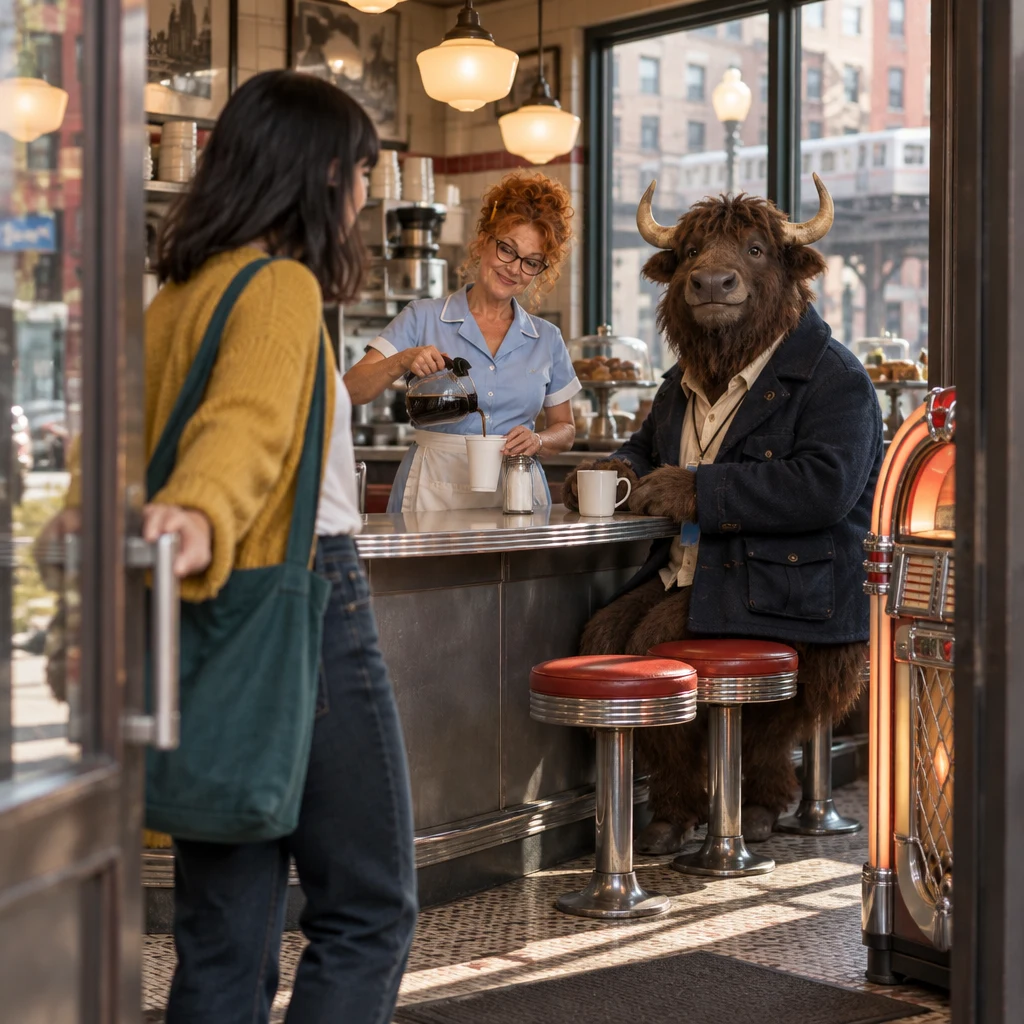
Same morning on Larch Street. Ana has her teal tote and pushes the diner door. Dee is already pouring a to-go cup at the counter.
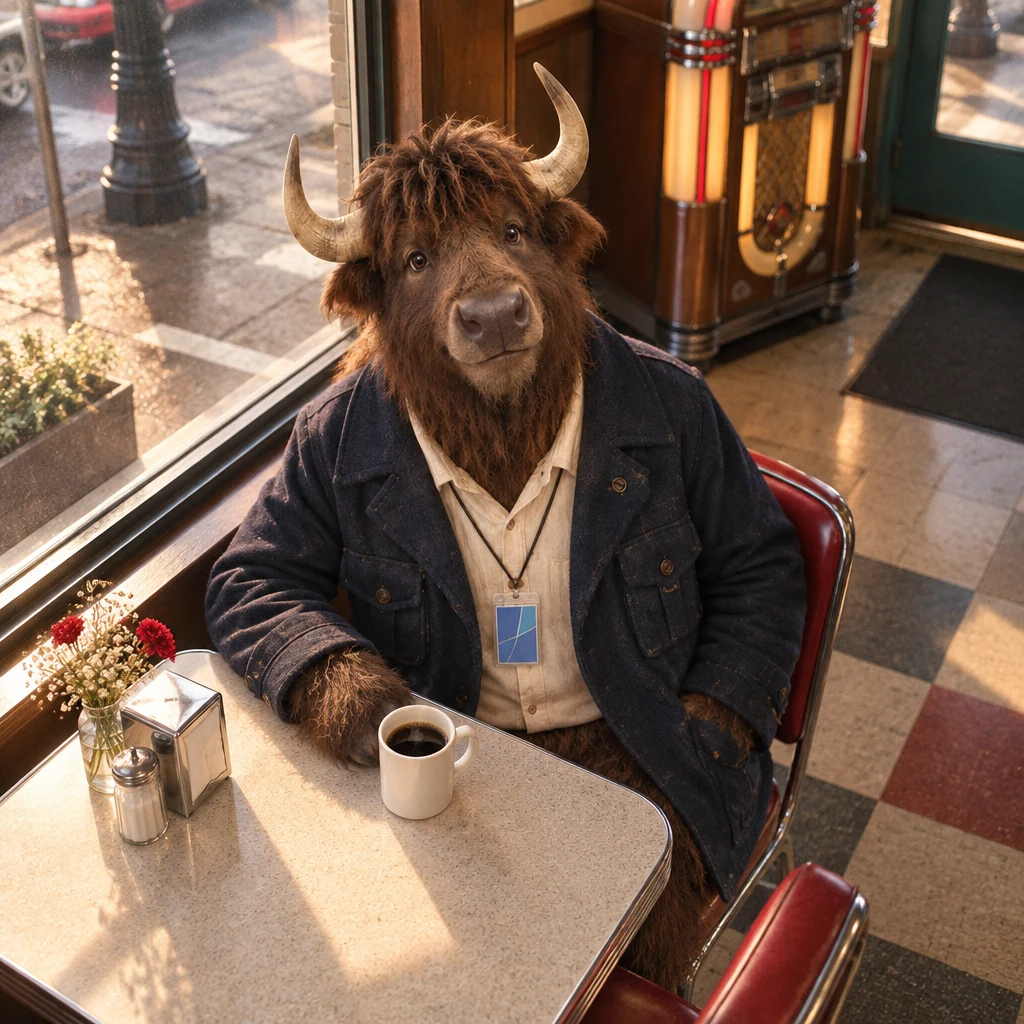
Murray sits on two stools with a black coffee he has not finished. The jukebox by the door stays quiet.
Learn — hours and time off
Six short lines cover your hours, a day off, leaving early, staying late, and missing a day.
The first two have a blank for the time.

I start work at ___.
This is the time my workday begins.
When to use it: Say this to tell people when your workday begins.
Put the clock time in the blank after at.
Say it: At can sound like 'ət' before a time.

I finish work at ___.
This is the time my workday ends.
When to use it: Say this to tell people when your workday ends.
The blank after at is for the end time.
I have a day off on Wednesday.
I do not work on Wednesday.
When to use it: Say this when you do not work that day.
Day off means you do not work that day.

Can I leave early today?
May I go home before the usual time today?
When to use it: Ask this when you want to go home before the usual time.
Can I is a polite way to ask.
Say it: Can and I can link.

I'm working late today.
I will stay at work past my usual finish time.
When to use it: Say this when you will stay past your usual finish time.
The -ing form can talk about a plan for today.
Say it: The stress is on working.

I can't come to work today.
I have to miss work today.
When to use it: Say this when you have to miss work today.
Can't is one piece and means you are not able to.
Say it: Can't has a clear n sound.
Story — nine to six
Watch Ana tell Dee her hours at the counter. Dee is already pouring the to-go cup.
The highlighted words are the lines you just learned.
- The morning lamps are still on. Dee already has a paper cup in her hand.
 DeeGood morning, hon. For here or to go?a warm hello before noon, then she asks if Ana will take the coffee with her
 AnaTo go, please.I will take it with me.
- DeeWhen do you start, hon?She asks what time Ana's workday begins.
- AnaI start work at nine.This is the time my workday begins.
- DeeAnd you finish when? Every day?She asks when the workday ends, and if that is every day.
- AnaI finish work at six. I have a day off on Wednesday.Her workday ends at six, but she does not work on Wednesday.
- Dee nods and keeps pouring.
 MurrayWell, is the day broken?He thinks day off means the day does not work.
- AnaThe lights? I don't understand.She takes his words at face value, then says the words are not clear.
- DeeYou don't work, hon. Class night.She explains that Ana does not work that day.
- MurraySo what do you say if you stay late?He asks what she says when she stays past her usual finish time.
- AnaI'm working late today.I will stay at work past my usual finish time.
- Dee nods, then asks about leaving early today instead.
- DeeAnd what would you ask if you needed to leave early today instead?She asks what Ana would say to go home early today instead.
- AnaCan I leave early today?May I go home before the usual time today?
- DeeAsk Marcus, hon. Not me.Dee wants Ana to ask her boss, not the diner.
- MurrayYou coming in if you're sick?He asks what she does when she cannot go to work.
- AnaI can't come to work today.I have to miss work today.
Practice — start and finish
Eleven quick exercises wait here. You will listen, pick, match, fill a gap, and build a line.
They stay short, so the round moves fast.
0 of 11 done
What did you hear?
What did you hear?
What does it mean?
What does it mean?
I have a day off on Wednesday.
What do you say?
What do you say?
Dee asks when your workday begins. It is nine.
Fill the gap
Fill the gap
This is the time my workday ends.
I ____ work at ___.
Pick the reply
Dee says:
Pick the reply
Marcus keeping you past six tonight?
She asks if you will stay after your usual finish time.
And you reply with:
Build the line
Build the line
May I go home before the usual time today?
?
Tap the words in order.
Match the pairs
English
I start work at ___.Drop the Simple English hereI finish work at ___.Drop the Simple English hereCan I leave early today?Drop the Simple English hereI can't come to work today.Drop the Simple English hereSimple English
Swap the word
Swap the word
Tell Dee when your workday begins, not when it ends.
I ____ work at ___.
What do you say?
What do you say?
You are sick. Tell your boss you have to miss work.
True or false?
True or false?
This line means you know every word they said.
Fill the gap
Fill the gap
I will take the food with me
To ____, please.
Say it — say your hours
Now you are Ana at the diner counter before work. When it's your turn, tap the microphone and speak the line.
Tap play first if you want to hear the line. Your recording stays on your device.
- DeeGood morning, hon.hello before noon
- Ana (you)Tell her when your workday begins, and say nine.
Tell her when your workday begins, and say nine.
I start work at ___.
This is the time my workday begins.
0 of 6 said
Recap — what you can say now
| English | Simple English | Play |
|---|---|---|
| I start work at ___. | This is the time my workday begins. | |
| I finish work at ___. | This is the time my workday ends. | |
| I have a day off on Wednesday. | I do not work on Wednesday. | |
| Can I leave early today? | May I go home before the usual time today? | |
| I'm working late today. | I will stay at work past my usual finish time. | |
| I can't come to work today. | I have to miss work today. |
Save your progress — it’s free
Keep your place in the course and see which lines you’ve learned.
Want the next lesson in your inbox?
Get the next lesson by email, one a day.
Join the newsletterDaily lesson emails are coming soon. Newsletter subscribers get them first.
Keep practicing with Yak Cards
Want to keep these hours handy? Grab the Yak Cards for this lesson and review them anywhere.
A quick round with the Yak Cards each day keeps your hours ready for work.
Open Yak Cards