
New here? This is lesson 128 of a free 240-lesson English course.
Emergency help in English
A pan pops in Dee's kitchen at the Blue Plate. Steam shoots up, and Ana thinks it is a real emergency.
Danny tells everyone to stay calm. Dee keeps hands off the hot pan. It is only steam.
Later they see a small accident on the street.
By the end, you will tell people what to do and how to stay safe. You will name an accident and ask for an ambulance.
By the end of this lesson
Tell people what to do in a scare, and how to stay safe.
- Stay calm.Try not to panic.
- Get out now.Leave this place immediately.
- Don't touch it.Keep your hands off that thing.
- Please don't move.Stay still so you stay safer.
- There was an accident.A crash or injury just happened.
- I need an ambulance.I need medical help right now.
Scene — a pan pops
Same afternoon at the Blue Plate. A pan pops in Dee's kitchen and steam fills the pass.
Ana jumps. Danny is by the pie case with a dish towel. Dee already has the coffee pot.
Murray sits on two stools. His coffee is still unfinished. The jukebox by the door stays quiet.

Learn — stay calm and get out
Six short lines tell people what to do and how to stay safe.
You will calm someone, get them out, and keep hands off a hot thing.
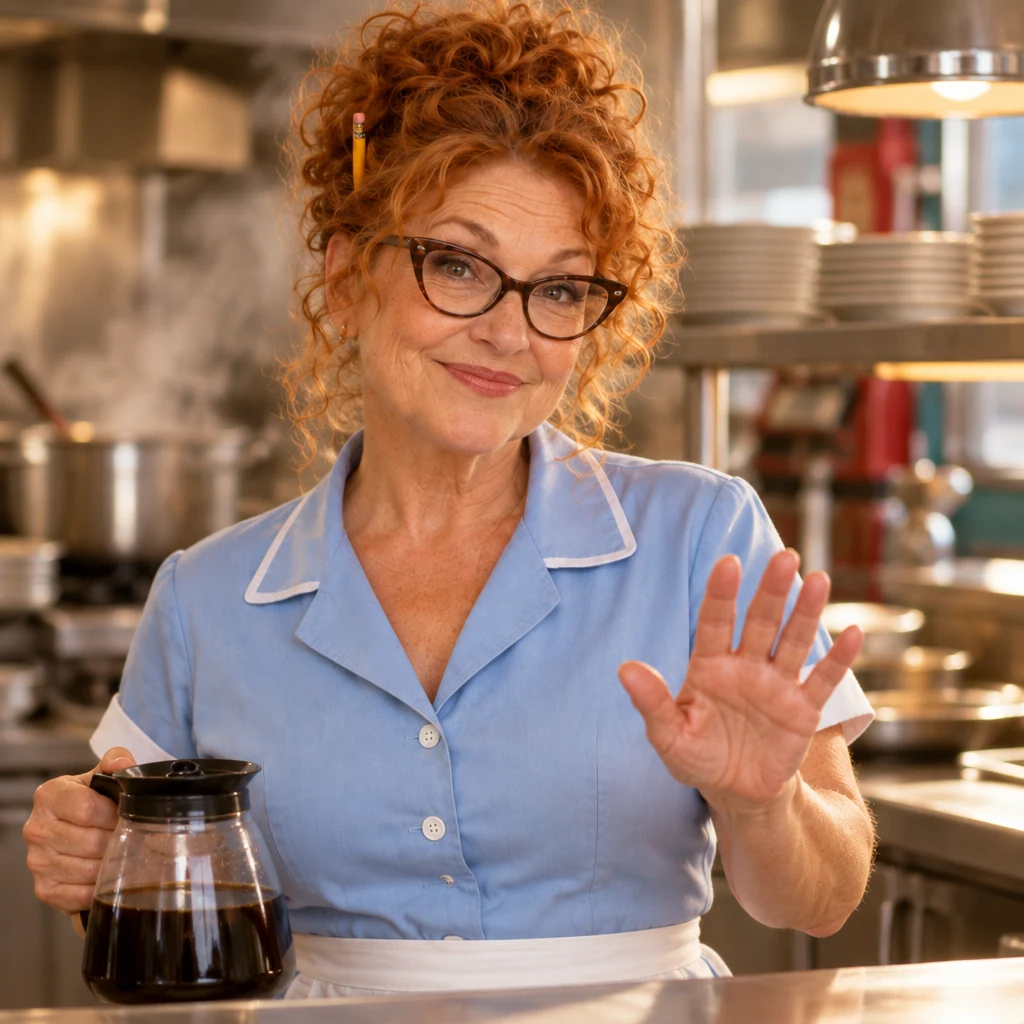
Stay calm.
Try not to panic.
When to use it: Say this when someone starts to panic.
Stay and calm work as one short command.
Say it: The stress is on calm.

Get out now.
Leave this place immediately.
When to use it: Say this when people must leave at once.
Now makes this command feel urgent.
Say it: Get and out can link.
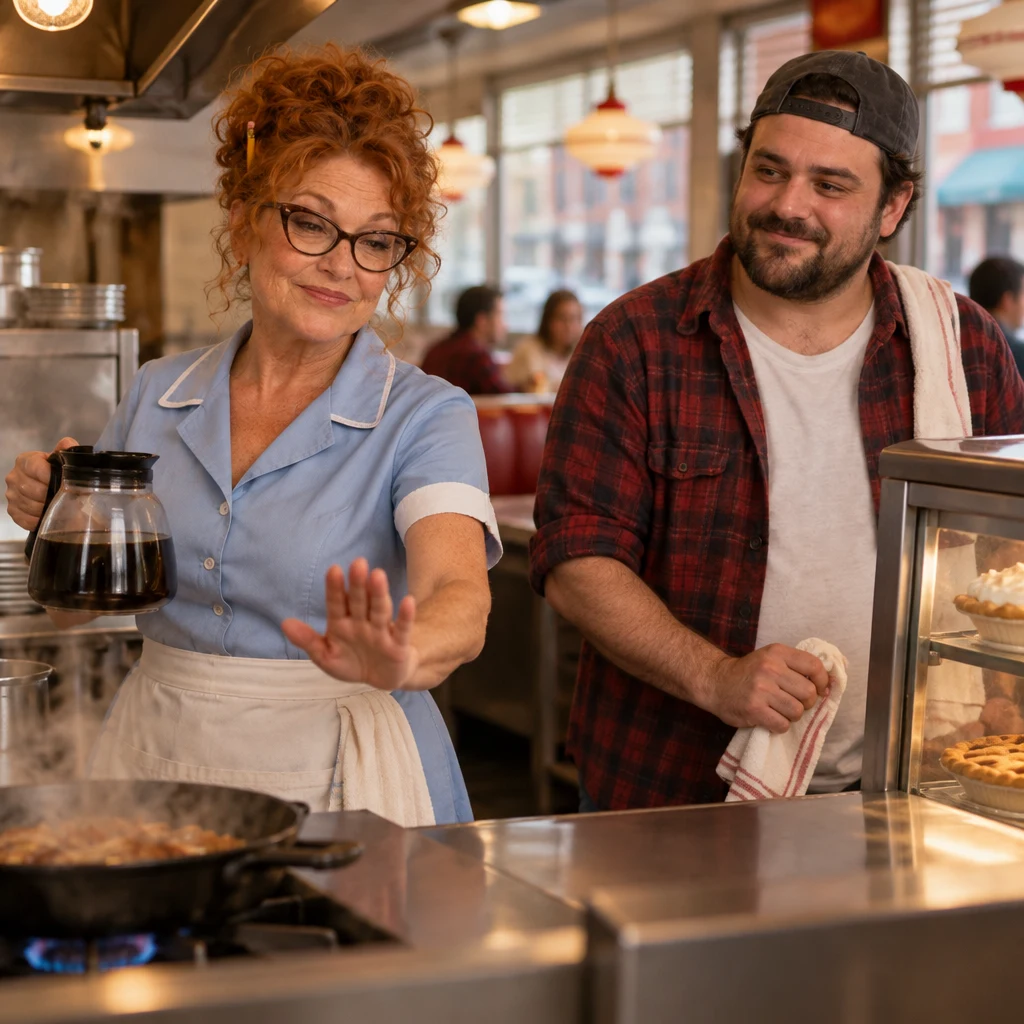
Don't touch it.
Keep your hands off that thing.
When to use it: Say this when a thing is hot or unsafe.
Don't is one piece that means do not.
Say it: The n in Don't is clear.
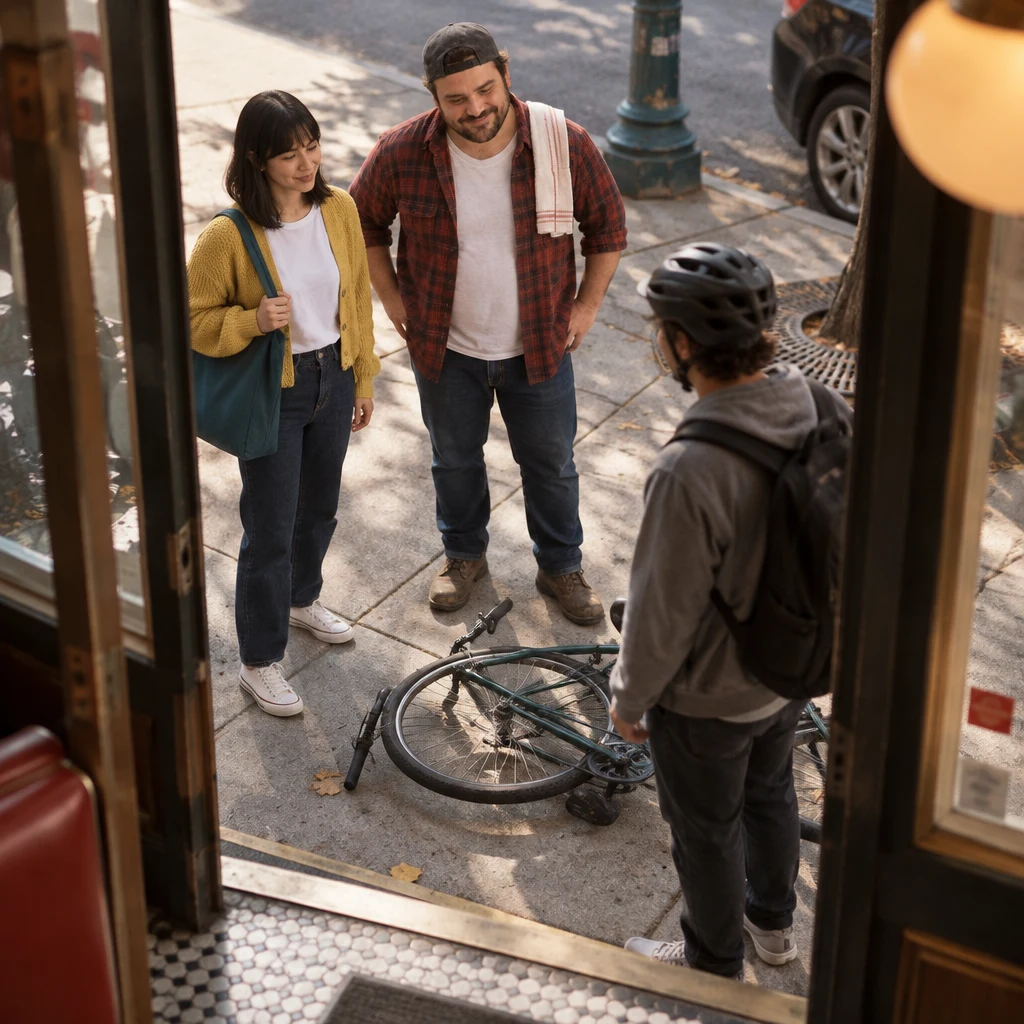
Please don't move.
Stay still so you stay safer.
When to use it: Say this when staying still is safer.
Please makes this command sound kinder.
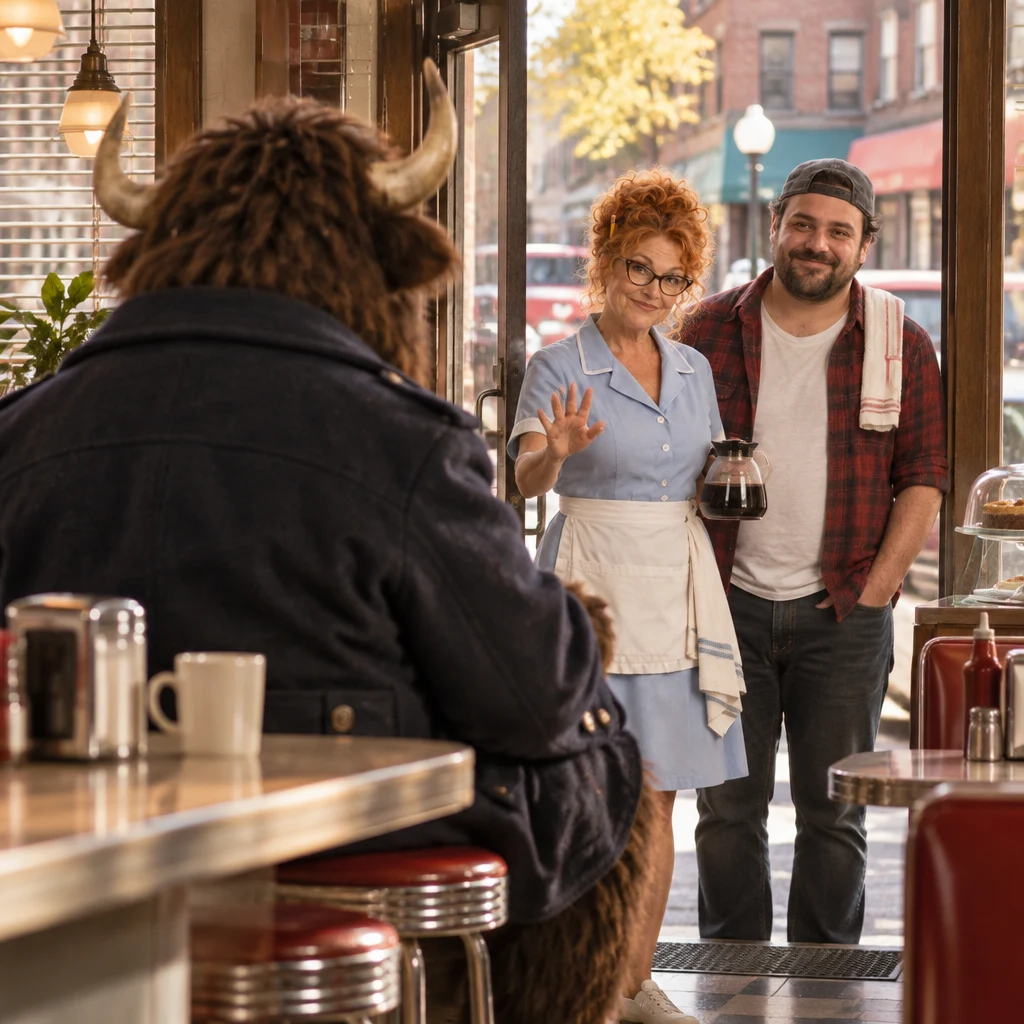
There was an accident.
A crash or injury just happened.
When to use it: Say this after a crash or injury.
Was is the past tense of is here.
Say it: An and accident can link.

I need an ambulance.
I need medical help right now.
When to use it: Say this when someone needs medical help now.
Need tells them you want help now.
Say it: The stress is on the first part.
Story — only steam
Watch the kitchen when a pan pops. Ana thinks it is a big emergency. It is only steam.
Then they see a small accident outside.
The highlighted words are the lines you just learned.
- A pan pops. Steam fills the pass.
 DannyStay calm.Try not to panic.
 AnaGet out now.Leave this place immediately.
- Dee steps toward the stove. The pan is still hot.
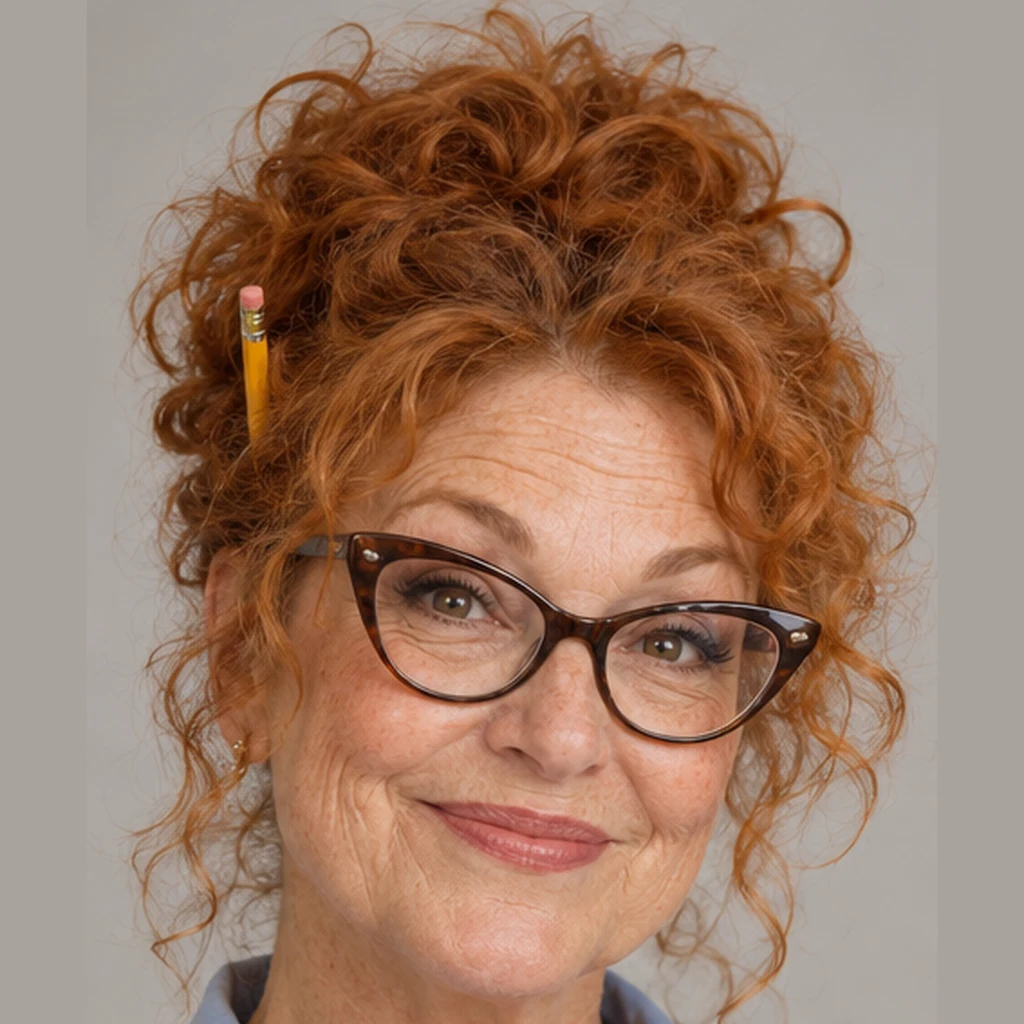 DeeDon't touch it, hon.Keep your hands off that thing.
- Ana pulls her hands back.
- DeeDon't worry, hon. It's only steam.The small problem is fine, and it is only steam.
 MurraySo, is the pie okay?He asks if the pie is safe.
- DeeThe pie's fine, hon.The pie is okay.
- They step to the door. A rider is down by the bike.
- DannyThere was an accident.A crash or injury just happened.
- DeePlease don't move.Stay still so you stay safer.
- AnaI need an ambulance.I need medical help right now.
- DeeAre you okay?I want to know if you are all right.
- StrangerMy arm hurts, and I can't stand.The rider says their arm hurts and they cannot stand.
Practice — keep people safe
Ten quick exercises wait here. You will listen, pick, match, fill a gap, and build a line.
They stay short, so the round moves fast.
0 of 10 done
What did you hear?
What did you hear?
Match the pairs
English
Stay calm.Drop the Simple English hereGet out now.Drop the Simple English hereDon't touch it.Drop the Simple English herePlease don't move.Drop the Simple English hereSimple English
What do you say?
What do you say?
Steam fills the kitchen. You want everyone to leave this place at once.
What does it mean?
What does it mean?
There was an accident.
Fill the gap
Fill the gap
Keep your hands off that thing.
Don't ____ it.
Build the line
Build the line
I need medical help right now.
.
Tap the words in order.
Pick the reply
Stranger says:
Pick the reply
I fell. My neck hurts.
This person fell down and their neck may be hurt.
And you reply with:
What do you say?
What do you say?
A friend looks scared after the pan pops. Check if they are all right.
True or false?
True or false?
This line asks for medical help.
Swap the word
Swap the word
Someone starts to panic in the kitchen. Tell them not to panic.
Stay ____.
Say it — say it back
Now you are Ana at the Blue Plate. When it is your turn, tap the microphone and speak the line.
Tap play first if you want to hear the line. Your recording stays on your device.
- DannyThe pan just popped.The pan made a loud sound.
- Ana (you)Tell him not to panic.
Tell him not to panic.
Stay calm.
Try not to panic.
0 of 5 said
Recap — what you can say now
| English | Simple English | Play |
|---|---|---|
| Stay calm. | Try not to panic. | |
| Get out now. | Leave this place immediately. | |
| Don't touch it. | Keep your hands off that thing. | |
| Please don't move. | Stay still so you stay safer. | |
| There was an accident. | A crash or injury just happened. | |
| I need an ambulance. | I need medical help right now. |
Save your progress — it’s free
Keep your place in the course and see which lines you’ve learned.
Want the next lesson in your inbox?
Get the next lesson by email, one a day.
Join the newsletterDaily lesson emails are coming soon. Newsletter subscribers get them first.
Keep practicing with Yak Cards
Want to keep these safety lines handy? Grab the Yak Cards for this lesson and review them anywhere.
A quick round with the Yak Cards each day keeps these lines ready if you need them.
Open Yak Cards