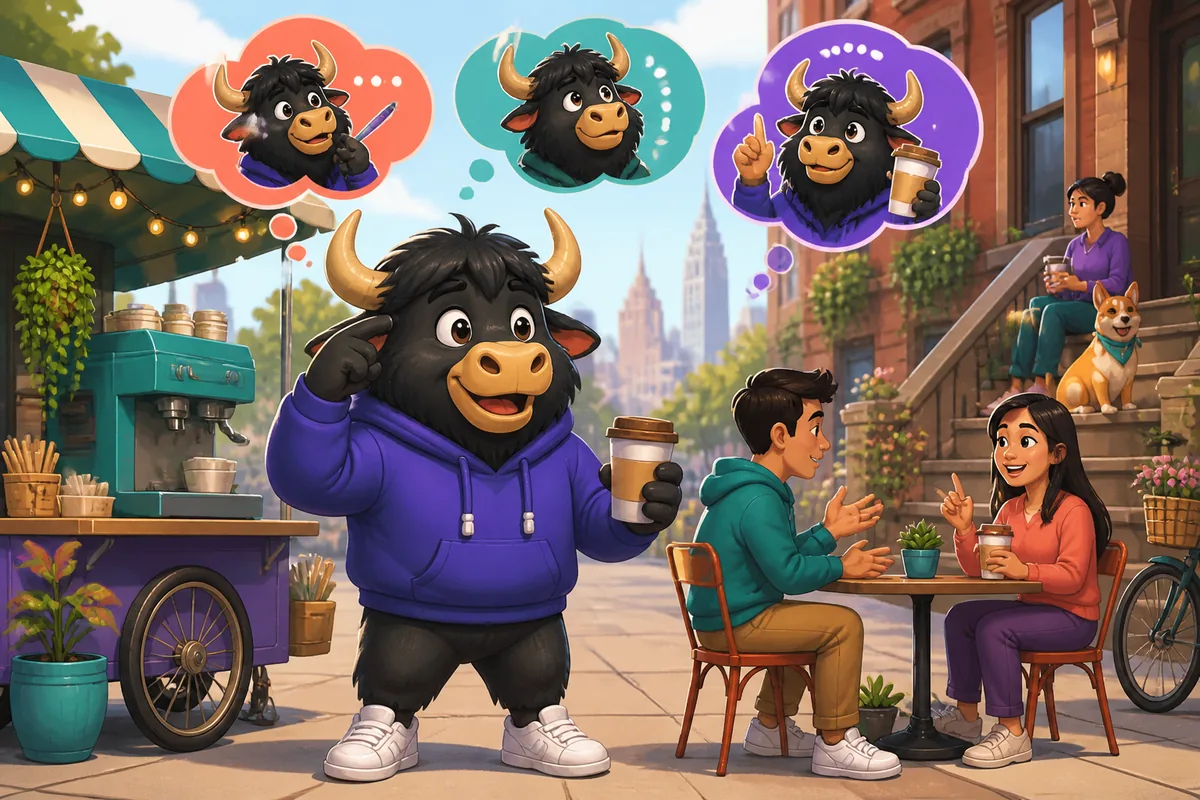
Hello! Ready for some social glue? This short lesson focuses on common filler phrases that help you pause, organize thoughts, or gently correct someone. Say them out loud and feel the flow.
Level A2: In this friendly lesson you'll learn 13 common conversational fillers (like “Let me think.” and “Actually, ___.”). These short frames help you buy time, organize ideas, and keep conversations polite and natural. CEFR-aligned, focused practice: listen, choose, and speak.
After this lesson you'll be able to:
Recognize and use everyday fillers to pause or organize your speech.
Practice polite ways to ask for a short pause and to correct or clarify ideas.
Gain confidence saying 13 common phrases aloud (A2).
Ready? Let's go!
When you tap play on phrases, we track your progress through this lesson.
1. Reading + Listening Practice
Hear core phrases, repeat aloud.
Let me think.
pause briefly while thinking
Meaning: pause briefly while thinking.
When to use: Use when you need a short moment to find words or decide what to say.
Tip: Saying it too often can make you sound unsure; try to follow with a clear idea.
Let me think. I had two options — let me think, which one is best?
Let me think. I had two options — let me think, which one is best?
Can you wait? Let me think about the answer.
Can you wait? Let me think about the answer.
Just a moment.
ask for a very short pause
Meaning: ask for a very short pause.
When to use: Polite in service or everyday conversations when you need a quick pause.
Just a moment, please — I'll grab my notes.
Just a moment, please — I'll grab my notes.
Could you hold on? Just a moment, I'll check that.
Could you hold on? Just a moment, I'll check that.
One second.
ask for a brief pause informally
Meaning: ask for a brief pause informally.
When to use: Use with friends or casual situations to delay a response a little.
One second — I need to find my keys.
One second — I need to find my keys.
Wait one second, I'm almost done.
Wait one second, I'm almost done.
How can I say this?
search for words while speaking
Meaning: search for words while speaking.
When to use: Say this when you want time to find the right words or tone down your message.
How can I say this? The meeting went well, but...
How can I say this? The meeting went well, but...
How can I say this? I don't want to offend anyone.
How can I say this? I don't want to offend anyone.
I mean, ___.
clarify or restate an idea
Meaning: clarify or restate an idea.
When to use: Use to correct or make your previous comment clearer for the listener.
Tip: Begins many sentences and can sound repetitive if overused.
I mean, it's not that I don't like it — I mean, I just prefer something cheaper.
I mean, it's not that I don't like it — I mean, I just prefer something cheaper.
He left early. I mean, he had a phone call.
He left early. I mean, he had a phone call.
Well, ___.
start an answer while thinking
Meaning: start an answer while thinking.
When to use: Good for softening an answer and giving yourself thinking time.
Well, I don't know the exact time, but I think it's 3pm.
Well, I don't know the exact time, but I think it's 3pm.
Well, that's complicated — let me explain.
Well, that's complicated — let me explain.
Actually, ___.
introduce a small correction or contrast
Meaning: introduce a small correction or contrast.
When to use: Use to gently correct information or offer a different point of view.
Tip: If used bluntly, it can sound like a strong correction; add a friendly tone.
Actually, I finished it yesterday, not today.
Actually, I finished it yesterday, not today.
I thought it was Friday. Actually, it's Thursday.
I thought it was Friday. Actually, it's Thursday.
So, ___
continue or organize what to say next
Meaning: continue or organize what to say next.
When to use: Use to move the conversation forward or summarize the next step.
So, we can meet at noon and then go to the cafe.
So, we can meet at noon and then go to the cafe.
So, if you agree, I'll book the ticket.
So, if you agree, I'll book the ticket.
The thing is, ___.
softly introduce the main point
Meaning: softly introduce the main point.
When to use: Use to gently signal that the main idea or concern is coming.
The thing is, we need more time to finish.
The thing is, we need more time to finish.
The thing is, he didn't tell anyone about the change.
The thing is, he didn't tell anyone about the change.
I'm not sure, but ___.
give an uncertain answer while keeping the conversation moving
Meaning: give an uncertain answer while keeping the conversation moving.
When to use: Say this when you want to give a possible answer but you are not certain.
I'm not sure, but maybe the train is delayed.
I'm not sure, but maybe the train is delayed.
I'm not sure, but I think she lives nearby.
I'm not sure, but I think she lives nearby.
That's a good question.
buy time before answering a question
Meaning: buy time before answering a question.
When to use: Use when someone asks something that needs a considered response.
That's a good question — let me think.
That's a good question — let me think.
That's a good question; I haven't decided yet.
That's a good question; I haven't decided yet.
What was I saying?
recover the topic after losing the thread
Meaning: recover the topic after losing the thread.
When to use: Use when you lose your place in a story or after an interruption.
What was I saying? Right — the plans for Saturday.
What was I saying? Right — the plans for Saturday.
What was I saying? Oh yes, the budget.
What was I saying? Oh yes, the budget.
Where was I?
return to a previous point after a pause or interruption
Meaning: return to a previous point after a pause or interruption.
When to use: Short phrase to get back to your main point after a break.
Where was I? Oh yes, the beginning of the meeting.
Where was I? Oh yes, the beginning of the meeting.
Where was I? I wanted to tell you about the film.
Where was I? I wanted to tell you about the film.
2. Conversational Listening Practice
Hear phrases in a real mini-conversation.
Choosing a place to eat, using fillers to think and organize ideas.
Anna
Anna: Where should we eat tonight?
Anna: Where should we eat tonight?
David
David: That's a good question. Let me think.
David: That's a good question. Let me think.
Anna
Anna: Any ideas?
Anna: Any ideas?
David
David: Well, I mean, the new Thai place is close. One second — I want to check the reviews.
David: Well, I mean, the new Thai place is close. One second — I want to check the reviews.
Anna
Anna: Okay. So, if it's good, we can go there.
Anna: Okay. So, if it's good, we can go there.
David
David: The thing is, some people say it's noisy. I'm not sure, but maybe we should try another option.
David: The thing is, some people say it's noisy. I'm not sure, but maybe we should try another option.
3. Guided Practice
Quizzes and matching to lock in meaning.
Which phrase is best to politely ask someone to wait a moment while you check something?
Which filler starts a careful or slightly hesitant answer?
You want to correct a small mistake you just said. Which phrase fits best?
Which phrase helps you return to your main point after an interruption?
Just a moment — I need to check my notes. (Polite short pause to check something.)
A: Do you know the answer? B: _____ I need to check my notes.
The thing is, the budget is higher than expected. (Introduces the main point.)
During the meeting he paused and said, "____, the budget is higher than expected."
I'm not sure, but maybe we can ask Tom? (Expresses uncertainty while continuing the conversation.)
You want to be honest but unsure: "____, maybe we can ask Tom?"
Match the core phrases
Match the extra phrases
4. Speaking Practice
Say phrases yourself (mic/recording).
Recording stays on your device only. Check speech uses your browser's speech tools when available.
Say this phrase out loud:
Let me think.
pause briefly while thinking
Say this phrase out loud:
Just a moment.
ask for a very short pause
Say this phrase out loud:
One second.
ask for a brief pause informally
Say this phrase out loud:
How can I say this?
search for words while speaking
Say this phrase out loud:
I mean, ___.
clarify or restate an idea
Say this phrase out loud:
Well, ___.
start an answer while thinking
Say this phrase out loud:
Actually, ___.
introduce a small correction or contrast
Say this phrase out loud:
So, ___
continue or organize what to say next
Say this phrase out loud:
The thing is, ___.
softly introduce the main point
Say this phrase out loud:
I'm not sure, but ___.
give an uncertain answer while keeping the conversation moving
Say this phrase out loud:
That's a good question.
buy time before answering a question
Say this phrase out loud:
What was I saying?
recover the topic after losing the thread
Say this phrase out loud:
Where was I?
return to a previous point after a pause or interruption