English - Possession

Lesson 14 of 139

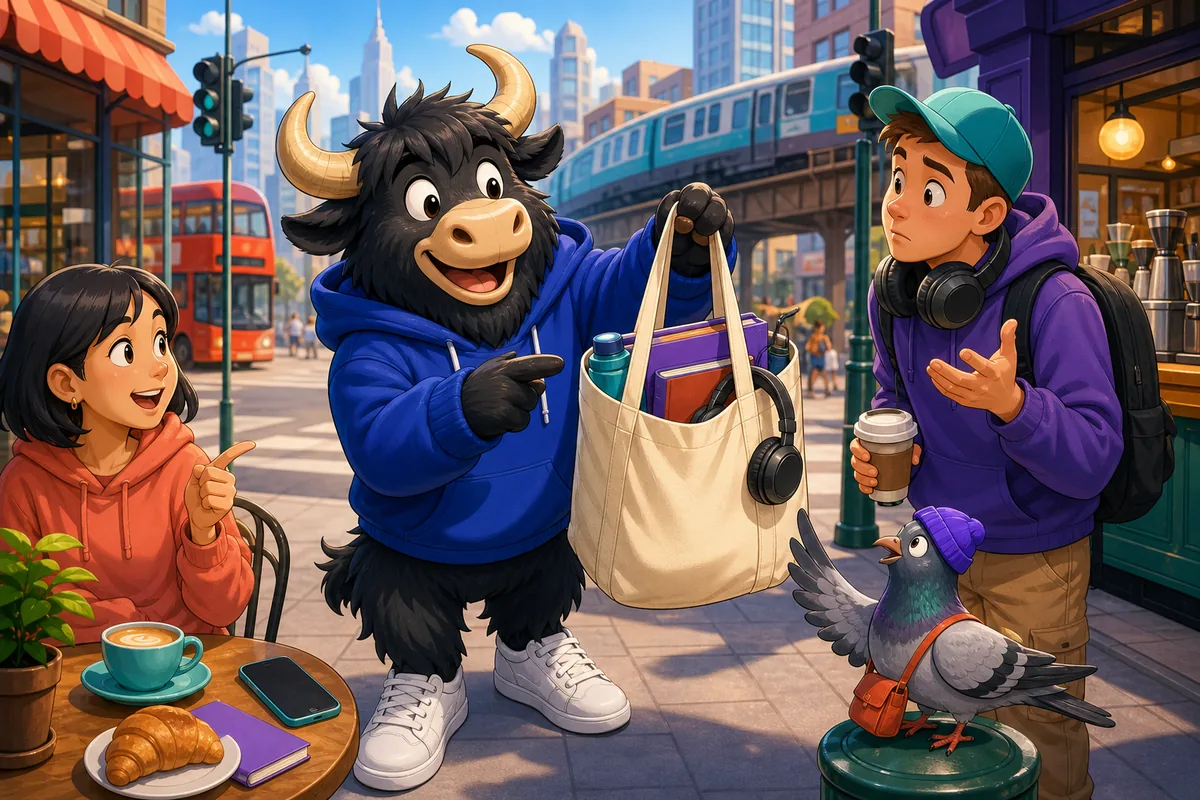
Two English learners look at several everyday items on a table and ask who they belong to. The scene supports an English lesson about possession phrases.

Goal: Say what belongs to you, to us, or to someone else.

Free English lessons with audio, guided practice, and speaking support.

Welcome back! Today we are doing a small but powerful job: finding out who has what. Very useful when keys, pens, tickets, or snacks go missing.

Level A1: In this lesson, you will practice everyday possession phrases like “These are mine,” “Are these yours?” and “Who has ___?” You will ask about objects, say what you have, and say when you only have one thing. Tiny words, big help—especially in bag-check moments!

After this lesson you'll be able to:

  • Say that several things belong to you with “These are mine.”
  • Ask if several things belong to another person with “Are these yours?”
  • Ask what someone has and who has an item.
  • Say what your group has, or say you only have a limited item.
A table with keys, notebooks, pens, and tickets ready for an English practice activity about ownership.

Ready? Let's go!

When you tap play on phrases, we track your progress through this lesson.

1. Reading + Listening Practice

Hear core phrases, repeat aloud.

These are mine.

Say that several things belong to the speaker.

Meaning: These are mine.

When to use: Use this when several things belong to you.

Tip: Use “these” for more than one thing. For one thing, say “This is mine.”

These are mine. They are my keys.
Several keys belong to me.
These are mine, not yours.
Several things belong to me, not you.

Are these yours?

Ask if several things belong to the listener.

Meaning: Are these yours?

When to use: Use this to ask if several things belong to the person you are talking to.

Tip: Do not say “Are these your?” Say “Are these yours?”

Are these yours? I found them on the chair.
I am asking if several things belong to you.
Are these yours, David?
I am checking if the things belong to David.

What do you have?

Ask what someone has.

Meaning: What do you have?

When to use: Use this to ask what items someone has.

What do you have in your bag?
I am asking about the things in your bag.
What do you have for the trip?
I am asking what items you have for the trip.

Who has ___?

Ask which person has something.

Meaning: Who has ___?

When to use: Use this when you want to know which person has an item.

Who has the tickets?
I want to know which person has the tickets.
Who has my phone charger?
I want to find the person with my phone charger.

We have ___.

Say that a group has something.

Meaning: We have ___.

When to use: Use this to say that you and another person, or your group, have something.

We have two bags.
Our group has two bags.
We have the tickets.
Our group has the tickets.

I only have ___.

Say that you have a limited amount or only one available thing.

Meaning: I only have ___.

When to use: Use this to say you have a small amount, or just one thing available.

Tip: “Only” usually comes before the thing you have: “I only have one pen.”

I only have one pen.
I do not have many pens; I have one.
I only have five dollars.
I have a limited amount of money.

2. Conversational Listening Practice

Hear phrases in a real mini-conversation.

Anna and David are getting ready to leave a café after studying.
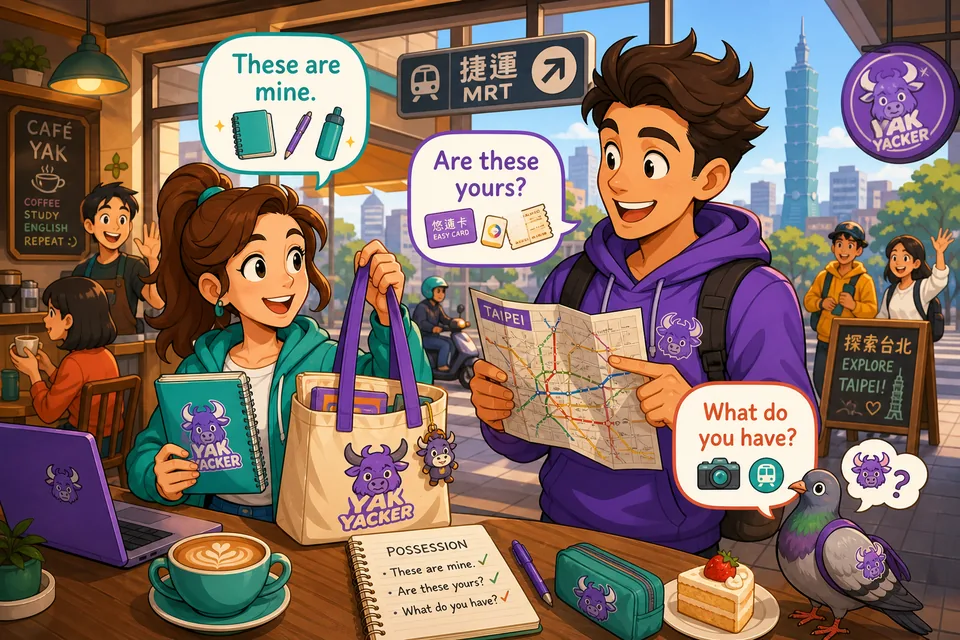
Anna and David sort shared items while practicing English phrases like “Are these yours?” and “These are mine.”

What are Anna and David trying to sort out?

Portrait of Anna in a English lesson dialogue

Anna

David, are these yours?

Anna asks if several things belong to David.

Portrait of David in a English lesson dialogue

David

No, these are mine.

David says another group of things belongs to him.

Portrait of Anna in a English lesson dialogue

Anna

Okay. What do you have?

Anna asks what David has.

Portrait of David in a English lesson dialogue

David

I only have my notebook and one pen.

David has just a notebook and one pen.

Portrait of Anna in a English lesson dialogue

Anna

Who has the tickets?

Anna asks which person has the tickets.

Portrait of David in a English lesson dialogue

David

We have the tickets. They are in your bag.

David says their group has the tickets.

3. Guided Practice

Quizzes and matching to lock in meaning.

You see three pens on your desk. They belong to you. What can you say?

You find two notebooks and ask David if they belong to him. What do you ask?

You want to know which person has your charger. What is the best question?

You and Anna have the tickets together. What can you say?

Anna finds two keys on the table and asks David: Are these yours?

Anna finds two keys on the table and asks David: ___.

David checks his bag and says: I only have one pen. I need another pen.

David checks his bag and says: ___. I need another pen.

The group is ready to enter the station. Anna smiles and says: We have the tickets.

The group is ready to enter the station. Anna smiles and says: ___.

Match the core phrases

Match the extra phrases

4. Speaking Practice

Say phrases yourself (mic/recording).

Recording stays on your device only. Check speech uses your browser's speech tools when available.

Say this phrase out loud:

These are mine.

Say that several things belong to you.

Say this phrase out loud:

Are these yours?

Ask if several things belong to the listener.

Say this phrase out loud:

What do you have?

Ask what someone has.

Say this phrase out loud:

Who has ___?

Ask which person has something.

Say this phrase out loud:

We have ___.

Say that a group has something.

Say this phrase out loud:

I only have ___.

Say that you have a limited amount or only one available thing.