
New here? This is lesson 172 of a free 240-lesson English course.
How it turned out in English
Tasha and Ana sit at the Blue Plate with coffee. Tasha looks back on the Milwaukee trip: the wrong train, the frozen custard, the long walk.
At the time it felt messy. Looking back, it turned out fine.
You'll say how things went in the end. You'll talk about what you planned, what you felt then, and how you see it now.
These lines help you tell a story after it is over.
By the end of this lesson
Look back on a trip and say how it turned out.
- Looking back, I think we did okay.Now I feel the result was fine.
- It turned out to be a good trip.In the end, the trip was good.
- At the time, I was so tired.Then, I was very tired.
- I didn't realize we were almost there.I did not know we were close to our stop.
- We were supposed to drive, but we didn't.Our plan was to go by car, but we did not.
- I was nervous about it at first.At the beginning I felt worried.
Scene — after the trip
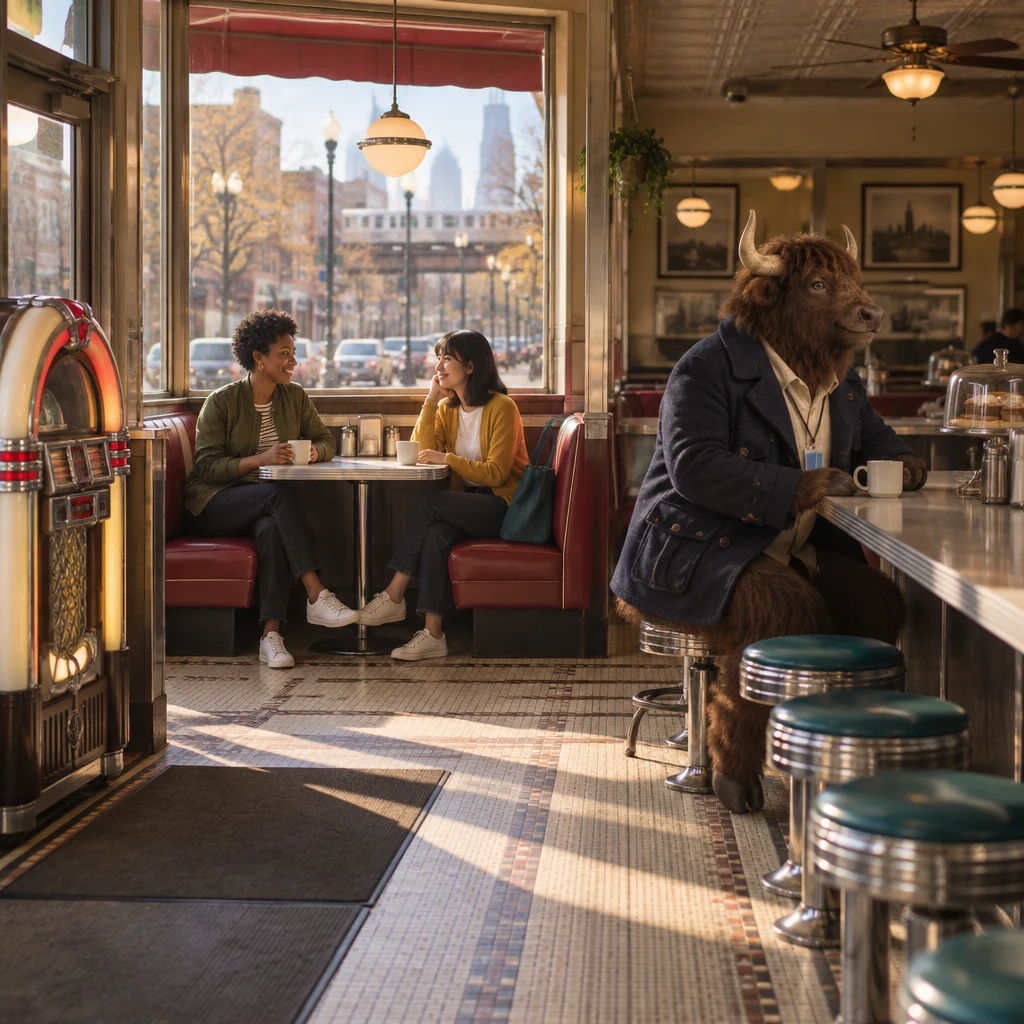
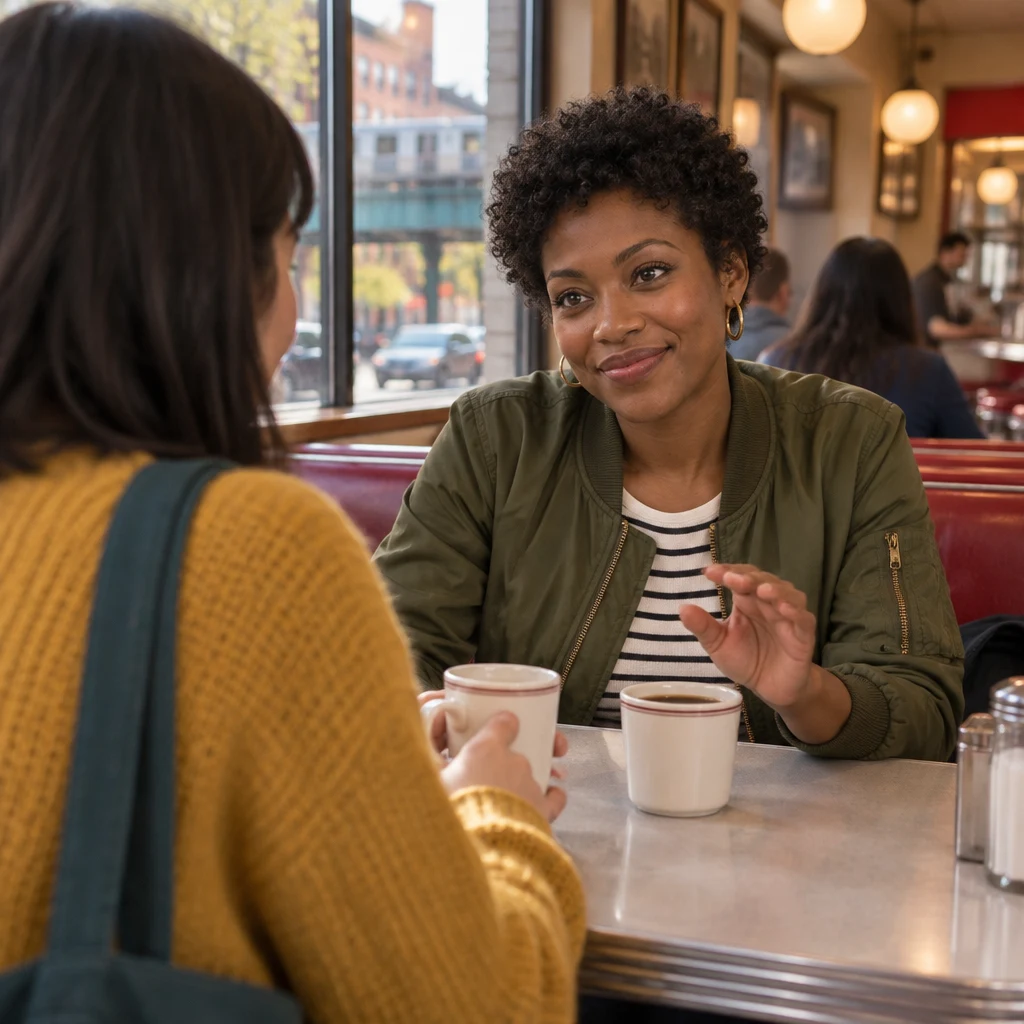
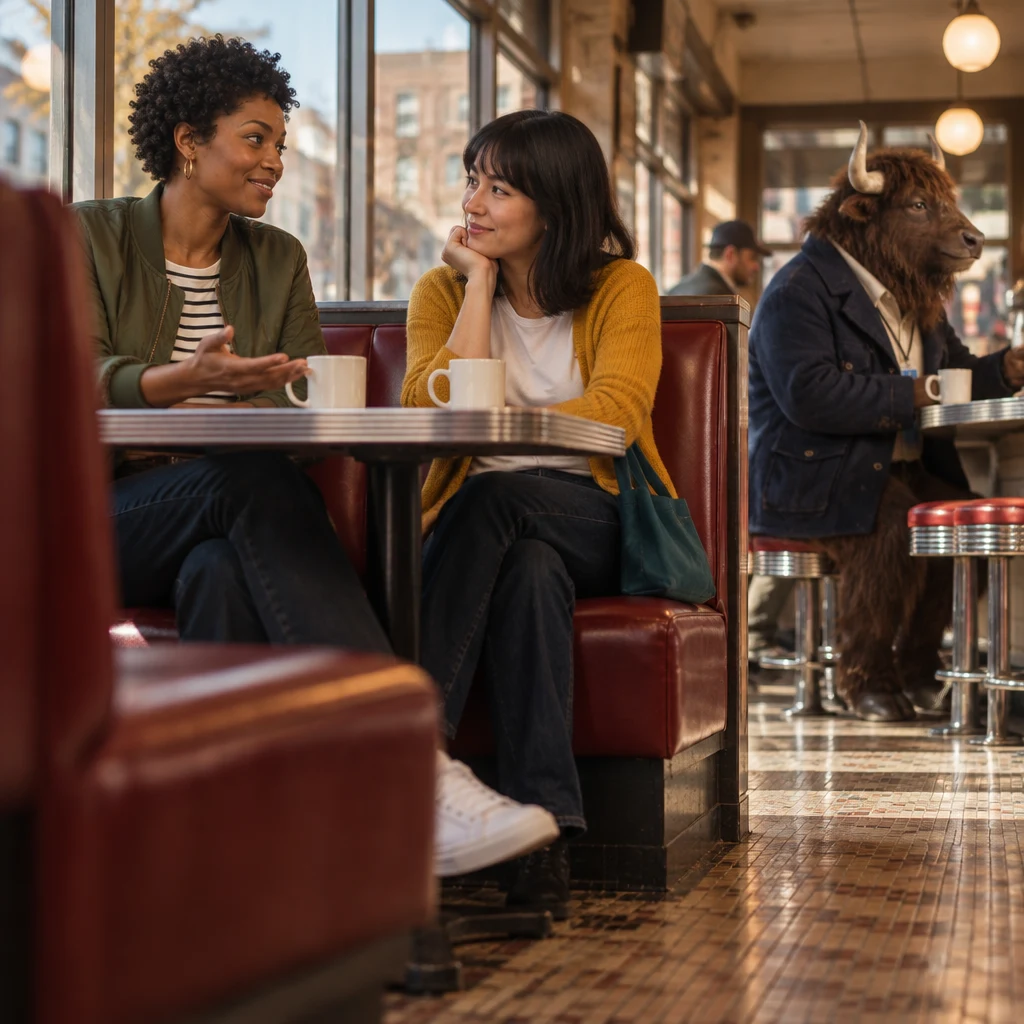
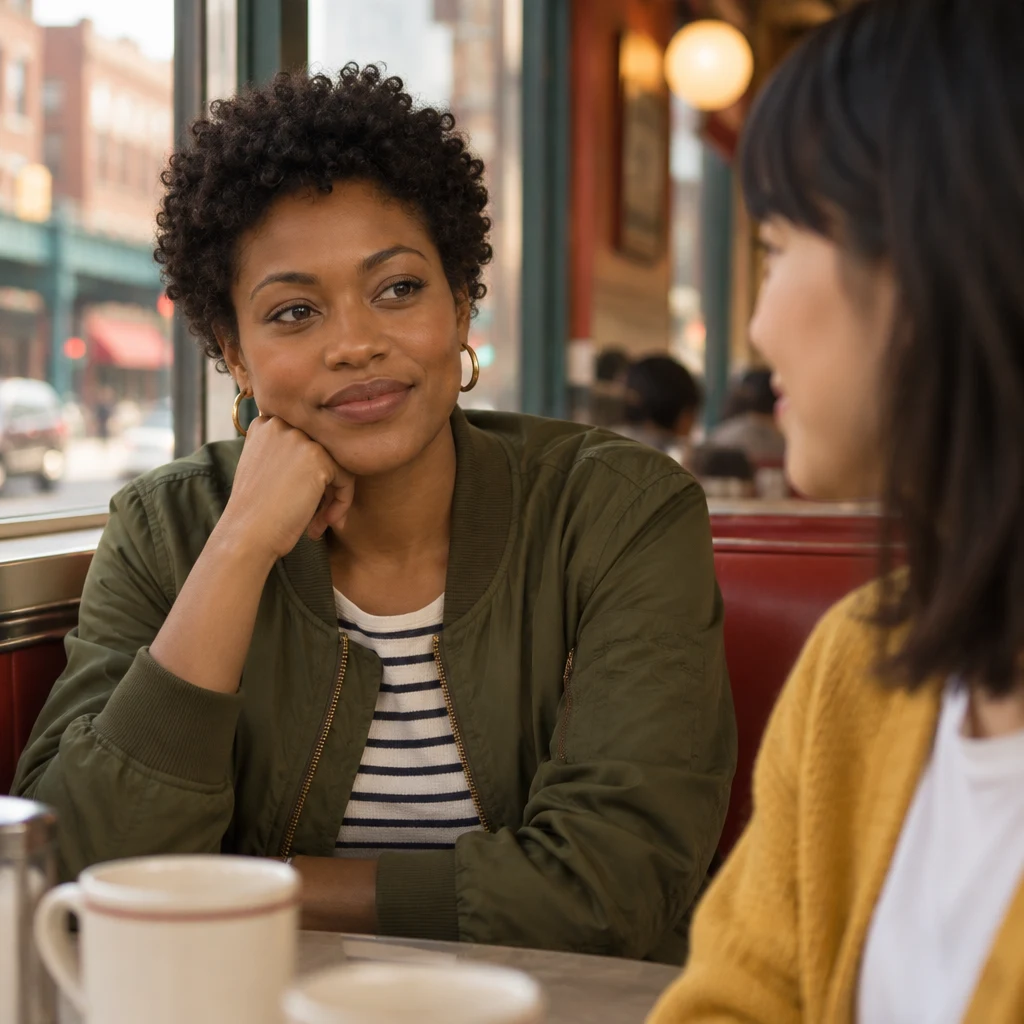
Saturday afternoon at the Blue Plate. Tasha and Ana share a booth by the window. Two coffees sit between them.
Tasha talks about Milwaukee. Ana listens. She feels less nervous now.
Murray is at the counter with his unfinished coffee. The jukebox by the door stays quiet.
Learn — how things ended
Six lines help you look back on a trip. You say how it felt then, and how it looks now.
You'll also say what you planned, and what actually happened.
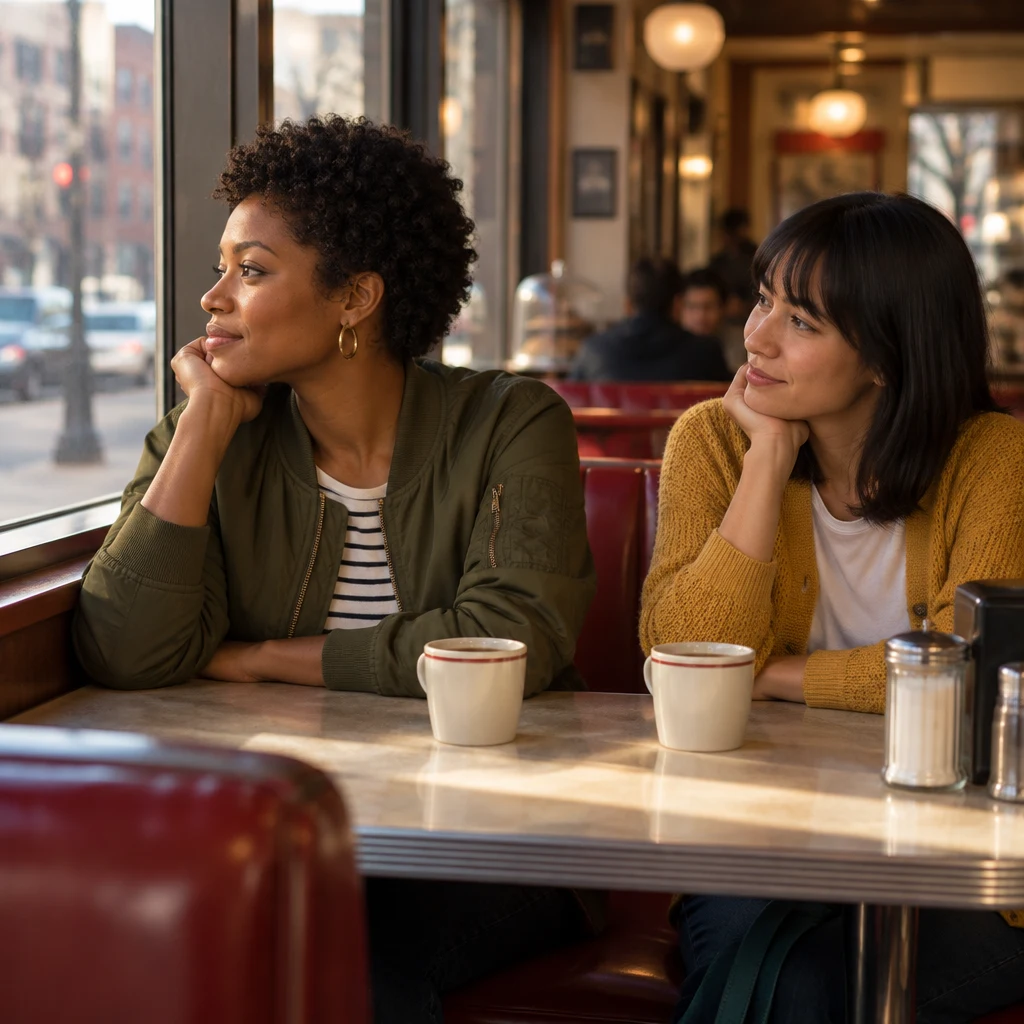
Looking back, I think we did okay.
Now I feel the result was fine.
When to use it: Say this when you judge a past event from now.
Looking back is the -ing form, and it points to now after the event.
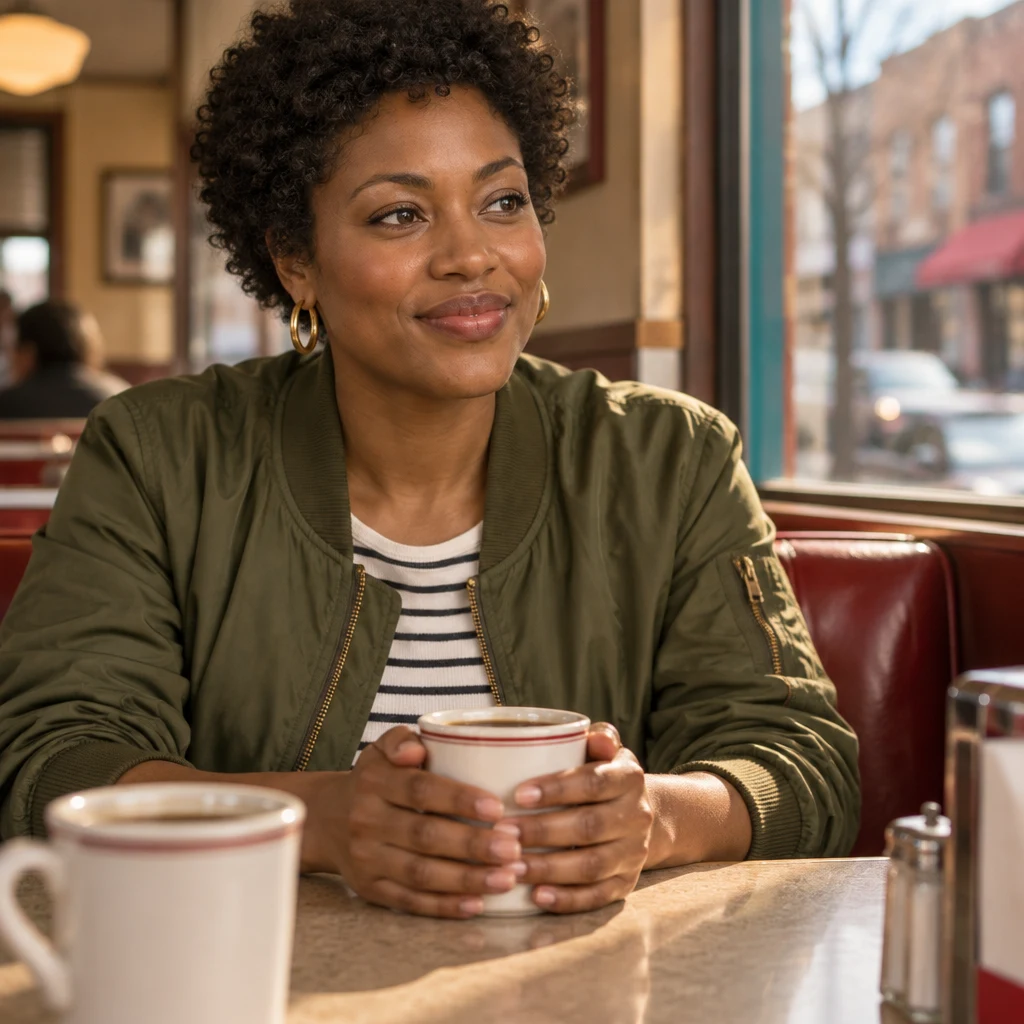
It turned out to be a good trip.
In the end, the trip was good.
When to use it: Say this when the end result of something was good.
Turned out is past tense and names the result in the end.
Say it: Put the stress on out in turned out.
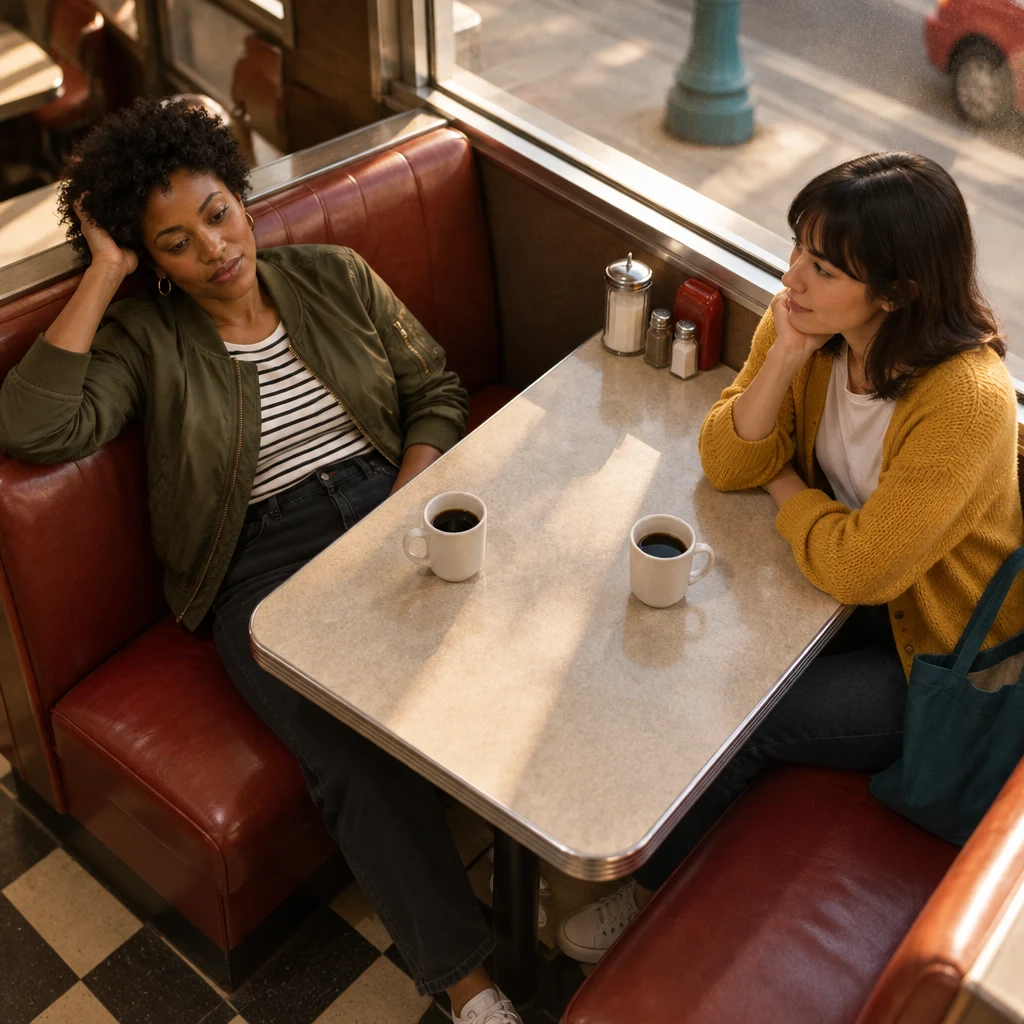
At the time, I was so tired.
Then, I was very tired.
When to use it: Say this when you talk about a feeling you had then.
At the time means then, not now.
I didn't realize we were almost there.
I did not know we were close to our stop.
When to use it: Say this when you did not know something in that moment.
Didn't is a short form of did not.
We were supposed to drive, but we didn't.
Our plan was to go by car, but we did not.
When to use it: Say this when a plan did not happen.
Were supposed to names the old plan, not what you did.
I was nervous about it at first.
At the beginning I felt worried.
When to use it: Say this when worry was only at the start.
At first means at the start, before things felt easier.
Story — over coffee
Tasha looks back on the Milwaukee trip over coffee. Ana asks how it felt then, and how it looks now.
The highlighted words are the lines you just learned.
- The booth is warm. Tasha wraps both hands around her cup.
 TashaSo, you want the real version this time.She will tell the trip as it really happened.
 AnaHow did you feel about it?What was your feeling then?
- TashaI was nervous about it at first.At the beginning I felt worried.
- AnaWhat was the plan?She asks what they had planned.
- TashaWe were supposed to drive, but we didn't.Our plan was to go by car, but we did not.
- AnaSo, the train then.Ana checks that they went by train.
- TashaYeah. At the time, I was so tired.She agrees, then says she was very tired then.
- AnaDid you know the stop was coming?Ana asks if Tasha knew the station was close.
- TashaI didn't realize we were almost there.I did not know we were close to our stop.
- Dee refills both cups. She does not ask.
- AnaLooking back, I think we did okay.Now I feel the result was fine.
- TashaIt turned out to be a good trip.In the end, the trip was good.
- AnaI used to hear that and look for a left turn.Ana jokes about taking the words too literally before.
- TashaIt means how it ended. That's all.Tasha explains the idea in a short, kind way.
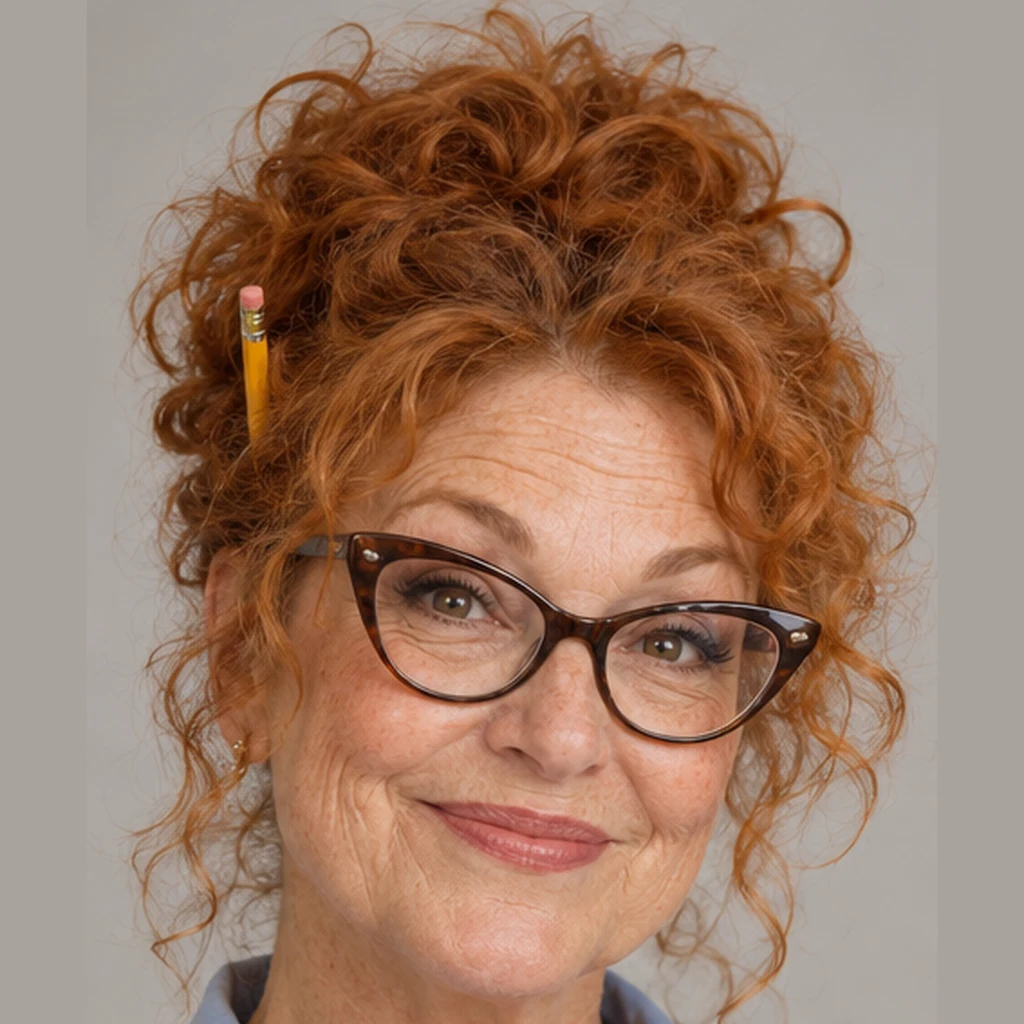 DeeSafe travels next time, hon.She wishes them a safe trip another time.
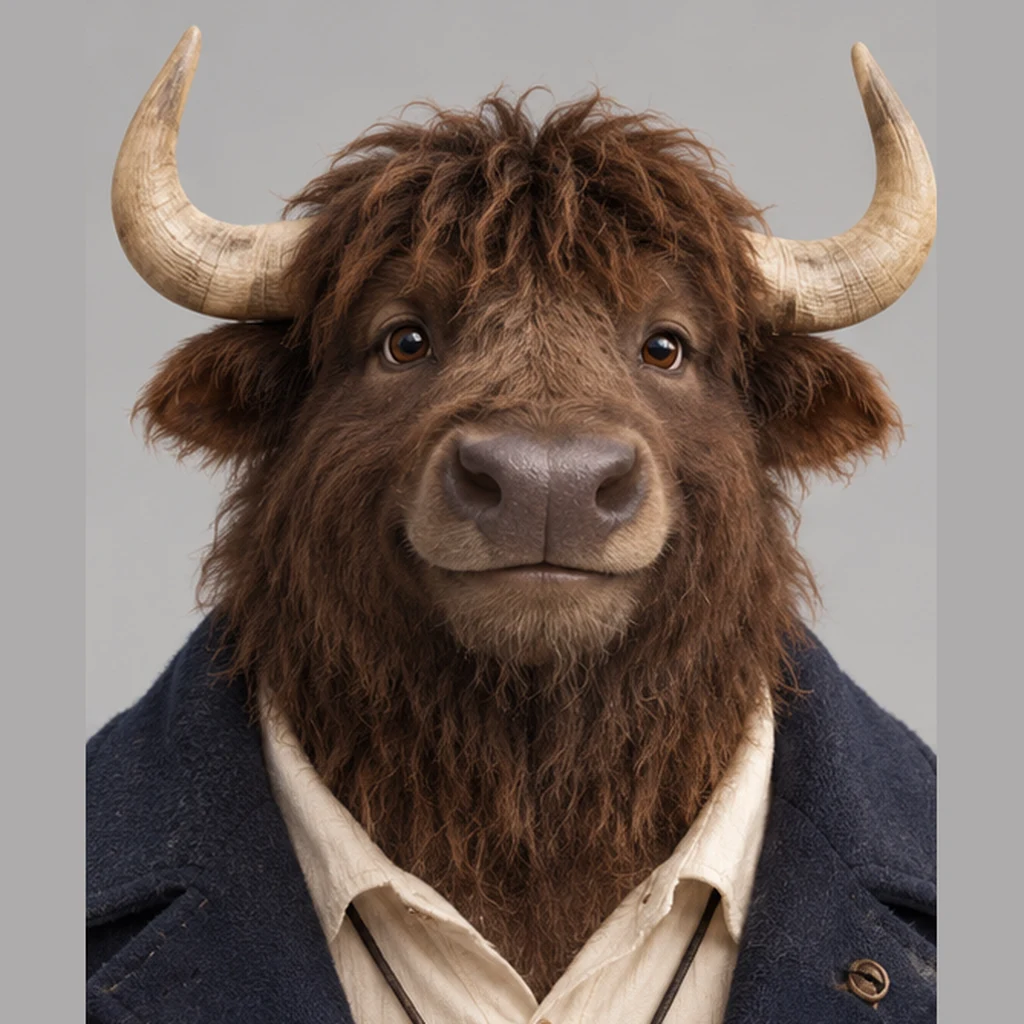 MurrayWell, I'm glad you're back.He is happy they returned.
Practice — then and now
Ten quick exercises wait here. You'll listen, pick, fill a gap, build a line, and swap a word.
They stay small, so the round moves fast.
0 of 10 done
What did you hear?
What did you hear?
What does it mean?
What does it mean?
It turned out to be a good trip.
What do you say?
What do you say?
You talk about the start of the Milwaukee trip. You felt worried then.
Fill the gap
Fill the gap
Then, I was very tired.
At the time, I was so ____.
Build the line
Build the line
I did not know we were close to our stop.
.
Tap the words in order.
Pick the reply
Tasha says:
Pick the reply
Did you take the car?
She asks if you went by car.
And you reply with:
Swap the word
Swap the word
Tasha sums up the Milwaukee weekend, not a workday.
It turned out to be a good ____.
What do you say?
What do you say?
Tasha just finished the whole Milwaukee story. You want her feeling about it.
Pick the reply
Tasha says:
Pick the reply
We missed the first train.
They were too late for that train.
And you reply with:
True or false?
True or false?
You say this when a trip is already over.
Say it — say it now
Now you're Ana at the diner booth with Tasha. When it's your turn, tap the microphone and speak the line.
Tap play first if you want to hear the line. Your recording stays on your device.
- TashaHow did you feel about it?What was your feeling then?
- Ana (you)Tell her you felt worried at the start.
Tell her you felt worried at the start.
I was nervous about it at first.
At the beginning I felt worried.
0 of 6 said
Recap — what you can say now
| English | Simple English | Play |
|---|---|---|
| Looking back, I think we did okay. | Now I feel the result was fine. | |
| It turned out to be a good trip. | In the end, the trip was good. | |
| At the time, I was so tired. | Then, I was very tired. | |
| I didn't realize we were almost there. | I did not know we were close to our stop. | |
| We were supposed to drive, but we didn't. | Our plan was to go by car, but we did not. | |
| I was nervous about it at first. | At the beginning I felt worried. |
Save your progress — it’s free
Keep your place in the course and see which lines you’ve learned.
Want the next lesson in your inbox?
Get the next lesson by email, one a day.
Join the newsletterDaily lesson emails are coming soon. Newsletter subscribers get them first.
Keep practicing with Yak Cards
Want to keep these lines handy? Grab the Yak Cards for this lesson and review them anywhere.
A quick round with the Yak Cards each day keeps your look-back lines ready.
Open Yak Cards