
New here? This is lesson 22 of a free 240-lesson English course.
No thanks, that's enough in English
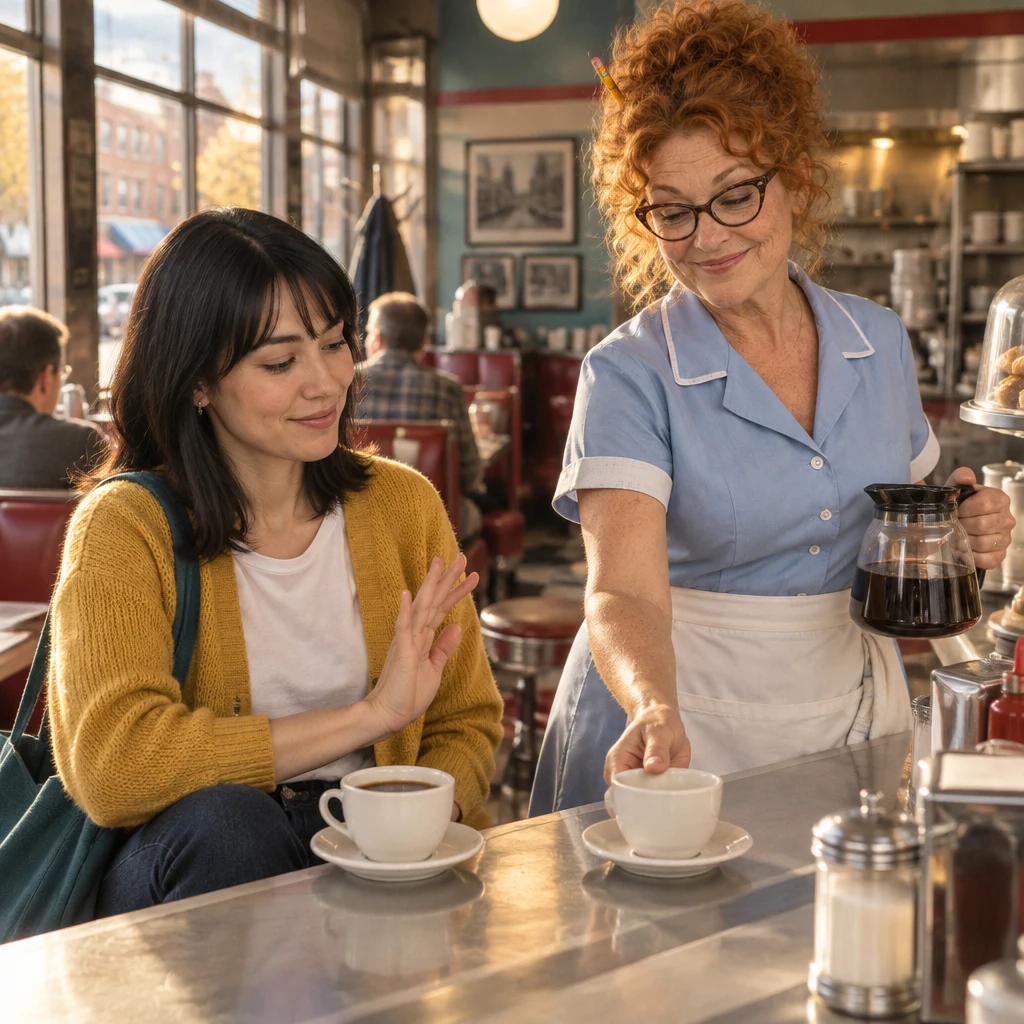
Dee comes back with the coffee pot. Ana's cup is already full, but Dee still wants to pour.
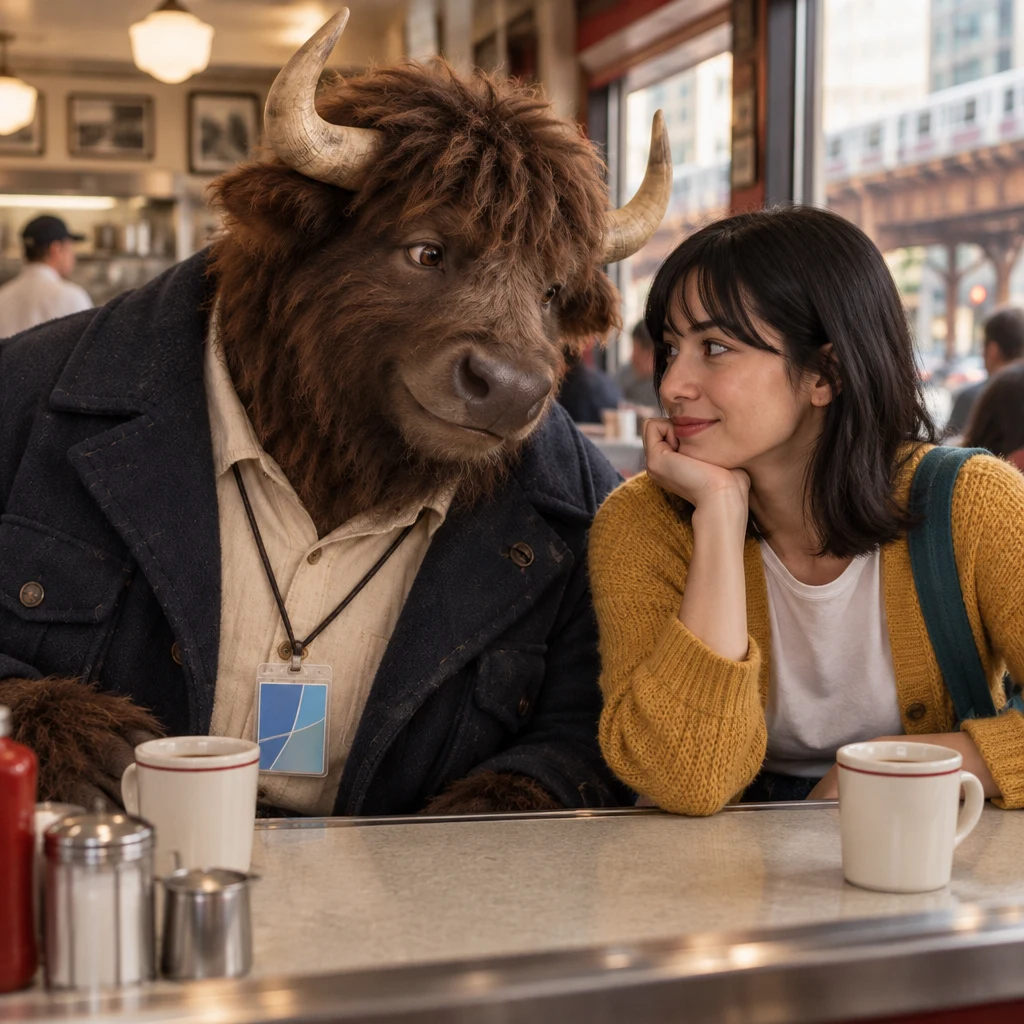
Murray sits on two stools with a black coffee he does not drink.
Today you learn how to turn extra things down, and how to ask for only a little.
Say no more, thanks when you do not want extra. I'm all set means you have what you need.
By the end of this lesson
Turn extra things down politely, and ask for only a little.
- No more, thanks.Please do not give me extra.
- I don't need ___.This is not necessary for me.
- That's enough.I have the right amount now.
- I already have one.I do not need another.
- I'm all set.I have what I need; no more.
- A little, please.I only want a small amount.
Scene — the coffee pot again
Same morning at the Blue Plate in Logan Square. Dee walks the counter with the coffee pot in her hand.
Ana's cup is already full. Murray's coffee sits there. He does not drink it.
The jukebox by the door stays quiet.

Learn — no more, thanks
Six short lines help you turn extra coffee down.
You also learn a small yes: A little, please, when you want only a bit.

No more, thanks.
Please do not give me extra.
When to use it: Say this when someone offers extra food or drink.
Learn it as one piece when you want no extra.
Say it: The stress is on more.
I don't need ___.
This is not necessary for me.
When to use it: Say this and name the thing you do not need.
Learn it as one piece, then add the thing.

That's enough.
I have the right amount now.
When to use it: Say this when you have the right amount.
Learn it as one piece to stop extra.
Say it: That's and enough can link.
I already have one.
I do not need another.
When to use it: Say this when you already have that thing.
Learn it as one piece when someone offers a second thing.

I'm all set.
I have what I need; no more.
When to use it: Say this when you do not need anything else.
Learn it as one piece for a friendly no.
Say it: The stress is on set.

A little, please.
I only want a small amount.
When to use it: Say this when you want only a small amount.
Learn it as one piece for a small yes.
Story — she pours anyway
Watch Ana stop the coffee pot. Dee pours anyway, and Murray helps with a short line.
The highlighted words are the lines you just learned.
- Dee comes down the counter with the coffee pot again.
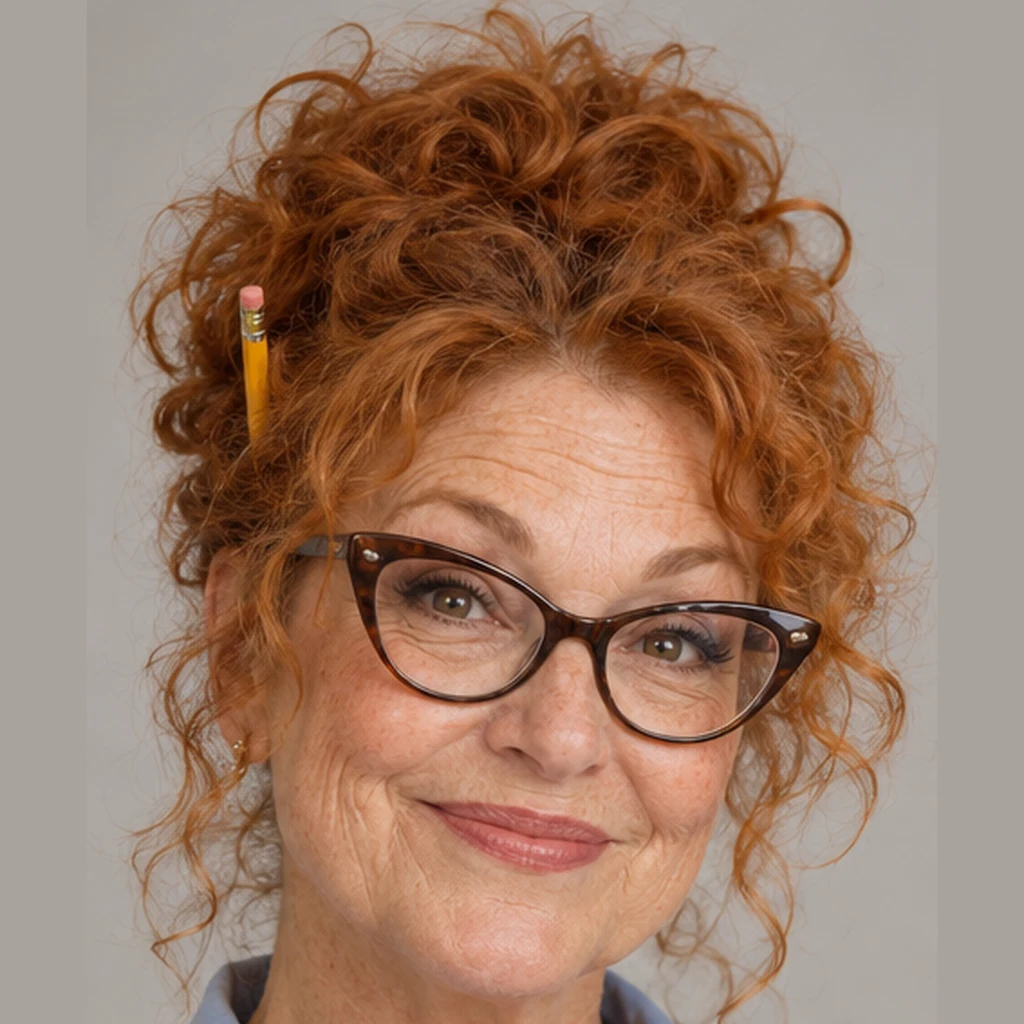 DeeMore coffee, hon?She offers more coffee.
 AnaNo more, thanks.Please do not give me extra.
- Dee pours anyway, then reaches for a second cup.
- AnaI already have one.I do not need another.
- Murray leans toward Ana and whispers.
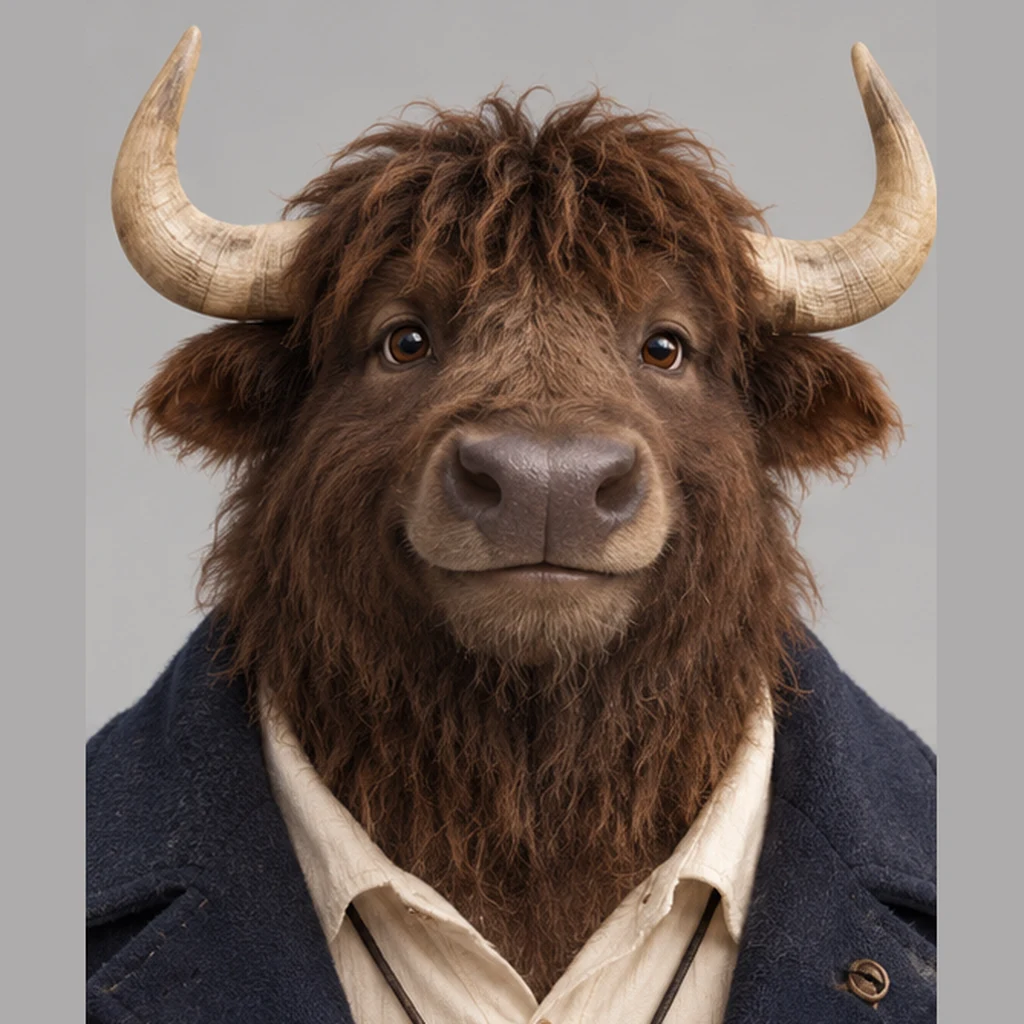 MurrayThat's enough.I have the right amount now.
- AnaThat's enough for a whole table?She asks if the coffee is for everyone.
- DeeJust say, "That's enough," hon.She wants Ana to use fewer words.
- She nods at the pie case.
- DeeSo, pie, hon?She offers some pie.
- AnaA little, please.I only want a small amount.
- DeeAnything else, hon?She asks if Ana wants more.
- AnaI'm all set.I have what I need; no more.
- She looks at Murray.
- DeePie for you, hon?She offers him some pie.
- MurrayNo, thank you. I don't need pie.He politely says he does not need any pie.
- Dee looks at Murray's full cup; he does not drink.
Practice — enough or a little
Eleven quick exercises wait here. You listen, pick, match, fill a gap, and build a line.
They stay tiny, so the round moves fast.
0 of 11 done
What did you hear?
What did you hear?
Match the pairs
English
No more, thanks.Drop the Simple English hereThat's enough.Drop the Simple English hereI already have one.Drop the Simple English hereI'm all set.Drop the Simple English hereSimple English
What do you say?
What do you say?
Dee holds out a second muffin. You already have one and do not want another.
What does it mean?
What does it mean?
That's enough.
True or false?
True or false?
This line means you still want more.
Build the line
Build the line
I only want a small amount.
, .
Tap the words in order.
Pick the reply
Dee says:
Pick the reply
More coffee, hon?
She offers more coffee.
And you reply with:
What does it mean?
What does it mean?
I don't need ___.
Fill the gap
Fill the gap
no, and you are polite about it
No, ____ you.
What do you say?
What do you say?
Dee offers water. You want some.
Which one doesn’t belong?
Which one doesn’t belong?
Say it — turn it down
Now you're Ana at the counter. Dee has the coffee pot again. When it's your turn, tap the microphone and speak the line.
Tap play first if you want to hear the line. Your recording stays on your device.
- DeeMore coffee, hon?She offers more coffee.
- Ana (you)You do not want extra coffee.
You do not want extra coffee.
No more, thanks.
Please do not give me extra.
0 of 6 said
Recap — what you can say now
| English | Simple English | Play |
|---|---|---|
| No more, thanks. | Please do not give me extra. | |
| I don't need ___. | This is not necessary for me. | |
| That's enough. | I have the right amount now. | |
| I already have one. | I do not need another. | |
| I'm all set. | I have what I need; no more. | |
| A little, please. | I only want a small amount. |
Save your progress — it’s free
Keep your place in the course and see which lines you’ve learned.
Want the next lesson in your inbox?
Get the next lesson by email, one a day.
Join the newsletterDaily lesson emails are coming soon. Newsletter subscribers get them first.
Keep practicing with Yak Cards
Want to keep these lines handy? Grab the Yak Cards for this lesson and review them anywhere.
A quick round with the Yak Cards each day helps you say no politely at the counter.
Open Yak Cards