
New here? This is lesson 21 of a free 240-lesson English course.
I want in English
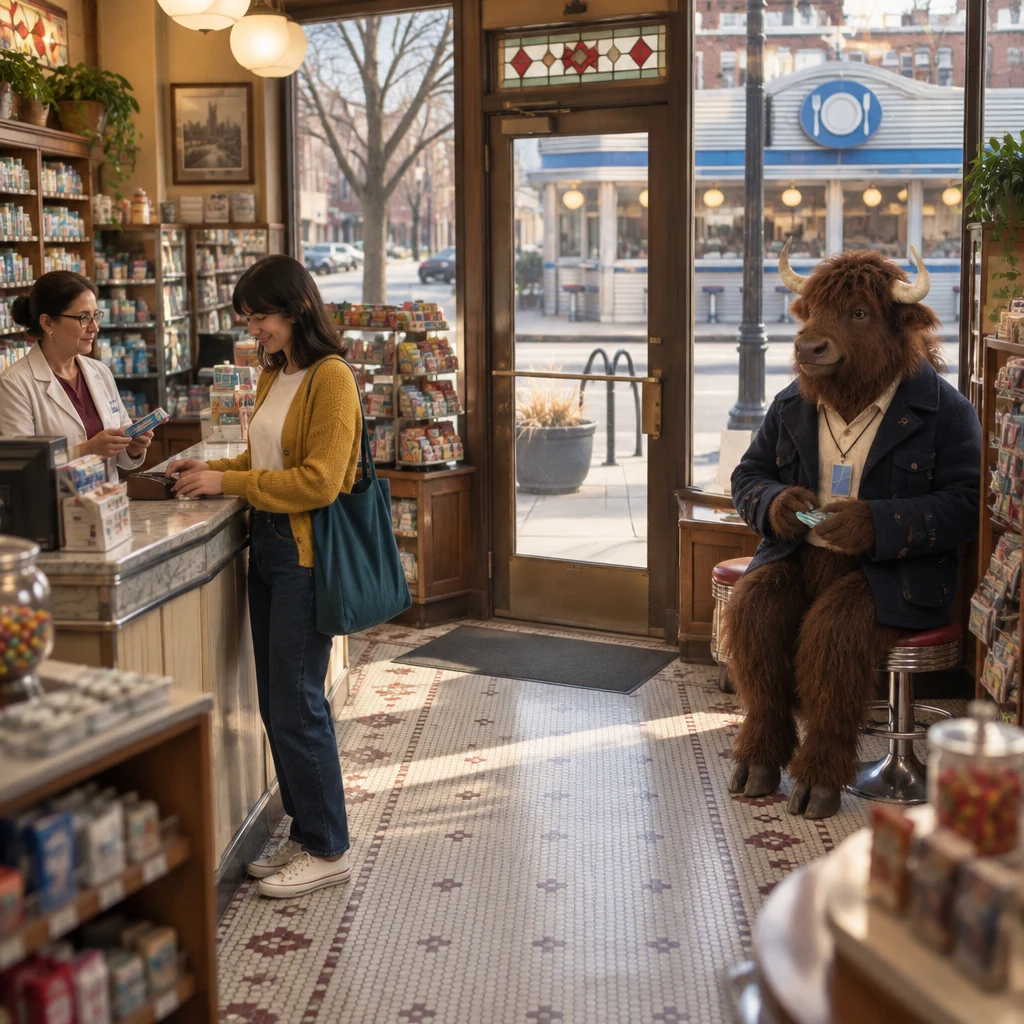
Ana walks into the drugstore across from the Blue Plate. A clerk is behind the counter. Murray is already there with a pack of mints.
The clerk asks what she wants. Ana starts a long list of things she needs for her new life.
By the end, you'll say what you want, what you need, and what you do not want. You'll also ask other people the same thing.
Want is for a thing you would like. Need is for a thing you must have.
By the end of this lesson
Say what you want and what you need.
- I want ___.you say what you would like
- I need ___.you must have this
- I don't want ___.you say no to this thing
- What do you want?you ask what someone would like
- Do you need ___?you ask if someone must have this
- I need to ___.I must do this
Scene — across the street
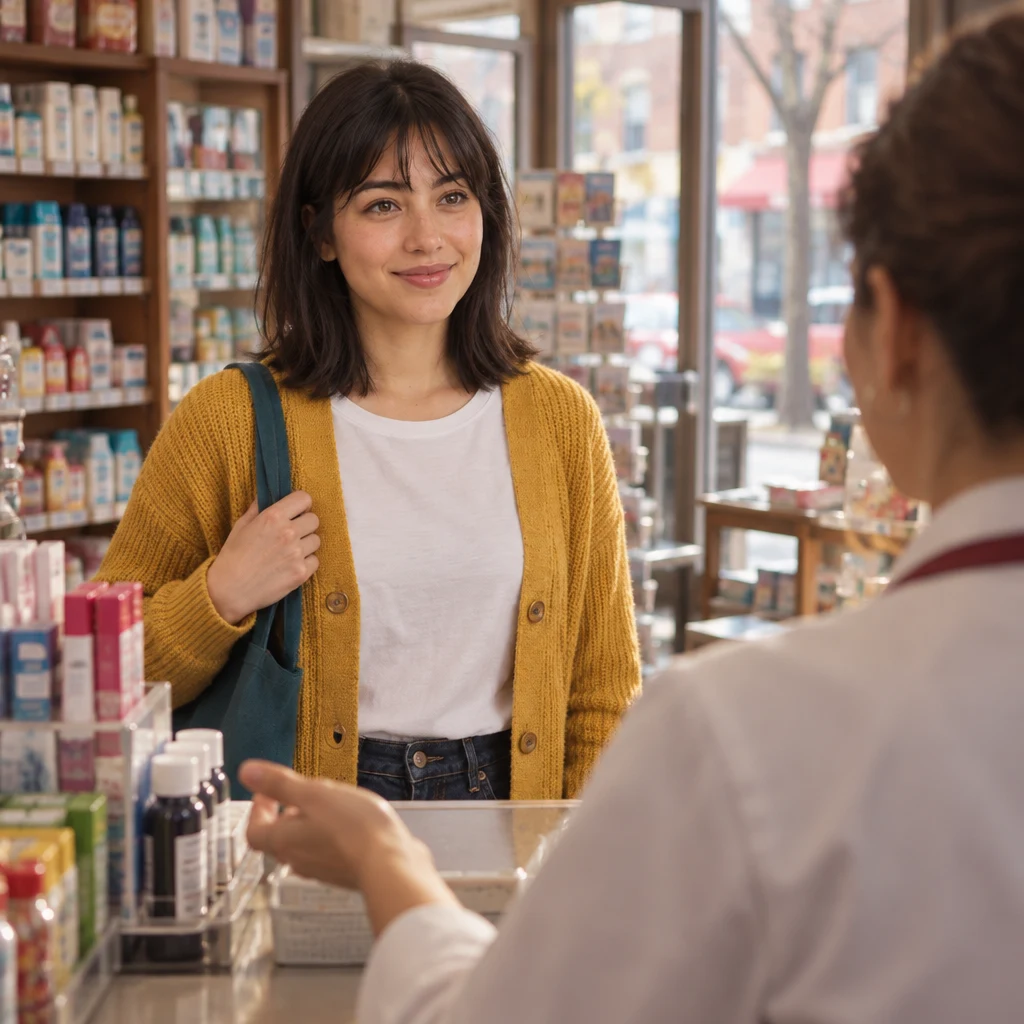
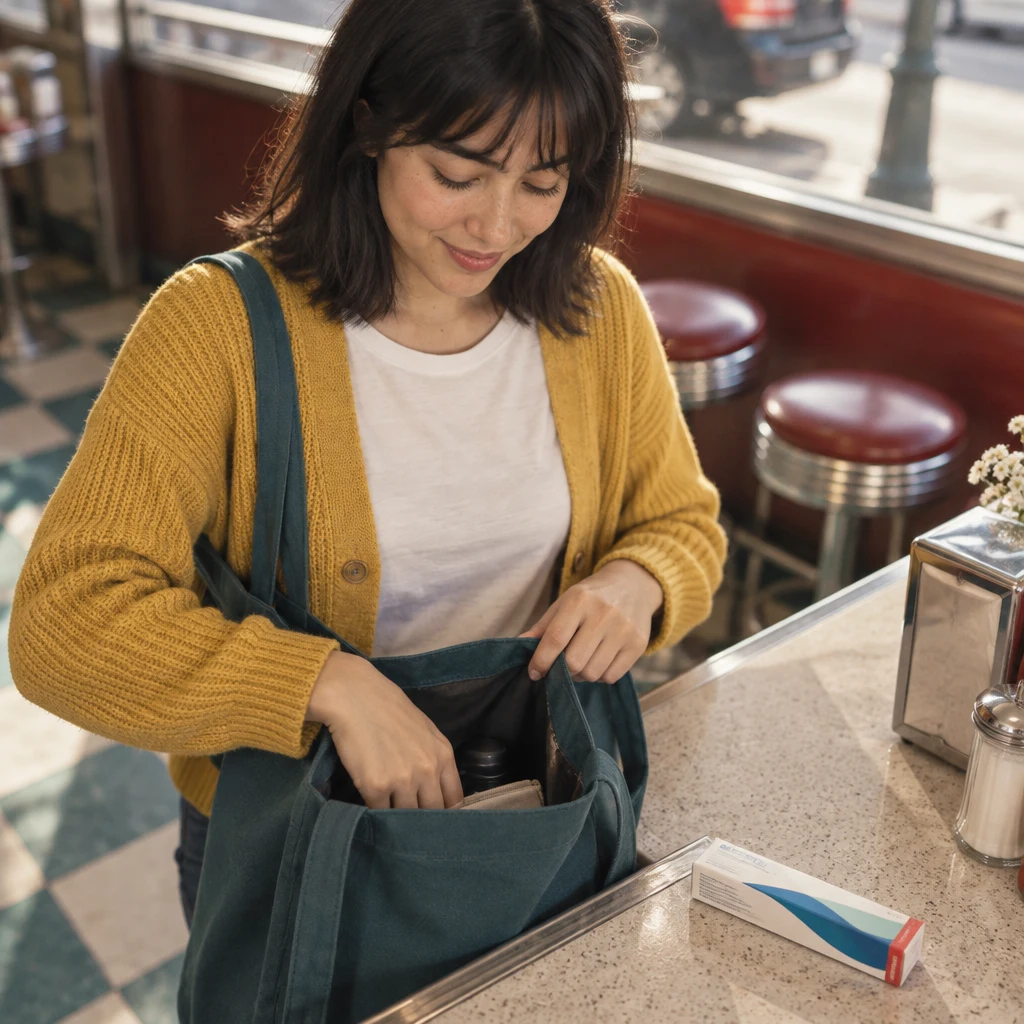
The drugstore is across from the Blue Plate. Ana stands at the counter with her tote bag. The clerk waits with a box of toothpaste.
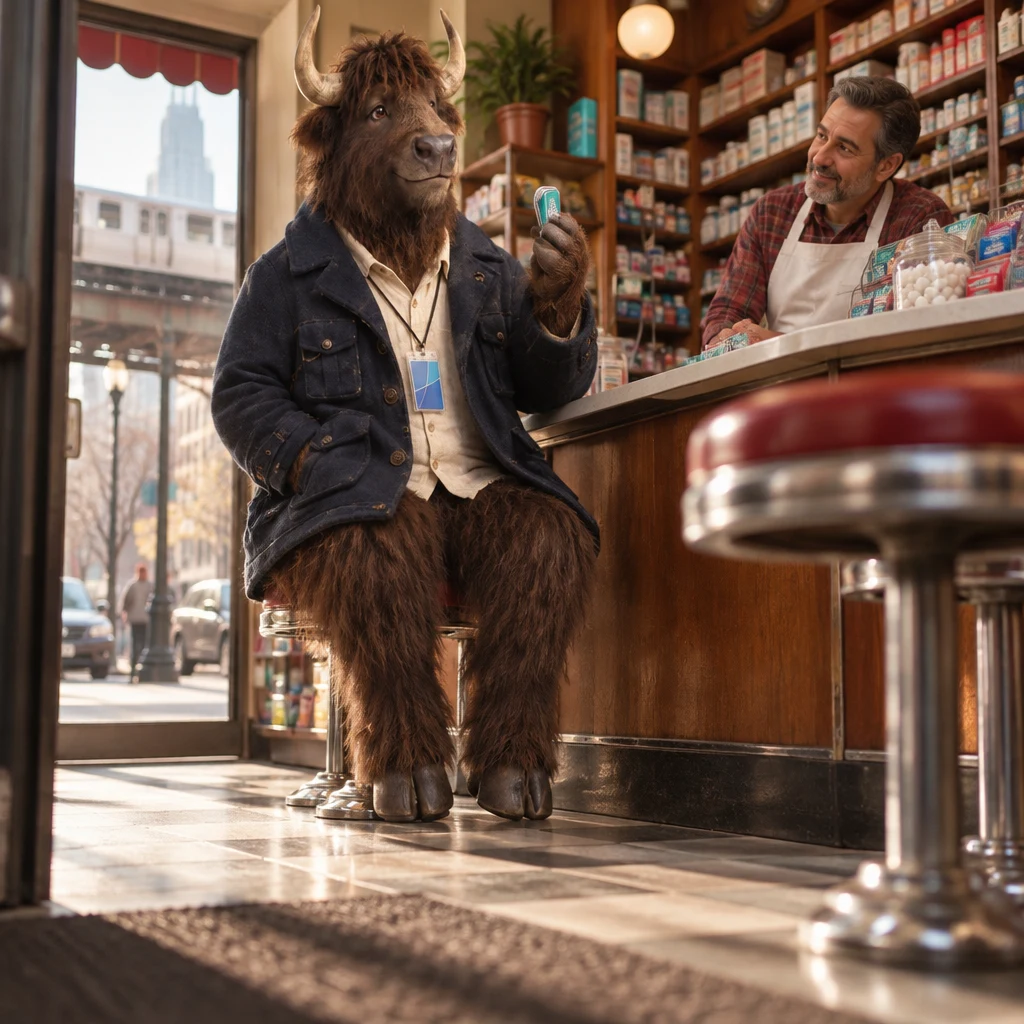
Murray sits near the door with a pack of mints. He already has what he wants. The jukebox at the diner is still quiet.
Learn — want and need
Six short lines cover want, need, and I don't want.
You'll also ask What do you want? and Do you need this?
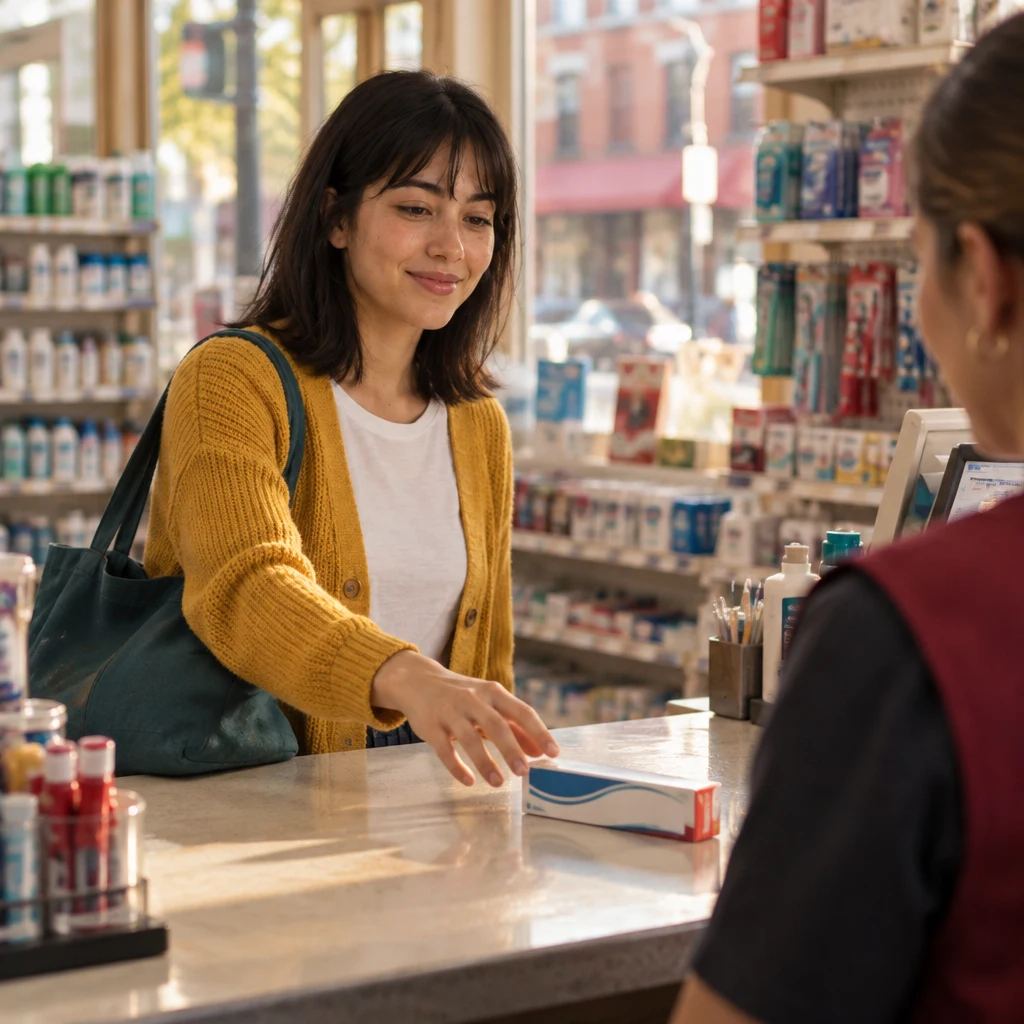
I want ___.
you say what you would like
When to use it: Say this when you would like a thing.
Learn it as one piece, then name the thing.
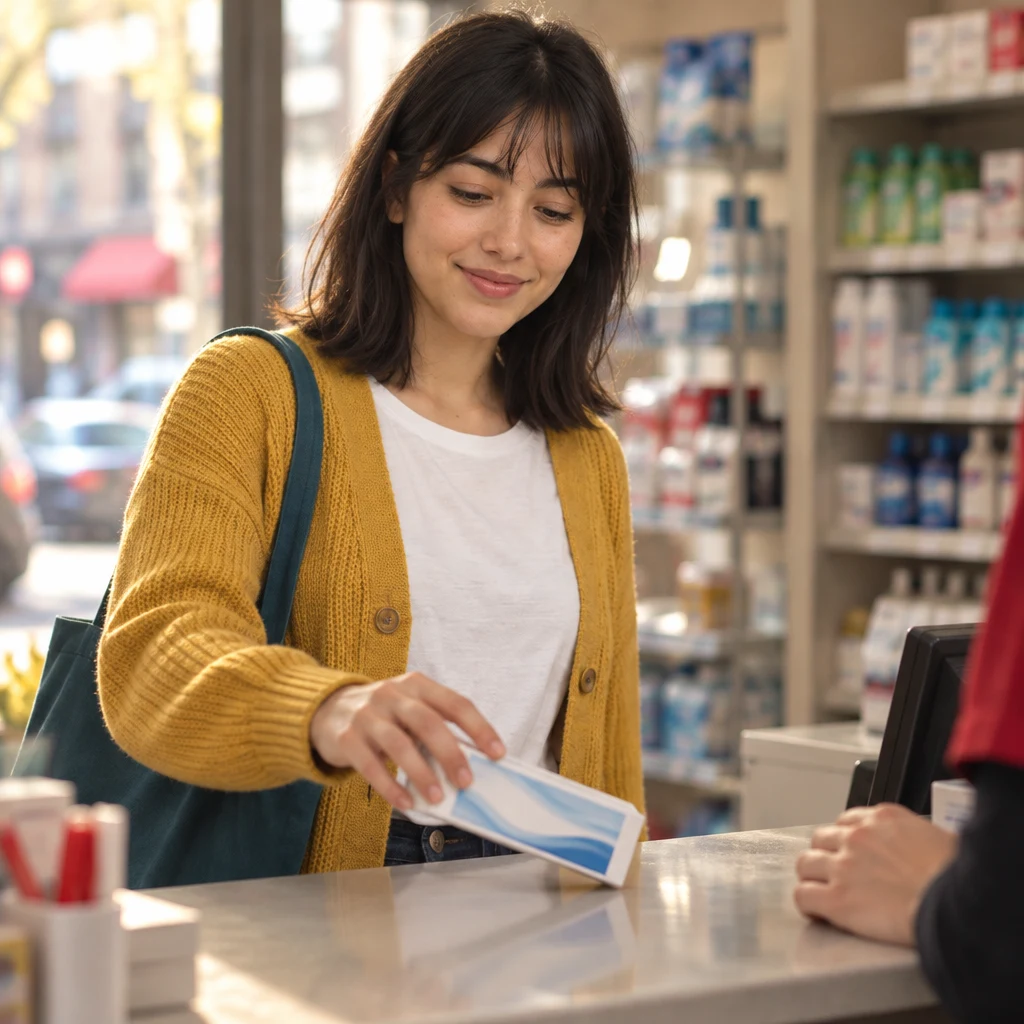
I need ___.
you must have this
When to use it: Say this when you must have a thing.
Learn it as one piece, then name the thing.
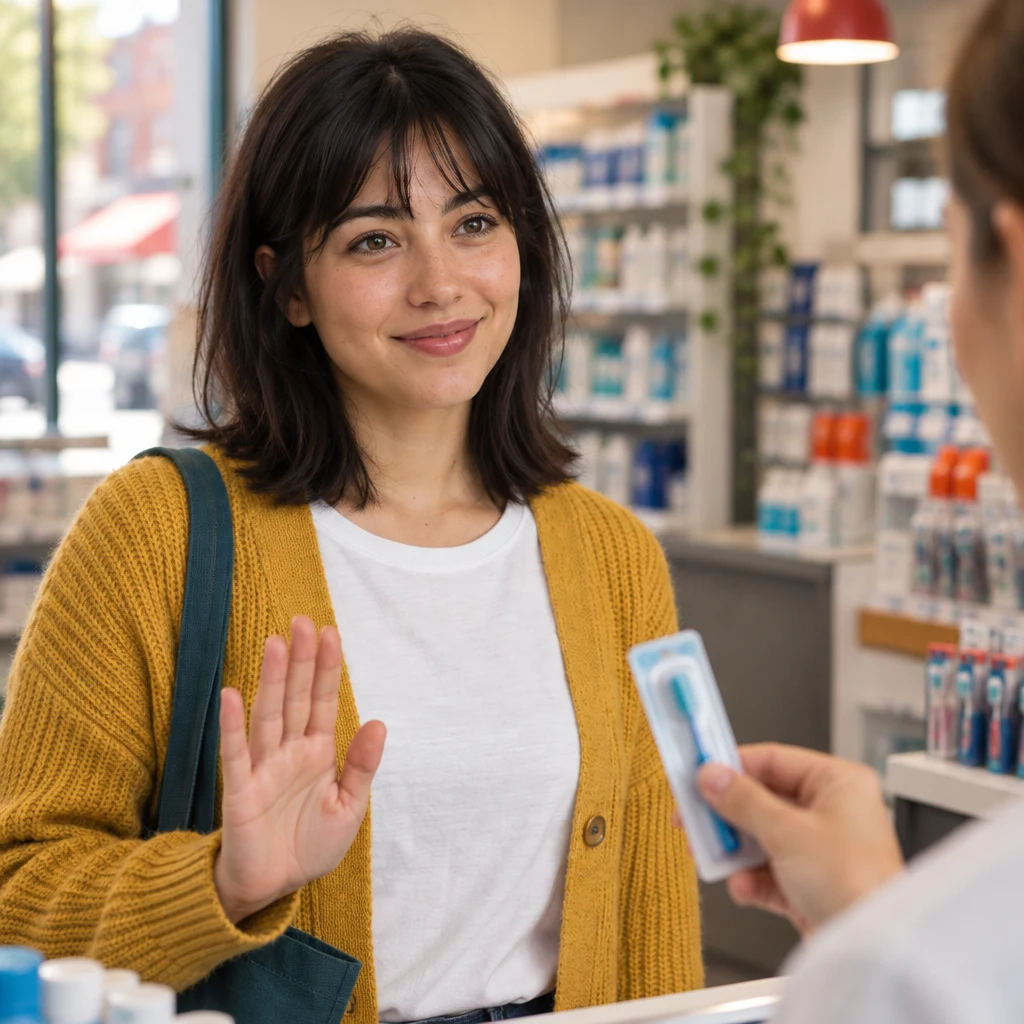
I don't want ___.
you say no to this thing
When to use it: Say this when you do not want a thing.
Learn it as one piece to say no to a thing.
What do you want?
you ask what someone would like
When to use it: Ask this to hear what they would like.
Learn it as one piece when you ask someone.
Say it: Do and you can link.
Do you need ___?
you ask if someone must have this
When to use it: Ask this to check if they must have a thing.
Learn it as one piece, then name the thing.
I need to ___.
I must do this
When to use it: Say this when you must do something.
Learn it as one piece, then say what you must do.
Say it: To often sounds like tuh.
Story — a long list
Watch Ana at the drugstore counter. The clerk asks what she wants, and Ana starts a long list.
The highlighted words are the lines you just learned.
- Ana sets her tote on the drugstore counter. The clerk looks up.
- ClerkHi. What do you want?A friendly hello, then a question about what Ana would like.
 AnaI need a couch. I need a bike.She says she must have furniture and a way to travel.
- The clerk smiles and taps a box on the shelf.
- ClerkHere. Do you need toothpaste?She points to something for cleaning teeth and asks if Ana needs it.
- AnaI want toothpaste.She would like something to clean her teeth.
- ClerkDo you need floss too?She asks if Ana also needs something to clean between her teeth.
- AnaI don't want floss.She says no to the thing for cleaning between her teeth.
- The clerk turns to Murray.
- ClerkWhat do you want?you ask what someone would like
 MurrayI want these mints.He would like the small candies in his hand.
- AnaI need to unpack. Thank you.She must take things out of her bags, then thanks the clerk.
Practice — from the shelf
Eleven short exercises wait here. You'll listen, pick, fill a gap, and swap a word.
They stay small, so you can move through them fast.
0 of 11 done
What did you hear?
What did you hear?
Match the pairs
English
I want ___.Drop the Simple English hereI need ___.Drop the Simple English hereI don't want ___.Drop the Simple English hereWhat do you want?Drop the Simple English hereSimple English
What do you say?
What do you say?
The clerk holds up floss. You do not want it.
What does it mean?
What does it mean?
I don't want ___.
Fill the gap
Fill the gap
you say this when someone helps you
Thank ____.
Build the line
Build the line
you ask what someone would like
?
Tap the words in order.
What do you say?
What do you say?
You have no toothpaste at home. Tell the clerk you must have some.
Swap the word
Swap the word
Ask if they must have this, not if they would like it.
Do you ____ ___?
True or false?
True or false?
This line asks what someone would like.
What do you say?
What do you say?
They asked how you are. You said you are fine. Now ask them the same thing.
What does it mean?
What does it mean?
I need to ___.
Say it — name the thing
Now you're Ana at the drugstore counter. When it's your turn, tap the microphone and speak the line.
Tap play first if you want to hear the line. Your recording stays on your device.
- ClerkWhat do you want?you ask what someone would like
- Ana (you)Say you would like toothpaste.
Say you would like toothpaste.
I want ___.
you say what you would like
0 of 5 said
Recap — what you can say now
| English | Simple English | Play |
|---|---|---|
| I want ___. | you say what you would like | |
| I need ___. | you must have this | |
| I don't want ___. | you say no to this thing | |
| What do you want? | you ask what someone would like | |
| Do you need ___? | you ask if someone must have this | |
| I need to ___. | I must do this |
Save your progress — it’s free
Keep your place in the course and see which lines you’ve learned.
Want the next lesson in your inbox?
Get the next lesson by email, one a day.
Join the newsletterDaily lesson emails are coming soon. Newsletter subscribers get them first.
Keep practicing with Yak Cards
Want to keep want and need handy? Grab the Yak Cards for this lesson and review them anywhere.
A quick round with the Yak Cards each day keeps want and need ready at the store.
Open Yak Cards