
New here? This is lesson 32 of a free 240-lesson English course.
Borrow a phone in English
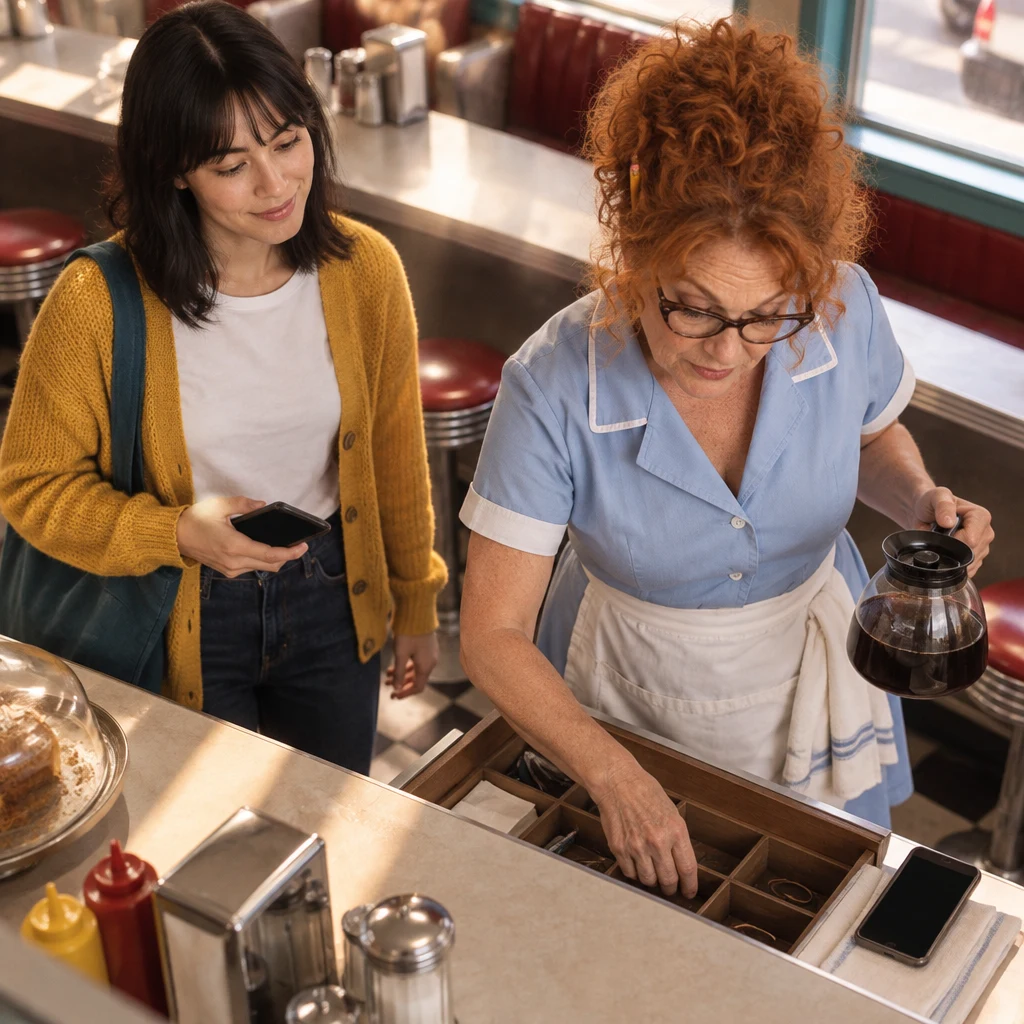
Ana's phone has no power at the Blue Plate. She needs to make a call, so she asks Murray for his phone.
He searches his peacoat and finds his Ventra card first. Dee stays close with the coffee pot.
By the end, you'll ask to use a phone, ask someone to call, and ask what to do.
You'll also ask a person to come with you, look at a thing, or get someone.
By the end of this lesson
Ask to use a phone, ask someone to call, and ask what to do.
- Can I use your phone?Please let me make a call on your phone
- Can you call ___?Please phone this person for me
- What should I do?Tell me the next step
- Can you come with me?Please go there with me
- Can you look at this?Please check this with me
- Can you get someone, please?Please find another person to help
Scene — the phone is dark
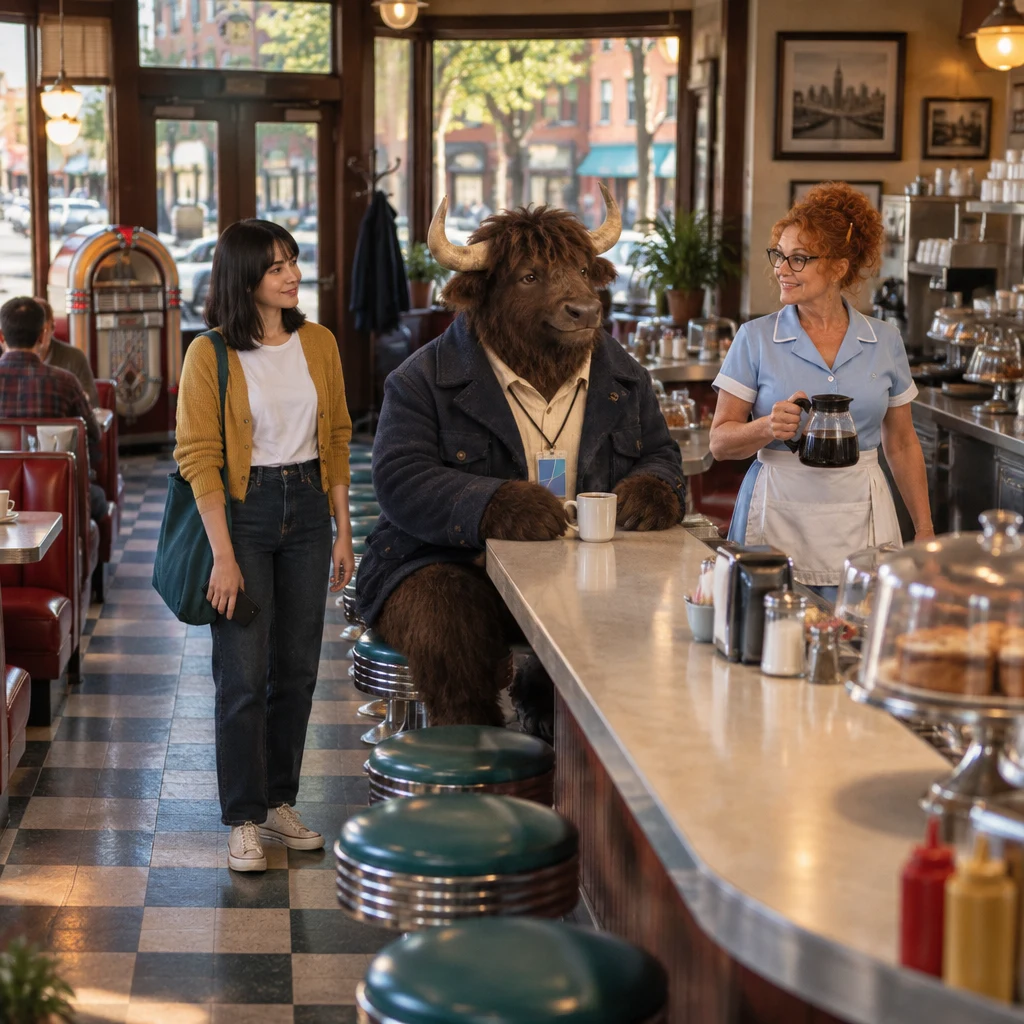
Ana is at the Blue Plate on Larch Street in Logan Square, Chicago. Her phone is dark. She stands beside Murray at the counter.
Murray sits on two stools in his peacoat. His coffee is still unfinished. Dee holds the coffee pot nearby. The jukebox by the door stays quiet.
Learn — ask to use a phone
Six short lines help you ask to use a phone, ask someone to call, and ask what to do.
You'll also ask a person to come, look, or get help.
Can I use your phone?
Please let me make a call on your phone
When to use it: Ask this to use another person's phone.
Ask before you take someone's phone.
Say it: Can is often quiet and quick in this question.
Can you call ___?
Please phone this person for me
When to use it: Ask this when you need someone to phone a person.
Put the person's name in the open space.
What should I do?
Tell me the next step
When to use it: Ask this when you need to know what to do next.
Learn it as one piece when you need help.
Say it: Stress the word do at the end.

Can you come with me?
Please go there with me
When to use it: Ask this when you want a person to go with you.
You want to go together.
Can you look at this?
Please check this with me
When to use it: Ask this when you want someone to check a thing.
Show the person the thing you want them to check.
Say it: Look and at can link.

Can you get someone, please?
Please find another person to help
When to use it: Ask this when you need another person to help.
Please makes this request friendly.
Story — the wrong pocket
Watch Ana ask for a phone at the counter. Murray looks in his peacoat and finds the wrong thing.
Follow Ana as she asks Dee for help.
- Ana's phone has no power, so she turns to Murray.
 AnaExcuse me. Can I use your phone?She gets his attention and asks to make a call.
 MurraySure. One second.He agrees but needs a little time.
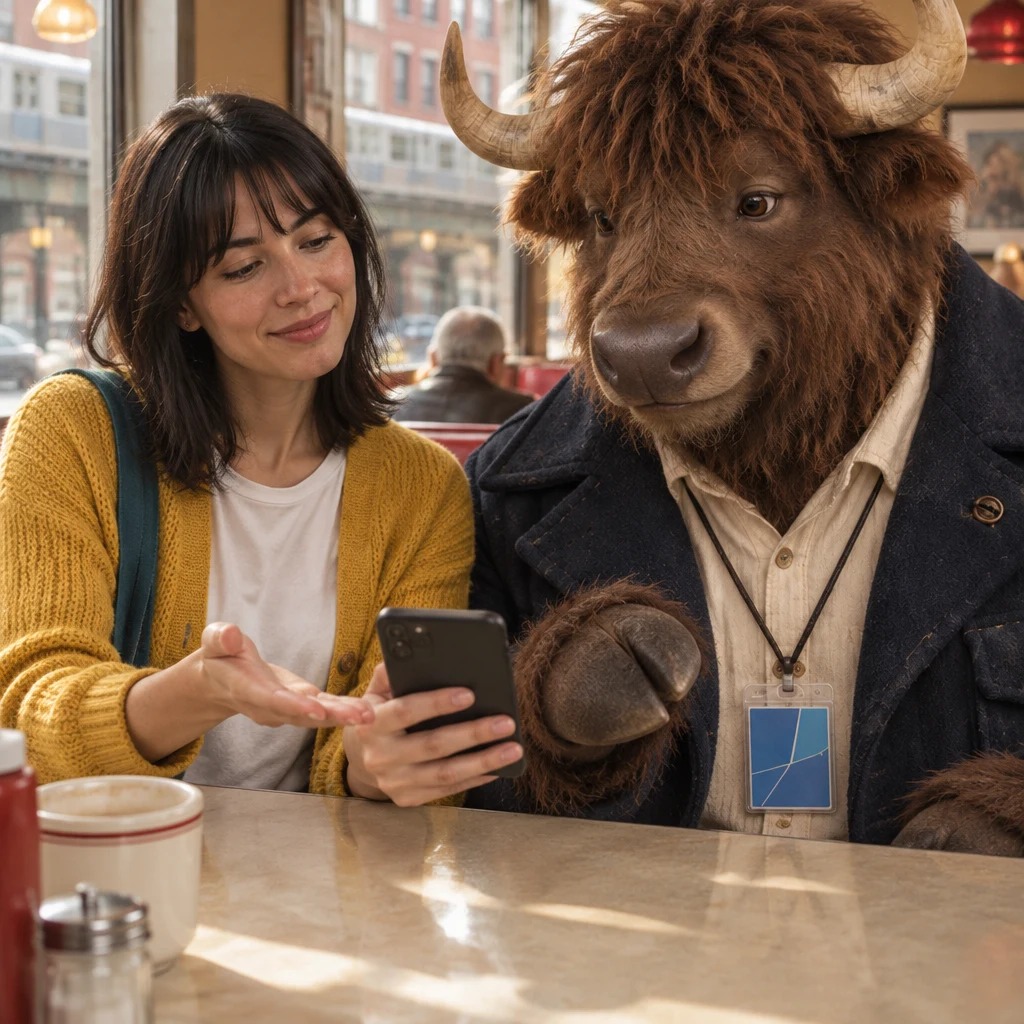
- Murray searches his peacoat and pulls out his Ventra card first, so Ana shows him her phone.
- AnaCan you look at this? What should I do?She wants him to check her phone and tell her the next step.
- Murray checks the dark screen and looks toward Dee.
- MurrayAsk Dee.He thinks Dee can help.
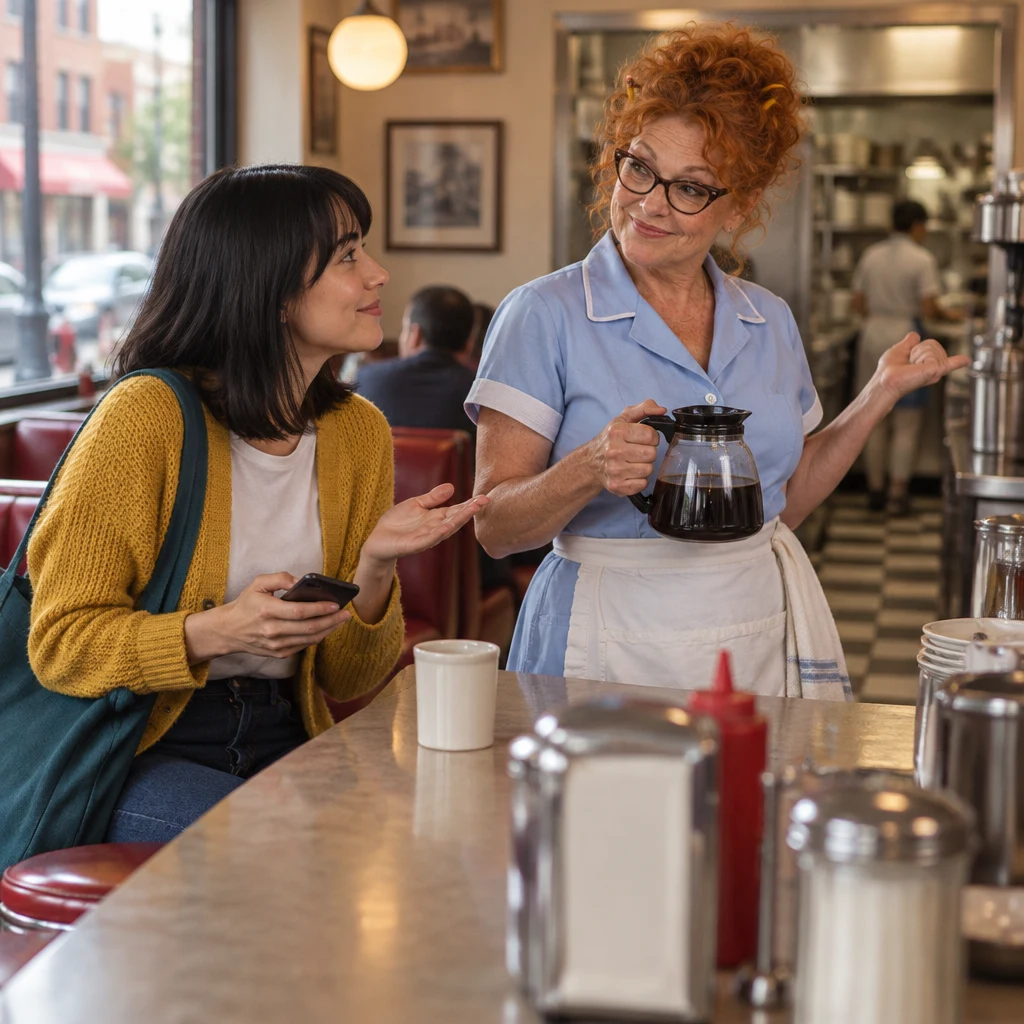
- Ana turns to Dee.
- AnaCan you call Tasha?Please phone this person for me
 DeeSure. Come to the back, hon.She agrees and asks Ana to follow her.
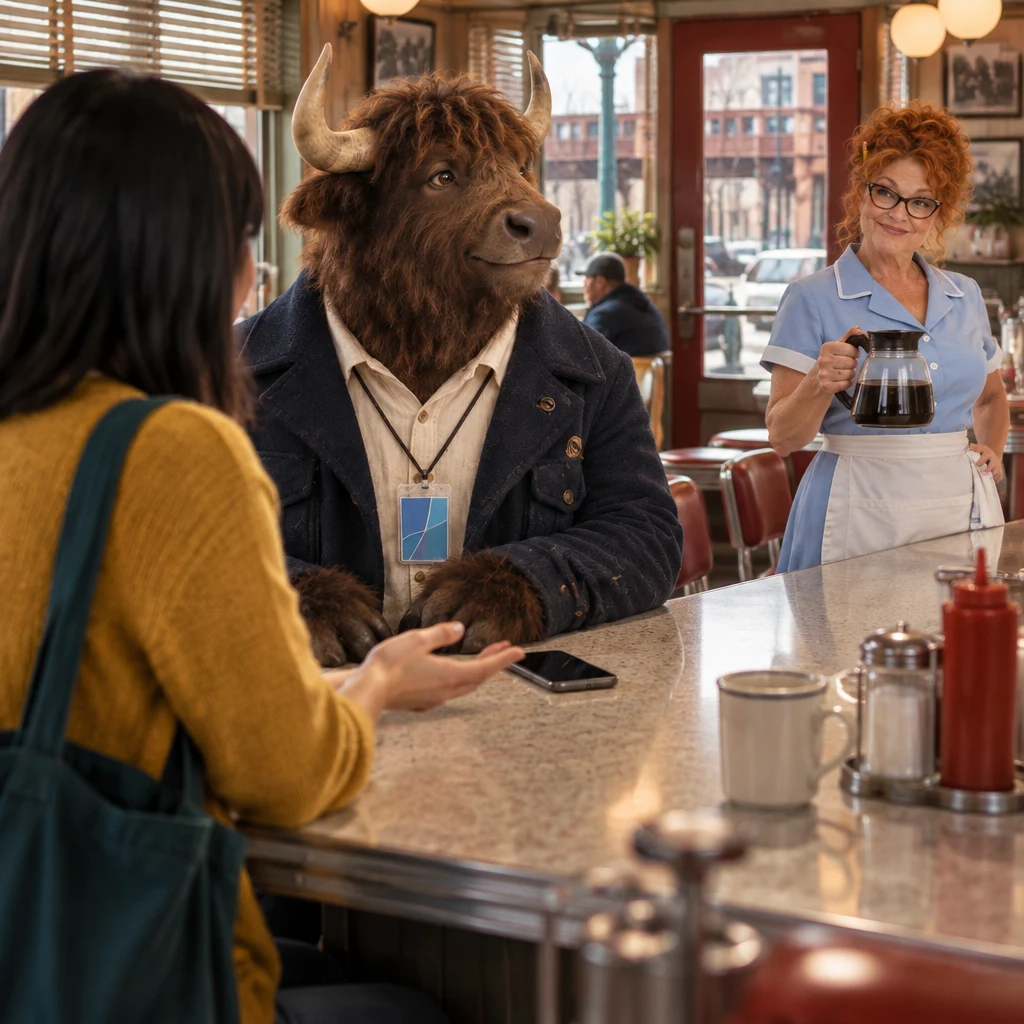
- Ana looks back at Murray.
- AnaCan you come with me?Please go there with me
- MurrayYes. Let's ask Dee for a charger.He agrees and wants to find something to charge Ana's phone.
- Dee puts down her phone and looks for a charger, but she can't find one.
- AnaCan you get someone, please?Please find another person to help
- DeeI'll get Danny.She will bring her son to help.
- AnaThank you.you say this when someone helps you
Practice — ask for a call
Ten quick exercises wait here. You'll listen, pick, match, fill a gap, and build a line.
Think about the help Ana needs before you choose.
0 of 10 done
What did you hear?
What did you hear?
Match the pairs
English
Can you call ___?Drop the Simple English hereCan you come with me?Drop the Simple English hereCan you look at this?Drop the Simple English hereCan you get someone, please?Drop the Simple English hereSimple English
What do you say?
What do you say?
It's noon. Murray hasn't noticed you yet. Get his attention before you ask for help.
What does it mean?
What does it mean?
Can you get someone, please?
Fill the gap
Fill the gap
Please go there with me
Can you come ____ me?
Build the line
Build the line
Please check this with me
?
Tap the words in order.
What do you say?
What do you say?
You want Dee to phone Tasha for you. Ask her to make that call.
Swap the word
Swap the word
Your phone has no power. Ask Murray to let you make a call on his.
Can I use your ____?
What do you say?
What do you say?
Your phone has no power. You don't know what to do next. Ask Dee for the next step.
Pick the reply
Dee says:
Pick the reply
I'll call Tasha for you now, hon.
She offers to phone your friend.
And you reply with:
Say it — ask at the counter
Now you're Ana, and your phone has no power. When it's your turn, tap the microphone and speak the line.
Listen first if you need help. For the line with an open space, use Tasha's name.
- MurrayNeed a phone?He asks if you need to make a call.
- Ana (you)Ask to make a call on his phone.
Ask to make a call on his phone.
Can I use your phone?
Please let me make a call on your phone
0 of 6 said
Recap — what you can say now
| English | Simple English | Play |
|---|---|---|
| Can I use your phone? | Please let me make a call on your phone | |
| Can you call ___? | Please phone this person for me | |
| What should I do? | Tell me the next step | |
| Can you come with me? | Please go there with me | |
| Can you look at this? | Please check this with me | |
| Can you get someone, please? | Please find another person to help |
Save your progress — it’s free
Keep your place in the course and see which lines you’ve learned.
Want the next lesson in your inbox?
Get the next lesson by email, one a day.
Join the newsletterDaily lesson emails are coming soon. Newsletter subscribers get them first.
Keep practicing with Yak Cards
Want to keep these lines handy? Grab the Yak Cards for this lesson and review them anywhere.
A quick round with the Yak Cards each day helps you ask for help when you need it.
Open Yak Cards